
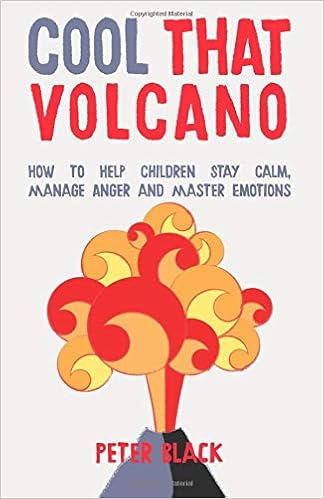
Publication Date: 27th February 2018
Format: Paperback
I.S.B.N.: 9781986036115
Price: £6.99
Blurb
Are your children difficult to control? Are you starting to worry that their constant temper tantrums and explosive anger are getting out of hand? You’re not alone. It is a fact that many children experience difficulties in managing their emotions, and can express anger in a damaging way that causes problems for them, and others around them. Which is where Cool That Volcano comes in. This book is packed full of techniques and methods that take you through a step by step approach to teaching your children how to manage their emotions, in a concise and easy to read manner. This is not a 300 page technical manual, but it is a set of practical methods which help you to help your child stay in control of, and master their emotions. This will almost certainly improve their lives, and the lives of those who care about them. In this guide you’ll learn how to: Teach your child to recognise problematic emotions:Teach your child how to calm down and manage anger: Teach your child how to talk about their feelings: Teach your child how to achieve mastery of their emotions: Think about your own approach to emotional management. What are you waiting for? Read this book, apply the methods inside, and begin to improve your child’s life today.
My Review
Pete contacted me earlier in the year to see if I could review his books ‘Cool That Volcano’ and ‘Don’t Pack The Stress’, and I agreed. I’ve just finished reading ‘Cool That Volcano’, a book aimed at parents who want to help their children improve their emotional intelligence and emotional regulation.
This is a very concise book, using the metaphor of the erupting volcano to describe violent explosions of emotions and icebergs to describe techniques to calm down and get emotions under control. The author goes on to explain the importance of discussing emotions, finding the causes of temper tantrums or other emotional explosions and also parental modelling of behaviours.
The geologist in me is saying the volcano is a terrible metaphor because they don’t erupt because they get too hot and you wouldn’t want to drop an iceberg on an erupting volcano, all putting water on a volcano does is make it more explosive; water and volcanoes really don’t mix well at all. There’s loads of volcanoes under the ice sheet of the Antarctic that have to be monitored because an eruption will be a: violent and b: melt shed loads of fresh water into the South Atlantic or South Pacific, bugger up currents and possibly cause catastrophic sea level rise.
But that’s by the by. Sorry I got off track, blame it on being autistic, I usually do.
I found this book interesting and the author explains the ideas clearly and with little jargon; not having children I haven’t been able to try it out but I can see the utility of the ideas for myself. While the metaphor makes my inaccuracy meter scream, as a general idea, and bearing in mind the ignorance of most people about how volcanoes work, it’s not a bad metaphor. It also appears to be a fairly common one, so I’m going to assume it’s a standard psychological model for emotional eruptions, so it must have some utility. It’s easy to grasp, we’ve all felt the sudden surge of an overwhelming anger and then lashed out physically or verbally, and children can pick up the idea quickly.
I particularly liked the chapters about parental modeling of behaviour and explaining hypermasculinity. Kids pick up on what’s going on around them; if parents and media are modeling unhealthy emotional behaviour then they’ll copy that. For the mental and emotional health of children better behaviour, better emotional responses need to be modelled.
I recommend this little book, for it’s simplicity and clarity of ideas.

 Everything Is Better With Dragons
1 Comment