
And this is my second attempt at writing this post. I got it finished and everything I’d written this evening (third book onwards) disappeared. So, I’m trying again…
In have a plan. I have soooooo many Pen & Sword books that I’m going to do a twice monthly joint ‘non-fiction’ review post of whatever I’ve read in the time between posts, about two weeks. I have five for you this time:
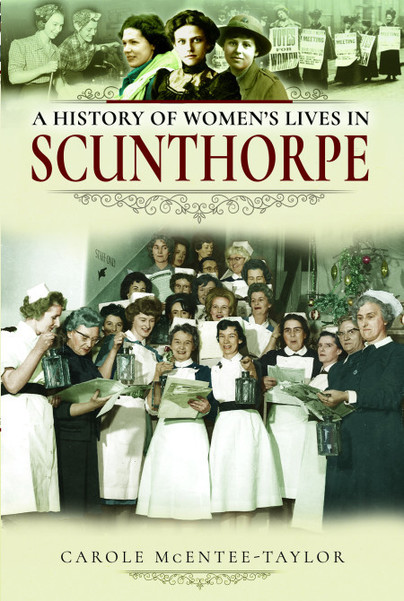
- A History of Women’s Live in Scunthorpe, by Carole McEntee-Taylor (that’s a local interest one for me)
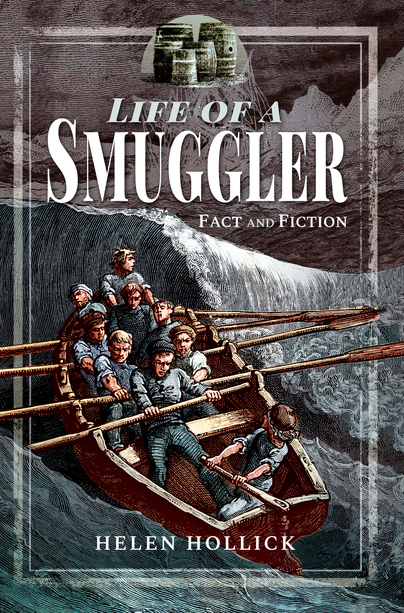
- Life of a Smuggler: Fact and Fiction, by Helen Hollick
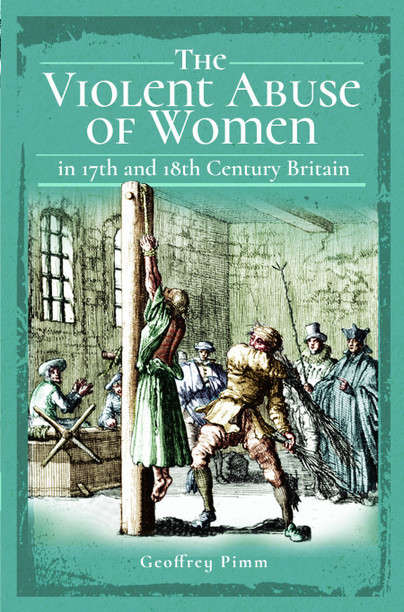
- The Violent Abuse of Women in 17th and 18th Century Britain, by Geoffrey Pimm
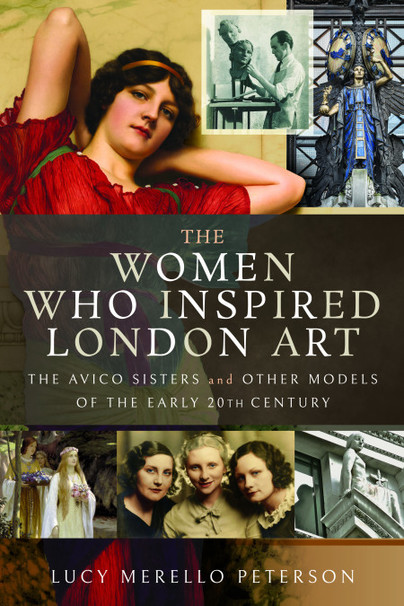
- The Women who Inspires London Art: The Avico Sisters and Other Models of the Early 20th Century, by Lucy Merello Peterson
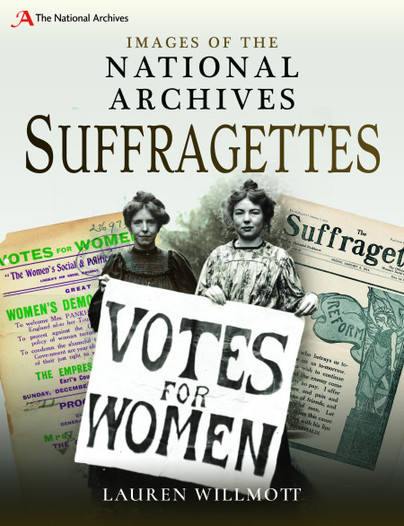
- Images of the National Archives: Suffragettes, by Lauren Willmott
So, lets get going, shall we?
ISBN: 9781526717177
Published: 6th March 2019
Format: paperback
Purchase Link
Blurb
Stalkers, bigamy, murders, domestic violence, hard work, continuous childbearing, starvation, illegal abortions, suicides. What was the reality of life for women in the masculine environment of an emerging steel town? Steel manufacturing began in Frodingham in 1890 and as agricultural workers came in from the surrounding villages and skilled workers came from other areas in the country the population in the villages of Ashby, Brumby, Crosby, Frodingham and Scunthorpe grew rapidly. The fastest growth was in Scunthorpe which reached urban district status in 1883. By 1891 the population had risen to 3,417. The first council elections took place on 17th December 1894. There were 45 candidates chasing 15 places, but Scunthorpe only had one seat on Lindsey County Council– Councillor J Foster. Women did not have a vote.
There was little or no Suffragette activity in Scunthorpe, the women were too busy surviving. But these ordinary women had a hidden strength that only really came to the fore in both the First and Second World Wars after which they faded back into obscurity.
Using previously unpublished school diaries, original Co-operative Society documents and newspaper accounts from the time, A History of Women’s Lives in Scunthorpe shines a brief spotlight on the unsung heroes without whom the town would never have thrived, the women from the 1840s to the 1950s whose story has never been told.
This book covers almost a hundred years from the mid-nineteenth century to 1950, and gives details of women, their families and parentage, if they appeared in the papers or courts. It’s interesting if you are looking for possible ancestors or a little bit of local history. There certainly are some interesting stories, and the history of one of the girls’ schools is fascinating to read, as excerpts from the school diary are published. The author is clearly adept at finding information in archives and court records and has found some gems. The incidental history of Scunthorpe’s industrial rise and the unknown bombings of the First World War is definitely worth reading.
I wasn’t impressed by the author’s comments about modern feminism, because she’s talking about something she clearly isn’t qualified to discuss.
SBN: 9781526727138
Published: 21st January 2019
Format: Paperback
Purchase Link
Blurb
‘Brandy for the parson, baccy for the clerk…’
We have an image, mostly from movies and novels, of a tall ship riding gently at anchor in a moonlit, secluded bay with the ‘Gentleman’ cheerfully hauling kegs of brandy and tobacco ashore, then disappearing silently into the night shadows to hide their contraband from the excise men in a dark cave or a secret cellar.
But how much of the popular idea is fact and how much is fiction? Smuggling was big business – it still is – but who were these derring-do rebels of the past? Were smugglers regarded as the heroes of a community, or were they resented and feared? How effective were the men who tried to uphold the laws against smuggling?
My Review
This is an easy to read, well laid out book that covers the basics of the history of smugglers in Britain, mostly focusing on the 17th and 18th centuries, although some mention is made of modern smuggling. Helen Hollick writes fiction about smugglers so she already has some background in the subject and her ability to write is clear. She’s funny and the narrative is broken up by short ‘Facts’ paragraphs. I read it fairly quickly because it was interesting and fun. Hollick charts the change in attitudes over the centuries from general acceptance of smuggling as a necessity because of government tariffs making goods more expensive than necessary. As time passed the gangs became more violent and less accepted.
ISBN: 9781526739544
Published: 4th March 2019
Format: Hardback
Purchase Link
Blurb
The seventeenth and eighteenth centuries are the gateway between the medieval world and the modern, centuries when the western societies moved from an age governed principally by religion and superstition to an age directed principally by reason and understanding. Although the worlds of science and philosophy took giant strides away from the medieval view of the world, attitudes to women did not change from those that had pertained for centuries. Girls were largely barred from education – only around 14% of women could read and write by 1700 – and the few educated women were not permitted to enter the professions.
As a result women, especially if single, were employed in menial jobs or were forced into a life of petty crime. Many survived by entering the ‘oldest profession in the world’.
The social turbulence of the first half of the seventeenth century afforded women new opportunities and new religious freedoms and women were attracted into the many new sects where they were afforded a voice in preaching and teaching. In a time of unprecedented and unbridled political discussion, many better educated women saw no reason why they should not enter the debate and began to voice their opinions alongside those of men, publishing their own books and pamphlets. These new and unprecedented liberties thus gained by women were perceived as a threat by the leaders of society, and thus arose an unlikely masculine alliance against the new feminine assertions, across all sections of society from Puritan preachers to court judges, from husbands to court rakes.
This reaction often found expression in the violent and brutal treatment of women who were seen to have stepped out of line, whether legally, socially or domestically. Often beaten and abused at home by husbands exercising their legal right, they were whipped, branded, exiled and burnt alive by the courts, from which their sex had no recourse to protection, justice or restitution. Many of the most brutal forms of punishment were reserved exclusively for women, and even where the same, they were more savagely applied than would be the case for similar crimes committed by men.
This work records the many kinds of violent physical and verbal abuse perpetrated against women in Britain and her colonies, both domestically and under the law, during two centuries when huge strides in human knowledge and civilisation were being made in every other sphere of human activity, but social and legal attitudes to women and their punishment remained firmly embedded in the medieval.
My Review
To say this book is a joy to read would probably be badly phrased. It would be better to say this is a passionate and informative account of the subject and especially of judicial violence. It also did not surprise me to learn that the author has written a book about Samuel Pepys as his diary is quoted several times as an example of the legally and socially acceptable use of violence and sexual assault a ‘respectable’ man could perpetrate against women at the time, without consequences. The book charts changing attitudes towards judicial violence and violence against women in particular over the time period and is illustrated well, without being gratuitous.
ISBN: 9781526729453
Published: 6th March 2019
Format: Paperback
Purchase Link
Blurb
1918 was a watershed moment for the development of British democracy: for the first time, some women could vote. The occasion marked the culmination of a fifty-year long and arduous struggle of thousands of women and men up and down the country.
Using unique documents and images held at The National Archives, we will delve into the world of suffrage and trace the journey of these thousands of individuals, fighting to achieve women’s rights in a man’s world, and how they were ultimately able to emerge largely victorious.
My Review
This book provides images and a basic narrative of events leading up to partial suffrage in 1918. It would be a useful resource for students and schools teaching the period in history, giving examples of police documents, as well as images of the women involved in the suffrage fight and the events they took part in.
I found this book interesting and the use of narrative and images side by side helped put this into perspective. I read this book in one sitting, though it is only 92 pages long.
ISBN: 9781526751720
Published: 30th June 2019
Format: Hardback
Purchase Link
Blurb
This is the story of women caught up in the tumultuous art scene of the early twentieth century, some famous and others lost to time.
By 1910 the patina of the belle époque was wearing thin in London. Artists were on the hunt for modern women who could hold them in thrall. A chance encounter on the street could turn an artless child into an artist’s model, and a model into a muse. Most were accidental beauties, plucked from obscurity to pose in the great art schools and studios. Many returned home to lives that were desperately challenging — almost all were anonymous.
Meet them now. Sit with them in the Café Royal amid the wives and mistresses of London’s most provocative artists. Peek behind the brushstrokes and chisel cuts at women whose identities are some of art history’s most enduring secrets. Drawing on a rich mélange of historical and anecdotal records and a primary source, this is storytelling that sweeps up the reader in the cultural tides that raced across London in the Edwardian, Great War and interwar periods.
A highlight of the book is a reveal of the Avico siblings, a family of models whose faces can be found in paint and bronze and stone today. Their lives and contributions have been cloaked in a century of silence. Now, illuminated by family photos and oral histories from the daughter of one of the models, the Avico story is finally told.
My Review
This book starts with the general and moves on to the specific, covering the personalities and life styles of the various artists prominent in London in the early twentieth century, as well as conditions for models in studios and schools, before looking specifically at the Avico sisters as examples of models from the time They appear to have been luckier than most, making a decent living compared to the majority of unknown models.
It is an interesting book for those interested in the milieu of the London art scene in the 1910s – 1930s.

 Everything Is Better With Dragons