Was Donald Trump able to become President because God abandoned us? Are Jews white? Does Hell have better weather than Heaven?
In Giveth and Taketh, Rota addresses all of these questions, discussing his own experience and political theology as a Jewish person in the Trump-era while also exploring broader issues of race, mental health and grief.
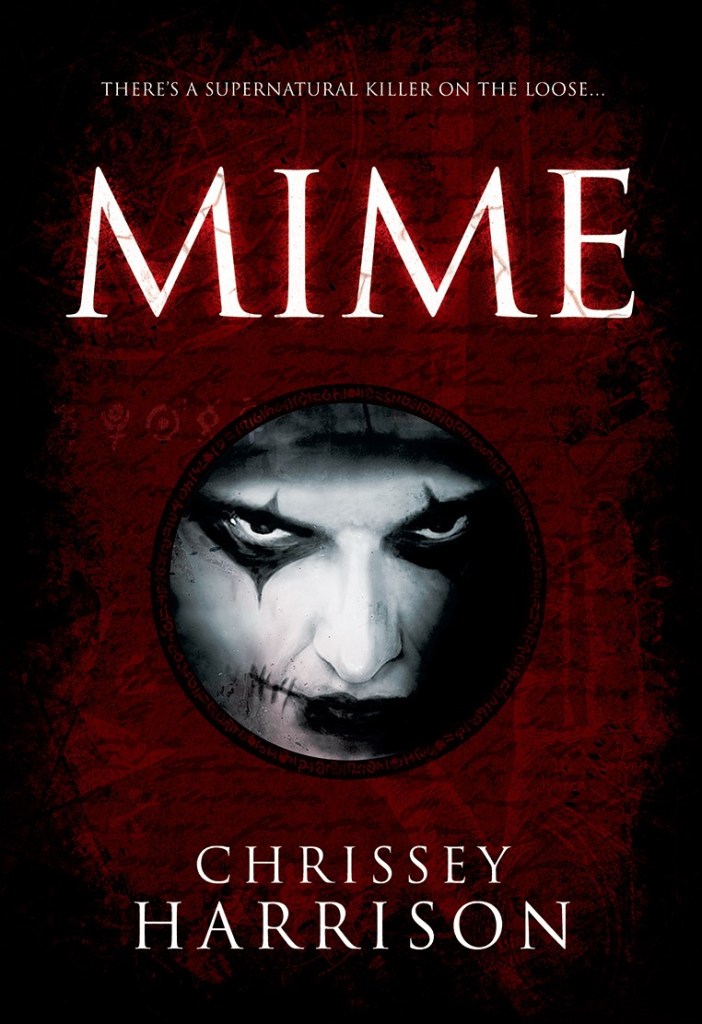
Elliot Cross didn t believe in monsters. At least, not until his brother died at the hands of something unnatural.
Four years later and a string of impossible deaths leave the police baffled. Consumed by a desire to shine a journalistic light on the supernatural world, Elliot sees a chance to make a difference. Enlisting the help of his (only) employee, Samantha, he quickly identifies the culprit a demonic mime artist whose invisible creations are fatally real.
Way out of his depth, Elliot s only hope is renowned demon hunter Gabriel Cushing. But tracking down Gabriel is only the beginning The search for a way to end the demon forever will take Elliot and Sam across the country, uncovering lost history, buried secrets, and a few new truths about themselves.
During and after the Second World War, 200,000 Poles were given leave to remain in the UK as thanks for their help during the conflict – this book is a fictional account of just one of those families. Set during the 1960s and 1970s, The Black Madonna of Derby traces the story of the Baran family living in a provincial town in England. Their seemingly ordinary existence hides secrets of past betrayal, madness, and tragedy.
The story focuses on three generations: the elderly grandmother whose proud Polish patriotism hides dark events from the past that affect the present, the mother whose tries to meld her past life in war-torn Poland and Germany with her new life in England and the granddaughter who lives a double life culturally and linguistically – Polish at home and English outside.
The swinging sixties in London is vividly recreated, as is the hardship of life under communism in the Poland of that time. This book is unique in that there are no other novels dealing with the story of second generation Poles in the UK. It is a story that deserves to be told, a story of a group of people who have had little attention in the literature. Listen to what they have to say.
The 1970s. Zany fashions brought the Decade That Taste Forgot. Change is in the air. Decimal currency; the Common Market; widespread strikes; the Winter of Discontent; IRA bombings; the sale of Council houses and quickie divorces make their mark on the whole country including the community of the Banjo. The eight households who live in Cromwell Close experience births, deaths, marriages, shocks and surprises but as the 70s become the 80s and beyond Dagenham undergoes great transformation. The once close-knit Community is changing.
Elaine Spires is a novelist, playwright, screenwriter and actress. Extensive travelling and a background in education and tourism perfected Elaine’s keen eye for the quirky characteristics of people, captivating the humorous observations she now affectionately shares with the readers of her novels. Elaine has written two books of short stories, two novellas and seven novels, four of which form the Singles Series – Singles’ Holiday, Singles and Spice, Single All The Way and Singles At Sea. Her latest book, Singles, Set and Match is the fifth and final book in the series. Her play Stanley Grimshaw Has Left The Building was staged at the Bridewell Theatre, London in May 2019. Her short film Only the Lonely, co-written with Veronique Christie and featuring Anna Calder Marshall is currently being in shown in film festivals worldwide and she is currently working on a full length feature film script. Only the Lonely won the Groucho Club Short Film Festival 2019. Elaine recently returned to UK after living in Antigua W.I. She lives in East London.
Today we have an extract from this intriguing looking book and a chance to win a copy – U.S. only, sorry – of the book.
Pauper and Prince in Harlem
A vulnerable kid. A brutal enemy. An addled ally. Blood runs cold on Harlem’s hottest summer night when Drive-by assassins shoot up a crowded playground, killing the teenaged friend of private eye SJ Rook. Only fourteen, the kid was smart, affectionate, and alive with potential. His sudden death strikes the cynical Rook through the heart. Was this boy the victim of a cruel accident? Or was he targeted by gang hit men in a ruthless display of power?
To find the killers, Rook must enlist the help of another teen, Whip, a mysterious runaway witness. Whip is a transgender boy whose life on the streets has drawn him into the realm of a violent mob kingpin. Damaged by his mother’s rejection, Whip doesn’t want to be found. Not by the cops or by community do-gooders. And certainly not by Rook, a resolute stranger with vengeance on his mind. Rook’s search for the elusive kid becomes a dangerous trek through the meanest corners of his neighborhood.
Racing from desolate homeless camps to urban swamps, from settlement houses to high-rise palaces ruled by greed and corruption, the determined Rook pursues his quarry. An unexpected twist in the detective’s relationship with his crime-fighting partner, Sabrina Ross, threatens to derail his mission. Noble tramps, vicious thugs, and a pint-sized trigger woman also complicate Rook’s efforts to protect Whip. When a mob prince and a hobo hold the boy’s life in the balance will Rook’s grit and imagination be enough to save Whip and bring the killers to justice?
The King indeed has never met anyone like her. In fact, no one had, nor would they for another 1250 years. Being ahead of their time doesn’t make Gen ahead of their ways. A twenty-first-century mind in a first-millennium female doesn’t necessarily guarantee happiness, peace, or success so much as it does headaches, misunderstandings, fear, and danger. Of course, stirring intrigue in a curious king’s mind may be of great help; if you are careful. Unfortunately, being careful is not one of Gen’s strong suits.
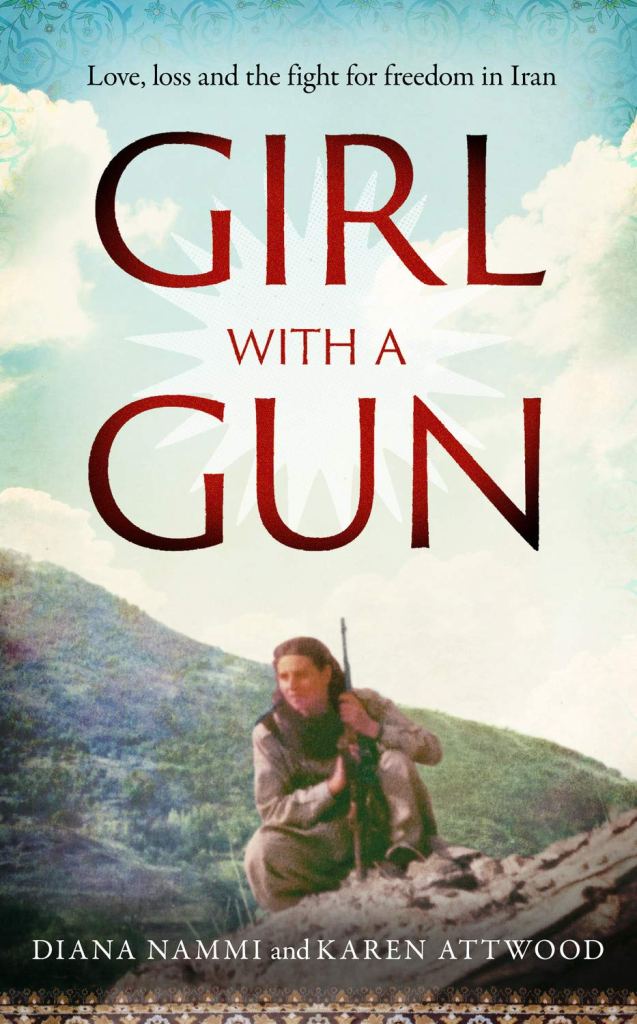
Diana Nammi became a fighter with the Peshmerga when she was only seventeen.
Originally known as Galavezh, she grew up in the Kurdish region of Iran in the 1960s and 70s.
She became involved in politics as a teenager and, like many students, played a part in the Iranian Revolution of 1979.
But the new Islamic regime tolerated no opposition, and after Kurdistan was brutally attacked, Galavezh found that she had no choice but to become a soldier in the famed military force.
She spent twelve years on the front line, and helped lead the struggle for women’s rights and equality for the Kurdish people, becoming one of the Iranian regime’s most wanted in the process.
As well as being the startling account of Galavezh’s time as a fighter, Girl with a Gun is also a narrative about family and resilience, with a powerful love story at its heart.
Caught in a web of murder and vengeance, Theo must outsmart the Spylady to save her new friends.
Imprisoned in a male appearance, can Nand survive deportation without losing herself?
Forced to leave Eridan after her mental battle with Keith of Rain Forest, Theo travels to Earth Metropolis with SpaceSS agent Jack Finch. When Jack is arrested for murdering his husband, Farren, Theo’s plans for a new future collapse.
To impress Declan, Nand face-changes into her cousin’s appearance on the day of the Face Changer Assembly. But her moment of triumph turns into a nightmare when Keith launches an attack against the Face Changers.
Deported to Gambling Nova, the federal prison, with Ashta and a few Face Changers, will Declan be strong enough to overcome his guilt in order to help Nand keep her male appearance and safeguard Eridan’s future?
Convinced that Farren is still alive, Theo must outsmart the Spylady if she wants to get Jack released from the penitentiary and find Farren’s whereabouts. Yet when Sheer, the Savalwomen leader, orders her to rescue the Face Changers, Theo faces a new challenge: is she ready to return to Gambling Nova? And risk her life?
ENDEAVOUR £16.99 HARDBACK, INCLUDING 16 PAGES OF COLOUR PHOTOGRAPHS OUT 2 APRIL For more information please contact Victoria Scales
18 Tiny Deaths is the remarkable story of how one woman changed the face of murder investigation forever.
Born in 1878, Frances Glessner Lee’s world was set to be confined to the domestic sphere. She was never expected to have a career, let alone one steeped in death and depravity. Yet she was to become known as ‘the mother of forensic science’. This is her story.
Frances Glessner Lee’s mission was simple: she wanted to train detectives to ‘convict the guilty, clear the innocent and find the truth in a nutshell’. This was a time of widespread corruption, amateur sleuthing and bungled cases. With the help of her friend, the pioneering medical examiner George Magrath, Frances set out to revolutionise police investigation. Her relentless pursuit of justice led her to create ‘The Nutshell Studies of Unexplained Death’, a series of dollhouse-sized crime scene dioramas depicting actual cases in exquisitely minute detail that Lee used to teach homicide investigators.
They were first used in homicide seminars at Harvard Medical School in the 1930s, and then became part of the longest running and still the highest regarded police training seminar in America. Celebrated the world over by scientists, artists and miniaturists, these macabre scenes helped to establish her legendary reputation as ‘the mother of modern forensics’, influencing people the world over, including Scotland Yard. Frances wanted justice for all. She became instrumental in elevating murder investigation to a scientific discipline.












 Everything Is Better With Dragons