Review: ‘Fatal Evidence’, by Helen Barrell

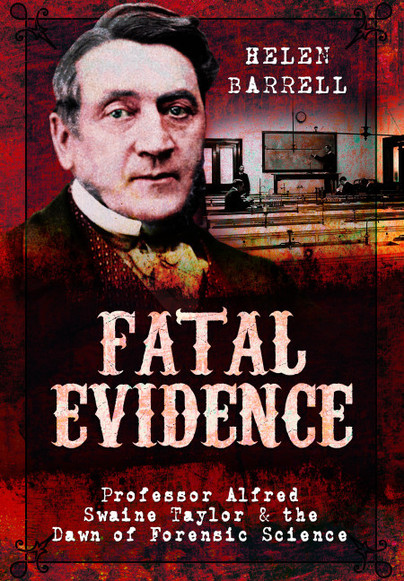
aFatal Evidence

Published By: Pen & Sword History

Publication Date: 4th September 2017

I.S.B.N.: 9781473883413

Format: Hardback

Price: £15.99

Blurb

If there was a suspected poisoning in Victorian Britain, Professor Alfred Swaine Taylor was one of the toxicologists whose opinion would be sought. A surgeon and chemist at Guy’s Hospital in London, he used new techniques to search human remains for evidence that had previously been unseen. As well as finding telltale crystals of poison in test tubes, he could identify blood on clothing and weapons, and he used hair and fibre analysis to catch killers.

Taylor is perhaps best remembered as an expert witness at one of Victorian England’s most infamous trials – that of William Palmer, ‘The Rugeley Poisoner’. The case of the strychnine that wasn’t there haunted Taylor, setting up controversial rivalries with other scientists that would last decades. It overshadowed his involvement in hundreds of other intriguing cases, such as The Waterloo Bridge Mystery; The Great Fire of Newcastle and Gateshead; and the investigation into female impersonators, Boulton and Park. Crime struck even at the heart of Taylor’s own family, when his nephew’s death became the focus of The Eastbourne Manslaughter.

Taylor wrote many books and articles on forensic medicine; he became required reading for all nineteenth-century medical students. He gave Charles Dickens a tour of his laboratory, and Wilkie Collins owned copies of his books on poisons. Taylor’s work was known to Sir Arthur Conan Doyle, and he inspired the creation of fictional forensic detective Dr Thorndyke; for Dorothy L. Sayers, Taylor’s books were ‘the back doors to death’.

From crime scene to laboratory to courtroom – and sometimes to the gallows – this is the world of Alfred Swaine Taylor and his fatal evidence.

Continue reading “Review: ‘Fatal Evidence’, by Helen Barrell”

Criminally good books

I’ve just finished reading a couple of good books:

Silent Witnesses

Nigel McCrery

and

The Burglar Caught by a Skeleton

And Other Singular Tales from the Victorian Press

Jeremy Clay


Continue reading “Criminally good books”

Review: ‘The Devil’s Ribbon’ A Hatton and Roumande Mystery by D.E. Meredith

image

2011
Allison and Busby

In July 1858 a cholera epidemic once again threatens an overheated London. Professor Hatton of St. Barts Hospital and his chief diener Albert Roumande spend their days cutting up cadavers in an effort to learn as much ad they can about the disease. At the same time they are also working in the new science of forensics and as London’s leading experts are called in to help when an Irish MP is murdered a few days before the anniversary of Drogheda, a green ribbon found in the dead man’s mouth.

A series of other murders follow. The victims all seemed to have known each other in Donegal, during the Potato Famine. What happened there and who would want revenge? As Hatton, and Inspector Grey of Scotland Yard, about whom Hatton has grave doubts, investigate they are interrupted by an explosion in a packed shopping arcade. The Inspector, and the widow of the first victim are seriously injured. Hatton has more questions than answers. Is the explosion connected to the murders or is one a cover tor the other? What has Donegal to do with it? Why does all the opium and fly papers keep disappearing? And is the mortuary budget really getting cut?

Using their new method of fingerprinting the Professor and his diener discover the murderers. Using torture Inspector Grey finds the bombers.

I do like a good murder mystery, and this is an excellent example. The characters are engaging even if the set up hasn’t been original since Conan Doyle wrote his Sherlock Holmes stories (skilled amateur investigators/useless professional policeman). The plot is strong, and conclusion unexpected and imaginative. Full of period detail which immerses the reader in the scenario without being overwhelming or too descriptive, and which adds to the plot. The premise, of an early forensic pathologist working in a world that doesn’t understand what he does, is interesting.

This is the second book in the series. I haven’t read the first but I probably will try to at done point. It isn’t necessary though as it is perfectly possible to read the novel as a stand alone story. Previous cases are hinted at throughout, drunken/drugged confessions about their pasts develop the characters, although some of the repeat characters need fleshing out a bit. How did they all end up in London? What secrets, because they all have secrets, do they hide, and why? Presumably we will find out in future novels although somethings can be guessed at.

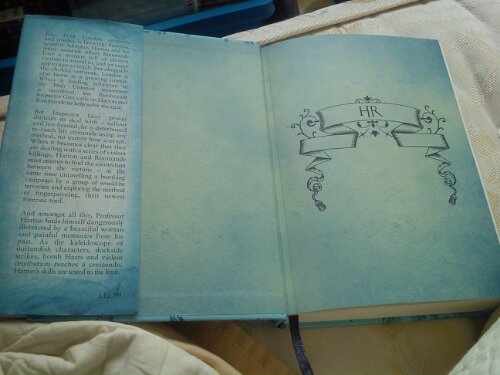
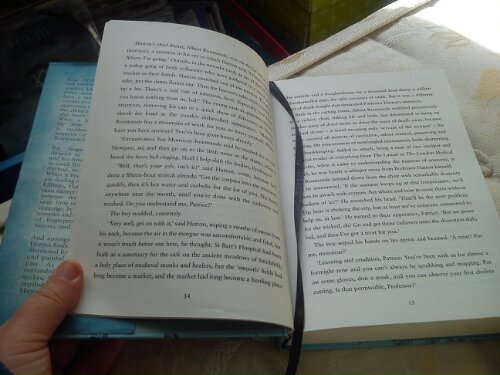
I really did like this book; the audio book is available soon. It is a beautifully bound and presented article.

image

image

image

I might be easily pleased but I like a well presented hardback book.

I noticed a small number of typos but nothing that took away from the story significantly.

Definitely a must read if you like historical mysteries.

****

Rose