Paperback, 80 pages Published July 30th 2018 by Pen & Sword Books ISBN:1526700913 (ISBN13: 9781526700919)
Blurb
What springs to mind when you think of British Victorian men and women? Manners, manners and more manners. Behaviour that was as rigid and constricted as the corsets women wore. From iron-knicker sexual prudery to men so uptight they furtively released their pent up emotions in opium dens and prostitute hot spots. All, of course, exaggerated clichés worthy of a Victorian melodrama. Each generation loves to think it is better than the last and loves to look aghast at the horrifying trends of their ancestors. But are we really any different?
This glimpse at life for Victorian men and women might make millennials think again. Men and women were expected to live very differently from one another with clearly defined roles regardless of class. However, lift the skirts a little and not only will you see that they didn’t wear knickers but they were far less repressed than the persistent stereotypes would have us believe. The Victorians were as weird and wonderful as we are today. From fatal beauty tips to truly hysterical cures for hysteria to grave robbers playing skittles with human bones, we have cherry picked some of the more entertaining glimpses into the lives led by our Victorian brothers and sisters.
I’ve got four for you this evening; I’ve been saving them up. Pen & Sword send me a lot of books, ones I’ve agreed to review, but you know how it is, my eyes are bigger than my belly when it comes to books, so I generally have to read a few at a time then review them all in groups. Sometimes there’s even a theme.
Today there is a theme. Daily life in various historical periods. I’ve just finished reading ‘How to survive in Ancient Egypt’, which I had been waiting on to do this set of reviews.
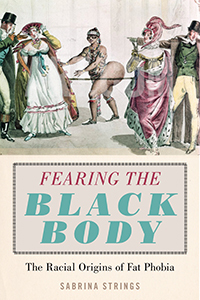
Format: 283 pages, Paperback Published: May 7, 2019 by New York University Press ISBN: 9781479886753 (ISBN10: 1479886750)
Blurb
In her first book, sociologist Strings (sociology, Univ. of California, Irvine) explores the historical development of prothin, antifat ideologies deployed in support of Western, patriarchal white supremacy. Beginning in the aesthetic ideals circulated by Renaissance thinkers and artists and bringing her narrative up into the 1990s, Strings charts how white Europeans and Anglo-Americans developed ideals of race and beauty that both explicitly and figuratively juxtaposed slim, desirable white women against corpulent, seemingly monstrous black women.
The work is divided into three sections. The two chapters in the first part consider how Renaissance white women and women of colour were depicted as plump and feminine, separated by class, yet belonging to the same gender. The second part of the work charts the rise of modern racial ideologies that yoked feminine beauty to Protestant, Anglo-Saxon whiteness. Later chapters and the epilogue consider how Americans normalized the “scientific management” of white women’s bodies for the purpose of racial uplift, a project that continued to situate black women as the embodied Other.
My Review
I’ve been reading this book on and off over the last few months as other commitments permitted; I found it fascinating and always picked up some new information every time I went back to it. I finished it last night with a feeling of disappointment that it wasn’t longer, but also interested in reading more by the author and on the topic.
BMI is, as I have said many times, bullshit, made-up and irrational. That it is still used by the medical profession is a travesty. Historical attitudes to fatness have varied with time and place, but scientific evidence does not support the vilification of fat people. In fact, Ancel Keys, who essentially invented the BMI and pushed for it to replace actuarial tables for insurance and medical purposes, admitted he found fat people ugly and assumed they were unhealthy. You cannot tell anything about a person’s health from a ratio of height to weight, or their appearance.
This book covers Europe and the U.S., because the author is USian, and the U.S. wouldn’t exist without European colonisation, so it covers the period from the Renaissance to the last years of the twentieth century. Five hundred years and three continents it a lot of space and time to cover.
When European’s started Othering people to justify slavery, weight was one of the things they chose to stigmatise. It coincided with Protestant disgust with bodies, with anything that might be fun, and later with changing ideas about ‘polite’ behaviour. By accusing African people of being lazy, gluttonous and dishonest, they could link that to intellect and justify colonisation and enslavement. And of course, to keep Europeans on top of the heap, the same rules had to be applied to Europeans, especially middle and upper class women.
Later still, eugenics came into play and whole new fields of scientific racism and sexism opened up for those white men determined to hold their places at the top of society. In the U.S. one of the ways they did this was to racialise Jewish, Irish, Southern (particularly Italian) and Eastern Europeans as the different groups migrated to the Americas across the 18th and 19th centuries and into the 20th century. They used the same lazy propaganda that earlier European ‘scientists’ had used to racialise and other Africans and then the indigenous populations of the Americas and Australia.
Body size and shape was used as a stick to beat people with. A ‘too thin’ rich white woman was a danger to the nation (whichever nation it was), a ‘too fat’ rich white woman, equally so, at different times. A fat black or African woman – signs of laziness and greediness – moral incontinence and hypersexuality. Because reasons.
Racist shitbags don’t actually have logical reasons, they take their beliefs and make up pseudoscience to support it. Fat hate is the same. It doesn’t matter how much evidence you have to show that ‘normal weight’ doesn’t exist, and that weight variation is just a normal part of human diversity (like the levels of melanin in the skin), they’ll still scream that fat kills.
Strings is a professional, and writes like one, unlike me; I’m just blunt and don’t mind swearing if I think it’s appropriate. I’ve seen other reviews that claim the writing is dry; I disagree. I found it clear and precise, although I would have been interested in more analysis and references from African and African American sources, but I doubt they were available given the systemic erasure and silencing of Black people in the last five hundred years.
The structure of the book puts the different strands of evidence into context and builds on Strings’ argument in a structured and organised way. Strings draws on popular and scientific literature, art and cultural movements to explore the topic and build her arguments. This is not ‘popular history but rewards careful reading and consideration.
Hardcover, 127 pages Published March 20th 2019 by Pen and Sword History ISBN1526727978 (ISBN13: 9781526727978)
Blurb
King Richard III remains one of the most infamous and recognisable monarchs in English or British history, despite only sitting on the throne for two years and fifty-eight days. His hold on the popular imagination is largely due to the fictional portrayal of him by William Shakespeare which, combined with the workings of five centuries of rumour and gossip, has created two opposing versions of Richard. In fiction he is the evil, scheming murderer who revels in his plots, but many of the facts point towards a very different man.
Dissecting a real Richard III from the fictional versions that have taken hold is made difficult by the inability to discern motives in many instances, leaving a wide gap for interpretation that can be favorable or damning in varying degrees. It is the facts that will act as the scalpel to begin the operation of finding a truth obscured by fiction.
Richard III may have been a monster, a saint, or just a man trying to survive, but any view of him should be based in the realities of his life, not the myths built on rumour and theatre. How much of what we think we know about England’s most controversial monarch will remain when the facts are sifted from the fictions?
Paperback, 168 pages Published November 13th 2019 by Pen and Sword History ISBN: 1526732858 (ISBN13: 9781526732859)
In the last few decades, steampunk has blossomed from being a rather obscure and little-known subgenre of science fiction into a striking and distinctive style of fashion, art, design and even music. It is in the written word however that steampunk has its roots and in this book Simon Webb explores and examines the real inventions which underpin the fantasy. In doing so, he reveals a world unknown to most people today.
The Real World of Victorian Steampunk shows the Victorian era to have been a surprising place; one of steam-powered airplanes, fax machines linking Moscow and St Petersburg, steam cars traveling at over 100 mph, electric taxis and wireless telephones. It is, in short, the nineteenth century as you have never before seen it; a steampunk extravaganza of anachronistic technology and unfamiliar gadgets. Imagine Europe spanned by a mechanical internet; a telecommunication system of clattering semaphore towers capable of transmitting information across the continent in a matter of minutes. Consider too, the fact that a steam plane the size of a modern airliner took off in England in 1894.
Drawing entirely on contemporary sources, we see how little-known developments in technology have been used as the basis for so many steampunk narratives. From seminal novels such as The Difference Engine, through to the steampunk fantasy of Terry Pratchett’s later works, this book shows that steampunk is at least as much solid fact as it is whimsical fiction.
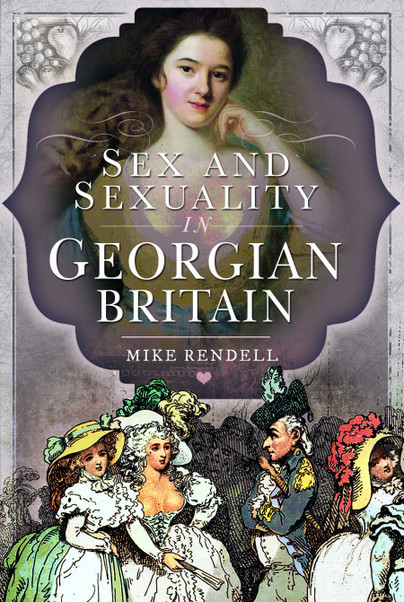
By Mike Rendell Imprint: Pen & Sword History Pages: 216 Illustrations: 30 black and white illustrations – integrated and 8 page mono plates ISBN: 9781526755629 Published: 29th October 2020 Price: £10.49 was £14.99
Peek beneath the bedsheets of eighteenth- and early nineteenth-century Britain in this affectionate, informative and fascinating look at sex and sexuality during the reigns of Georges I-IV. It examines the prevailing attitudes towards male and female sexual behaviour, and the ways in which these attitudes were often determined by those in positions of power and authority. It also explores our ancestors’ ingenious, surprising, bizarre and often entertaining solutions to the challenges associated with maintaining a healthy sex life.
Did the people in Georgian Britain live up to their stereotypes when it came to sexual behaviour? This book will answer this question, as well as looking at fashion, food, science, art, medicine, magic, literature, love, politics, faith and superstition through a new lens, leaving the reader enlightened and with a new regard for the ingenuity and character of our ancestors.
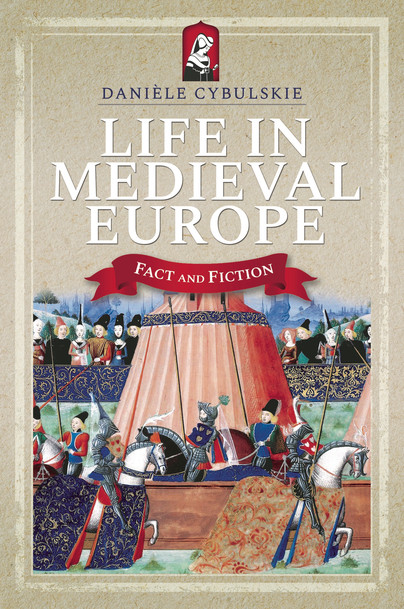
Have you ever found yourself watching a show or reading a novel and wondering what life was really like in the Middle Ages? What did people actually eat? Were they really filthy? And did they ever get to marry for love?
In Life in Medieval Europe: Fact and Fiction, you’ll find fast and fun answer to all your secret questions, from eating and drinking to sex and love. Find out whether people bathed, what they did when they got sick, and what actually happened to people accused of crimes. Learn about medieval table manners, tournaments, and toothpaste, and find out if people really did poop in the moat.
ISBN: 9781526745170 Published: 20th November 2019 Price: £15.99
On the second Monday of March 1918, the world changed forever. What seemed like a harmless cold morphed into a global pandemic that would wipe out as many as a hundred-million people – ten times as many as the Great War. German troops faltered lending the allies the winning advantage, India turned its sights to independence while South Africa turned to God. In Western Samoa a quarter of the population died; in some parts of Alaska, whole villages were wiped out. Civil unrest sparked by influenza shaped nations and heralded a new era of public health where people were no longer blamed for contracting disease. Using real case histories, we take a journey through the world in 1918, and look at the impact of Spanish flu on populations from America, to France, to the Arctic, and the scientific legacy this deadly virus has left behind.
My Review
Thanks to Rosie at Pen & Sword for sending me this book. It’s much appreciated, given how much time it’s taking me to read and and review books she’s been sending me.
Took me less than four hours to read this book last night. I couldn’t sleep anyway. No, really, I’m coughing a bit. It’s probably just a cold or an allergy. Might change my bedding later and vacuum the carpet, just in case. I’ll let you know if it’s something worse.
Like the Spanish Flu.
Although I’d probably be dead by now if I had Spanish Flu. In the second wave it was so virulent that it killed people as they walked down the street to the doctors to get help. Whole families died. Thousands of children were left orphaned. Up to 100 million people died in less than two years. At the time it was a shocking event, but in the years that followed it was forgotten. The author speculates that the horrors of war, mass movement of people, malnutrition and then the pandemic was too much for people to cope with. They prefered to think that people died in combat not coughing up their own lungs and choking to death.
Colonialism helped spread the pandemic. Troops from the colonies were sent to the Western Front and then sent back. European troops had been sent to the Middle East, Chinese citizens were sent through Canada and across the Atlantic as part of the Chinese Labour Corp. Millions of people from all over the planet moving around, meeting up in closely packed, unhealthy conditions, malnourished and carrying seasonal infections, then going back out into the world.
People generally know about the effects of the Spanish Flu in Europe and North America, but the pandemic covered the whole globe. People who were of European decent were less likely to die compared to indigenous people in Africa, the Americas, Australia and the Pacific Islands. European and North America people of European descent are used to getting colds and flu, so they had some immunity. Indigenous people didn’t.
Viruses do this interesting thing where they can share their genetic material with each other if they meet in a cell. At some point in the years between 1916 and 1918 some nasty H1N1 flu strains met up, shared genetic material and produced the nastiest virus humans have ever dealt with. Reconstruction of the virus from Alaskan bodies buried in the permafrost in 1920 shows that any one of the eight segments would produce a nasty virus; together they made it leathal.
The arrival of the flu in 1918 helped end the Great War, because it’s really hard to keep up violence when your soldiers are dying from disease and your support lines are falling apart because everyone who should be moving supplies is dead, dying or sick. There were mass famines as the fields weren’t harvested or planted in 1919. In industrial areas, factories and mines shut down because too many people were ill.
It encouraged new and already existing independence movements in colonies in response to the poor treatment of indigenous people during the pandemic, and probably screwed up the post-war negotiations, since it killed or sickened many of the people at the table. The loss of moderate political voices lead to greater punitive measures against Germany, the loss of expertise about the Middle East resulted in the utter mess we still have today.
People are still not sure where it started. There were outbreaks of flu in 1916, 1917 and 1918 in China, the US and France before the first wave of the Spanish Flu. I have a hypothesis that there were some nasty strains going around, and the mass movement of people from across the world, carrying these different strains, as the ‘first wave’ and finally brought together in France, allowed the nastiest of them to meet up, shuffle around some genetics and then produce the virus we call Spanish Flu. I think this is the ‘second wave’, which was the truly awful one. The one that killed millions. The ‘third wave’, less virulent was possibly a version that had drifted a bit or one or the less nasty. Might be wrong, someone else has probably looked at it and ruled this idea out.
Honestly, this is a really good introduction to the Spanish Flu pandemic and its ongoing influence. I could tell the author has a history background and a journalism background too. She made the book very easy to read and the use of real people examples really brought the events of those years to life.
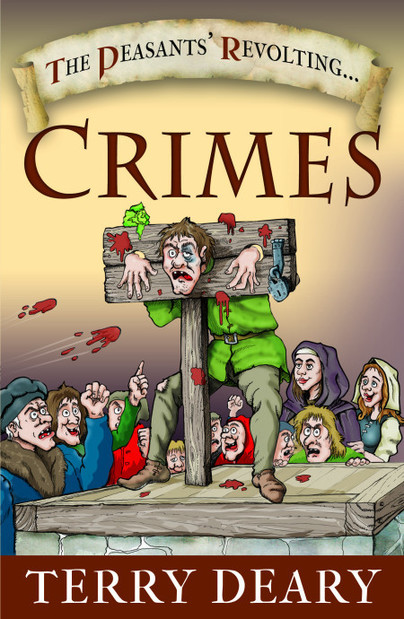
ISBN: 9781526745576 Buy here Published: 23rd October 2019 Price: £8.00
Popular history writer Terry Deary takes us on a light-hearted and often humorous romp through the centuries with Mr & Mrs Peasant, recounting foul and dastardly deeds committed by the underclasses, as well as the punishments meted out by those on the ‘right side’ of the law.
Discover tales of arsonists and axe-wielders, grave robbers and garroters, poisoners and prostitutes. Delve into the dark histories of beggars, swindlers, forgers, sheep rustlers and a whole host of other felons from the lower ranks of society who have veered off the straight and narrow. There are stories of highwaymen and hooligans, violent gangs, clashing clans and the witch trials that shocked a nation. Learn too about the impoverished workers who raised a riot opposing crippling taxes and draconian laws, as well as the strikers and machine-smashers who thumped out their grievances against new technologies that threatened their livelihoods.
Britain has never been short of those who have been prepared to flout the law of the land for the common good, or for their own despicable purposes. The upper classes have lorded and hoarded their wealth for centuries of British history, often to the disadvantage of the impoverished. Frustration in the face of this has resulted in revolt. Read all about it here!
This entertaining book is packed full of revolting acts and acts of revolt, revealing how ordinary folk – from nasty Normans to present-day lawbreakers – have left an extraordinary trail of criminality behind them. The often gruesome penalties exacted in retribution reveal a great deal about some of the most fascinating eras of British history.
My Review
Thanks to Rosie Crofts at Pen & Sword for sending me this book. I’m making my way through my book backlog while trying to keep up with my blog tour commitments.
It’s popular history, so don’t expect in-depth discussion of the crimes or events covered in the book. The author has a rather broad definition of ‘peasant’. A peasant is:
Deary’s broader definition seems to be broadened to ‘a person with a low income and a low social position’. So long as they don’t have land and extensive income or property, the author classes them as a peasant.
The author covers the period from the Norman Conquest to the late-eighteenth century. The crimes are everything from petty theft to forgery, murder and revolt. This book is sometimes humorous and it was good for dipping in and out of. It did keep me amused (even when I had to correct minor things) and it is an easy to read book that builds on Deary’s ‘Horrible Histories’ books. It has a similar format to those books, with the era chapters sub-divided by crime, which makes it easy to find specific crimes in specific eras. Deary uses quotes judiciously to support the text.
Probably a good one for children interested in history who have read all the ‘Horrible Histories’.
Charles and Ada: the
computer’s most passionate partnership
The partnership of Charles Babbage and Ada
Lovelace was one that would change science forever.
They were an unlikely pair – one the
professor son of a banker, the other the only child of an acclaimed poet and a
social-reforming mathematician – but perhaps that is why their work is so
revolutionary.
They were the pioneers of computer science,
creating plans for what could have been the first computer. They each saw
things the other did not; it may have been Charles who designed the machines,
but it was Ada who could see their potential.
But what were they like? And how did they
work together? Using previously unpublished correspondence between them , Charles and Ada explores the
relationship between two remarkable people who shared dreams far ahead of their
time.







 Everything Is Better With Dragons