Pen & Sword Review: Sex & Sexuality in Tudor England, by Carol McGrath

Imprint: Pen & Sword History
Series: Sex and Sexuality
Pages: 176
Illustrations: 25 black and white illustrations
ISBN: 9781526769183
Published: 8th March 2022

Blurb

The Tudor period has long gripped our imaginations. Because we have consumed so many costume dramas on TV and film, read so many histories, factual or romanticised, we think we know how this society operated. We know they ‘did’ romance but how did they do sex?

In this affectionate, informative and fascinating look at sex and sexuality in Tudor times, author Carol McGrath peeks beneath the bedsheets of late fifteenth- and early sixteenth-century England to offer a genuine understanding of the romantic and sexual habits of our Tudor ancestors.

Find out the truth about ‘swiving’, ‘bawds’, ‘shaking the sheets’ and ‘the deed of darkness’. Discover the infamous indiscretions and scandals, feast day rituals, the Southwark Stews, and even city streets whose names indicated their use for sexual pleasure. Explore Tudor fashion: the codpiece, slashed hose and doublets, women’s layered dressing with partlets, overgowns and stomachers laced tightly in place. What was the Church view on morality, witchcraft and the female body? On which days could married couples indulge in sex and why? How were same sex relationships perceived? How common was adultery? How did they deal with contraception and how did Tudors attempt to cure venereal disease? And how did people bend and ignore all these rules?

Continue reading “Pen & Sword Review: Sex & Sexuality in Tudor England, by Carol McGrath”

Pen & Sword TBR Pile Review: Richard III – Fact and Fiction, by Matthew Lewis

41093351
Hardcover, 127 pages
Published March 20th 2019 by Pen and Sword History
ISBN1526727978 (ISBN13: 9781526727978)

Blurb

King Richard III remains one of the most infamous and recognisable monarchs in English or British history, despite only sitting on the throne for two years and fifty-eight days. His hold on the popular imagination is largely due to the fictional portrayal of him by William Shakespeare which, combined with the workings of five centuries of rumour and gossip, has created two opposing versions of Richard. In fiction he is the evil, scheming murderer who revels in his plots, but many of the facts point towards a very different man.

Dissecting a real Richard III from the fictional versions that have taken hold is made difficult by the inability to discern motives in many instances, leaving a wide gap for interpretation that can be favorable or damning in varying degrees. It is the facts that will act as the scalpel to begin the operation of finding a truth obscured by fiction.

Richard III may have been a monster, a saint, or just a man trying to survive, but any view of him should be based in the realities of his life, not the myths built on rumour and theatre. How much of what we think we know about England’s most controversial monarch will remain when the facts are sifted from the fictions? 

Continue reading “Pen & Sword TBR Pile Review: Richard III – Fact and Fiction, by Matthew Lewis”

Pen & Sword Review: The Real World of Victorian Steampunk, by Simon Webb

43972585
Paperback, 168 pages
Published November 13th 2019 by Pen and Sword History
ISBN: 1526732858 (ISBN13: 9781526732859)

In the last few decades, steampunk has blossomed from being a rather obscure and little-known subgenre of science fiction into a striking and distinctive style of fashion, art, design and even music. It is in the written word however that steampunk has its roots and in this book Simon Webb explores and examines the real inventions which underpin the fantasy. In doing so, he reveals a world unknown to most people today.

The Real World of Victorian Steampunk shows the Victorian era to have been a surprising place; one of steam-powered airplanes, fax machines linking Moscow and St Petersburg, steam cars traveling at over 100 mph, electric taxis and wireless telephones. It is, in short, the nineteenth century as you have never before seen it; a steampunk extravaganza of anachronistic technology and unfamiliar gadgets. Imagine Europe spanned by a mechanical internet; a telecommunication system of clattering semaphore towers capable of transmitting information across the continent in a matter of minutes. Consider too, the fact that a steam plane the size of a modern airliner took off in England in 1894.

Drawing entirely on contemporary sources, we see how little-known developments in technology have been used as the basis for so many steampunk narratives. From seminal novels such as The Difference Engine, through to the steampunk fantasy of Terry Pratchett’s later works, this book shows that steampunk is at least as much solid fact as it is whimsical fiction. 

Continue reading “Pen & Sword Review: The Real World of Victorian Steampunk, by Simon Webb”

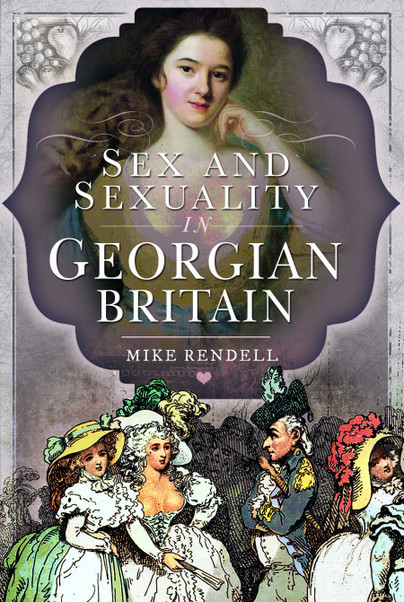
TBR Pile Review: Sex and Sexuality in Georgian Britain, by Mike Rendell

Sex and Sexuality in Georgian Britain
By Mike Rendell
Imprint: Pen & Sword History
Pages: 216
Illustrations: 30 black and white illustrations – integrated and 8 page mono plates
ISBN: 9781526755629
Published: 29th October 2020
Price: £10.49 was £14.99

Peek beneath the bedsheets of eighteenth- and early nineteenth-century Britain in this affectionate, informative and fascinating look at sex and sexuality during the reigns of Georges I-IV. It examines the prevailing attitudes towards male and female sexual behaviour, and the ways in which these attitudes were often determined by those in positions of power and authority. It also explores our ancestors’ ingenious, surprising, bizarre and often entertaining solutions to the challenges associated with maintaining a healthy sex life.

Did the people in Georgian Britain live up to their stereotypes when it came to sexual behaviour? This book will answer this question, as well as looking at fashion, food, science, art, medicine, magic, literature, love, politics, faith and superstition through a new lens, leaving the reader enlightened and with a new regard for the ingenuity and character of our ancestors.

Continue reading “TBR Pile Review: Sex and Sexuality in Georgian Britain, by Mike Rendell”

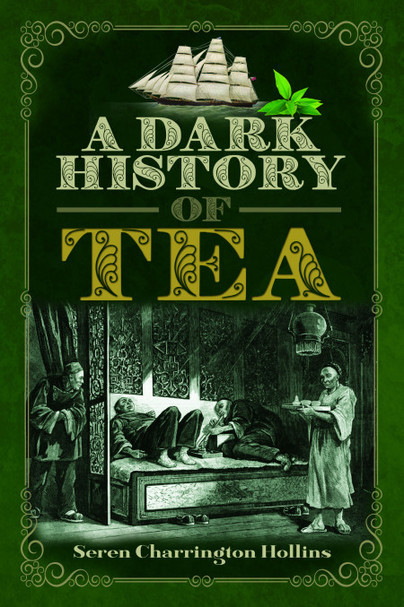
Pen & Sword Review: A Dark History of Tea, by Seren Charrington-Hollins

A Dark History of Tea

 Dark History of Tea looks at our long relationship with this most revered of hot beverages. Renowned food historian Seren Charrington-Hollins digs into the history of one of the world’s oldest beverages, tracing tea’s significance on the tables of the high and mighty as well as providing relief for workers who had to contend with the ardours of manual labour.

This humble herbal infusion has been used in burial rituals, as a dowry payment for aristocrats; it has fuelled wars and spelled fortunes as it built empires and sipped itself into being an integral part of the cultural fabric of British life. This book delves into the less tasteful history of a drink now considered quintessentially British. It tells the story of how, carried on the backs of the cruelty of slavery and illicit opium smuggling, it flowed into the cups of British society as an enchanting beverage.

Chart the exportation of spices, silks and other goods like opium in exchange for tea, and explain how the array of good fortunes – a huge demand in Britain, a marriage with sugar, naval trade and the existence of the huge trading firms – all spurred the first impulses of modern capitalism and floated countries.

The story of tea takes the reader on a fascinating journey from myth, fable and folklore to murky stories of swindling, adulteration, greed, waging of wars, boosting of trade in hard drugs and slavery and the great, albeit dark engines that drove the globalisation of the world economy. All of this is spattered with interesting facts about tea etiquette, tradition and illicit liaisons making it an enjoyable rollercoaster of dark discoveries that will cast away any thoughts of tea as something that merely accompanies breaks, sit downs and biscuits.


My Review

Thanks to Rosie Crofts at Pen & Sword for sending me a copy of this book for review.

The Rosie Synopsis

A non-fiction book briefly covering the history of tea in CHina and how it came to be a staple of the British diet, through Opium Wars, adulterated supplies and the Assam tea gardens.

The Good

I like tea.

Green tea, black tea, herbal teas, you name it, I’ll drink it. I’ve been to Twinnings shop in London and had a tea tasting session. I have a small collection of loose leaf teas. I can’t decide if Rington’s or Betty’s of Harrogate do the best household tea bags. I once gave myself a migraine from drinking way too much builders tea.

This book is broadly chronologically organised and provides a fairly well-researched introduction to the topic. It is quite easy to read. You can pick up a chapter and there’s enough information to put things in context even if you missed earlier chapters. It is wide ranging in time although very specific in its British centrism. It covers quite a bit about the opium wars and their origins, the detrimental effect of the opium and tea trades on China and in Britain.

There is a limited bibliography that would make a good place to start for people interested in deepening their knowledge. Personally, I will finally be getting around to reading ‘Empire of Crime’ by Tim Newark, which covers the opium wars in more detail and has been sat on my Pen & Sword pile for far too long.

The Not-So-Good

I like tea.

I do not like the history of tea. Britain, or more precisely the East India Company of London under their Government issued monopoly, had a hugely damaging effect on the world and helped build an empire on slavery, tea, sugar and opium. I thought this book would be about the machinations of the tea trade in the 16th to 19th centuries and about food adulteration in the domestic tea market. I assumed it would be Anglocentric because most Pen & Sword books are and it is clearly aimed at the British market – it has a BBC history documentary series feel to it – , so I wasn’t overly disappointed that there was not much about the other European empires built partly on the tea trade, or the development of tea growing in places other than China and Assam. I would have liked to learn about that, and more details about life on the tea plantations in both those places.

The book was interesting but felt like a series of essays written on different tea-related topics and then joined together. There was a lot of repetition and chronology was all over the place. One sentence is about Victorian horror at lower class tea drinking and the next mentions a Georgian criminal case. There was also the random chapter on tea magic at the end. I don’t understand the point of that and found the use of ‘gypsy’ to refer to Roma jarring and the constant use of ‘coolies’, even when in quotation marks, unnecessary. Why not mention the historical term and then use a less loaded, more accurate description of the indentured servants on the Assam tea plantations?

My Verdict

Not a bad introduction to the subject, a gateway to wider reading.

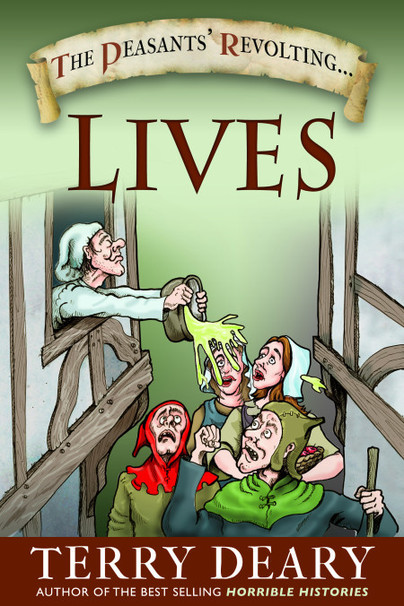
Pen & Sword Review: The Peasants’ Revolting Lives

The Peasants' Revolting Lives
By Terry Deary
Imprint: Pen & Sword History
Series: The Peasants’ Revolting
Price: £8.00
ISBN: 9781526745613
Published: 15th May 2020

Today we are aware of how the rich and privileged have lived in the past because historians write about them endlessly. The poor have largely been ignored and, as a result, their contributions to our modern world are harder to unearth.

Skilled raconteur TERRY DEARY takes us back through the centuries with a poignant but humorous look at how life treated the common folk who scratched out a living at the very bottom of society. Their world was one of foul food, terrible toilets, danger, disease and death – the last, usually premature.

Discover the stories of the teacher turned child-catcher who rounded up local waifs and strays and put them to work, and the thousands of children who descended into the hazardous depths to dig for coal. Read all about the agricultural workers who escaped the Black Death only to be thwarted by greedy landowners. And would you believe the one about the man who betrothed his 7-year-old daughter to a Holy Roman Emperor, or even the brothel that was run by a bishop?

On the flip side, learn how cash-strapped citizens used animal droppings for house building and as a cure for baldness; how sparrow’s brains were incorporated into aphrodisiacal brews; and how mixing tea with dried elder leaves could turn an extra profit. And of the milestones that brought some meaning to ordinary lives, here are the trials and tribulations of courtship and marriage; the ruthless terrors of the sporting arena; and the harsh disciplines of education – all helping to alleviate the daily grind.

The Peasants’ Revolting… Lives celebrates those who have endured against the odds. From medieval miseries to the idiosyncrasies of being a twenty-first-century peasant, tragedy and comedy sit side by side in these tales of survival and endurance in the face of hardship.

Continue reading “Pen & Sword Review: The Peasants’ Revolting Lives”

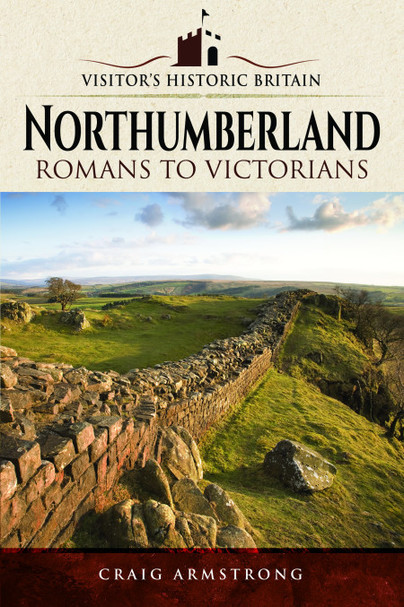
Pen & Sword Review: Northumberland Romans to Victorians, by Craig Armstrong


Imprint: Pen & Sword History
Series: Visitors’ Historic Britain
Price: £12.99
ISBN: 9781526702784
Published: 16th March 2020

Northumberland…to the Romans it was Ad Fines, the limit of the Empire, the end of the Roman World. It was here in 122 AD that the Emperor Hadrian decided to build a wall stretching from coast-to-coast to provide protection, to show the might of the Empire, and as a statement of his grandeur. Visitors to Northumberland can walk the Wall visiting milecastles, Roman frontier forts and settlements such as Housesteads (where you can see the oldest toilets you’ll ever see) or Vindolanda (where you can take part in an archaeological dig) where wooden tablets detailing life on this frontier (the oldest example of written language in Britain) were discovered, or the remains of Roman temples and shrines (such as the Mithraeum at Carrawburgh). After the Romans left, Northumberland became the heart of one of the greatest kingdoms of Anglo-Saxon Britain, Northumbria. The home of Saints, scholars and warrior kings. Visitors can see the ancient seat of this kingdom at the medieval Bamburgh Castle, visit Hexham Abbey (built in 674 AD), or tour the magnificent remains of the 7th century Priory at Tynemouth (where three kings are buried – Oswin (d. 651), Osred (d. 790), and the Scottish King Malcolm III (d. 1093).

No other county in Britain has as many medieval remains as Northumberland. From the most grand such as Alnwick Castle (known as the Windsor of the North, the home of the Dukes of Northumberland, the capital of Northumberland, and, to many, Hogwarts!) to humble remains such as the Chantry at Morpeth. At Warkworth visitors can tour the medieval church (scene of a 12th century Scottish massacre), Warkworth Castle (another Percy possession and the setting for a scene in Shakespeare’s Henry IV), a medieval hermitage, and the fortified bridge gatehouse (one of the only surviving examples in Britain).

Northumberland was ravaged during the Anglo-Scottish Wars and this led to the development of family clans of Border Reivers who were active during the 16th and early 17th centuries. Raiders, looters, blackmailers and courageous cavalrymen the Reivers have left many surviving remnants of their harsh time. Peel Towers dot the landscape alongside Bastle Houses. The active can even walk in the footsteps of the Reivers by following the Reivers Way long distance path.

Victorian Northumberland was dominated by both farming and, increasingly, by the industrial genius of some of its entrepreneurs. The greatest of these, Lord Armstrong (known as the Magician of the North), has left behind one of the most magnificent tourist sites in Britain; his home at Cragside. Carved from a bare hillside and transplanted with millions of trees and shrubs and crowned with the beautiful Cragside House visitors can walk the grounds taking advantage of various trails and spotting wildlife such as red squirrels before visiting the first house in the world to be lit by electricity!

Continue reading “Pen & Sword Review: Northumberland Romans to Victorians, by Craig Armstrong”

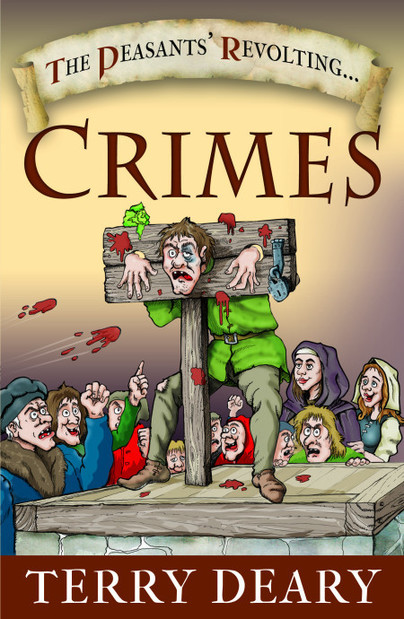
Unexpected Review: The Peasants’ Revolting Crimes, by Terry Deary

The Peasants' Revolting Crimes
ISBN: 9781526745576
Buy here
Published: 23rd October 2019
Price: £8.00

Popular history writer Terry Deary takes us on a light-hearted and often humorous romp through the centuries with Mr & Mrs Peasant, recounting foul and dastardly deeds committed by the underclasses, as well as the punishments meted out by those on the ‘right side’ of the law.

Discover tales of arsonists and axe-wielders, grave robbers and garroters, poisoners and prostitutes. Delve into the dark histories of beggars, swindlers, forgers, sheep rustlers and a whole host of other felons from the lower ranks of society who have veered off the straight and narrow. There are stories of highwaymen and hooligans, violent gangs, clashing clans and the witch trials that shocked a nation. Learn too about the impoverished workers who raised a riot opposing crippling taxes and draconian laws, as well as the strikers and machine-smashers who thumped out their grievances against new technologies that threatened their livelihoods.

Britain has never been short of those who have been prepared to flout the law of the land for the common good, or for their own despicable purposes. The upper classes have lorded and hoarded their wealth for centuries of British history, often to the disadvantage of the impoverished. Frustration in the face of this has resulted in revolt. Read all about it here!

This entertaining book is packed full of revolting acts and acts of revolt, revealing how ordinary folk – from nasty Normans to present-day lawbreakers – have left an extraordinary trail of criminality behind them. The often gruesome penalties exacted in retribution reveal a great deal about some of the most fascinating eras of British history.

My Review

Thanks to Rosie Crofts at Pen & Sword for sending me this book. I’m making my way through my book backlog while trying to keep up with my blog tour commitments.

It’s popular history, so don’t expect in-depth discussion of the crimes or events covered in the book. The author has a rather broad definition of ‘peasant’. A peasant is:

person who owns or rents a small piece of land and grows cropskeeps animals, etc. on it, especially one who has a low income, very little education, and a low social position. This is usually used of someone who lived in the past or of someone in a poor country

https://dictionary.cambridge.org/dictionary/english/peasant

Deary’s broader definition seems to be broadened to ‘a person with a low income and a low social position’. So long as they don’t have land and extensive income or property, the author classes them as a peasant.

The author covers the period from the Norman Conquest to the late-eighteenth century. The crimes are everything from petty theft to forgery, murder and revolt. This book is sometimes humorous and it was good for dipping in and out of. It did keep me amused (even when I had to correct minor things) and it is an easy to read book that builds on Deary’s ‘Horrible Histories’ books. It has a similar format to those books, with the era chapters sub-divided by crime, which makes it easy to find specific crimes in specific eras. Deary uses quotes judiciously to support the text.

Probably a good one for children interested in history who have read all the ‘Horrible Histories’.

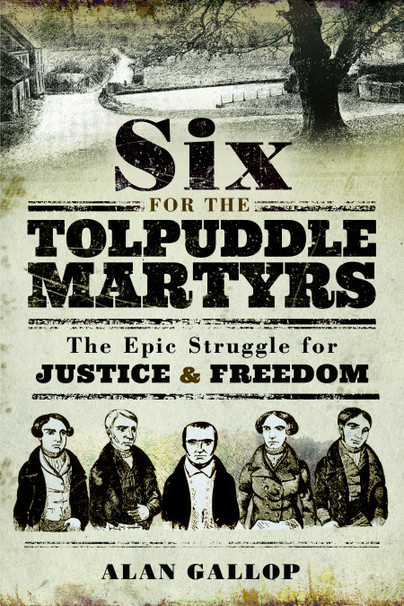
Review: ‘Six for the Tolpuddle Martyrs’, by Alan Gallop

Six For The Tolpuddle Martyrs Published by: Pen & Sword  History 
Published: 5th June 2017

ISBN: 9781526712509
Price: £14.99

Blurb

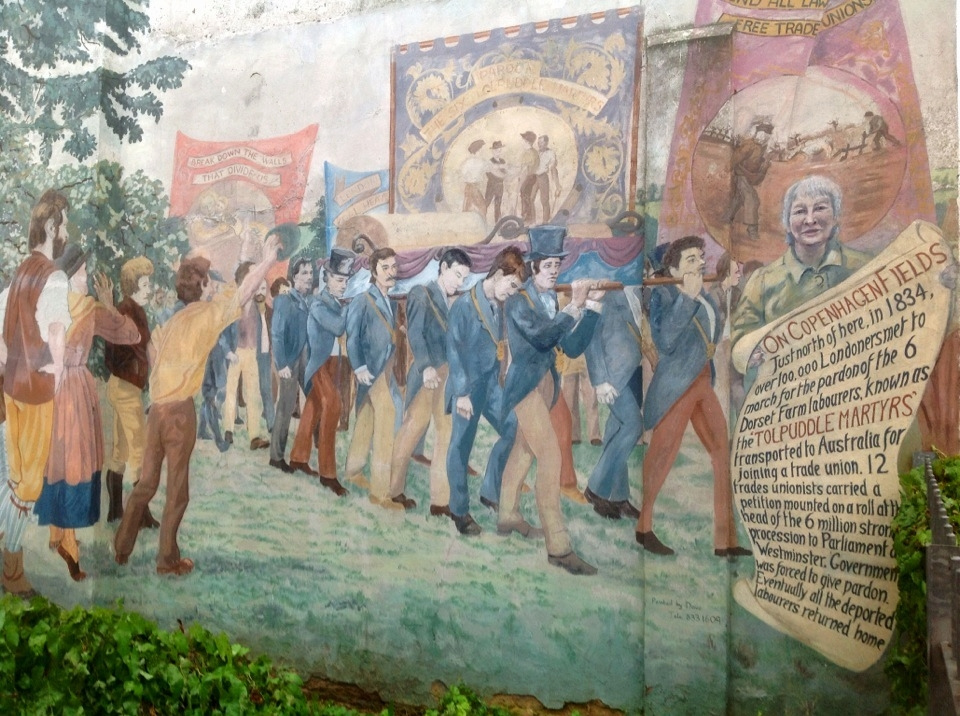
In 1834 six farm labourers from the Dorset hamlet of Tolpuddle fell foul of draconian Victorian laws prohibiting ‘assembly’. Today the names of George Loveless and his brother James, Thomas Standfield and his son John, James Brine and James Hammett, who made up the Tolpuddle Martyrs, stand high on the roll of British men who have been victimised for their beliefs but stood steadfast in the face of persecution. They refused to be persuaded to betray their principles either by the promise of release or by transportation to Australia. The Tolpuddle men fought to win their freedom sustained by their passionate conviction that their sacrifices would not be in vain. Their experience and example have proved to be an inspiration for future generations and they remain icons of pioneering trade unionism.

The Author has thoroughly researched their story and the result is a fascinating and revealing re-examination of this legendary saga. Their triumph over legal persecution and abuses of power over 180 years ago is told afresh in this comprehensive and attractively illustrated book which delves deeper into their story than ever before.

More details here

Continue reading “Review: ‘Six for the Tolpuddle Martyrs’, by Alan Gallop”