Sex and Sexuality in Medieval England allows the reader a peek beneath the bedsheets of our medieval ancestors, in an informative and fascinating look at sex and sexuality in England from 1250 to 1450. It examines the prevailing attitudes towards male and female sexual behaviour, and the ways in which these attitudes were often determined by those in positions of power and authority. It also explores our ancestors’ ingenious, surprising, bizarre and often entertaining solutions to the challenges associated with maintaining a healthy sex life. This book will look at marriage, pre-marital sex, adultery and fornication, pregnancy and fertility, illegitimacy, prostitution, consent, same-sex relationships, gender roles and much more, to shed new light on the private lives of our medieval predecessors.
My Review
Meh. Felt like more of a gazetteer of examples rather than an exploration of “marriage, pre-marital sex, adultery and fornication, pregnancy and fertility, illegitimacy, prostitution, consent, same-sex relationships, gender roles”.
The author covers sex and sexuality across the whole medieval period. This is a thousand years. Most of the examples are from the latter half of the period, as that’s what survives, and the author draws on academic work by modern researchers. While there are some interesting snippets of information, you can probably learn more from the ‘Betwixt the Sheets’ podcast.
I have books on similar subjects from Pen & Sword, that are either really well organised and explore the subject in detail, or they are more of the gazetteer type with a bit of discussion around lists of people who did things or got arrested for things. It’s repetitive and unhelpful. This is what really frustrates me about Pen & Sword books, they’re either really quite amateur or really professional, with very little in between.
By Julie Cook Imprint: Pen & Sword History Pages: 184 Illustrations: 32 black and white illustrations ISBN: 9781399003414 Published: 10th October 2022 £14.00
Description
A History of Girl Guides and Girl Scouts: Brownies, Rainbows and WAGGGS charts the evolution of the Girl Guides and Girl Scouts from its early days as a movement started before WW1 right through to the modern day. With real life interviews with Girl Guides and Girl Scouts from their 90s down to young children, this book looks at what being a Girl Guide has meant through the ages up to the present day. With dramatic and often emotional stories of what it was like to be an evacuated Brownie in the Second World War, a disabled Girl Guide and with tales of girls’ heroism throughout the two great wars both in the UK and the United States, this book extols the Guiding and Scouting movement as one that has evolved with women and girls’ rights and its hopes for the future.
My Review
Thanks to Rosie Crofts at Pen & Sword for sending me a copy of this book, way back in 2022. I was sent it in return for an honest review.
I wanted to review this book because I was in Brownies and Guides, and have some really good memories of being part of the Guiding movement. I got me through most of my teens and gave me something to do on a Wednesday evening for 7 years, and trips away. I still see my Brownie leader. I was also her Young Leader in a different Guide group when I was 17/18 after I left my original Guide group just before I turned 16. I managed a whole year out of Guides. When I went to university, I joined the Guides and Scouts association there, but didn’t do anything with them. There were so many people and they were not as welcoming as you would expect.
Reading this book brought back memories. I’d completely forgotten about the toadstool and mirror we used as a pool in Brownies to do our Promise. I can’t remember what Six I was in, but I think my sister made it to Seconder in her Six. I must have joined in 1990, or 1991, because I had the ‘new uniform’, a pair of trousers and a jumper, while my sister had the old brown dress and she joined a year before me. You had to wait until there was space before you could join. The leaders, Brownie Owl and Tawny Owl, were school teachers at my cousins’ primary school. We used to play games and make things. My best friend also went to that Brownies, but didn’t stay long because a lot of our games were floor based and she couldn’t take part, and I can’t remember her from then; we met in secondary school in 1994 and we’ve been friends ever since she talked at me until I finally responded. I did a few badges, mostly the walking and camping related ones. I think I tired to do some of the more domestic ones, but I wasn’t very good at the.
I went up to Guides in 1993 when I turned 10. My Guide leader was the vicar’s wife and a Marie Curie nurse. Our Guides, and the Brownies, were attached to the local C of E church. We did a lot of stuff in and around the church and the vicarage, because they had a huge garden, and knew a lot of people. We went camping, to adventure centres, did flower arranging, candle making and jam making, we went to The Body Shop for a special visit about make-up for beauty related stuff, followed by a trip to McDonalds, we went ice skating and to Cleethorpes swimming pool for a special treat. We went to Poacher 96, a big international camp help every four years at Lincolnshire Show Ground. We learnt about child safety and care. I got badges in walking, camping and other random stuff. We got new neckers around 1998, in Royal Stuart Tartan. Before that, I can’t remember what colour we had, or if we even had one.
There was one camp where I wanted to try climbing and abseiling, but I only just managed to climb the climbing wall and had to be helped down the internal stairs of the climbing tower, because I was too scared to abseil once I got to the top. I wet the sleeping bag every night of that camp. I was still bed wetting at that point. Luckily I was sleeping in my own tent, although I shared it with one other Guide who was as anxious as I was. I’d have preferred to have my own tent to myself. That was the camp where the leader went to buy ‘Seventeen’ magazine for a group of fifteen year old Guides (so I must have been 12 or 13) and was scandalised when she realised what was in Seventeen magazine. Some of those girls seemed impossibly more mature and sophisticated than me, even though they weren’t much older really.
At another camp, we stayed in dorms (I had adult nappies for this occasion) at an adventure centre and I fell in a river while canoeing. I don’t mind falling in rivers, that’s fun. We also went climbing on that trip too. I got sunburnt and hid under a rock after doing the easiest climb and abseil.
On one weekend trip to a local water sports centre, my sister and I had a dome tent and we played ‘how many guides can you get in a 2-person dome tent’.
The answer is 12. Twelve teenage Guides full of sugar, who’d just spent the day canoeing around an old clay pit.
I’m sure my experience in a Guide group in the 1990s in a small town in northern Lincolnshire will be different from a Guide in 1990s London or a coastal town in Cornwall.
This book isn’t a deep archival research based book, it outlines the story of Girl Guiding and Girl Scouting in Britain and the US in 1910, and shares the stories of Guides, Scouts, and Brownies from the last 80 years. It was written during the pandemic lockdowns, so the interviews were performed over video calls. Some of the quotes come from previously published memoirs to illustrate the experiences of other Guides.
The book shows there’s a rich social history to be found in the stories of Guides and Girl Scouts, ready to be mined. There are bits and pieces of information in this book that every Guide and Girl Scout should know – like who founded them (Agnes Baden-Powell in the UK, Juliette Gordon-Low in the US) and when, the origins of the names and uniforms, that sort of thing. It also looks to the future and the current needs of girls. GirlGuiding UK regularly surveys members in about the things that are currently important to them and has found some disturbing things about the way girls feel about their bodies and abilities.
Guides and Girl Scouts did consider opening to boys when I was a member, just after Scouting UK and Boy Scouts of American opened up to girls, but they decided that girls need a place away from boys, to develop their identities away from the influence of social expectations of the way children and teenagers of different genders should interact. The GirlGuiding UK website makes it clear that men can volunteer to help units in some capacities, but it is a girls-only organisation and the leaders are all women, for instance, had my grandad still been alive while I was a Guide, he could have taught us knots for a badge and been a tester, but he couldn’t have been a leader, although he’d been a Scout Leader in South Shields while my Dad and Uncle were in the Cub Scouts.
This book was fascinating and reminded me of the fun and adventures I had in my Guiding days. A great addition to any Guide’s library.
By Amanda J Thomas Imprint: Pen & Sword History Pages: 280 ISBN: 9781473875678 Published: 23rd June 2020
Blurb
The Nonconformist Revolution explores the evolution of dissenting thought and how Nonconformity shaped the transformation of England from a rural to an urban, industrialised society.
The foundations for the Industrial Revolution were in place from the late Middle Ages when the early development of manufacturing processes and changes in the structure of rural communities began to provide opportunities for economic and social advancement. Successive waves of Huguenot migrants and the influence of Northern European religious ideology also played an important role in this process. The Civil Wars would provide a catalyst for the dissemination of new ideas and help shape the emergence of a new English Protestantism and divergent dissident sects. The persecution which followed strengthened the Nonconformist cause, and for the early Quakers it intensified their unity and resilience, qualities which would prove to be invaluable for business.
In the years following the Restoration, Nonconformist ideas fuelled enlightened thought creating an environment for enterprise but also a desire for more radical change. Reformers seized on the plight of a working poor alienated by innovation and frustrated by false promises. The vision which was at first the spark for innovation would ignite revolution.
My Review
I received this book in 2020 from the publisher in return for an honest review. It has taken me a long time to read it. I have been reading in in bursts, a chapter or two at a time around other reviewing commitments and work.
This review is all over the place. I have just finished the book. It took me 3.5 years to read the first ten chapters (140 pages) and less than a day to read the last five (68 pages); I’m a bit confuddled.
The book covers developments from the 1300s to the 1800s, in dissenting religious groups and industrial development, and makes the argument that without the unconventional thinking and organisational support Nonconformists and ‘heretics’ provided to each other, England would not have become the driver of Industrial revolution that it was in the early 18th to late 19th century that it was. The focus is on England, the interactions between England and Continental ideas and people, England and the North American colonies, England and France (because, 1066 and all that). It doesn’t look at technology developed in any of the colonies (usually derived from indigenous or enslaved peoples’ knowledge).
There are some interesting ideas in this book:
The author points out the complex family networks of the Midlands and northern Nonconformist families who supported each others’ business ventures and encouraged/funded new developments in ironworks, among other things. The relationships were longstanding and lucrative for many of the families. The connections went from the Tyne to the Severn, through Liverpool, Manchester, Sheffield, Birmingham and Bristol.
The literacy encouraged by Protestant beliefs – that people should be able to read the Bible in their own language – encouraged education in these families and that enabled people to question social structures and norms, as well as make scientific breakthroughs.
Every group looks back to a golden age of freedom and liberty – the Peasant’s Revolt (which was more of a middling sorts revolt with villainage cannon fodder) looked back to a pre-Norman England, the Nonconformists of the 18th century valourised the Puritanism of the Republic. They never were golden ages, there were always tyrants and inequality and war.
The author doesn’t mention much about the slave trade, although some of the Nonconformist families made their money from making guns and cannons, supporting the East India Company and the slave trade. At least one person mentioned, from the 1700s, was disowned by his Quaker congregation for inheriting a gun company and supporting the slave trade. It is safe to say that without the triangular trade a lot of people wouldn’t have had the funds to support the new products produced by Wedgwood, or fund the research of Priestley and the Lunar society (amongst others). The focus of the book is so narrow that the author can’t bring these considerations into the text. I don’t know if that is a good or bad thing. She does mention the above, but briefly, with no exploration. A wider exploration of the developing empire might have added context.
The final two chapter focus heavily on Thomas Paine, his adventures in North America and France, who he knew and what he wrote. Amanda J. Thomas explores the possible developments of his radical thought from his Quaker upbringing to his return to North America in 1800 after imprisonment in France. The author connects his activities to the rise and fall of radical organisations, especially those in Sheffield, demanding governmental reform. As we all should know, the government of the time, and for decades afterwards, was very opposed to any reform, cracking down heavily, violently against anything that would put the high church gentry and the aristocracy out of control. And yet, people kept dissenting…
There were times when the book felt disjointed, as though it were a collection of essays arranged chronologically, and at other times several chapters would naturally follow from each other. This may be an artifact of the development of the book?
The writing is decent and the story is really interesting. What I think slowed me down was all the family trees (tangled shrubs in some cases) that the author felt the need to write out and share with us in the main text. I don’t think it was always necessary to getting the ideas across clearly and could possibly have be left to an appendix, along with the visual representations of the family trees.
The book has a good bibliography and indexing, notes are clearly identified and information sourced. The author has relied heavily on some sources more than others, usually those about specific families or individuals, which gives a possibly partial impression of events, but also provides interesting nuggets of information about individuals and the social and cultural dynamics of their times. I did not know that Joseph Priestley knew Thomas Paine and Thomas Jefferson, for example, or that Benjamin Johnson was a member of the Royal Society at the same time. I knew Erasmus Darwin and Wedgwood knew each other, because of the weird family dynamics of Charles Darwin and his cousin-wife. In-bred the lot of them -the Wedgwoods, Darwins and Galtons.
So, final thoughts. Interesting ideas and social history that tries to illuminate the development of the co-occurring scientific, religious and political though that brought about the 18th and 19th century Industrial Revolution in England, and makes some attempt to put it into the wider North Atlantic context. Quite well written and extensively researched. Excellent bibliography. Could do with some editing.
Also, I noted some references that make it into Discworld.
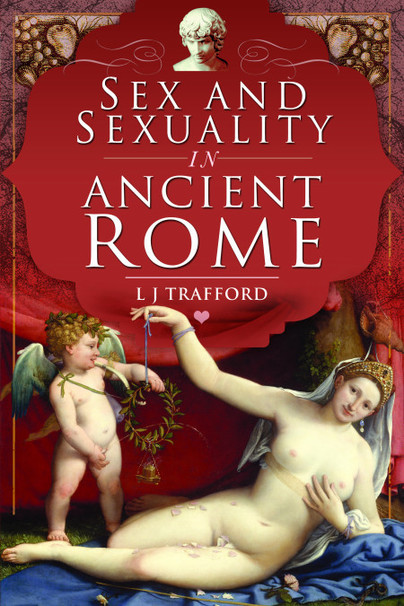
From Emperors and empresses, poets and prostitutes, slaves and plebs, Ancient Rome was a wealth of different experiences and expectations. None more so than around the subject of sex and sexuality. The image of Ancient Rome that has come down to us is one of sexual excess: emperors gripped by perversion partaking in pleasure with whomever and whatever they fancied during week long orgies. But how true are these tales of depravity? Was it really a sexual free for all? What were the laws surrounding sexual engagement? How did these vary according to gender and class? And what happened to those who transgressed the rules?
We invite you to climb into bed with the Romans to discover some very odd contraceptive devices, gather top tips on how to attract a partner and learn why you should avoid poets as lovers at all costs. Along the way we’ll stumble across potions and spells, emperors and their favourites and some truly eye-popping interior décor choices.
Paperback, 208 pages Published November 23rd 2020 by Pen and Sword History ISBN:1526755262 (ISBN13: 9781526755261)
Delve into the world of the unorthodox burial in seventeenth-century England, including mass interments in times of disease, the burial of suicides, and the unconventional laying to rest of English Catholics.
Death was a constant presence in the lives of the rich and poor alike in seventeenth-century England, being much more visible in everyday existence than it is today. It is a highly important and surprisingly captivating part of the epic story of England during the turbulent years of the 1600s. This book guides readers through the subject using a chronological approach, as would have been experienced by those living in the country at the time, beginning with the myriad causes of death, including disease, war, and capital punishment, and finishing with an exploration of posthumous commemoration. Although contemporaries of the seventeenth century did not fully realize it, when it came to the confrontation of mortality they were living in wildly changing times.
My Review
Thanks to Rosie Crofts at Pen & Sword for sending me a copy of this book. It is one of many that I am working my way through.
This book covers the ways people died, how they were buried and how they were remembered in 17th century England. It’s a very specific subject, and it’s rather fun to read about a single subject sometimes. Sometimes I like learning about specific subjects as well as wider ranging books. This one was fascinating.
Humans have a habit of thinking that how things are now are how things have always been. In life and death. But that’s not always true. And this is one of those ways in which things are the same and different. People still die, are disposed of and are remembered, and most are buried in consecrated ground.
People don’t die from the plague anymore, and rarely die in war, Catholics don’t get buried in ditches and people who complete suicide aren’t buried at cross-roads with a stake through the heart. We don’t hang criminals either.
Which is nice.
This book covers the various ways people died, how they acted on the deathbed, funerals, unusual burials and how people remembered the dead. It has some interesting photographs and extracts from primary documents, to illustrate the descriptions.
I found the writing easy to read. I read a large chunk in one sitting and then had to finish the last chapter some weeks later due to other commitments. I could pick up the thread fairly easily and get back right into the book.
If you want to read a different perspective on the turbulent years of the 17th century, and you’re interested in death, I recommend this book.
For my friend Nicky: There are some good tips on ancient gravestones you could follow up for photographing.
Price: £13.99 ISBN: 9781526756688 Published: 18th May 2020
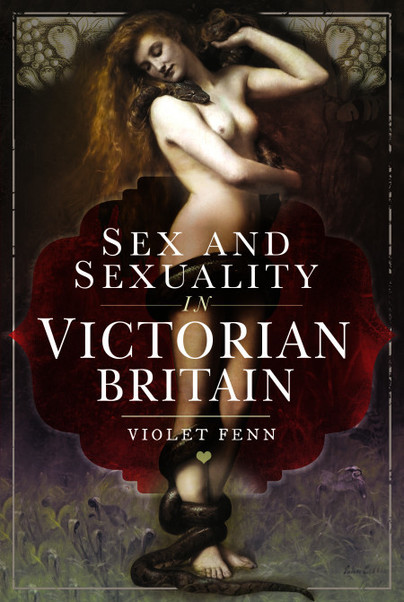
Peek beneath the bedsheets of nineteenth-century Britain in this affectionate, informative and fascinating look at sex and sexuality during the reign of Queen Victoria. It examines the prevailing attitudes towards male and female sexual behaviour, and the ways in which these attitudes were often determined by those in positions of power and authority. It also explores our ancestors’ ingenious, surprising, bizarre and often entertaining solutions to the challenges associated with maintaining a healthy sex life.
Did the people in Victorian times live up to their stereotypes when it came to sexual behaviour? This book will answer this question, as well as looking at fashion, food, science, art, medicine, magic, literature, love, politics, faith and superstition through a new lens, leaving the reader uplifted and with a new regard for the ingenuity and character of our great-great-grandparents.
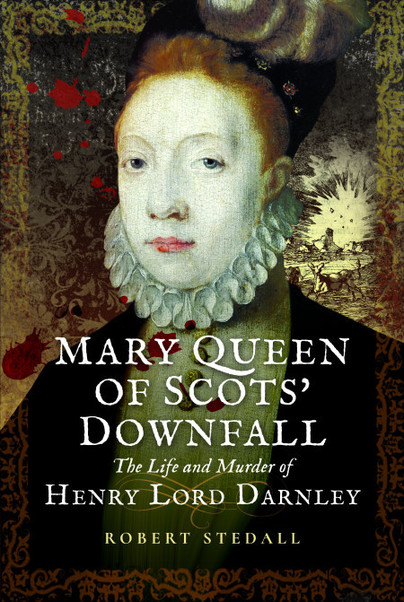
In the early hours of 10 February 1567 a large explosion ripped through the Old Provost’s lodgings at Kirk o’ Field, Edinburgh, where Mary Queen of Scotland’s consort, Henry Lord Darnley, was staying. Darnley’s body was found with that of his valet in a neighbouring garden the next morning. The Queen’s husband had been suffocated and the ramifications for Mary and Scottish history would be far-reaching.
Lord Darnley cuts an infamous figure in Scottish and Tudor history. In life he proved a controversial character, and his murder at Kirk o’ Field in 1567 remains one of British history’s great, unsolved mysteries – establishing whether Mary was implicated has taxed historians ever since.
In this engaging and well-researched biography, Robert Stedall re-examines Darnley’s life and his murder. It is not to be missed; his investigation brings new light and compelling conclusions to a story surrounded by political betrayal, murder, falsified evidence and conspiracy.
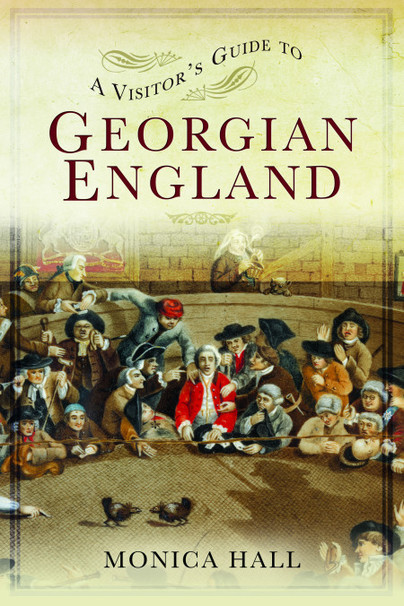
Could you successfully be a Georgian? Find yourself immersed in the pivotal world of Georgian England, exciting times to live in as everything was booming; the Industrial Revolution, the Enlightenment, and the nascent Empire; inhabited by Mary Shelley, the Romantic Poets and their contemporaries. However, rather than just wondering about the famous or infamous, you will find everything you need to know in order to survive undetected among the ordinary people. What to wear, how to behave yourself in public, earn a living, and find somewhere to live. Very importantly, you will be given advice on how to stay on the right side of the law, and how to avoid getting seriously ill. Monica Hall creatively awakens this bygone era, filling the pages with all aspects of daily life within the period, calling upon diaries, illustrations, letters, poetry, prose, 18th century laws and archives. This detailed account intimately explores the ever changing lives of those who lived through Britain’s imperial prowess, the birth of modern capitalism, the reverence of the industrial revolution and the upheaval of great political reform and class division. A Visitor’s Guide to Georgian England will appeal to Romantic poetry lovers, social history fans, fiction and drama lovers, students and anyone with an interest in this revolutionary era.




 Everything Is Better With Dragons