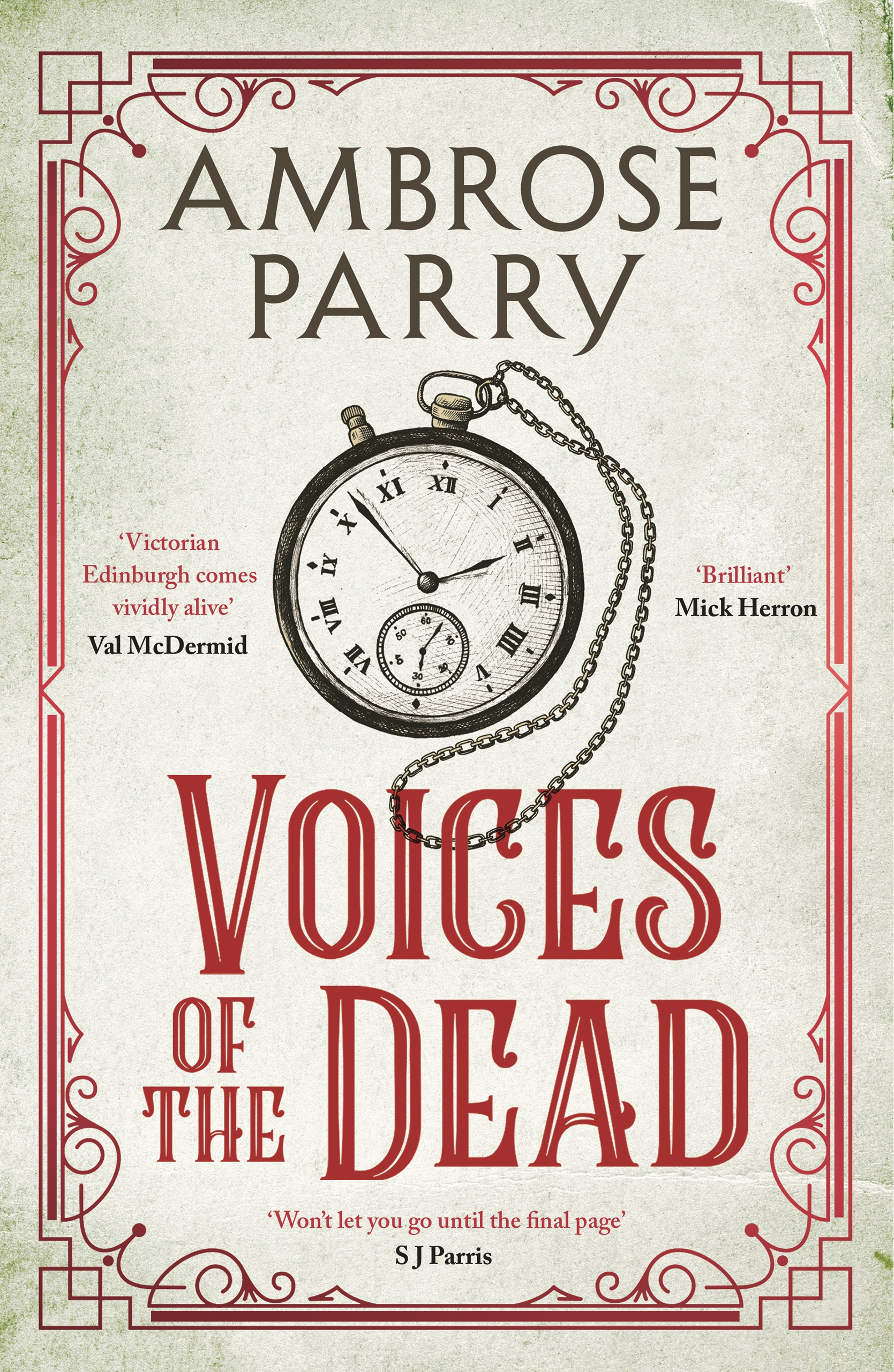

EDINBURGH, 1853. In a city of science, discovery can be deadly . . .
In a time of unprecedented scientific discovery, the public’s appetite for wonder has seen a resurgence of interest in mesmerism, spiritualism and other unexplained phenomena.#
Dr Will Raven is wary of the shadowlands that lie between progress and quackery, but Sarah Fisher can’t afford to be so picky. Frustrated in her medical ambitions, she sees opportunity in a new therapeutic field not already closed off to women.
Raven has enough on his hands as it is. Body parts have been found at Surgeons’ Hall, and they’re not anatomy specimens. In a city still haunted by the crimes of Burke and Hare, he is tasked with heading off a scandal. When further human remains are found, Raven is able to identify a prime suspect, and the hunt is on before he kills again.
Unfortunately, the individual he seeks happens to be an accomplished actor, a man of a thousand faces and a renowned master of disguise.
With the lines between science and spectacle dangerously blurred, the stage is set for a grand and deadly illusion . . .
Paperback Publication date: April 20th 2023, The History Press
Blurb
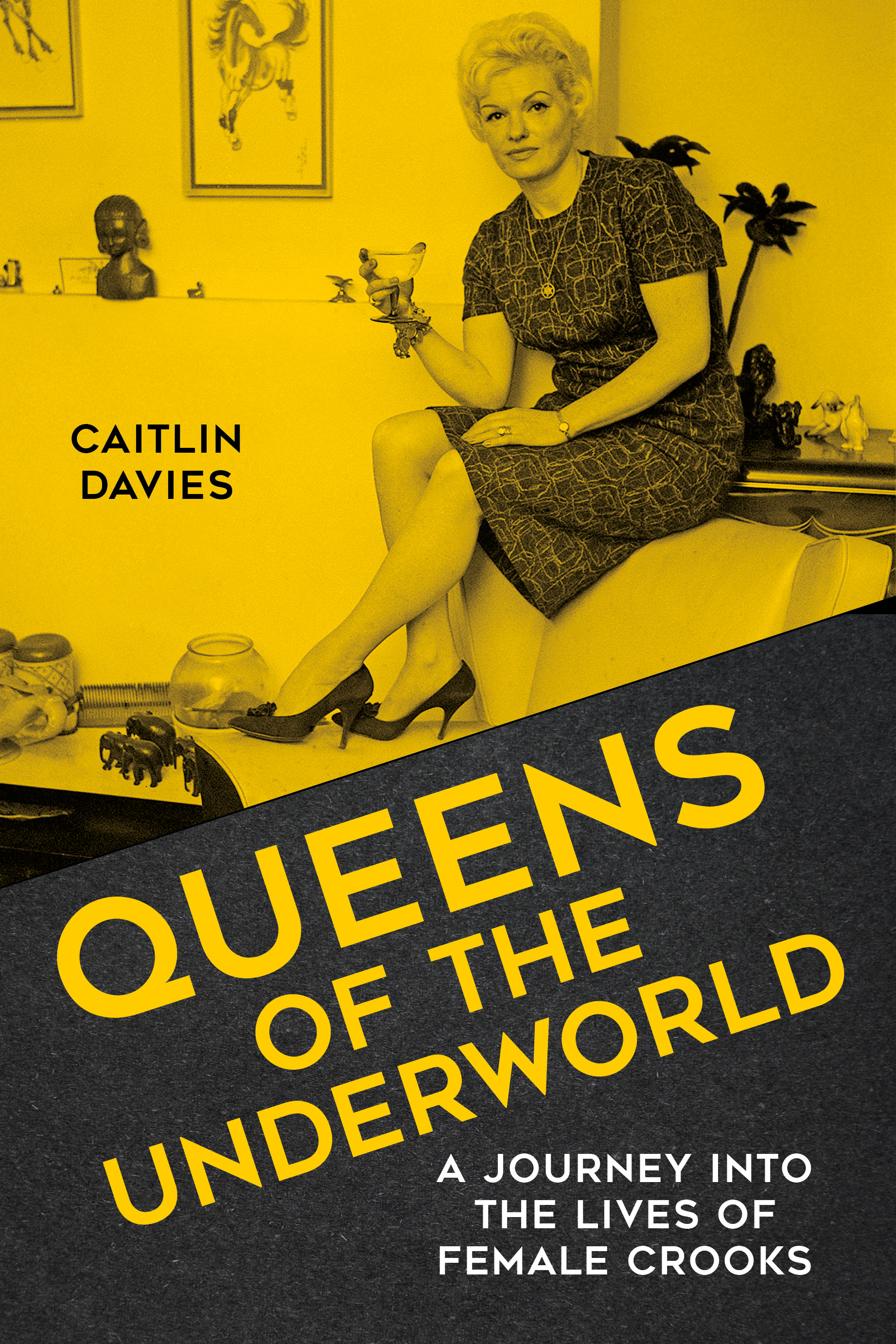
Robin Hood, Dick Turpin, Ronnie Biggs, the Krays … All have become folk heroes, glamorised and romanticised, even when they killed. But where are all the female crooks? Where are the street robbers, gang leaders, diamond thieves, bank robbers and gold smugglers?
Queens of the Underworld reveals the incredible story of professional female criminals from the 17th century to today. From Moll Cutpurse who ruled the Jacobean underworld, to Victorian jewel thief Emily Lawrence and 1960s burglar Zoe Progl, these were charismatic women at the top of their game.
But female criminals have long been dismissed as either not ‘real women’ or not ‘real criminals’, and in the process their stories have been lost. Caitlin Davies unravels the myths, confronts the lies, and tracks down modern-day descendants in order to tell the truth about their lives.
‘A riveting dive into the criminal underworld and the women who queened it there’ – Helena Kennedy QC
‘A rollicking account of all kinds of crime committed by women, who have not only been forgotten or ignored, but who put their male counterparts to shame’ – Julie Bindel, The Spectator
In the follow up to his Sunday Times bestseller, The Hidden Life of Trees, Peter Wohlleben compares tree planting to battery farming
‘In clear, vivid prose with impeccable reasoning, Peter Wohlleben makes a compelling case that almost everything we do in modern forestry management may be dead wrong. What should we do instead? Let the wisdom of the trees quell our human arrogance, heal the forest and restore our sweet, green world’ Sy Montgomery, author of How to be a Good Creature and The Soul of an Octopus
TREES CAN SURVIVE without humans, but we can’t live without trees. Even if human-caused climate change devastates our planet, trees will return—as they do, always and everywhere, even after ice ages, catastrophic fires, destructive storms, and deforestation. It would just be nice if we were around to see them flourish.
The Power of Trees is forester Peter Wohlleben’s follow-up to The Hidden Life of Trees, a Sunday Times bestseller that sold millions of copies worldwide. In his latest book, he is dismissive of token gestures in terms of tree planting. Just as he compared forest trees to ‘families’ and urban trees to ‘street urchins’ in his first book, in The Power of Trees he uses equally powerful metaphors to compare tree planting to battery farming (‘Switching to fast-growing species and breeding trees for desired traits brought results like those achieved by factory farming: individuals ready for harvest at a young age, all with a relatively uniform carcass weight.’). However, he also joyfully describes trees determination to survive, describing seedlings breaking through the earth where you least expect them, as ‘stalwart tree children’.
This latest work is as fascinating and eye-opening as it is trenchant in its critique: on the one hand, Wohlleben describes astonishing discoveries about how trees pass knowledge down to succeeding generations and their ability to survive climate change; on the other, he is unsparing in his criticism of those who wield economic and political power—who plant trees exclusively for the sake of logging and virtue signaling—even as they ruthlessly exploit nature. The Power of Trees is a love letter to the forest and a passionate argument for protecting nature’s boundless diversity, not only for the sake of trees, but also for us.
Imprint: Aurum Pub Date (UK): Apr 20, 2023 Price: £16.99 GBP ISBN-13: 978-0-7112-6711-4 Format: Hardcover Book Pages: 256
Blurb
In this fascinating and insightful book, feminist curator Rachael Lennon provides an intimate and intersectional examination of the history of marriage around the world. With a lively and accessible style, Lennon tells a remarkable story of how this institution has developed from the ancient customs of the stone age through to the modern form it takes today. This book also explores themes such as the pressure to marry, the politics surrounding proposals, the spectacle of marriage, the business behind it, and the politics tied to consummation as well as issues such as taking a man’s name, the nuances of marriage vows and obedience, ‘having it all’ and trying to keep up the fight to have an enduring marriage.
Having married her wife just a few years after the legalisation of same sex marriage in the United Kingdom, Lennon interweaves her own personal experiences of marriage with stories and anecdotes from throughout history to explore how marriage has transformed over the years.
I’m diagnosed with autism 20 years after telling a doctor I had it.
My terrible Catholic childhood: I hate my parents etc.
My friendship with an elderly man who runs the corner shop and is definitely not trying to groom me.
Homelessness.
Stripping.
More stripping but with more nervous breakdowns.
I hate everyone at Edinburgh uni etc.
REDACTED as too spicy.
After everyone tells me I don’t look autistic, I try to cure my autism and get addicted to Xanax.
REDACTED as too embarrassing.
If you’ve ever been on a night out where you got blackout drunk and have laughed the next day as your friends tell you all the stupid stuff you said, that’s what being autistic feels like for me: one long blackout night of drinking, except there’s no socially sanctioned excuse for your gaffes and no one is laughing.
In this book, Fern uses her voice as an autistic, working class woman from Scotland to bring her experiences with sex work, abusive relationships and her time spent in a teenage mental health unit to the page. Written with unflinching honesty, Strong Female Character is a game-changing memoir on sexism and autism.
(I changed some of the blurb copy because Fern Brady has made it clear she doesn’t like being referred to as neurodivergent and wants people to use ‘autistic’ instead.)