
Pen & Sword TBR Pile Review: Revolting Recipes From History, by Seren Charrington-Hollins

Hardcover, 216 pages
Published June 16th 2022 by Pen and Sword History
ISBN:1526773023 (ISBN13: 9781526773029)

Blurb

Nothing causes a stir on social media platforms like a topical discussion on the latest food trend. Modern-day chefs like to think that they are creative and often claim to push boundaries of food creation, but if we want to explore real culinary creativity then we need to look to our ancestors.

Writer and food historian, Seren Charrington-Hollins delves into the history of culinary experimentation to bring us some of the weirdest and most stomach-churning food delicacies to ever grace a dining table. She uncovers the rather gruesome history behind some everyday staples, uncovers bizarre and curious recipes, whilst casting light on foods that have fallen from culinary grace, such as cows udders and tripe; showing that revulsion is just a matter of taste, times and perhaps knowledge.

From pickled brains to headcheese, through to songbirds and nymphs’ thighs, this book explores foods that have evoked disgust and delight in diners depending on culinary perspective.

So pull up a chair, unfold your napkin and get ready for a highly entertaining and enlightening journey to explore what makes a recipe revolting? Be warned; you’ll need a strong stomach and an open mind. 

My Review

I actually managed to read and finish a book Pen & Sword sent me within a couple of months of getting it! Actually, I have another one I’ll review soon. I’ve still got a massive Pen & Sword pile to read. I will, eventually get through them all. I read another book by this author, about tea in 2020.

So, why did I read and finish this one so quickly?

Food! I like good food, I like to cook, and I find food a fascinating way to understand societies. Why would anyone eat some of the stuff they have if they didn’t need to? For instance garum sauce – hugely popular in ancient Rome, made of fermented fish. Basically fish left to rot in terracotta pots. Nope, not eating that. Who first thought to try it? And who thought of eating bovine digestive tracts (tripe)? Who gutted a cow and thought, ooh, that looks lovely? Only someone really desperate would consider pigs ears, surely?

And that’s just the stuff people chose to eat.

Imagine thinking you were going to get a decent bit of tinned ham and it turned out to be rotten because the tin wasn’t sealed properly. And you’re on a three year mission to chart the North West Passage. Eurgh! I liked the details about the history of food and the changes in diet over the centuries. It’s mostly Anglo-centric although there are some European and North American stories.

There were some sections that put me right off some foods and some I’m pleased I’ve never eaten. Like goose liver pate. That’s just cruel.

The book started off really strongly but by the last chapter it began to waver a bit and felt like it was unfinished. However, generally a good introduction to food history.
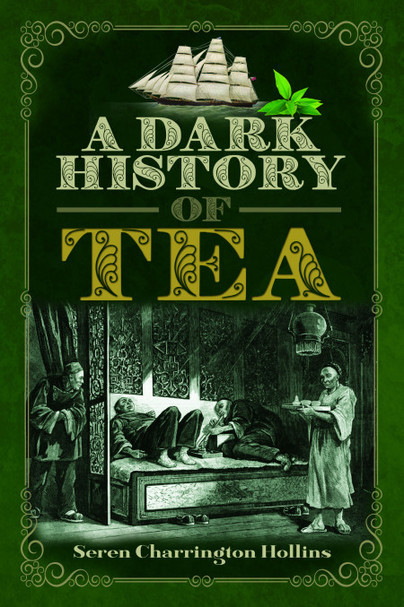
Pen & Sword Review: A Dark History of Tea, by Seren Charrington-Hollins

A Dark History of Tea

 Dark History of Tea looks at our long relationship with this most revered of hot beverages. Renowned food historian Seren Charrington-Hollins digs into the history of one of the world’s oldest beverages, tracing tea’s significance on the tables of the high and mighty as well as providing relief for workers who had to contend with the ardours of manual labour.

This humble herbal infusion has been used in burial rituals, as a dowry payment for aristocrats; it has fuelled wars and spelled fortunes as it built empires and sipped itself into being an integral part of the cultural fabric of British life. This book delves into the less tasteful history of a drink now considered quintessentially British. It tells the story of how, carried on the backs of the cruelty of slavery and illicit opium smuggling, it flowed into the cups of British society as an enchanting beverage.

Chart the exportation of spices, silks and other goods like opium in exchange for tea, and explain how the array of good fortunes – a huge demand in Britain, a marriage with sugar, naval trade and the existence of the huge trading firms – all spurred the first impulses of modern capitalism and floated countries.

The story of tea takes the reader on a fascinating journey from myth, fable and folklore to murky stories of swindling, adulteration, greed, waging of wars, boosting of trade in hard drugs and slavery and the great, albeit dark engines that drove the globalisation of the world economy. All of this is spattered with interesting facts about tea etiquette, tradition and illicit liaisons making it an enjoyable rollercoaster of dark discoveries that will cast away any thoughts of tea as something that merely accompanies breaks, sit downs and biscuits.


My Review

Thanks to Rosie Crofts at Pen & Sword for sending me a copy of this book for review.

The Rosie Synopsis

A non-fiction book briefly covering the history of tea in CHina and how it came to be a staple of the British diet, through Opium Wars, adulterated supplies and the Assam tea gardens.

The Good

I like tea.

Green tea, black tea, herbal teas, you name it, I’ll drink it. I’ve been to Twinnings shop in London and had a tea tasting session. I have a small collection of loose leaf teas. I can’t decide if Rington’s or Betty’s of Harrogate do the best household tea bags. I once gave myself a migraine from drinking way too much builders tea.

This book is broadly chronologically organised and provides a fairly well-researched introduction to the topic. It is quite easy to read. You can pick up a chapter and there’s enough information to put things in context even if you missed earlier chapters. It is wide ranging in time although very specific in its British centrism. It covers quite a bit about the opium wars and their origins, the detrimental effect of the opium and tea trades on China and in Britain.

There is a limited bibliography that would make a good place to start for people interested in deepening their knowledge. Personally, I will finally be getting around to reading ‘Empire of Crime’ by Tim Newark, which covers the opium wars in more detail and has been sat on my Pen & Sword pile for far too long.

The Not-So-Good

I like tea.

I do not like the history of tea. Britain, or more precisely the East India Company of London under their Government issued monopoly, had a hugely damaging effect on the world and helped build an empire on slavery, tea, sugar and opium. I thought this book would be about the machinations of the tea trade in the 16th to 19th centuries and about food adulteration in the domestic tea market. I assumed it would be Anglocentric because most Pen & Sword books are and it is clearly aimed at the British market – it has a BBC history documentary series feel to it – , so I wasn’t overly disappointed that there was not much about the other European empires built partly on the tea trade, or the development of tea growing in places other than China and Assam. I would have liked to learn about that, and more details about life on the tea plantations in both those places.

The book was interesting but felt like a series of essays written on different tea-related topics and then joined together. There was a lot of repetition and chronology was all over the place. One sentence is about Victorian horror at lower class tea drinking and the next mentions a Georgian criminal case. There was also the random chapter on tea magic at the end. I don’t understand the point of that and found the use of ‘gypsy’ to refer to Roma jarring and the constant use of ‘coolies’, even when in quotation marks, unnecessary. Why not mention the historical term and then use a less loaded, more accurate description of the indentured servants on the Assam tea plantations?

My Verdict

Not a bad introduction to the subject, a gateway to wider reading.