
Afternoon all, I know I published a set of book reviews earlier but I’ve just finished a book that I wanted to tell you all about.
Hacker, Hoaxer, Whistleblower, Spy: The Many Faces of Anonymous
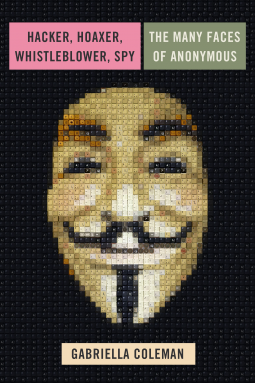
Verso Books
November 2014
Blurb
Here is the definitive book on the worldwide movement of hackers, pranksters, and activists that operates under the name Anonymous, by the woman the Chronicle of Higher Education calls “the leading interpreter of digital insurgency” and the Huffington Post says “knows all of Anonymous’ deepest, darkest secrets.” Half a dozen years ago, anthropologist Gabriella Coleman set out to study the rise of this global collective just as some of its adherents were turning to political protest and disruption (before Anonymous shot to fame as a key player in the Arab Spring and Occupy Wall Street). She ended up becoming so closely connected to Anonymous that some Anons claimed her as “their scholar.” Hacker, Hoaxer, Whistleblower, Spy brims with detail from inside a mysterious subculture, including chats with imprisoned hacker Jeremy Hammond and the hacker who helped put him away, Hector “Sabu” Monsegur. It’s a beautifully written book, with fascinating insights into the meaning of digital activism and little understood facets of culture in the Internet age, such as the histories of “trolling” and “the lulz.”
My Review
The trickster spirit is alive and well and living in the internet.
The author’s anthropological approach to the chimera that is Anonymous has yielded a fascinating insight into the loosely organised collective. She has “aimed to blot out misconceptions” but at the same time collect “riveting tales”. To do this, Gabriella Coleman says, she has adopted the “mythic framework and invite the trickster along for the ride”.
I think the author proves her point well with this study charting Anonymous’ journey from a network of trolls to an activist collective involved in causes as diverse as the Arab Spring to internet privacy, rape culture and political injustice. I, at least, see where she’s coming from in reference to the trickster: Loki might be a little git at times but he works for the greater good, and so do Anonymous, when they can get organised. Anonymous doesn’t have a strict structure or hierarchy, things are done by little groups, which makes them flexible and Phoenix-like in their ability to return even if they get burnt. It also means that lessons learnt in the past aren’t necessarily remembered. Anonymous is also marked by internal strife, with accusations of unethical hacking (as opposed to ethical hacking and data release), self-promotion (very much against Anon cultural tradition) and ‘snitching’.
The author writes in a colloquial and generally engaging fashion, although some turns of phrase grated, though that has more to do with the fact that it’s written in American English and I’m reading it in English English, so we can probably chalk it up to cultural differences. Gabriella Coleman clearly loves, is passionate about, her subject and endeavours to show us, the reader, as much as she can of the hidden depths of hactervist culture and history.
This is a fascinating and important work.
5/5

 Everything Is Better With Dragons