

PUBLICATION DATE: 17 SEPTEMBER 2020 | PAPERBACK ORIGINAL | £8.99 | ORENDA BOOKS
One of Norway’s most distinguished voices, Agnes Ravatn’s first novel to be published in the UK was The Bird Tribunal. It won an English PEN Translation Award, was shortlisted for the Dublin Literary Award and the Petrona Award, and was adapted for a BBC Book at Bedtime. She returns now with a dark, powerful and deeply disturbing psychological thriller about family, secrets and dangerous curiosity…
University professor Nina is at a turning point. Her work seems increasingly irrelevant, her doctor husband is never home, relations with her adult daughter Ingeborg are strained, and their beautiful house is scheduled for demolition.
When Ingeborg decides to move into another house they own, things take a very dark turn. The young woman who rents it disappears, leaving behind her son, the day after Nina and Ingeborg pay her a visit.
With few clues, the police enquiry soon grinds to a halt, but Nina has an inexplicable sense of guilt. Unable to rest, she begins her own investigation, but as she pulls on the threads of the case, it seems her discoveries may have very grave consequences for her and her family.
My Review
Thanks to the wonderful peeps at Orenda for sending me a copy of this book and organising the blog tour. Due to the volume of books I’ve agreed to review this month I honestly worried I’d struggle and not get a review done.
I really shouldn’t have worried.
I sat down to read on Sunday evening, just a few pages to get into the story. I surfaced half an hour later, about a third of the way into the story. Today (Monday), I sat down after breakfast and housework to read a bit more, thinking it would be an all day job. Three hours later I was done. It’s not a short book, about average at 230+ pages, but my does it fly past!
The Rosie Synopsis
Let’s start with the main character, Nina, a mature lady, an academic in her later years, who is beginning to wonder what the point of it all was. Her childhood home, and the one she and her husband had lived in for 35 years, needs to be demolished for a new light railway line. Nina is heartbroken and confused.
To add t0 it all, Nina takes more and more responsibility for her rather spoilt granddaughter. Her daughter is pregnant, frantic about silverfish and decides she will inherit a property the family own, left by a great-aunt, early. To do so, the current resident has to move out. Nina is rather ashamed of her daughter’s bullying behaviour as the young woman i living there, Mari Wilson, is forced to let them in and look around.
Then Mari goes missing. It gets rather complicated and Nina feels compelled to help in the search, especially as she thinks they might have been the last people, other than her son, Ask and parents, to see her. New evidence comes to light and things aren’t even as simple as all that. Nina goes off on a few different academic tracks, thinking the ex-husband must be the killer, or a psychologist the missing woman might have been seeing.
The days count down to the New Year, and to the demolition of the family home as Nina comes to terms with everything around her and she hopes for a new start, but then the shocking truth comes out and Nina has to make a decision that could tear her family apart.
The Good
I really was taken by the writing and narrative. It’s all indirect, and I think I enjoyed the strange way of presenting speech as reported speech even as it’s being said by a present character. Nina is the main focus of the narrative and it’s like a first person told in third person. I can’t quite describe it.
The plot is fairly complex and the title refers to a Bartok opera, a fairy-tale about a husband who murdered his wives and to Nina’s own journey through the disappearance and finding of her former tenant, the truth of Ask’s parentage and Mari’s death. Does she really want to open the seventh door and take the consequences? It all makes sense in the end. I liked the use of the fairy tale to hint at the truth but also the way it and interpretations of the tale led to mistakes and misunderstandings by Nina. It underlines the idea that reading and understanding a text can be simple – it’s just what’s before your eyes, – or complex, with multiple levels of interpretation depending on your world view. Nina makes mistakes because she tries to understand a story in different ways rather than looking at what’s in front of her. She has all the information, she just doesn’t put it together, or ask the right questions.
Never having been the Bergan, I haven’t a clue where any of the places mentioned are, but the description, although fairly minimalistic, gives the reader a sense of place and time.
I enjoyed the protagonist, Nina, and the other main character, except Mari, being older and her perspective on the people around her, coloured by her experiences over many years I found the close friendship between Nina and Kaia touching. The academic atmosphere of their lives and discussions contrast with that of their husbands, who are more worldly in their careers and actions, and the choices they make. Where Kaia makes suggestions and references psychological concepts and ideas, the men are more dismissive of events.
The Not-So-Good
I haven’t got anything to complain about.
The verdict
This is a very deep and thoughtful novel while telling a gripping story. I sped through the pages and was entertained all the way to the end.
AUTHOR BIO
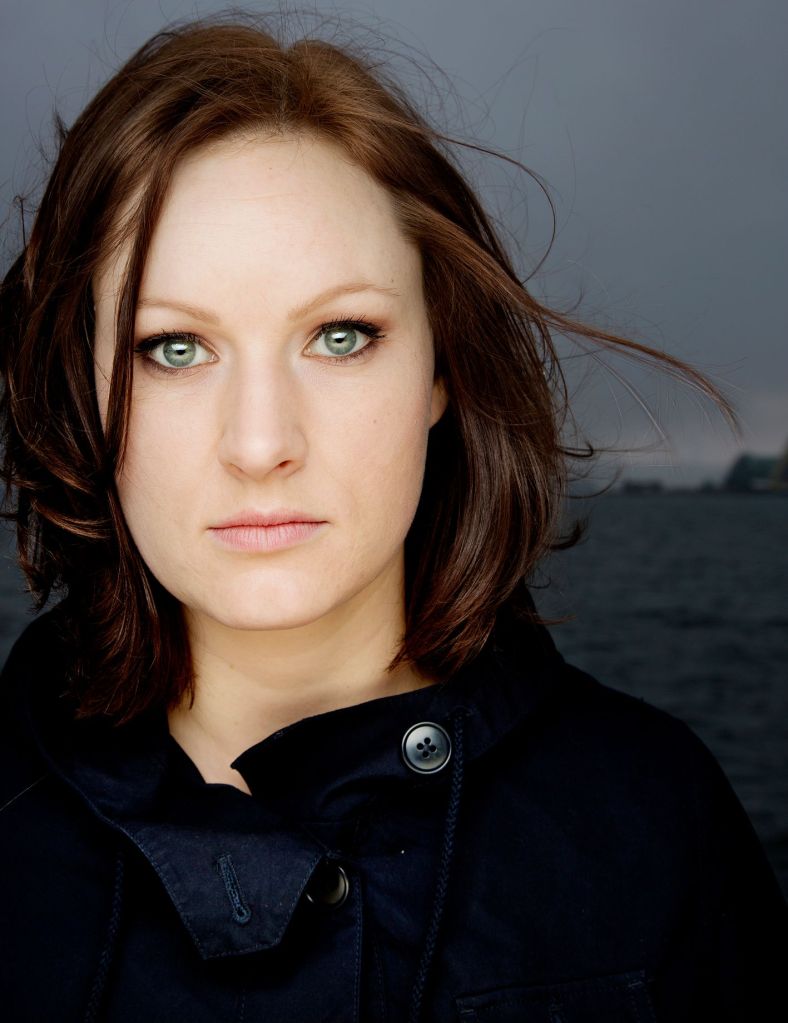
THE LONG-AWAITED NEW NOVEL FROM THE AWARD-WINNING AUTHOR OF THE BIRD TRIBUNAL
Agnes Ravatn (b. 1983) is a Norwegian author and columnist. She made her
literary début with the novel Week 53 (Veke 53) in 2007. Since then she
has written three critically acclaimed and award-winning essay collections:
Standing still (Stillstand), 2011, Popular Reading (Folkelesnad), 2011, and
Operation self-discipline (Operasjon sjøldisiplin), 2014. In these works,
Ravatn revealed a unique, witty voice and sharp eye for human fallibility.
Her second novel, The Bird Tribunal (Fugletribuanlet), was an international
bestseller translated into fifteen languages, winning an English PEN Award,
shortlisting for the Dublin Literary Award, a WHSmith Fresh Talent pick and a BBC Book at Bedtime. It was also made into a successful play, which premiered in Oslo in 2015.
Agnes lives with her family in the Norwegian countryside.

 Everything Is Better With Dragons