

Published March 20th 2019 by Pen and Sword History
ISBN1526727978 (ISBN13: 9781526727978)
Blurb
King Richard III remains one of the most infamous and recognisable monarchs in English or British history, despite only sitting on the throne for two years and fifty-eight days. His hold on the popular imagination is largely due to the fictional portrayal of him by William Shakespeare which, combined with the workings of five centuries of rumour and gossip, has created two opposing versions of Richard. In fiction he is the evil, scheming murderer who revels in his plots, but many of the facts point towards a very different man.
Dissecting a real Richard III from the fictional versions that have taken hold is made difficult by the inability to discern motives in many instances, leaving a wide gap for interpretation that can be favorable or damning in varying degrees. It is the facts that will act as the scalpel to begin the operation of finding a truth obscured by fiction.
Richard III may have been a monster, a saint, or just a man trying to survive, but any view of him should be based in the realities of his life, not the myths built on rumour and theatre. How much of what we think we know about England’s most controversial monarch will remain when the facts are sifted from the fictions?
My Review
Thanks to Rosie Crofts and Pen & Sword for sending me a copy of this book.
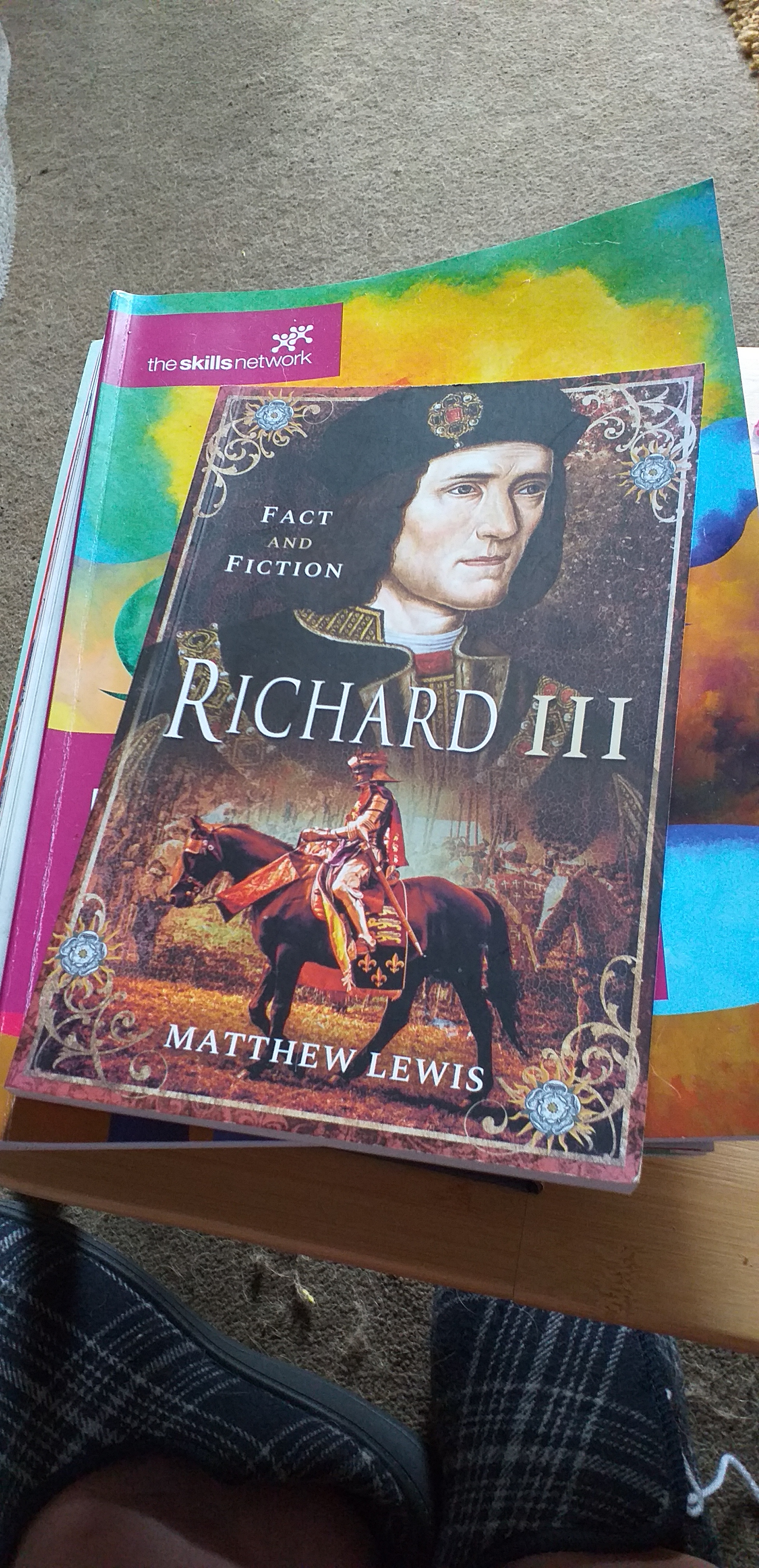
Yes, I have had this book for a couple of years and have only just had the chance to read and review it. Honestly, I’ve been reading it on and off for at least a year. It’s a bathroom book – a book I keep on the window ledge for dipping into when I’m on the loo. It’s perfect for that sort of reading, because of the structure of the ‘fact and fiction’ books, where a question is posed and answered, covering a wide range of subjects.
Richard III is an interesting and complex person, and might have been a good king if he hadn’t upset so many lords and lost his crown after less than two years. The Battle of Bosworth was a testament to how many people didn’t like him, although he inspired personal loyalty in some, only on of the great lords, Norfolk, fought at his side, while another held off until he saw which way the wind was blowing and joined Henry Tudor.
His track record as Duke of Gloucester, while ruling in Northern England from York, showed he was interested in justice and wouldn’t let vested interests force his hand. His first, and only, Parliament presented many laws that would have allowed the ‘lower orders’ to access justice more easily and would have helped English merchants.
A lot of the stories about him are based on Shakespeare’s play, and on some earlier writers, many with a vested interest in destroying his reputation (how else would Henry Tudor legitimise his claim?). There’s no evidence for a lot of the stories, in some cases the evidence could be interpreted widely differently depending on your prejudices, such as the disappearance of his nephews.
Personally, I think they got some random disease and died and nobody quite knew what to do about it. Either that or one of Henry Tudor’s supporters killed them. It wouldn’t be logical for Richard to kill them, not so early after his coronation, and certainly not when you consider that he treated his sister-in-law, her mother and his nieces fairly well. They had already been declared illegitimate and he had a son to inherit (well, until is son and then his wife Anne Neville died), so he didn’t need to hurt them. Plus, it wouldn’t have looked good or been just. And his track record was one of loyalty (even when he disagreed with his brother/king, Edward) and justice.
I found this book interesting and a good ‘dipping into’ book. It challenges preconceived myths about Richard while being honest about his weaknesses.

 Everything Is Better With Dragons