Bodies, Brains & Bogies
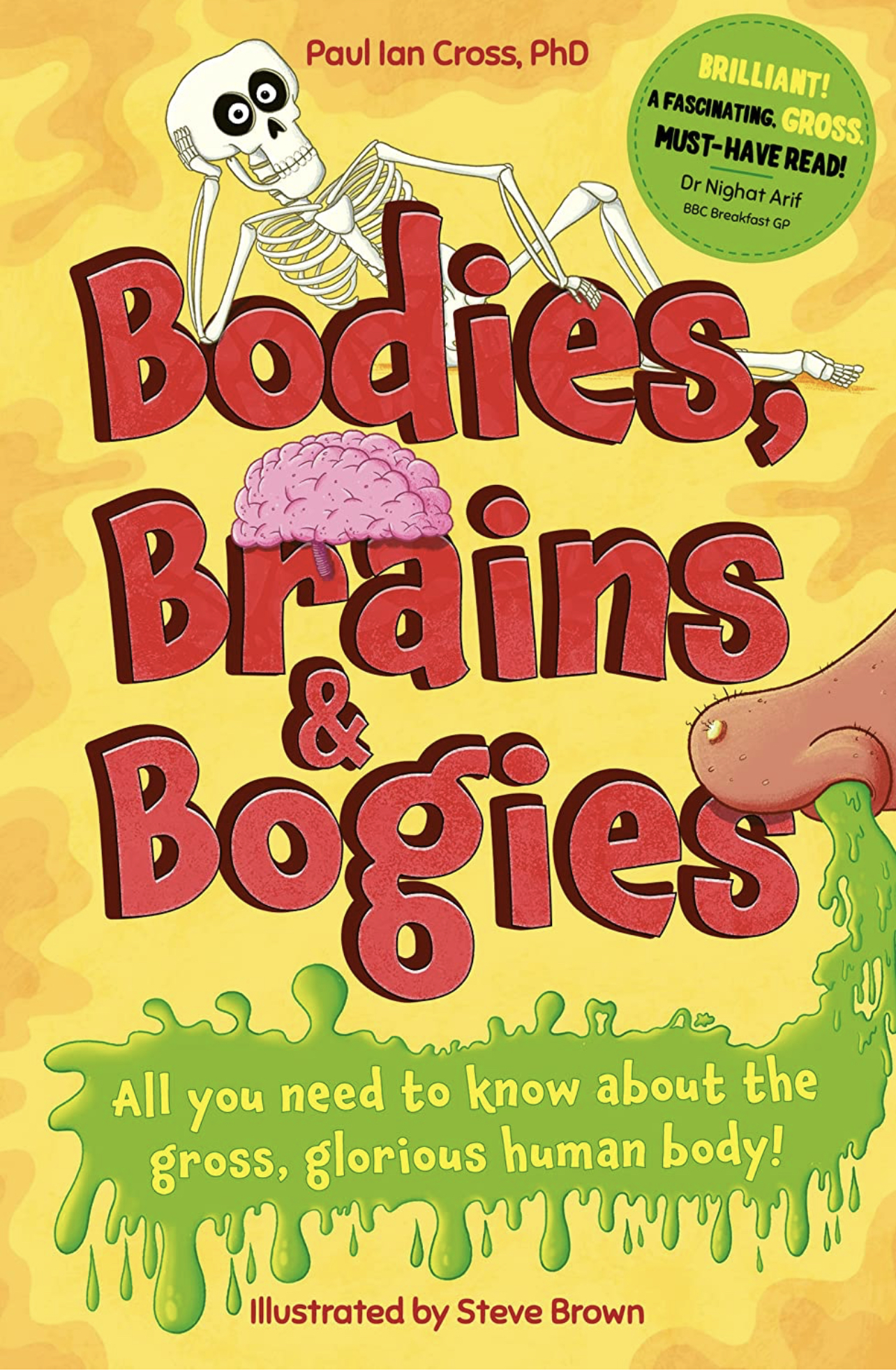
This fantastic title from Paul Ian Cross, the writer of How to Vanquish a Virus, takes the reader on a whirlwind tour of everything that’s disgusting, unusual and amazing about the human body. Find out everything about poo, pus and bogies, while learning a whole lot about how our bodies work hard in hundreds of fascinating ways to keep us alive.
With tons of hilarious and informative illustrations, it includes lashings of Paul Ian Cross’s trademark laugh-out-loud humour, in-depth knowledge and infectious optimism. It’s the perfect funny, accessible way to discover everything you’ve ever wanted to know about the human body, but were too grossed-out to ask!
Purchase Links
UK – https://www.amazon.co.uk/Bodies-Brains-Bogies-Everything-remarkable/dp/1783128720/
US – https://www.amazon.com/Bodies-Brains-Bogies-Everything-remarkable/dp/1783128720/
My Review
I received a copy of this book as part of the blog tour organised by Rachel’s Random Resources. Thanks to the author, publisher and Rachel.
This book explains the human body for children. It is illustrated and I would estimate the appropriate age range to be 8 to 12.
It’s amusingly written although I’m not sure about the appeal of ‘grossness’ as a way of presenting information.
The illustrations are good. I also like that it has activities to explain some of the ideas.
It covers every body system, and has a chapter on self-esteem. Thirty years ago, when I was the target age, books like these would never have covered the reproductive system, body positivity or self-esteem. And neurodivergence wasn’t even thought about. I’m glad children can access this sort of book now. It gives them a good grounding before puberty hits and helps to develop self-awareness. I like that the author presents basic reproductive and puberty information clearly and in a simple way that children can understand. It’s definitely age-appropriate.
I would have liked to see more one sexuality, gender and neurodiversity, beyond the quick mentions they get in a list in the final chapter about human diversity. Children in the target age-range are already beginning to be aware of these things and neurodivergent kids are often bullied because they are perceived as different; the earlier kids learn that all this variation is natural and not something they should be bullied for/not something they should bully others for, the better.
Couple of things: Cross mixed up his usage of neurodivergence and neurodiversity a couple of times. Lets get this sorted out: Neurodiversity – the natural diversity of human brains and sensory systems; Neurodivergence – variations of brains and sensory systems that are considered outside the socially constructed norms, e.g. Autistic, Dyslexic, Dyspraxic and ADHD people, people with Down’s Syndrome, Epilepsy, Schizophrenia, Cerebral Palsy, etc. are considered neurodivergencies from current medical definitions of healthy, normal brains in Europe, and European-colonised areas. They are usually labelled ‘disorders’, ‘conditions’ or ‘illnesses’ in the pathology paradigm.
Repeatedly says hair and fingernails are dead skin cells. They are not. Hair and nails are made from the protein keratin; the keratin is made by living cells and ‘extruded’ in the structures that make up hair and nails. Skin is made from cells, some living. some dead, and some produce keratin.
Author Bio –

Paul Ian Cross, PhD, is a scientist, researcher, writer, and educator from London, UK.
Paul works in clinical research (developing new medicines) and he’s also a science communicator (presenting science to non-scientists). Paul specialises in vaccine development and has an interest in pharmacovigilance (the safety of medicinal products). His PhD research investigated the benefit-risk assessment of medicines, and how patients and the public can be more involved in their treatment decisions.
Paul’s popular social media accounts (@DrPaulScience) are full of STEM-themed content for all ages, but particularly for parents and adults to share with the children in their lives. Paul is a member of #TeamHalo, a UN backed initiative where doctors, healthcare workers, and scientists share accurate information about healthcare, science, and the COVID-19 vaccines. In 2021, Paul was named as a ‘Luminary’ at the G7’s Vaccine Confidence Summit, in recognition for his science communication work on social media.
In addition to his research career, Paul has a passion for introducing children to STEM subjects, particularly reluctant readers. By introducing science creatively, he aims to spark their interest, allowing them to gain confidence with their reading. As a previous reluctant reader himself, he understands how hard it can be. But it’s all about making reading fun and interesting!

 Everything Is Better With Dragons
1 Comment