TBL Pile Review: The Justice of Kings, by Richard Swan

Length: 13 hrs and 45 mins
Unabridged Audiobook
Release date: 22-02-22

Blurb

No man is above the law.

The Empire of the Wolf simmers with unrest. Rebels, heretics and powerful patricians all challenge the power of the imperial throne. 

Only the Order of Justices stands in the way of chaos. Sir Konrad Vonvalt is the most feared Justice of all, upholding the law by way of his sharp mind, arcane powers and skill as a swordsman. At his side stands Helena Sedanka, his clerk and protégé, orphaned by the wars that forged the empire.

When the pair investigate the murder of a provincial aristocrat, they unearth a conspiracy that stretches to the very top of imperial society. As the stakes rise and become ever more personal, Vonvalt and Helena must make a choice: will they abandon the laws they’ve sworn to uphold in order to protect the empire?

Introducing an unforgettable protagonist destined to become a fantasy icon, The Justice of Kings is an unmissable debut where action, intrigue and magic collide.

My Review

I listened to this in August and September, but completely forgot to review it for you all. Since I’m doing my ‘favourite sci fi and fantasy of 2023’ list soon, I thought I’d better add it, because I really enjoyed the book.

In this first book in the Empire of the Wolf series we meet the main characters, Helena Sedanka, Konrad Vonvalt and Bressinger. They are on their rounds, as Vonvalt is a Justice of the Empire, applying the common law across fractious provinces. They are accompanied for part of their journey by Patria Bartholomew Claver, a fundamentalist priest with ambitions to even greater things. In the first village they visit, they find an enclave of ‘heretics’, people following their indigenous religion, instead of the imperial religion of Nema. Vonvalt tries to find a solution that helps everyone, while Claver demands they’re burnt and then leaves. After Vonvalt, Helena and Bressinger move on, Claver returns with Templars and kills everyone in the village, burning them to death.

Later, Vonvalt is called to a port town to investigate the murder of a noblewoman. They find a much deeper conspiracy involving a monastery funnelling money to Claver and the Templars, a woman held hostage, and a child murdered. Helena has to go under cover, while Vonvalt is diverted by the arrival of an old friend and his investigations take him elsewhere.

Claver brings his army to the same town to demand the release of one of the priests held for the murder. He attacks the town, slaughtering innocent residents to hide the evidence of the crimes he and his funders committed. Claver shows his new powers, stolen from the Justices.

Vonvalt becomes obsessed with defeating Claver, getting revenge for the death of his old friend and for the people murdered by the Templars.

That leads us to the start of The Tyranny of Faith.

Helena tells the story, moving between her present day and her past, her recollections of events that lead to the downfall of the Empire. The structure is really interesting and we see her character development from a young, naïve, secretary to an experienced investigator, a scholar of the law. We see her first love, sex, and loss, her heartbreak and her developing relationship with her colleagues. Bressinger is her best friend but he’s a less developed character, while Vonvalt is both her mentor and a man she is developing romantic feelings for. She is torn between her professional obligations and her personal feeling, both for her first love, for Vonvalt, and about her job, killing people, and the things she must give up to be a Justice.

Vonvalt is a highly developed character, a complex man who desperately wants to be a force for good in the Empire, but is torn between the law in theory and the way it’s practiced in reality.

Bressinger is not as well developed; we know he fought in the Riekskrieg, lost his wife and children, to an attack on his home town, and joined the service of the Empire only because Vonvalt was his friend and he wanted revenge.

The worldbuilding is amazing! It is a medieval Germanic inspired world. It reminds me of a cross between the Roman Empire and the Holy Roman Empire, with hints of earlier medieval European states. There’s Templar knights and hints of gun powder, while village ladies lead rituals around bonfires to forbidden gods. The supernatural elements are woven into the story completely; from Vonvalt’s necromancy to Helena’s unexpected trips to the ‘Holy Realm’ – the places where the dead and the spirits live. The ‘gods’ are shown to be questionable, while the magic, under different names and either allowed or not depending on who is using it, is a tool that people use or fight over.

The writing is really accomplished and the story flies by. I’d never heard of Richard Swan until I received a signed special edition of this book in the SFF Fellowship subscription in 2022. Now I follow him on Instagram and have the third book in the series on pre-order. I’m a bit of a fan of his writing.

The narrator is really good. We can hear the difference between young Helena and older Helena by the tone of her voice. She puts a lot of emotion into her narration.

If you’re looking for an epic fantasy, try this series.

Review: Mr Gearheart, by Emily Owen

Book Information
 
Genre: steampunk historical fiction
Publication Date 27 November 2023
ISBN 978-1-3999-5773-1
Dimensions 229 x 152mm
Extent 306 pages
RRP £9.99
BIC FL, FV
Rights Worldwide
 
Published by Open Door Books. Page design and typesetting by SilverWood Books.

Key Selling Points

  • From the author of The Mechanical Maestro and The Copper Chevalier, a new story following the Abernathy siblings as they face an enigmatic adversary.
  • Character-driven story centred around three genius siblings.
  • A steampunk-tinged tale with Gothic overtones sure to enthral fans of clockwork, androids and the Victorian era alike.
  • Immersive world filled with colourful characters.

Blurb

1863

Six years have passed at Ravenfeld Hall. The Abernathy siblings’ fortunes continue to improve as George and Douglas’s android-building business thrives. But change looms on the horizon. Douglas’s engagement to the sweet, charming Clara Marsden threatens to take him from his family, while sister Molly contemplates whether a future with the man she loves means sacrificing her independence and academic pursuits.

Then the family face more pressing concerns…

One night, George’s latest invention escapes the Hall. Four months later, a charismatic inventor by the name of Gearhart appears in London, with an intellect to rival that of the Abernathys’. George senses there’s something sinister about the mysterious Mr Gearhart, who’s planning to unveil an invention that could change the world. But does he have far grander ambitions? And can George uncover the truth about him in time?

Continue reading “Review: Mr Gearheart, by Emily Owen”

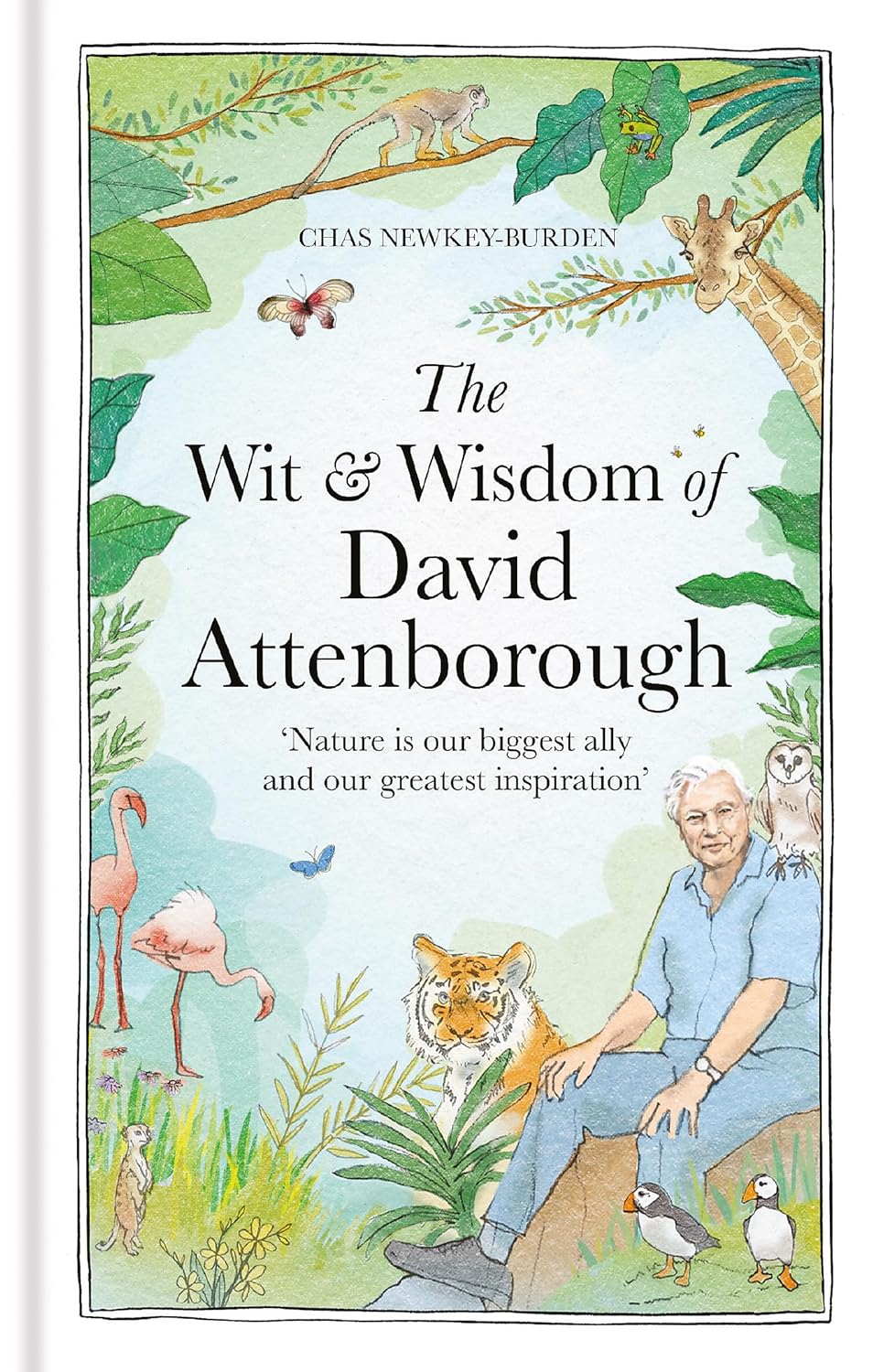
Review: The Wit & Wisdom of David Attenborough, by Chas Newkey-Burden

Publication date Thursday, October 26, 2023
Price £14.99
EAN\ISBN-13 9781856755269

Blurb

Description
A fascinating and entertaining collection of facts, quotes and stories,
celebrating Sir David Attenborough’s wicked sense of humour and astute
wisdom.
David Attenborough is a national treasure, known for his soothing voice, calming presence, passion for the natural world, and his humble, easy-going nature. Despite his incredible talent and influence, he tends to play it all down, one time stating that, ‘I can’t believe I’m still employed’.

So if he won’t celebrate himself, we’ll have to do it for him. Filled with facts, tributes and anecdotes, as well as beautiful illustrations, this enormously
positive book celebrates Sir David, providing a fascinating insight into his life as well as showcasing his brilliant sense of humour. Running chronologically, this book begins with his early days, to his first job at the BBC, to eventually becoming the most esteemed naturalist on the planet, as he is today.

Such revelations include:

  • There are 18 plants and animals named after him
  • When asked by a reporter how many degrees he had, he said it would be ‘rude to
    count’*
  • The single thing that would improve his quality of life is ‘good, workable knees’.
    Blending his quips galore with his powerful messages on the environment and future of
    the planet, this timely book showcases everything we love about Sir David, making it the
    perfect gift for any fan.
  • *He has over thirty!
Continue reading “Review: The Wit & Wisdom of David Attenborough, by Chas Newkey-Burden”

Review: The Other Side, by Milo McGivern

The Other Side by Milo McGivern
27th November – 15th December
Genre: Children’s Fiction
Age:  8 – 12
Pages: 184
Publisher: Matador
Format: UK Prints
Buy Links
https://www.amazon.co.uk/Other-Side-Tales-Animaux/dp/1805140736/ref=sr_1_1

Blurb 

The Island of Animaux is a mysterious, wonderful place. Unknown to humans, hidden by fog and always on the move around the planet. It is a land of crazy, mad, funny adventures. Welcome back!

The five new tales in The Other Side follow on from the ones in the last book, Coffee and Ice Cream. Aubrey the Turkey is once again up to his neck in bother. See where he ends up when a magic trick goes wrong, also how Clifford Platypus, Walli Hog and their friends manage to save him. Travel with Aubrey, Clifford and Walli as they go on an enjoyable seaside holiday, at least for the turkey. Watch as the island becomes stuck in the middle of the Pacific Ocean, unable to move. The biggest crisis in its long history!

Please enjoy the stories. And don’t be afraid to laugh, particularly as Aubrey’s expense. But please, please, please – continue to remember to keep the latest position of the island top secret!

Continue reading “Review: The Other Side, by Milo McGivern”

TBL Pile Review: The Tyranny of Faith, by Richard Swan

Published February 14, 2023 by Hachette B and Blackstone Publishing
ISBN: 9781668629963 (ISBN10: 1668629968)

Blurb

A Justice’s work is never done.

The Battle of Galen’s Vale is over, but the war for the Empire’s future has just begun. Concerned by rumors that the Magistratum’s authority is waning, Sir Konrad Vonvalt returns to Sova to find the capital city gripped by intrigue and whispers of rebellion. In the Senate, patricians speak openly against the Emperor, while fanatics preach holy vengeance on the streets.

Yet facing down these threats to the throne will have to wait, for the Emperor’s grandson has been kidnapped – and Vonvalt is charged with rescuing the missing prince. His quest will lead him – and his allies Helena, Bressinger and Sir Radomir – to the southern frontier, where they will once again face the puritanical fury of Bartholomew Claver and his templar knights – and a dark power far more terrifying than they could have imagined.

Continue reading “TBL Pile Review: The Tyranny of Faith, by Richard Swan”

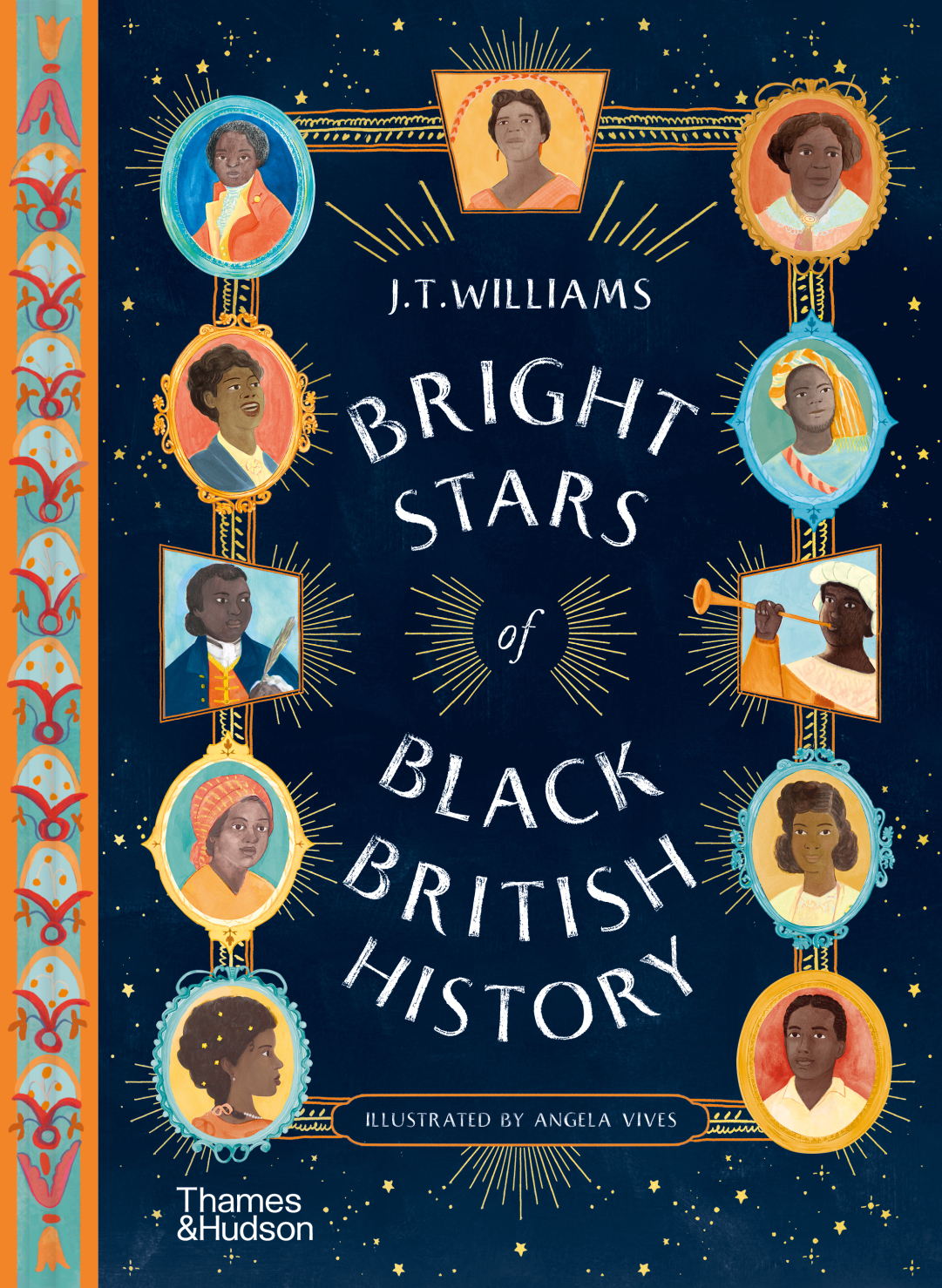
Review: Bright Starts of Black British History, by J.T. Williams, illustrated by Angela Vives

3rd September 2023
Ages 9+ | £16.99
Hardback | 60 illus
160pp | 24.0 x 17.2cm


A dazzlingly illustrated collection presenting the extraordinary life
stories of fourteen bright stars from Black British history, from Tudor
England to modern Britain.

Brought to life through hand-painted illustrations by award-winning illustrator Angela Vives, this important and timely book from author and educator J. T. Williams brings the lives of fourteen shining stars from Black British History into the spotlight, celebrating their remarkable achievements and contributions to the arts, medicine, politics, sport and beyond.

Featuring a constellation of iconic individuals – including storytelling freedom fighter Mary Prince, football star and World War I soldier Walter Tull, and Notting Hill Carnival founder Claudia Jones – ‘Bright Stars of Black British History’ shines a light on the courage, resilience and talent of remarkable individuals who have left a lasting mark on our collective history.

Continue reading “Review: Bright Starts of Black British History, by J.T. Williams, illustrated by Angela Vives”

Pen & Sword TBR Pile Review: The Nonconformist Revolution, by Amanda J. Thomas

By Amanda J Thomas
Imprint: Pen & Sword History
Pages: 280
ISBN: 9781473875678
Published: 23rd June 2020

Blurb

The Nonconformist Revolution explores the evolution of dissenting thought and how Nonconformity shaped the transformation of England from a rural to an urban, industrialised society.

The foundations for the Industrial Revolution were in place from the late Middle Ages when the early development of manufacturing processes and changes in the structure of rural communities began to provide opportunities for economic and social advancement. Successive waves of Huguenot migrants and the influence of Northern European religious ideology also played an important role in this process. The Civil Wars would provide a catalyst for the dissemination of new ideas and help shape the emergence of a new English Protestantism and divergent dissident sects. The persecution which followed strengthened the Nonconformist cause, and for the early Quakers it intensified their unity and resilience, qualities which would prove to be invaluable for business.

In the years following the Restoration, Nonconformist ideas fuelled enlightened thought creating an environment for enterprise but also a desire for more radical change. Reformers seized on the plight of a working poor alienated by innovation and frustrated by false promises. The vision which was at first the spark for innovation would ignite revolution.


My Review

I received this book in 2020 from the publisher in return for an honest review. It has taken me a long time to read it. I have been reading in in bursts, a chapter or two at a time around other reviewing commitments and work.

This review is all over the place. I have just finished the book. It took me 3.5 years to read the first ten chapters (140 pages) and less than a day to read the last five (68 pages); I’m a bit confuddled.

The book covers developments from the 1300s to the 1800s, in dissenting religious groups and industrial development, and makes the argument that without the unconventional thinking and organisational support Nonconformists and ‘heretics’ provided to each other, England would not have become the driver of Industrial revolution that it was in the early 18th to late 19th century that it was. The focus is on England, the interactions between England and Continental ideas and people, England and the North American colonies, England and France (because, 1066 and all that). It doesn’t look at technology developed in any of the colonies (usually derived from indigenous or enslaved peoples’ knowledge).

There are some interesting ideas in this book:

  • The author points out the complex family networks of the Midlands and northern Nonconformist families who supported each others’ business ventures and encouraged/funded new developments in ironworks, among other things. The relationships were longstanding and lucrative for many of the families. The connections went from the Tyne to the Severn, through Liverpool, Manchester, Sheffield, Birmingham and Bristol.
  • The literacy encouraged by Protestant beliefs – that people should be able to read the Bible in their own language – encouraged education in these families and that enabled people to question social structures and norms, as well as make scientific breakthroughs.
  • Every group looks back to a golden age of freedom and liberty – the Peasant’s Revolt (which was more of a middling sorts revolt with villainage cannon fodder) looked back to a pre-Norman England, the Nonconformists of the 18th century valourised the Puritanism of the Republic. They never were golden ages, there were always tyrants and inequality and war.

The author doesn’t mention much about the slave trade, although some of the Nonconformist families made their money from making guns and cannons, supporting the East India Company and the slave trade. At least one person mentioned, from the 1700s, was disowned by his Quaker congregation for inheriting a gun company and supporting the slave trade. It is safe to say that without the triangular trade a lot of people wouldn’t have had the funds to support the new products produced by Wedgwood, or fund the research of Priestley and the Lunar society (amongst others). The focus of the book is so narrow that the author can’t bring these considerations into the text. I don’t know if that is a good or bad thing. She does mention the above, but briefly, with no exploration. A wider exploration of the developing empire might have added context.

The final two chapter focus heavily on Thomas Paine, his adventures in North America and France, who he knew and what he wrote. Amanda J. Thomas explores the possible developments of his radical thought from his Quaker upbringing to his return to North America in 1800 after imprisonment in France. The author connects his activities to the rise and fall of radical organisations, especially those in Sheffield, demanding governmental reform. As we all should know, the government of the time, and for decades afterwards, was very opposed to any reform, cracking down heavily, violently against anything that would put the high church gentry and the aristocracy out of control. And yet, people kept dissenting…

There were times when the book felt disjointed, as though it were a collection of essays arranged chronologically, and at other times several chapters would naturally follow from each other. This may be an artifact of the development of the book?

The writing is decent and the story is really interesting. What I think slowed me down was all the family trees (tangled shrubs in some cases) that the author felt the need to write out and share with us in the main text. I don’t think it was always necessary to getting the ideas across clearly and could possibly have be left to an appendix, along with the visual representations of the family trees.

The book has a good bibliography and indexing, notes are clearly identified and information sourced. The author has relied heavily on some sources more than others, usually those about specific families or individuals, which gives a possibly partial impression of events, but also provides interesting nuggets of information about individuals and the social and cultural dynamics of their times. I did not know that Joseph Priestley knew Thomas Paine and Thomas Jefferson, for example, or that Benjamin Johnson was a member of the Royal Society at the same time. I knew Erasmus Darwin and Wedgwood knew each other, because of the weird family dynamics of Charles Darwin and his cousin-wife. In-bred the lot of them -the Wedgwoods, Darwins and Galtons.

So, final thoughts. Interesting ideas and social history that tries to illuminate the development of the co-occurring scientific, religious and political though that brought about the 18th and 19th century Industrial Revolution in England, and makes some attempt to put it into the wider North Atlantic context. Quite well written and extensively researched. Excellent bibliography. Could do with some editing.

Also, I noted some references that make it into Discworld.