
February 29, 2024
Price £20.00
EAN\ISBN-13 9781914240829
Description
“This is a heart-breaking story, beautifully told. I hope it finds a million
readers”. – Andrew O’Hagan
John MacDonald must find his mother.
Born into the slums of Glasgow in the late ’70s, a 4-year-old John’s life is filled with the debris of alcoholism and poverty. Soon after witnessing a drowning, his mother’s addictions take over their lives, leaving him starving in their flat, awaiting her return.
A concerned neighbour reports her, and he is forcibly taken away from his mother and placed into the care system. There, he dreams of being reunited with her. His mind is consumed with images and memories he can’t process or understand, which his eventual adoptive parents silence out of fear as he grows into a young man within a strict Catholic and Romany Gypsy community.
This memoir is about how John found his way to his true identity, Juano Diaz, and how, against all odds, his unstoppable love for his mother sets him free.
My Review
Thanks to Anne at Random Things Tours for organising this blog tour and to Octopus Books for sending me a copy of this memoir.
I’m going to recap a bit of the book in general terms and then make some comments about things that occurred to me while reading it. From the off I want to state that I found this book utterly engrossing and moving. I read this in one three hour sitting. It was a gripping read of neglect, abuse and the search for identity. Juano Diaz was named John by his mother, Margaret and Juan by his father, who will remain nameless because he doesn’t deserve it. That was about all his father did for him, before running off after abusing Margaret and Juano’s half-sisters.
It’s an insight into a time and place that isn’t that far gone. And the support for abused people is still ridiculously bad in places.
Juano’s early years were marred by abuse, neglect, and abandonment. He saw his mother being abused by men for money or beer. He was eventually taken into care, where he’s loved by some of the carers and abused by one of them. After a couple of years he was adopted by a wealthy family with an interesting background – his new father was from a Scottish Roma/Gypsy family who had settled down and got into the scrap metal trade in a big way. The life he lived with his adopted family was very different from that he could have had with his birth mother. In the years with his adopted family, it is clear that Juano has some psychological problems caused by his early childhood abuse.
Juono really struggled to deal with the trauma of his first 6 years, and his adopted parents try their best but they have their own complicated psychological problems. His adopted mother is torn between her Catholic upbringing, need for respectability, and knowing how to cope with having adopted children who remember their birth families. Reading about Juano’s memories, it’s clear she needed more support and that the support the family were given wasn’t appropriate. She also seems to have had something else going on, because her responses to his trauma vacillated between loving support and screaming at him. Since he had trauma from being screamed at a lot as an infant, this just made things worse.
His adopted father has a macho thing going on, and expects his sons to follow in his path. He wants them to be boxers, work in the family scrap trade and get married and have lots of kids. He doesn’t like that Juano is obviously gay and is quite feminine, and tries to make him masculine and ‘a proper man’. He also struggles with Juano’s trauma responses, and his obvious neurodivergence. He tries to help stabilise Juano’s life, and at one point shows him the life history book Juano made with his social worker, but doesn’t give him the chance to talk about his feeling. Feelings are an issue for his adopted dad. His machismo means he can’t express feelings in a healthy way.
It really messed Juano up. He was struggling with his trauma, his identity crisis and his emerging homosexuality. As a teenager he makes plans to run away but doesn’t go through with it. His first boyfriend, a boy from the village, is a secret, and they have to hide their meetings. He wanted to go to college in London but his adopted mum wouldn’t allow him so far from home – ‘he couldn’t be trusted’. When she finally let him get more education she was unhappy with his choice of course but was really proud of him at the end of course fashion show. He expresses in the book that he always struggled with feeling that he must strive to make his parents proud, that he has to be worthy of them, of all the things they’d given him.
Later, his adopted mother died in a car accident. Juano, his adopted brother and sister, and adopted dad, are heartbroken and although they have a large family to support them, they don’t deal with their grief in a healthy way. His dad destroyed everything his wife owned in a big bonfire, bulldozed their garden and sold off the scrap yard.
In the years that followed, Juano meets a new boyfriend through his college course, and the clubbing that went with it. It was the 1990s, his new boyfriend was also closeted. One day, they’re caught naked in bed by Juano’s dad, who gives an ultimatum. Go ‘straight’ or get out.
So Juano gets his stuff together and disappears to Glasgow with his boyfriend, who helps him move into a bedsit and then walks out of his life. Struggling to earn money from his art and looking homelessness in the face, Juano fell in with a group of people who were not good for him and he almost ends up in sex work.
He eventually tracked down his adoption records and his sister Hannah. Hannah has tried to contact him multiple times, but has been rebuffed by Juano’s adopted parents. Hannah has two children and lives near their birth mother and aunt in some of the worst areas of Glasgow. Hannah tells Juano about their life before and after his birth. And that their mother has BPD and is Autistic. I suspect their aunt is autistic, or has traits, and Hannah’s children are probably autistic, given their comments about it running in the family.
Then he meets his birth mother again. Eventually, Juano moves in with his mother. After years of dreaming of reuniting with her, he is upset to find his mother is still struggling with alcohol, and not the person he dreamed she was. She lied about trying to contact him, and was abusive again. Hannah, their aunt, and Juano look after her as best they can, but it’s hard for them. After she meets a man that gives them all the heebie-jeebies, she walks out of his life again. This repetition of his childhood abuse and abandonment causes him even more distress.
It’s only then that Juano gets back in touch with his adopted dad. His dad is upset that he’s living in a council flat with nothing and not going anywhere in life. He is beginning to accept that his son John, Juano, is gay and that times are changing. He does love his son and the estrangement has really hurt them both.
Eventually, Juano gets a job as a live in carer for an elderly man with polio-induced paralysis. He has his own space and can work on his art between his care work. His employer, Hamish, gives him support and encouragement to develop his skills as an artist. He uses the name Juano chooses for himself, based on the name on his birth certificate. Finally stable, he tries to get back in touch with his mother, who screams at him down the phone, and Hannah, who is upset that he disappeared suddenly.
She also tells him that their mother fell down the stairs and is in a coma. It’s 2003 and the stability Juano has found with Hamish is shattered. He and Hannah race down to England to their mother’s bedside and sit with her for as long as they can. They both believe their mother was the victim of violent abuse at the hands of her new partner, but nothing is ever said. Juano has to go back to his work, his stability, but Hannah returns to England a couple of times before their mother dies.
The book ends with Juano’s mother’s death and his reflections on the way life has changed in the 19 years between 2003 and 2022 when he wrote the book. It includes a letter from Sister Pauline, the nun who helped him while he was in the children’s home. It’s rather a sweet way to end a difficult story.
Juano’s story is really moving, and painful to read. I cried, lots. It does end with hope though, and it’s a story of success from difficult beginnings. I noticed a lot of traits and emotions that were familiar. Juano, mate, how can I put this. You’s autistic as fuck – you get it from your mother. Also, PTSD. A lot of that stuff you did that you’re parents hated and yelled at you about, it’s called dissociative states, sensory seeking and getting overwhelmed. I really hope he’s had some therapy for the PTSD.
Hannah was right, their mum didn’t get the support she needed, and neither did Juano. No one recognised the obvious signs of trauma in the children’s home, although Sister Pauline might have realised, and she was the only person who realised he was being abused by one of the staff members. No one, at any time, seems to have thought about getting a small child who had been through such terrible abuse so psychological support or to support his adopted parents to support him. Adverse Childhood Events can cause lifetime damage, although whether that was known in the 1980s/90s in social care circles is a mystery to me. It does seem intuitive though to anyone with an ounce of empathy.
I find it interesting that both Juano’s mother and her twin sister were in abusive relationships and dependant on alcohol; alcohol dependence was and is a common coping mechanism for undiagnosed and unsupported autistic or otherwise Neurodivergent people, but I wonder what happened to them for it to be the case that they both ended up up abusive relationships, given their mother’s ‘respectability’. Yes, they lived in a difficult area, but Granny had a nice council house and seemed to be capable, while they lived in slum housing. She wore her respectability like a shield, maybe? What messed her daughters up so badly?
I’m also interested in why Juano’s adopted mum was so stressed about being ‘respectable’. She also seemed to have some problem with Father Andrew when he took an interest in Juano. I wonder why? How has the Father wormed his way into her father’s home? I wonder if she knew something about the Father that made her suspicious of his interest in Juano. It wouldn’t surprise me. Everyone in that family clearly needed therapy! Especially ‘Uncle’ Maureen. It was mean of the kids to call their aunt that, but she was incredibly homophobic. Given the information Juano shares, I suspect a self-hating butch lesbian who’s been convinced by religion that it’s wrong to be gay. Religion, it’ll fuck you up. I wonder how many people have suffered over the centuries because of that crap.
But, to end with hope, as Juano does in his memoir. The author has made a good life for himself in the last 21 years and I hope that writing his memoir has helped him process his trauma. I had a look at his website, https://www.juanodiaz.com/ and his work is really good. He’s a really skilled artist and art kept him going through everything.
About the author
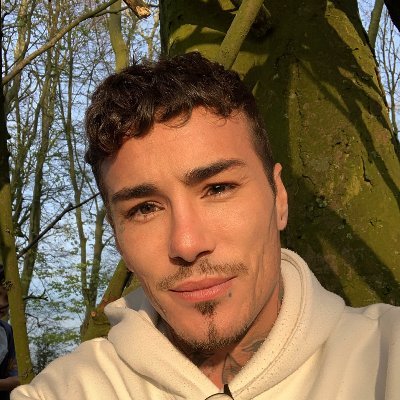
Juano lives in Wiltshire with his partner David and their son. He is an internationally
acclaimed artist and collaborates with many others including Pierre et Giles and Grace
Jones. His work has been exhibited in galleries across the world including at the Museum
of Modern Art in New York. Juano is currently working with film director Sophie Fiennes.


 Everything Is Better With Dragons
thanks for the blog tour support x