The heatwave of 1995.
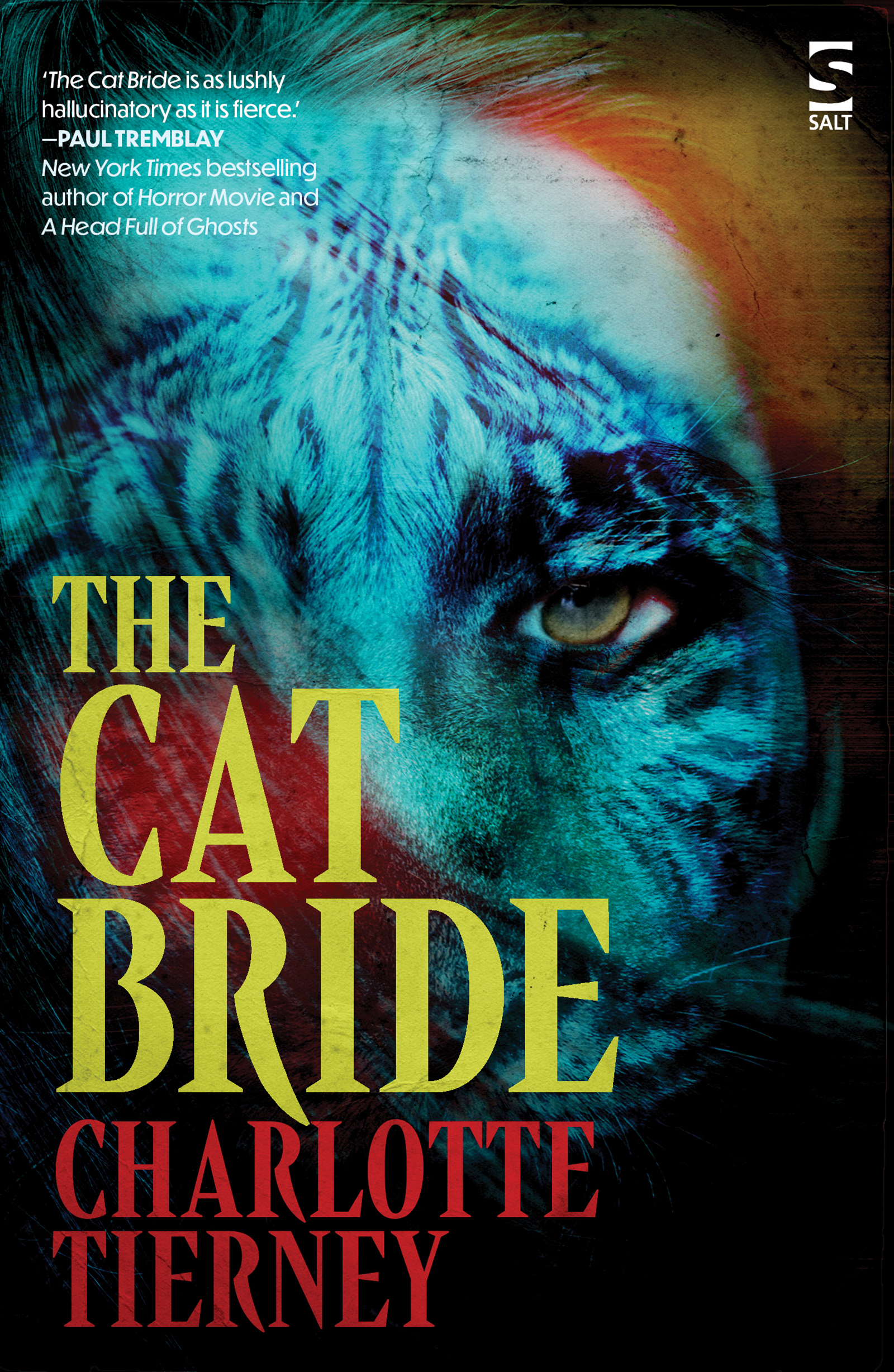
Sixteen years since an infamous tiger-lynx hybrid escaped a small moorland zoo and killed a man.
Sixteen years since the animal was euthanised.
Sixteen years for the zoo to fall into disrepair.
Lowdy’s Mumma grew up in the zoo and when Lowdy falls ill, they’re forced to move to the old zoo for her to recover, still inhabited by her dying grandmother. As soon as they arrive, rumours surface of a big cat stalking the moors again.
Vengeful locals blame the three women for an apex predator on the loose and invade the estate, searching for proof.
Mumma insists all the cats are dead. Grandma whispers that the ‘tynx’ needs to be fed. Lowdy, still recovering from her own mysterious illness, has no idea what to believe. Can she even trust herself when she wakes up covered in ticks with no recollection of the night before?
As Lowdy searches for the truth – the truth of her childhood, what it means
to be a woman, and the truth about the cats – she realizes something catlike runs in the blood, something she cannot ignore.
My Review
Thanks to Anne Cater for organising this blog tour and to the author Charlotte Tierney, and publisher, Salt, for my copy of this book.
After an incident at the boys’ school where her mother is a house matron, Lowdy and her mother are forced to move back home to Devon, where Lowdy’s grandmother has a run-down house and the remains of a zoo. Lowdy’s grandmother is dying. Lowdy’s mother is abusive and obsessive about cleaning. Lowdy is very confused and self-harming. She believes she is a cat. She comes to believe that her grandmother and mother are skin changers, that they can change into giant lynx. Then she starts to believe she can become a lynx.
Meanwhile, something is attacking livestock and the local farmers think it’s a big cat that killed someone in the zoo before Lowdy was born in 1979. Lowdy’s grandmother shot the cat, which she called a tynx, and the pair of lynx that had been sent to the zoo as rescues, but rumours abound, and now something is attacking livestock, houses and vehicles.
Lowdy is also experiencing her first period – late at 16 because she’s starved and underdeveloped – and her first crush. She’s isolated, deep in her delusions about being a cat, and struggling to understand all the changes in her life.
This is a tale of teenage psychosis, intergenerational abuse and trauma, social panics and scapegoating.
Lowdy’s grandmother is obsessed by cats of all kinds, and reacts to being abandoned by her husband by throwing herself into her zoo. Then starts wearing her husband’s clothes and acting like him. Aster, Lowdy’s mother, is given no boundaries and is emotionally neglected. She’s attacked at some point and becomes pregnant but hides it in the shows she does at the zoo with the lynx pair.
In turn, Aster locks Lowdy in cupboards, controls her movements and keeps her isolated once she turns 12, to ‘protect her’. This results in an imaginative child who pretending to be a cat as a young child, becoming certain she is a cat and acting as a cat. She becomes obsessed with body hair and develops pica, eating hair. She dissociates a lot. We learn through the narrative, when she’s lucid, that she’d been to a doctor who raised the possibility of abuse, which Aster dismisses (obviously), and has had an operation to remove the hair ball in her intestines. At the family home, Aster locks Lowdy in a tower room and obsessively cleans the house, throwing everything out. This is a symptom of her own obsessive delusions and mental health disorder, induced probably by the neglect of her parents and her assault as a teenager. She is struggling to deal with her mother dying, her mental illness, and her daughter’s illness, while returning to a place that triggered the mental illness in the first place. It makes for a story of unreliable narrators, confusion, and disorder. I found it quite engrossing!
The depiction of a teenager going through puberty and living in difficult circumstances has many resonances with other media. Has anyone seen the werewolf film, Ginger Snaps!? It’s about an American high school girl who gets attacked by a werewolf and goes on a rampage. It’s also an allegory for puberty. The use of shapeshifting as a metaphor for life changes, such as puberty, is an old one, and it is used very well here. Lowdy’s obsession with cats is used strategically to suggest her metamorphosis from child to adult, from a powerless kitten to a powerful adult. Her move from being imprisoned to the one doing the imprisoning also symbolises her taking her agency back from her mother.
The community depended on the tourists brought by the zoo int he 1960s and 1970s; when the zoo shut down, the tourist trade dried up, people lost businesses, farmers struggled to sell their livestock, so they blamed ‘Mrs Cat’ – Lowdy’s grandmother. A rumours starts, stories build into hysteria, and before you know it there are bands of ‘cryptozoologists’ searching for ‘mystery cats’ on the moors, claiming they’re expert trackers and riling everyone up into attacking a dying woman, her seriously mentally ill daughter, and her abused granddaughter.
I used to go down to Devon in the 1980s and 1990s – my mother and grandmother are from Devon and we regularly holidayed there to visit family. I remember the stories of the Beast of Bodmin and other ‘mysterious cats’. It was quite a thing at the time. The explanation was usually dogs or possibly an escaped big cat from a private zoo…This novel is very evocative of the time and place. We visited all sorts of little zoos and attractions that seemed to be the only things keeping some of the towns and villages alive, and saw the places where the tourists didn’t visit (great granddad Frank used to take us on magical mystery tours – don’t ask!).
A place like Devon, and neighbouring Cornwall, once survived on farming and mining; now the mines are closed and farming never paid well (see ‘The Edwardian Farm’ series set in Devon), so tourism has filled the gap. Tourism is seasonal and fluctuating from year to year. One bad, wet summer and a small business can go bust.
Farming is hard work, losing livestock can kill a family farm, so the extreme reaction of the community in this novel to losing sheep and ponies is understandable, but that response inflamed by people after their shot at fame into a mob is a reflection of the moral panics of the time, and now. All it takes is one or two people and a concerted campaign of inflammatory rumours and lies to whip and already stressed community into a mob mentality (see last summer’s riots for an example).
Humans are tribal, anything outside the group can be a threat. When a outside agent invents a threat and inserts themselves into a stressed community, that imagined threat can be reified and directed at vulnerable group – see the conservative anti-LGBTQIA+ campaign against trans+ rights at the moment. We are a threat because we question the conservative social order. That social order works for them, so the threat must be eliminated.
Equally, in this novel, Lowdy and her family are out-group members, along with anyone who cares about wildlife, who have rumours swirling about them. The existence of the tynx is a rumour, but when the ‘cryptozoologists’ and journalists turn up and say it’s real and it’s attacking people, in the absence of a true threat, Lowdy and her family become the target to be eliminated. The idea of a ‘mystery cat’ allows farmers to right off their normal livestock loses and bad years as the fault of ‘Mrs Cat’, pushing away blame. With the new ‘attacks’ they are able to latch on to the rumours as reality and attack the perceived threat until they can return things to ‘normal’. Off course, as soon as the ‘mystery cat’ is ‘dead’, the family run off their land, they’ll have to find a new scapegoat – probably grockles, or environmentalists, or the moors themselves.
For a novel ostensibly about a girl with a cat obsession and a controlling mother, going through puberty at a run-down private zoo, this book was very thought provoking. I’ve spent a good hour writing this review, because I had so much to say. My response when I finished reading the book yesterday (Monday 4th August) was confusion, but I’ve slept on it, digested it, and I’m very impressed by the way the author has mixed rural myths, social issues, the context of the mid-nineties, mental illness and parental abuse, the difficulties of puberty, and making friends, into a coherent narrative. I loved the jarring tonal shifts as Lowdy moved between mental states, confusion and clarity, the way reality is brought in between bouts of delusions to give the reader an insight into past events as they colour recent actions.
Recommended.
ABOUT THE AUTHOR

Charlotte Tierney’s work is forthcoming in The Best Weird Fiction Of The Year and has also been published in Best British Short Stories 2024, Conjunctions, The London Magazine, New England Review, 3:AM Magazine and Mechanics Institute Review among others.
She is inspired by contemporary genre-bending writers but also the taut social atmospheres of restraint and oppression found in classic weird women’s fiction. She lives on Dartmoor and is available for interview and to write features. @charlottetierney52

 Everything Is Better With Dragons