
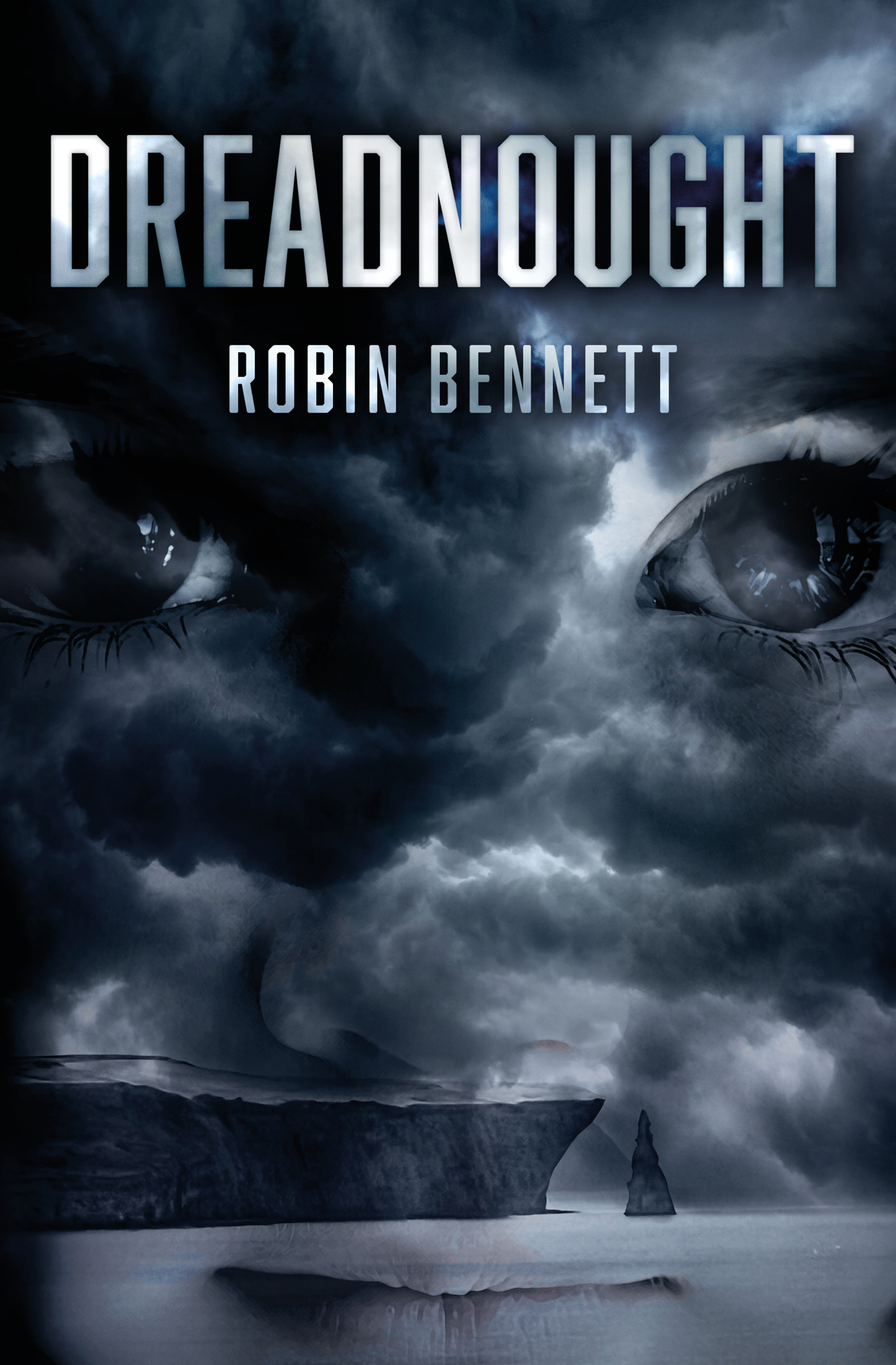
Dreadnought
A child sees things she’s sure don’t exist. The adults call it trauma. They’re both wrong.
On a remote Yorkshire headland known as Dreadnought, seven-year-old Cass Delaval begins to glimpse figures and fragments tied to a past that refuses to stay buried.
As the world edges toward conflict, Cass is drawn into a family mystery stretching back to the Second World War: a missing boy, a hidden weapon, and a family secret.
Because whatever has lain dormant on Dreadnought goes deep into our past … and it isn’t finished with us yet.
Dreadnought is a story of loyalty and hope, where the courage of one small girl may be our last defence.
Purchase Link – https://amzn.eu/d/0iKBv9i1
Extract
This extract is early on in the book. The book is set about ten years into our future and the growing threat of global conflict has led the remaining members of the Delaval family to seek a sort of refuge in Yorkshire on a promontory they have owned for a few generations. It is called Dreadnought. So far all we know is the grandfather, James has always liked the place. Olivia, his daughter, less so for reasons she cannot quite specify. Cass, the granddaughter, aged seven, initially loves it for the sea, the beaches and the freedom she and her brother Bertie are afforded after London. This is the first indication that Cass has more to learn about Dreadnought and the old house that they are living in.
‘Hurry up!’
Bertie was going much faster than Cass, but he wasn’t as far ahead as Boris who was now running across the sand, half in and half out of the waves. This looked like a lot more fun than the jumping, which was actually quite hard, and Bertie was cheating, so Cass gave up pretending and ran straight for the sea like a dart.
She forgot all about the fact Mummy had covered her in suncream and Grandpa had lent her his fishing hat that tied up and she smashed into the waves as Bertie, caught out and caught behind shouted, ‘Oi!’.
The sea was cold but not that cold and some of her cuts were stingy but not that stingy. It was frothy and fantastic! And for a few moments little Cass felt every care she had in the world wash away.
‘Look, Cass!’ Bertie, standing by some small rocks, had found some seaweed and was putting it on his head (of course). ‘I’m a pirate!’
Cass looked about for something interesting, too: saw a stick (all white), half a dead crab sloshing between two round stones the colour of toffee, some shells she tried to pull off the rocks but couldn’t (how did they hold on?) and something black and very shiny stuck in a crack. After a bit of tugging that hurt her fingers, it came away and she held it up.
‘What is it?’ Bertie had got bored of the seaweed and come over.
‘I don’t know. It’s shaped like a heart.’
Back at their new, but old house.
‘It’s called jet, and it probably came from a town near here called Whitby.’
‘What’s jet, like a plane?’ Bertie asked. ‘That doesn’t make sense.’
‘It comes from prehistoric wood, at least I think it does,’ Grandpa ploughed on.
‘And it was very fashionable amongst Edwardians of a certain class,’ added Cass’ mother. ‘Your great grandmother probably had a trunk full of it – for mourning, they did a lot of that in those days, it helped pass the time. You know, what you’ve found Cass might even have belonged to her, she did live here during the war, and …’ but she suddenly stopped talking and closed her mouth like she had been asked to swallow a bee.
Cass looked at her and she was looking at Grandpa, so she looked too because he suddenly seemed very angry about something. He put Cass’ treasure on the table with a click and picked up his wine instead. With a slurp.
Later, Cass was being helped into bed by her mother. The bandages on her hands would come off in three sleeps, she had promised but, for now, Cass had new ones that smelled of medicine. Cass put the jet pendant on her bedside table.
‘Mummy?’
‘Hmm?’
‘Don’t say hmmm…’
‘Hmm, what, then?’
‘Well, why doesn’t Grandpa like his granny?’ Cass’ mother paused.
‘She wasn’t always very nice from what I heard.’
‘She was a witch,’ Grandpa said, as he passed the door. ‘Or worse,’ he added.
‘Why was she a witch, could she do spells?’ Cass asked her mother because Grandpa had gone downstairs.
‘No, darling she wasn’t that sort of a witch.’
‘Did she have a cat?’ Bertie shouted from down the corridor, ‘and a big black hat?’
‘Well?’
‘Well, what?’
‘Did she have a cat and, um, wear scary clothes?’
‘She may have had a cat, everyone did in those days, to catch mice … and I wouldn’t say her clothes were scary, but wearing whalebone corsets and woollen petticoats in the height of summer – even up here – probably made her pretty frightening to know.’
‘So, she was a witch?’
‘No, witches don’t exist – at least not the ones who turn princes into frogs and fly about at night.’
‘But she might have been …’ Cass thought about it, ‘a secret witch.’
‘No, she was probably just very cross about something, most women were in those days.’
‘But…’
‘Goodnight, Cass.’
‘OK, goodnight, Mummy, but I’m not at all tired, I’ll probably just stay up for ages … wait!’
‘What?’
‘Leave the door open a bit, and the light on and remember you said if Boris wanted to come up and sleep in my room he could.’
‘I know.’
Later that night, when the adults had all gone to sleep, Boris huffed in his bed in the kitchen and even the house had put itself to bed, Cass thought she woke.
There was a scratching sound coming from the wardrobe door in her bedroom and her heart went boom boom. The scratching sound came again, followed by a ttsssss. Like someone with very dry lips was disappointed about something. The moon made a path across the floor to where the wardrobe stood, black against the white wall, like a dark door to somewhere.
Picking the jet pendant up, she got out of bed, crossed the wooden floor on tippy toes and then stood there, her face very close to the shiny wood, trying to hear the noise again.
The small key in the lock gave a rattle.
Cass stepped back because the key now began to turn itself on its own.
Then the wardrobe door swung open. Inside it smelled of the seaside, as if whoever was inside had come from there. In a sudden panic, Cass went to bang the wardrobe door shut.
A very white hand, like a claw, dripping with sea water shot out from between two cardigans and snatched the jet pendant.
‘Give that to me!’ the dry voice hissed. ‘It’s my black heart!’
Author Bio

Robin Bennett is an author and entrepreneur who has written over twenty-five books for children. He has also written books on the swashbuckling world of business: How to Make a Good Living Running Your Own Business, Kicking the Property Ladder and Start up Smart, all published by Harriman House.
In 2024 Cracking was shortlisted for a Week Junior Book Award and Sunday Times Sports Book of the Year for Children. His YA novel ‘XII’ was shortlised for a British Book Award in 2023 and his very popular Monster Max Series is a Book Trust pick and won Coventry Inspiration Book Awards in 2022. Picus the Thief, won the Writer’s News Indie Published Book of the Year Award in 2012.
When Robin grew up he thought he wanted to be a cavalry officer until everyone else realised that putting him in charge of a tank was a very bad idea. He then became an assistant gravedigger in London. After that he had a career frantically starting businesses (everything from dog-sitting to cigars, tuition to translation)… until finally settling down to write improbable stories to keep his children from killing each other on long car journeys.
When not writing or starting companies, Robin plays most sports. Poorly.
Social Media Links –
https://www.instagram.com/robinbennettauthor
https://www.tiktok.com/@robinbennettauthor