Hi I'm Rosemarie and I like to write. I write short stories and longer fiction, poetry and occasionally articles. I'm working on quite a few things at the minute and wouldn't mind one day actually getting published in print.
Life is already
complicated enough for Awa Bryant when she starts having weird dreams – waking
dreams – and strange coincidences start appearing in her real life.
She meets
dreamcharmer, Veila, a quirky glowing creature who helps to guide Awa through
the mysterious Dreamrealm.
At first the
Dreamrealm is a glorious escape from Awa’s daily struggles but something is not
right… Soon Awa discovers she has a bigger quest, and everything she cares
about is at stake. Will she be brave enough to face her fears and save her
friends?
*Terms and
Conditions –Worldwide
entries welcome. Please enter using the Rafflecopter box below. The
winner will be selected at random via Rafflecopter from all valid entries and
will be notified by Twitter and/or email. If no response is received within 7 days
then Rachel’s Random Resources reserves the right to select an alternative
winner. Open to all entrants aged 18 or over. Any personal data given as
part of the competition entry is used for this purpose only and will not be
shared with third parties, with the exception of the winners’ information. This
will passed to the giveaway organiser and used only for fulfilment of the
prize, after which time Rachel’s Random Resources will delete the
data. I am not responsible for despatch or delivery of the prize.
About
the Author
Isa Pearl
Ritchie is a New Zealand writer. As a child, she loved creating imaginary
worlds. She has completed a PhD on food sovereignty in Aotearoa. Her second
novel, Fishing for Māui, was selected as one of the top books of 2018
in the New Zealand Listener and was a finalist in the NZ Booklovers Award for
Best Adult Fiction Book 2019. Awa and the Dreamrealm is her first book
for young people.
I have so many Pen & Sword books to review (because they keep releasing so many that I want to read!) that I’m doing multiple reviews in a single post. Today I’m writing reviews for the true crime books I’ve read recently.
On the evening of 21 August 1983, Metropolitan Police detectives raced to the cells of London’s Clapham Police Station to find a prisoner dead and his cellmate sat cross-legged and quiet in the corner.
Kieran Kelly, a labourer from Ireland, quickly confessed to strangling the prisoner – and then stunned officers by confessing to dozens of unreported and unsolved murders over the previous 30 years.
Detectives believed they were in the presence of Britain’s most prolific serial killer yet Kelly was convicted on just two of his admissions and his story went unnoticed until 2015, when a former police officer who worked on the case claimed the killer’s crimes were covered up by the British Government.
Strangulations, murders on the London Underground, an internal Metropolitan Police review – as the story’s elements whipped the international news media into a frenzy, journalist Robert Mulhern set off on a methodical search for the truth against the backdrop of an ever-increasing body count.
I had not heard of this case before, and I was intrigued because I thought I’d heard of most of the major serial killers in Britain in the last fifty years, There has been a lot of speculation and sensationalisation about Kieran Kelly, much of it encouraged by former Police Officer Geoff Platt, alleging that Kieran Kelly had murdered 31 people, 12 on the tube. He wrote a couple of books about it and apparently does cruises. He also says the crimes were covered up by the government for some reason.
Robert Mulhern does an excellent job of chasing down as much of the truth as possible after so long. The only certainty is that Kelly killed his cell-mate William Boyd in August 1983 and Hector Fisher on Clapham Common in 1975. He may have also killed five or six other homeless people, but the police weren’t able to prove anything and his own solicitor called Kelly a ‘fantasist’.
As much an investigation in to the life of Kieran Kelly and an investigation into the claims that were making headlines and their author. Mulhern travels from London to Ireland and back, trying to check the details and speaking to people who knew Kelly as Ken.
Mulhern spoke to a lot of other people, including more police officers involved with the Kelly case in 1983/1984, and Geoff Platt himself. Among those Mulhern spoke to was ‘Officer A’, who had access to a lot of the paperwork and the new Inquiry, and retired D.I., Ian Brown, a detective on the Boyd case, who objects to being called a liar.
The evidence suggests Kelly murdered five or six homeless people during drunken rages, but had nothing to do with any deaths on the Underground. It also suggests that Platt is making hay from his minor part in an unusual case of murder in a police station. There’s some really good investigative work in this book, with multiple interviews from the people who were there.
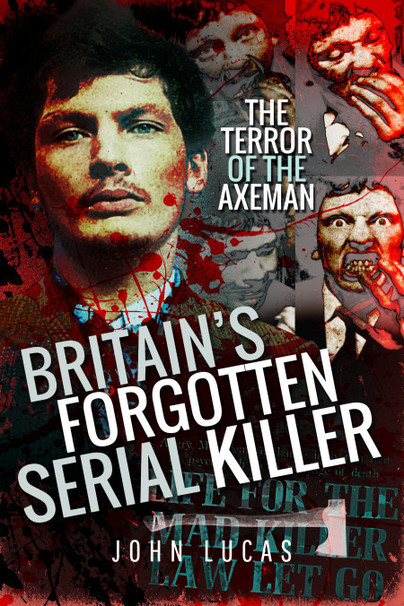
Serial killer Patrick Mackay was dubbed the most dangerous man in Britain when he appeared in court in 1975 charged with three killings, including the axe murder of a priest. The Nazi-obsessed alcoholic had stalked the upmarket streets of West London hunting for victims and was suspected of at least eight further murders.
Now, after more than 40 years behind bars, where he has shunned publicity, Mackay has been allowed to change his name and win the right to live in an open prison – bringing him one step closer to freedom. For the first time, Britain’s Forgotten Serial Killer reveals the full, untold story of Patrick Mackay and the many still-unsolved murders linked to his case. https://www.pen-and-sword.co.uk/Britains-Forgotten-Serial-Killer/p/16439
My Review
Patrick Mackay is a bit of a sad sack, who took out his own insecurities first on his mother and sisters, and then on local kids, before moving on to murder people who tried to help him. Usually elderly women. I’ve heard about him before so I couldn’t understand the title of this book. And then I got to the last chapter.
Patrick Mackay’s crimes were sensational at the time – priests found hacked to death in their baths will cause a fuss – but over the years he’s been forgotten. Murderers with higher body counts have pushed him into the background. He’s changed his name and now lives in an open prison. Brady or Sutcliffe would never have been allowed to do that.
The author sets out a biography of Patrick Mackay and his potential involvement in other unsolved crimes that match the crimes he was convicted for. If you’ve never heard of this particular serial killer, this book is a good place to start.
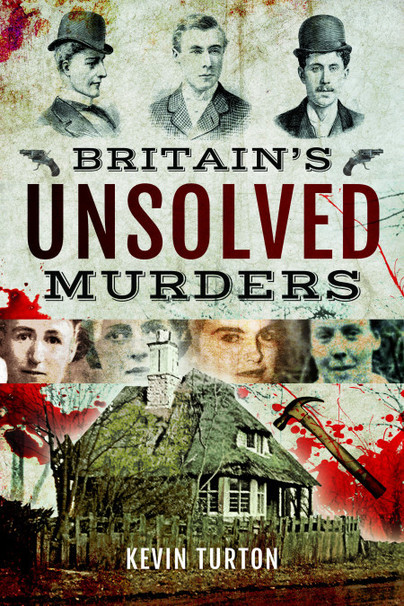
Britain has its fair share of unsolved murders. Crimes that have both fascinated and horrified in equal measure, with many as baffling today as they were when the stories first hit the headlines in the national press. Spanning 100 years between 1857-1957, this book re-examines thirteen of these murder cases and retells the stories that have endured and confounded both police and law courts alike. Each chapter provides an account of the circumstances surrounding the killing, of the people caught up in the subsequent investigation and the impact it had on some of their lives. It also explores the question of guilt and to whom it should, or should not, be attached. Each of these murders poses an undeniable truth; no-one was ever proven to have committed the killing despite, in some cases, accusing fingers being pointed, arrests being made and show trials taking place. Consequently, notoriety, deserved or otherwise, was often attached to both victim and accused. But was it ever merited?
From the questionable court case surrounding Scotland’s now famous Madeleine Smith, and the failed police investigation into Bradford’s Jack the Ripper case of 1888, to the mysterious deaths of Caroline Luard and Florence Nightingale Shore at the start of the twentieth century, this book disturbs the dust, sifts the facts and poses the questions that mattered at the time of each murder. Did Harold Greenwood poison his wife in Kidwelly? Who was responsible for the Ripper-like killing of Emily Dimmock and Rose Harsent? Why did Evelyn Foster die on the moor near Otterburn in what became known as the Blazing car murder and who strangled Ann Noblett to death in 1957?
This book covers thirteen murders from 1857 – 1957, some quite well-known and some less so. The author gives the details then discusses the possible killers, as far as he is able to after so long. Each chapter is detailed and the photographs and images provided are helpful. It’s a fairly easy to read book that you can pick up to read a chapter or two then go back to later.
A good place to start if you’re interested in unsolved murders.
Throughout our islands’ history we find tales of thieves, smugglers, thugs and murderers. Books have been written retelling tales of bandits, footpads, highwaymen, et al, attacking the lone traveller, the horseman, the coachman, shipping line, locomotive engineer, lorry or van driver and even pilot. Yet for almost two centuries the majority of goods travelled on Britain’s famed canal network. This also attracted felons of all kinds and yet many of these tales had been ignored, until now.
Within these pages all manner of crimes are covered. From murders to muggings, parental problems to pilfering, arson, assault, smugglers, counterfeiters and even road rage (albeit canal-style). But it is not all morbidity and misery, humour also plays a significant part in these tales. Why would a hungry man steal the inedible? Follow the policeman on foot chasing down a thief on board the narrowboat. Discover what really lies beneath the waters of the canal. Learn about canal etiquette, the hardships, the kindness and the cruelty.
From an author whose fascination with etymology has produced many books on origins of place names, leading to an interest in the historical modes of travel across our islands, this book is the latest to follow old routes and those found along them. https://www.pen-and-sword.co.uk/Crime-on-the-Canals-Paperback/p/16206
My Review
Well, this one was different. Since the network of canals around England were first dug in the early years of the Industrial Revolution to the modern use of them for pleasure, crime has taken place. Murder, mugging, coal theft.
I found this book sludgy going at times, although at others it was really fascinating.
So, Kelly at Love Books Tours emailed the other day and asked if I’d help with this publication day book promotion. As people know, I like to help, so I said yes. I was also intrigued by the synopsis of the novel. Having now read the author bio, I like the author too. The bio is funny. And appeals to my socialist side. Anyway. go ahead and have a gander for yourselves.
Elianor Paine is a Magistrate of the Peace in the Kingdom of Trist and a republican secret agent. She has 6 days to subvert her investigation, supplant war-hero Lord Vile, then coerce his adult children to start a revolution, before her masters discover the truth and have her killed. Just how far is she willing to go? And can she change the world without changing herself?
Keith Crawford is a retired Navy Officer, a disabled veteran, a Doctor of Law & Economics, a barrister, a stay-at-home Dad, and a writer. He has written for collections of scholarly works, academic journals, and newspapers including The Economist. He has had more than thirty plays recorded or produced for stage, been listed in a variety of short story competitions (in spite of his hatred of short stories), and runs a radio production company, www.littlewonder.website, which regularly runs competitions promoted by the BBC to help find, develop and encourage new writers.
In 2014 he was lecturing at Sciences Po in Paris and negotiating a contract to write a book on banking regulation, when he and his wife discovered to their delight that they were due to have their first child. Rather than writing more work that would only be read by his poor students, and then misquoted by politicians, he decided he would do his bit to stick his fingers up at the patriarchy and stay home to look after his own kids rather than the grown-up kids of rich people. Two more children swiftly followed. Keith has discovered that if you recite Stick Man backwards you get the lyrics to AD/DC’s Highway to Hell.
This (looking after the kids, not satanic rites with Stick Man) allowed him to support his wife’s career, which appears to be heading for the stratosphere, and also gave him the space to write about sword fights and explosions. And spaceships. All of which are more fun than banking regulation. As an extension to his work in radio production, he set up his own small press, and his first novel, Vile, is due to be published in December 2019. More novels will swiftly follow, like buses in countries that don’t privatise the bus companies.
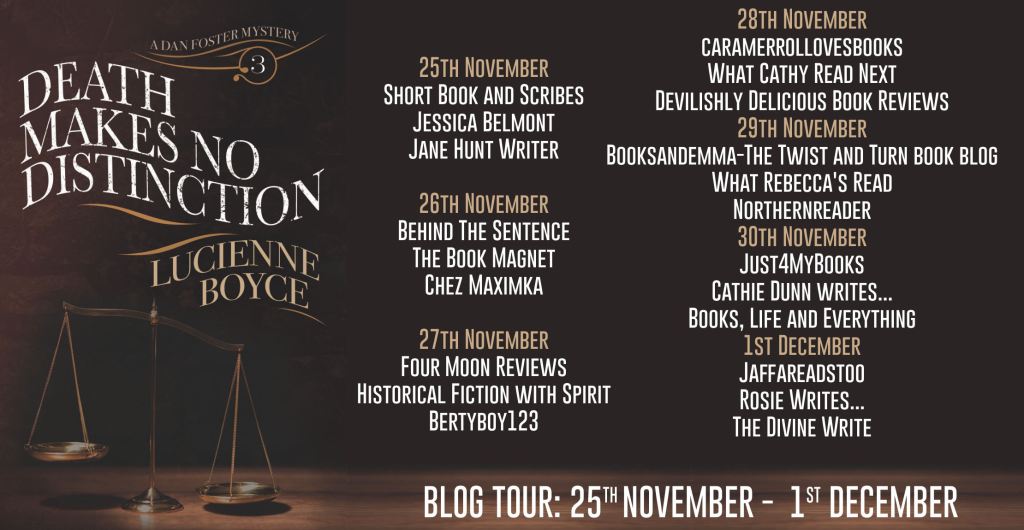
Two
women at opposite ends of the social scale, both brutally murdered.
Principal
Officer Dan Foster of the Bow Street Runners is surprised when his old rival
John Townsend requests his help to investigate the murder of Louise Parmeter, a
beautiful writer who once shared the bed of the Prince of Wales. Her jewellery
is missing, savagely torn from her body. Her memoirs, which threaten to expose
the indiscretions of the great and the good, are also missing.
Frustrated
by the chief magistrate’s demand that he drop the investigation into the death
of the unknown beggar woman, found savagely raped and beaten and left to die in
the outhouse of a Holborn tavern, Dan is determined to get to the bottom of
both murders. But as his enquiries take him into both the richest and the
foulest places in London, and Townsend’s real reason for requesting his help
gradually becomes clear, Dan is forced to face a shocking new reality when the
people he loves are targeted by a shadowy and merciless adversary.
Christmas is a time for families to come together.
Guin
Roberts can’t think of anything worse than visiting a Christmas market with her
new family. Guin is perfectly happy with own company and doesn’t want that
disrupted by her wisecracking stepbrother and his earnest mum.
Their
Christmas celebrations are invaded by a sleigh full of murderous elves. And it
doesn’t matter if they’ve been naughty or nice — these elves are out for blood.
Can the family band together to survive the night? Or will Santa’s little helpers make mincemeat of them all?
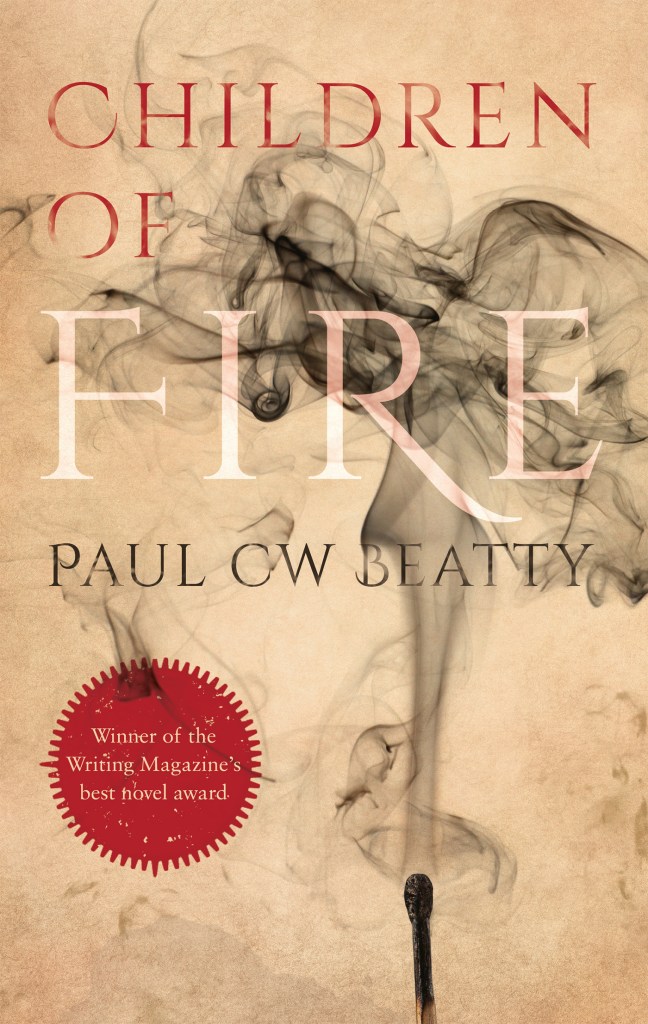
Can Josiah solve the puzzle
before more people die, or is he out of his depth?
In 1841, at the height of the
industrial revolution in the North West of England, Josiah Ainscough returns
from his travels and surprises everyone by joining the Stockport Police Force,
rather than following his adopted father’s footsteps into the Methodist
ministry.
While Josiah was abroad, five men
died in an explosion at the Furness Vale Powder Mill. Was this an accident or
did the Children of Fire, a local religious community, have a hand in it. As
Josiah struggles to find his vocation, his investigation into the Children of
Fire begins. But his enquiries are derailed by the horrific crucifixion of the
community’s leader.
Now Josiah must race against time
to solve the puzzle of the violence loose in the Furness Vale before more
people die. This is complicated by his affections for Rachael, a leading member
of the Children of Fire, and the vivacious Aideen Hayes, a visitor from
Ireland.
Can Josiah put together the
pieces of the puzzle, or is he out of his depth? Children of Fire won the
Writing Magazine’s Best Novel Prize for 2017












 Everything Is Better With Dragons