Review: The Emergent, by Nadia Afifi

Fiction: FICTION / Science Fiction /
Genetic Engineering
Product format: Paperback
Price: £12.95; $16.95
ISBN: 978-1-78758-666-6
Pages: 320 pp

Blurb

Amira Valdez’s adventures continue in the sequel to The Sentient,as she
finds herself in unprecedented danger. The ruthless new leader of the
fundamentalist Trinity Compound seeks to understand his strange
neurological connection with Amira and unleash an army on an unstable
North America. The first human clone has been born, but thanks to the
mysterious scientist Tony Barlow, it may unlock the secret to human
immortality– or disaster. Together, Amira and Barlow form an uneasy alliance in pursuit of scientific breakthroughs and protection from shared enemies.

But new discoveries uncover dark secrets that Barlow wants to keep hidden.

My Review

Thanks to Anne of Random Things Tours for organising this blog tour, and to Flame Tree Press for sending me a copy of the book.

Oh my goodness me! I just finished reading this novel (28th May 2022), I read the remaining 250 pages of this 310 page book today after getting started on it earlier in the week but being too exhausted to read for most of the week. I think I read most of it in about 4 hours, which is about normal for me. It was a real page-turner, though, because once I got settled with food and fluids, I didn’t move until I finished reading it.

Amira and friends return some months after the end of The Sentient, the first book in this series. After being cleared by Westport Police of any crimes, Amira has been tagged by the Aldwych Council to prevent her escaping before they could bring her to trial. The opening is tense and moving as Amira deals with her fears about what would happen if she was found guilty on spurious charges. She copes by getting drunk the night before her trial and hiding in an ancient vertical farm. Found and returned to civilisation by her friends D’Arcy and Julian, she finds she has more friends than she thought, or at least people who need her for things, including Dr Barlow. Amira also gets a boyfriend, despite her fears and internalised guilt.

What follows is a rollicking adventure that bounces from calm to tension to explosions and back again several times before an ending that is totally unexpected. There are several gun and ship battles, and once again Amira goes into space and has to do some high level clambering around buildings.

The plot was gripping and I liked the character development of Amira as she realises that she can be someone other than the ‘compound girl come good’ through seeing the manipulation of power players in the city. We learn more about the history of the Pandora project and the Cosmics, and see more of the world post-Cataclysm. There’s an eight year period which demands it’s own novel, from Lee, D’Arcy, Maxine or Hadrian’s POV.

There were some minor typographical errors, couldn’t tell if the author meant to use ‘commandeered’ when ‘commanded’ would make more sense. I can see why, in the context, it would sometimes be appropriate, but not always and it could be a mistake.

Review: Monsieur Le Chef, by Milo McGivern

Monsieur Le Chef  by Milo McGivern 
Genre: Children’s 
Age: 8 – 12 

Facebook Handle: https://www.facebook.com/milo.mcgivern.75/

Authors Website: Milomcgivern.com

Blurb 

Far across the sea and hidden by mist, lies a mysterious island. A bizarre place, populated by talking animals, that doesn’t appear in any atlases. A land that somehow continues to change its position on the planet each day, to prevent it from being found by humans. Welcome back to the Island of Animaux!

The five new tales in Monsieur Le Chef pick up where the last ones left off. Aubrey the Turkey continues to get up to his old mischief. In one story he imagines he is a great chef, until Clifford Platypus gets mixed up with preparations for the main course. In another tale Aubrey presents himself as a great explorer, to save poor Walli Hog. The arrival of his sister forces Aubrey to face his lack of bravery. And the three friends come together to play in an exciting football cup final. Other old friends reappear and new creatures, some sinister, are also introduced. Stories packed with fun, silliness, naughty behaviour and happy endings.

Please enjoy the stories. And don’t be afraid to laugh, particularly at Aubrey’s expense. But please, please, please – continue to remember to keep the latest position of the island top secret!

Continue reading “Review: Monsieur Le Chef, by Milo McGivern”

Audiobook Review: New versions of the Discworld books

I have listened to many Discworld audiobooks, and my favourite narrator is, and will always be, Stephen Briggs. Stephen Briggs was a fan before he was a narrator and it’s possible to tell from listening to his narration. These new editions all have three narrators – a main narrator which changes with the series, Peter Serafinowicz who plays Death, and Bill Nighy as the footnotes.

Continue reading “Audiobook Review: New versions of the Discworld books”

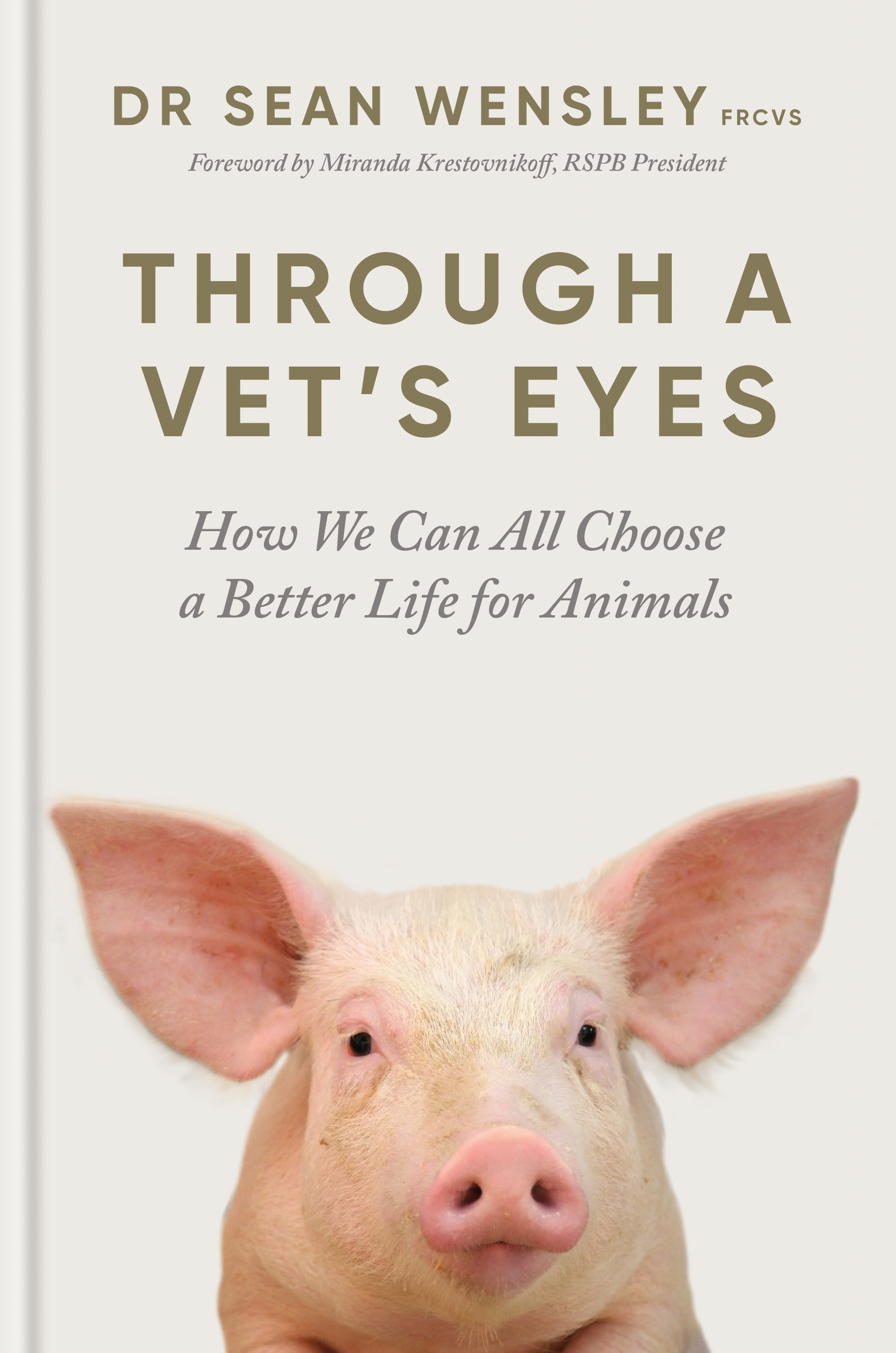
Review: Through A Vet’s Eyes, By Dr Sean Wensley

Gaia | £20.00 | 28th April 2022

Dr Sean Wensley is an award-winning vet and lifelong naturalist who has contributed to animal welfare and conservation projects all over the world. His debut book is about how we can choose a better life for animals, from the chickens we eat to the pets we keep.
As our societies become more urbanised, we are further removed from the reality of where and how our food is produced. On the opposite end of the spectrum, the humanisation of our pets is a risk to their welfare; with 60% of UK dogs being overweight or obese, we are effectively killing them with kindness. Through a Vet’s Eyes seeks to redress this imbalance so that we see all animals as thinking, feeling beings not dissimilar to ourselves.

There is high public and political interest in animal welfare, with current attention focused on high-profile topics such as animal sentience, humane and sustainable global agriculture and breeding pets, such as flat-faced dogs, for looks over health. To fully consider and improve the lives of animals, evidence-based information is needed to help us all understand these issues, what they mean from the animals’ perspectives and what we can all do to help.

A polemic with elements of memoir and nature writing, the book takes us through the years in which Sean trained to become a vet and shares his first-hand experience of how animals are treated and used for our benefit. It interrogates the different levels of welfare afforded to them and reveals
how we, as consumers and informed citizens, can reduce our animal welfare footprint through the choices we make every single day.

Continue reading “Review: Through A Vet’s Eyes, By Dr Sean Wensley”

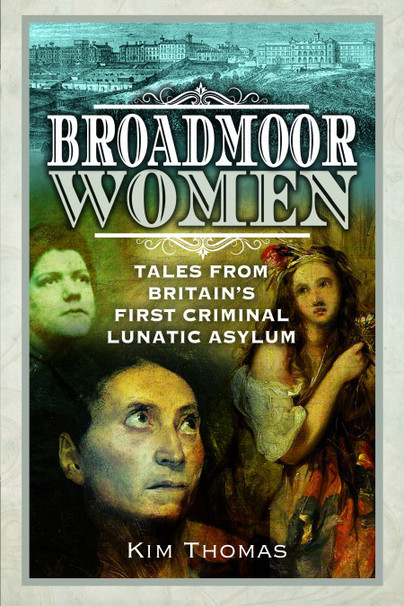
Pen & Sword Review: Broadmoor Women – Tales from Britain’s first criminal lunatic asylum, by Kim Thomas

By Kim Thomas
Imprint: Pen & Sword History
Pages: 192
Illustrations: 20 black and white illustrations
ISBN: 9781526794260
Published: 12th April 2022

Blurb

Broadmoor, Britain’s first asylum for criminal lunatics, was founded in 1863. In the first years of its existence, one in five patients was female. Most had been tried for terrible crimes and sent to Broadmoor after being found not guilty by virtue of insanity. Many had murdered their own children, while others had killed husbands or other family members.

Drawing on Broadmoor’s rich archive, this book tells the story of seven of those women, ranging from a farmer’s daughter in her 20s who shot dead her own mother to a middle-class housewife who drowned her baby daughter. Their moving stories give a glimpse into what nineteenth-century life was like for ordinary women, often struggling with poverty, domestic abuse and repeated childbearing. For some, Broadmoor, with its regime of plain food, fresh air and garden walks, was a respite from the hardships of their previous life. Others were desperate to return to their families.

All but one of the women whose stories are recounted in this book recovered and were released. Their bout of insanity was temporary. Yet the causes of their condition were poorly understood and the treatment rudimentary. As well as providing an in-depth look at the lives of women in Victorian England, the book offers a fascinating insight into the medical profession’s emerging understanding of the causes and treatment of mental illness.

My Review

Rosie Crofts, who does the marketing for Pen & Sword, sent me an email about this book a couple of weeks ago. I sat down and read it over the weekend.

I quite enjoy microhistories; the life of a single person or building can tell you something about the world around them. This book investigates the lives of seven women who were incarcerated in Broadmoor in the first forty years.

Most of them killed their children, one killed her husband and one killed her mother. Most of them had hard lives, limited by social conventions and/or poverty. Respectability was important to them all, and in court could be leveraged by a defendant so that they received a ‘guilty but insane’ or ‘not guilty by reason of insanity’ verdict. Often judges and juries were sympathetic to women who killed new born children in ‘puerperal insanity’ or ‘lactation insanity’. Psychiatrists and doctors didn’t really understand what was going on in people’s minds, and were still clinging to the idea that uteruses could cause madness; one particular belief was that women were so fragile that breast feeding for too long would cause madness.

Some of them had pre-existing mental health conditions before they committed their crimes and hadn’t received any or very limited care. Medical care for mental illness was limited at the time, as people were expected to look after their family members and doctors didn’t really understand how brains and hormones worked. Really bad cases were dropped in asylums and either left or experimented on, observed and drugged. Except in rare cases, like Tukes’ Retreat in York where the Quakers believed in calm, purposeful activity and loving kindness.

They averaged about 7 years in Broadmoor and were often released back to their families. Some husbands started petitioning for their release almost immediately after they were convicted, out of love or desperation for someone to care for their children. Returning to their families was often the worst thing that could happen to the women for several years, since it was the family/home environment that triggered the mental breakdown in the first place.

The regime at Broadmoor in the early years was based on improvement and calm, providing patients with a safe place to recover from their madness, time to heal and return to equanimity before being released. The early superintendents took after Dr. Tuke in their care of the patients; nutritious food, rest and care by sympathetic staff. Their regime was based on the latest (in the 1860s) scientific information. It would still be considered good care, now. Unfortunately, in between 1900 and 2000 there was a change in attitudes from care to abuse and back again. Seriously, I’m working on a project about this for work and it gives me nightmares to think about what happened to people with mental illnesses, learning disabilities or who were otherwise neurodivergent in asylums and residential centres.

I found this book interesting, it humanises the history of Broadmoor and gives us a snapshot into the social conditions of the late Victorian period. It would have been interesting to learn about the lives of the women warders alongside the patients. How did some working class women end up as warders and some as patients?

Could have done with some copy editing.

Review: The Blood Trials, by N.E. Davenport

│14 APRIL 2022│
PB £8.99│EB £5.49│EA £12.99

Blending fantasy and science fiction, N.E. Davenport’s fast-paced, action-packed debut kicks off a duology on loyalty and rebellion, in which a young Black woman must survive deadly trials in a racist and misogynistic society to become an elite warrior.

It’s all about blood.

Blood spilled long ago between the Republic of Mareen and the armies of the Blood Emperor, ending all blood magic.

Now there is peace in the Republic – but there is also a strict class system, misogyny, and racism. Her world is not perfect, but Ikenna survived in it.

Until now.

With the murder of her grandfather, Ikenna spirals out of control. Though she is an initiate for the Republic’s deadly elite military force, Ikenna has a secret only her grandfather knew: she possesses the blood magic of the Republic’s enemies.

Ikenna throws herself into the gladiatorial war games at the heart of her martial world: trials that will lead her closer to his killers. Under the spotlight, she subjects herself to abuse from a society that does not value her, that cherishes lineage over talent – all while hiding gifts that, if revealed, would lead to execution or worse. Ikenna is willing to risk it all to find out who killed her grandfather…

So she can end them.

Continue reading “Review: The Blood Trials, by N.E. Davenport”