Paperback Publication date: April 20th 2023, The History Press
Blurb
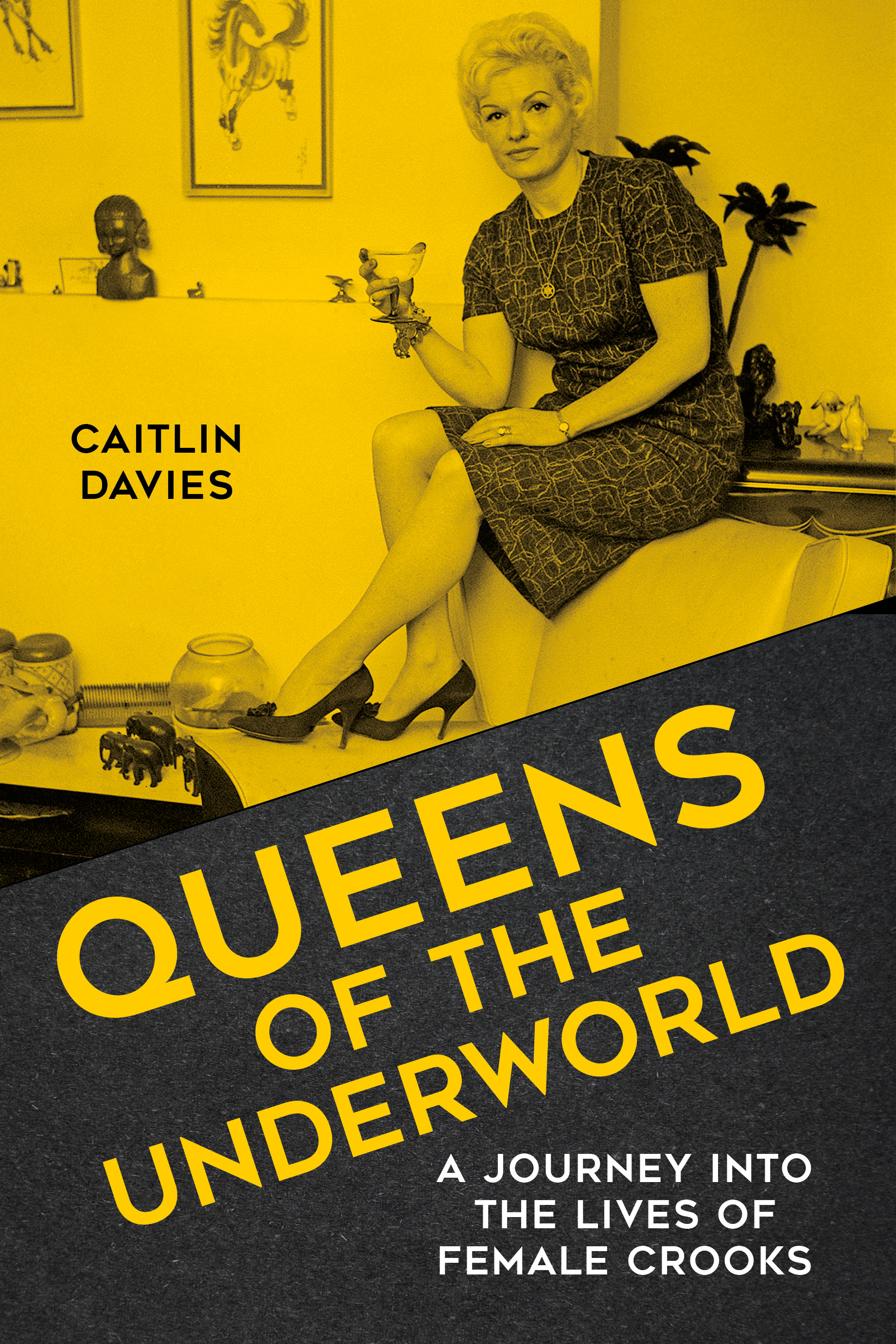
Robin Hood, Dick Turpin, Ronnie Biggs, the Krays … All have become folk heroes, glamorised and romanticised, even when they killed. But where are all the female crooks? Where are the street robbers, gang leaders, diamond thieves, bank robbers and gold smugglers?
Queens of the Underworld reveals the incredible story of professional female criminals from the 17th century to today. From Moll Cutpurse who ruled the Jacobean underworld, to Victorian jewel thief Emily Lawrence and 1960s burglar Zoe Progl, these were charismatic women at the top of their game.
But female criminals have long been dismissed as either not ‘real women’ or not ‘real criminals’, and in the process their stories have been lost. Caitlin Davies unravels the myths, confronts the lies, and tracks down modern-day descendants in order to tell the truth about their lives.
‘A riveting dive into the criminal underworld and the women who queened it there’ – Helena Kennedy QC
‘A rollicking account of all kinds of crime committed by women, who have not only been forgotten or ignored, but who put their male counterparts to shame’ – Julie Bindel, The Spectator
In the follow up to his Sunday Times bestseller, The Hidden Life of Trees, Peter Wohlleben compares tree planting to battery farming
‘In clear, vivid prose with impeccable reasoning, Peter Wohlleben makes a compelling case that almost everything we do in modern forestry management may be dead wrong. What should we do instead? Let the wisdom of the trees quell our human arrogance, heal the forest and restore our sweet, green world’ Sy Montgomery, author of How to be a Good Creature and The Soul of an Octopus
TREES CAN SURVIVE without humans, but we can’t live without trees. Even if human-caused climate change devastates our planet, trees will return—as they do, always and everywhere, even after ice ages, catastrophic fires, destructive storms, and deforestation. It would just be nice if we were around to see them flourish.
The Power of Trees is forester Peter Wohlleben’s follow-up to The Hidden Life of Trees, a Sunday Times bestseller that sold millions of copies worldwide. In his latest book, he is dismissive of token gestures in terms of tree planting. Just as he compared forest trees to ‘families’ and urban trees to ‘street urchins’ in his first book, in The Power of Trees he uses equally powerful metaphors to compare tree planting to battery farming (‘Switching to fast-growing species and breeding trees for desired traits brought results like those achieved by factory farming: individuals ready for harvest at a young age, all with a relatively uniform carcass weight.’). However, he also joyfully describes trees determination to survive, describing seedlings breaking through the earth where you least expect them, as ‘stalwart tree children’.
This latest work is as fascinating and eye-opening as it is trenchant in its critique: on the one hand, Wohlleben describes astonishing discoveries about how trees pass knowledge down to succeeding generations and their ability to survive climate change; on the other, he is unsparing in his criticism of those who wield economic and political power—who plant trees exclusively for the sake of logging and virtue signaling—even as they ruthlessly exploit nature. The Power of Trees is a love letter to the forest and a passionate argument for protecting nature’s boundless diversity, not only for the sake of trees, but also for us.
Imprint: Aurum Pub Date (UK): Apr 20, 2023 Price: £16.99 GBP ISBN-13: 978-0-7112-6711-4 Format: Hardcover Book Pages: 256
Blurb
In this fascinating and insightful book, feminist curator Rachael Lennon provides an intimate and intersectional examination of the history of marriage around the world. With a lively and accessible style, Lennon tells a remarkable story of how this institution has developed from the ancient customs of the stone age through to the modern form it takes today. This book also explores themes such as the pressure to marry, the politics surrounding proposals, the spectacle of marriage, the business behind it, and the politics tied to consummation as well as issues such as taking a man’s name, the nuances of marriage vows and obedience, ‘having it all’ and trying to keep up the fight to have an enduring marriage.
Having married her wife just a few years after the legalisation of same sex marriage in the United Kingdom, Lennon interweaves her own personal experiences of marriage with stories and anecdotes from throughout history to explore how marriage has transformed over the years.
Title Details ISBN:9781911668565 | Murdoch Books Hardcover | Embargo 13 October 2022 RRP £25.00
A heart-warming story of resilience and Persian culinary culture with mouth-watering recipes that are simple, flexible and full of flavour.
In Iran Hamed was a chef and restaurateur but he was also frequently in trouble with the religious police. When a crisis of faith imperilled his life, Hamed was forced to flee to Australia by boat with his pregnant girlfriend for his own safety. They travelled to Indonesia and then to Australia where they were detained for five months, shortly after their release their daughter was born.
It was natural for Hamed to gravitate towards food after his perilous escape and journey to Australia. His first dream was to find work: without English or local experience, that was hard enough. His next ambition was to open a business: his heartfelt cafe and restaurant SalamaTea launched in 2019. As soon as he could, Hamed employed fellow refugees and asylum seekers at SalamaTea, giving them the work experience that he found so hard to come by himself.
In Salamati Hamed melds Persian culinary culture and an understanding of different flavours to create recipes that are truly his – and now ours – to share. Hamed’s food is anchored in tradition but with recipes which are accessible to all, celebratory and appealing. With every swipe of warm lavash through herbed adami dip, every bite of braised lamb with dried lime and saffron rice, Hamed shines a light on his Persian past as he continues to build an optimistic future.
Packed with beautiful recipes and gorgeous photography throughout, Salamati is full of authentic and accessible dishes: • Ghahve Khunee Omelette (Street Food Tomato Omelette) • Halim Bademjan (Lamb, Lentil and Eggplant Casserole) • Fesenjun (Walnut and Pomegranate Chicken Stew) • Sabzi Polow Ba Mahi (Fish with Herb Pilaf) • Khoresh Bamieh (Slow-cooked Beef and Okra) • Lubia Polow (Green Bean Pilaf) • Persian Love cake • Bastani Sonnati (Persian Ice Cream) Wherever you live and whatever your background, you are invited to join the feast.
296 pages, Paperback Published January 1, 2009 by Middlesex University Press ISBN 9781904750680 (ISBN10: 1904750680)
Blurb
A history of the fantasy form, this work traces the genre from the earliest years with The Epic of Gilgamesh and The Odyssey through to the origins of modern fantasy in the 20th century with such acclaimed writers as Terry Pratchett and J. K. Rowling. An exploration of the great variety of fiction published under the heading “fantasy,” this engaging study seeks to explain its continuing and ever-growing popularity.
My Review
I bought myself this book because I am interested in fantasy as a genre. I have been reading fantasy seriously for almost thirty years, and I have joked that I learnt to be human by reading fantasy. I’ve learnt a lot about why people do what they do by reading fantasy. I am interested in the history and theory of the genre because I want to know why it is so popular, yet so disdained by the literary establishment*.
This book covers the development of fantasy as a genre up to 2008. It goes into detail in some areas but not in others. They cover Pratchett and Tolkien, of course, but also children’s fantasy and the cross-over between fantasy and sci fi. It is a comfortable balance between the popular and the academic.
I have only one problem with this book: I keep buying books. Oh, and it needs updating to 2022. Lots has happened in the last 14 years.
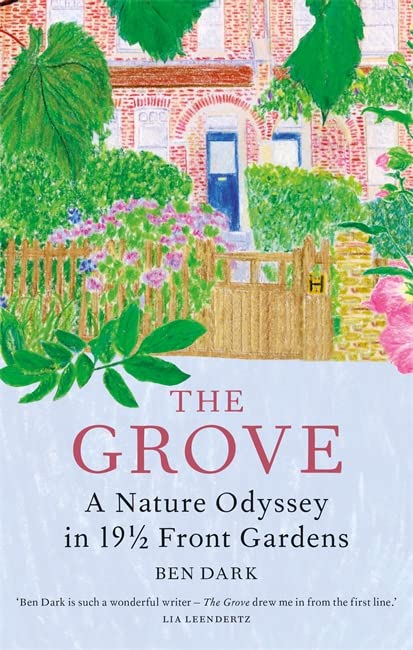
Recent times have seen a renewed interest in urban nature, as can be witnessed in the work of amateur botanists, identifying wildflowers and chalking their names on pavements. In The Grove the award-winning writer and head gardener, Ben Dark, reveals the remarkable secrets of 20 commonly found cultivated plants – including the rose, buddleja and the tulip – observed in the front gardens of a typical London street on daily walks over the course of a year. We discover how each species found its way into our gardens, the cast of characters who played their part in its story and what each one tells us about our national obsession with gardening and the urge to cultivate our own patch of nature.
‘Every species in this book was seen from one pavement over twelve months and there is little here that could not be found on any road in any town, but they recount stories of such weirdness, drama, passion and humour that, once discovered, familiar neighbourhoods will be changed forever.’
The Grove is about so much more than a single street, or indeed the plants found in its 19 ½ front gardens. It’s a glorious piece of urban nature writing and a skilful blend of horticultural history, personal narrative and an exploration of why gardens and gardening matter.
Hardcover, 248 pages Published June 30th 2022 by Pen & Sword History ISBN:1399004166 (ISBN13: 9781399004169)
Blurb
Victorian Fashions for Women explores the British styles and clothing throughout the long reign of Queen Victoria, from the late 1830s to the first years of the 20th century. Within are a superb overview of the dresses, hats, hair styles, corsetry, undergarments shoes and boots that combined to present the prevailing styles for each decade. From those who had enough money to have day and evening wear and clothes for sports and outdoor activities, to those with limited income and wardrobes or labouring folk with little more than the clothes they stood up in.
All decades are illustrated with original photographs, adverts and contemporary magazine features from the authors’ own remarkable collections, accompanied by a knowledgeable and informative text that describes the fashions, their social history context and influences reflected in the clothes of the time. Laid out in a clear and easy-to-follow chronological order, the key features of styles, decoration and accoutrements will help family historians to date family photographs and will provide a useful resource for students and costume historians or for anyone with a love of fashion and style to enjoy.
My Review
Review number five of the day. Don’t collapse everyone; I know I’ve posted a lot of reviews today, but I stack them up until I find a day to do all the reviews. Today is the day. I woke up early and I’ve had to stay up to wait for my post to be delivered. It was parcels, of meds and sweets. I needed more inhalers. This hot weather is screwing with my asthma so badly that I’m having to use them a lot more than usual. Since I’m awake and haven’t gone back to bed yet, I need to get these reviews done.
As you may know, I enjoy studying history and every area of life has something to tell us about history and society in different time periods, whether it’s food or military actions. Clothes are quite important facets of society and dress history is a growing area. I have visited the V&A museum in the past and was fascinated by the work that went into historical clothing. I also enjoy watching videos on YouTube by dress historians and reenactors, like Morgan Donner, Nicole Rudolph, Abby Cox and Bernadette Banner. It’s an unexpected turn for my interests, I know, because generally I don’t have much interest in clothes, beyond my swimming costumes and fancy underwear. It’s all about comfort for me.
Honestly, upper- and middle-class Victorian clothes look really uncomfortable! Heavy, fussy, and over-decorated. The figure was changed by adding padding and frames, rather than changing the body. Over seventy years fashions and figure changed in a variety of ways, from materials used to the type underwear worn. It really is quite interesting. This book is definitely focused on the dress of middle and upper-class women, because it is those women who could afford the clothes in fashion plates and fashion magazines. The development of fashion magazines and the production of paper patterns in magazines is also mentioned; I have quite a few modern patterns from magazines so the early history of these useful items is interesting to me. It shows that women were making their own fashionable clothes and using the new mechanical sewing machines that were starting to become available to the home sewer. It shows that high fashion was available to everyone if they had the money for material and time to sew.
I would have liked more information on working class clothing and fashions, which were covered only briefly, but I understand the limitations given the information available and the remaining material culture. The writing got a little sludgy at times but wasn’t bad.
Hardcover, 216 pages Published June 16th 2022 by Pen and Sword History ISBN:1526773023 (ISBN13: 9781526773029)
Blurb
Nothing causes a stir on social media platforms like a topical discussion on the latest food trend. Modern-day chefs like to think that they are creative and often claim to push boundaries of food creation, but if we want to explore real culinary creativity then we need to look to our ancestors.
Writer and food historian, Seren Charrington-Hollins delves into the history of culinary experimentation to bring us some of the weirdest and most stomach-churning food delicacies to ever grace a dining table. She uncovers the rather gruesome history behind some everyday staples, uncovers bizarre and curious recipes, whilst casting light on foods that have fallen from culinary grace, such as cows udders and tripe; showing that revulsion is just a matter of taste, times and perhaps knowledge.
From pickled brains to headcheese, through to songbirds and nymphs’ thighs, this book explores foods that have evoked disgust and delight in diners depending on culinary perspective.
So pull up a chair, unfold your napkin and get ready for a highly entertaining and enlightening journey to explore what makes a recipe revolting? Be warned; you’ll need a strong stomach and an open mind.
My Review
I actually managed to read and finish a book Pen & Sword sent me within a couple of months of getting it! Actually, I have another one I’ll review soon. I’ve still got a massive Pen & Sword pile to read. I will, eventually get through them all. I read another book by this author, about tea in 2020.
So, why did I read and finish this one so quickly?
Food! I like good food, I like to cook, and I find food a fascinating way to understand societies. Why would anyone eat some of the stuff they have if they didn’t need to? For instance garum sauce – hugely popular in ancient Rome, made of fermented fish. Basically fish left to rot in terracotta pots. Nope, not eating that. Who first thought to try it? And who thought of eating bovine digestive tracts (tripe)? Who gutted a cow and thought, ooh, that looks lovely? Only someone really desperate would consider pigs ears, surely?
And that’s just the stuff people chose to eat.
Imagine thinking you were going to get a decent bit of tinned ham and it turned out to be rotten because the tin wasn’t sealed properly. And you’re on a three year mission to chart the North West Passage. Eurgh! I liked the details about the history of food and the changes in diet over the centuries. It’s mostly Anglo-centric although there are some European and North American stories.
There were some sections that put me right off some foods and some I’m pleased I’ve never eaten. Like goose liver pate. That’s just cruel.
The book started off really strongly but by the last chapter it began to waver a bit and felt like it was unfinished. However, generally a good introduction to food history.
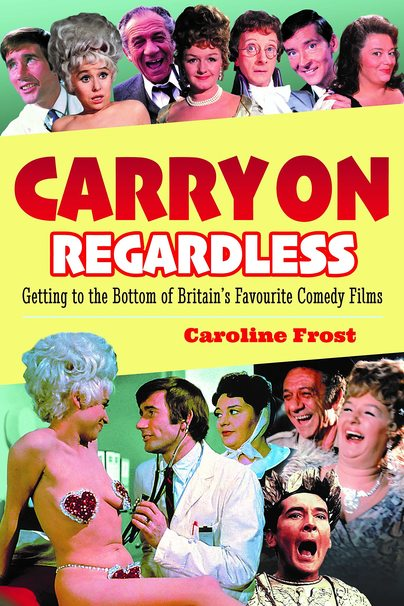
By Caroline Frost Imprint: White Owl Pages: 232 Illustrations: 32 black and white illustrations ISBN: 9781526774781 Published: 5th May 2022 Expected Re-release Date: 30th June 2022
Blurb
The completely updated story of Carry On, Britain’s largest film franchise, all the way from the gentle capers of the 1950s, through the raucous golden age of the 1960s, to its struggles in the years that followed.
We take a happy walk down memory lane to enjoy again Sid James’s cheeky chuckle, Kenneth Williams’ elongated vowels, Charles Hawtrey’s bespectacled bashfulness and Barbara Windsor’s naughty wiggle.
It all seemed effortless, but exclusive interviews with the series’ remaining stars including Bernard Cribbins, Angela Douglas and Kenneth Cope shed new light on just how much talent and hard work went into creating the laughs. For the first time, the loved ones of some of the franchise’s biggest names – on and off screen – share their personal memories from this unique era.
Was Carry On really as sexist, racist and bigoted as critics claim? Three of the films’ female stars explain why they never felt remotely exploited, plus we take a fresh look at some of the series’ biggest titles and discover that, in reality, they were far more progressive than their detractors would have you believe.
Finally, with constant talk about new films, fresh productions and tantalising speculation about a brand new era of Carry On, we ask – does this unique series still have legs?
My Review
Thanks to the publisher for sending me a copy of this book. It came with my latest box of books from Pen & Sword. I have always enjoyed the Carry On… films, they are a fond memory from my childhood, where we collected the VHS tapes and then the DVDs. I still have the DVDs but got rid of my tapes when I moved out in 2014. I have always been fascinated by the personalities behind the films, especially the ensemble cast of the 60s who come to mind when I think about the films. I’ve been re-watching the films lately. They’re a nostalgic blanket on a wet Sunday afternoon.
I can also quote quite a few lines from most of the films.
This book is an overview of the films, the cast and crew, going from the earliest film, Carry On Sergeant, to the final film, Carry On Columbus. Over the series the films poked gentle fun at institutions, cracked jokes and threw out double entendre all over the place. Unfortunately, by the late seventies, they struggled to cope with changing social mores and the attempts at keeping up with the times fell flat.
Frost writes from a position of fondness and the author clearly enjoyed interviewing as many people as she could who had been involved, and using the auto/biographies of those she could not, to give a positive view of the films. However, she doesn’t give us many details of the actual production process, and she gets repetitive at times. We hear time and time again how much the cast enjoyed filming, and how it was ‘just like going back to school’ every time they went back to Pinewood Studios. It also gets a bit ‘Great British Humour’ at times, all a bit jingoistic.
I found the discussion of criticism of the films interesting. Certainly the sort of stuff they got away with wouldn’t happen now, such as the black face used in Carry On…Khyber and …Up The Jungle. The roles for women could be a bit limited, although as the author points out, many of the women characters were strong, determined women. Carry on Cabby is a fantastic early example. However, the cheap jokes at the expense of women’s appearances is galling, and actually contributed to Joan Sims’ possible Binge Eating Disorder. I thought that Frost’s attitude to the criticism of what she and others refer to as ‘Woke’ and ‘PC’ critics is a bit hypocritical. People have made valid points about the films and the attitudes they display, and you have to be a very canny viewer to realise there’s a bit more going on.
There is a discussion of the likelihood of new Carry Ons…end the book; there are some deluded people out there that think it could happen. I’m sorry, but times and humour have changed. The films are a snap-shot of a time and place, a period of social change that is reflected in the attitudes of the films and the tension between the past and present in the 1960s and early 1970s. The films also worked because they had an ensemble cast of comedic actors. As we saw with the rebooted ‘St. Trinians’ films, what worked in 1960 doesn’t work in the 2000s; social mores and humour have changed, and there is a dearth of the sorts of comedic actors who would be willing to work as part of an ensemble cast, or with the training on stage, TV and film that the cast had.






 Everything Is Better With Dragons