Published By: Independently published Publication Date: 20th May 2018 Format: Paperback I.S.B.N.: 9781719390163 Price: £10.20 Purchase Links
Blurb
Throughout the history of Christianity there have been those claiming a monumental secret. Often centered around the Church of St. Sulpice in Paris and associated with French esoteric circles like Debussy who wrote in a review:
“Perhaps it’s to destroy that scandalous legend that Jesus Christ died on the cross.”
But even Canon Alfred Lilley came back from St. Sulpice questioning the crucifixion. There must have been some documentation in the church that convinced these people of something portentous. BUT now searching links between the history of Rome and the latest Biblical research, we finally reveal the extraordinary facts that prove exactly what the monumental secret was and its validity making the revaluation of Christianity, as we knew it, inevitable.
Published By: Pen & Sword Publication Date: 4th October 2018 Format: Hardback I.S.B.N.: 9781526731241 Price: £1999
Blurb
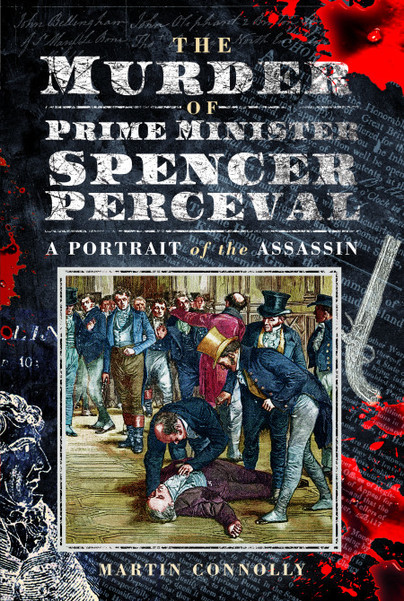
England entered the nineteenth century having lost the American states and was at war with France. The slave trade had been halted and the country was in torment, with industrialisation throwing men and women out of work as poverty haunted their lives. As the merchants of England and America saw their businesses stagnate and profits plummet, everyone blamed the government and its policies. Those in charge were alarmed and businessmen, who were believed to be exploiting the poor, were murdered. Assassination indeed stalked the streets.
The man at the centre of the storm was Prime Minister Spencer Perceval. From the higher reaches of society to the beggar looking for bread, many wanted him dead, due to policies brought about by his inflexible religious convictions and his belief that he was appointed by God. In May 1812 he entered the Lobby of the Houses of Parliament when a man stepped forward and fired a pistol at him. The lead ball entered into his heart. Within minutes he was dead.
Using freshly-discovered archive material, this book explores the assassin’s thoughts and actions through his own writings. Using his background in psychology, the author explores the question of the killer’s sanity and the fairness of his subsequent trial.
Within its pages the reader will find an account of the murder of Spencer Perceval and a well-developed portrait of his assassin.
Published By: Pen & Sword Publication Date: 7th November 2018 Format: Hardback Price: £19.99 I.S.B.N.: 9781526732293
Blurb
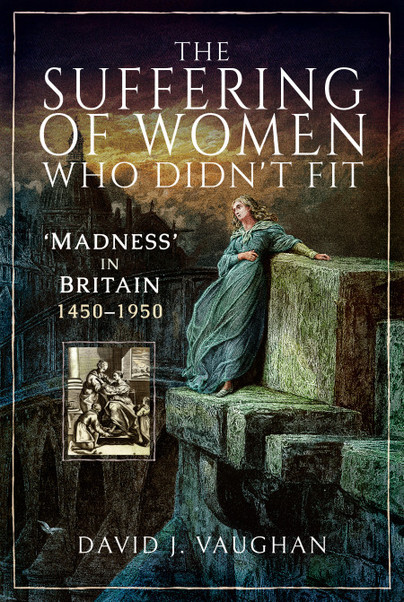
For over 500 years, women have suffered claims of mental decay solely on account of their gender. Frigid, insane, not quite there, a witch in sheep’s clothing, labels that have cast her as the fragile species and destroyer of Man.
This book reveals attitudes, ideas and responses on what was to be done with ‘mad women’ in Britain.
Journey back into the unenlightened Middle Ages to find demonic possession, turbulent humours and the wandering womb. In the Puritan Age, when the mad were called witches and scolds ducked for their nagging. The age of Austen and a sense and sensibility created from her fragile nerves. Then descend into Victorian horrors of wrongful confinement and merciless surgeons, before arriving, just half a century past, to the Viennese couch and an obligation to talk.
At the heart of her suffering lay her gynaecological make-up, driving her mad every month and at every stage of her life. Terms such as menstrual madness, puerperal insanity and ‘Old Maid’s Insanity’ poison history’s pages.
An inescapable truth is now shared: that so much, if not all, was a male creation. Though not every medic was male, nor every male a fiend, misogynist thought shaped our understanding of women, set down expectations and ‘corrected’ the flawed.
The book exposes the agonies of life for the ‘second class’ gender; from misdiagnosis to brutal oppression, seen as in league with the Devil or the volatile wretch. Touching no less than six centuries, it recalls how, for a woman, being labelled as mad was much less a risk, more her inevitable burden.
Published By: Pen & Sword Publication Date: 11th September 2018 Format: Hardback I.S.B.N.: 9781526722232 Price: £12.99
Blurb
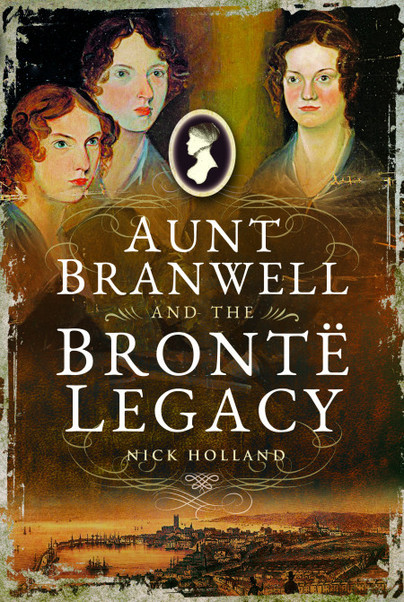
Elizabeth Branwell was born in Penzance in 1770, a member of a large and influential Cornish family of merchants and property owners. In 1821 her life changed forever when her sister Maria fell dangerously ill. Leaving her comfortable life behind, Elizabeth made the long journey north to a remote moorland village in Yorkshire to nurse her sister. After the death of Maria, Elizabeth assumed the role of second mother to her nephew and five nieces. She would never see Cornwall again, but instead dedicated her life to her new family: the Brontës of Haworth, to whom she was known as Aunt Branwell.
In this first ever biography of Elizabeth Branwell, we see at last the huge impact she had on Charlotte, Emily and Anne Brontë, as well as on her nephew Branwell Brontë who spiralled out of control away from her calming influence. It was a legacy in Aunt Branwell’s will that led directly to the Brontë books we love today, but her influence on their lives and characters was equally important. As opposed to the stern aunt portrayed by Mrs. Gaskell in her biography of Charlotte Brontë, we find a kind hearted woman who sacrificed everything for the children she came to love. This revealing book also looks at the Branwell family, and how their misfortunes mirrored that of the Brontës, and we find out what happened to the Brontë cousin who emigrated to America, and in doing so uncover the closest living relatives to the Brontë sisters today.
Honest! I’m not doing anymore this year. I’ve been ill, there’s been a lot of reading time. I’ve been making progress through my Pen & Sword collection.
Published By: Pen & Sword Publication Date: 7th November 2018 Format: Hardback ISBN: 9781526731654 Price: £15.99 Link
Blurb
Pirates and Privateers tells the fascinating story of the buccaneers who were the scourge of merchants in the 18th Century. It examines their lifestyle, looking at how the sinking of the Spanish treasure fleet in a storm off the coast of Florida led to a pirate’s gold rush; how the King’s Pardon was a desperate gamble – which paid off – and considers the role of individual island governors, such as Woodes Rogers in the Bahamas, in bringing piracy under control.
The book also looks at how piracy has been a popular topic in print, plays, songs and now films, making thieves and murderers into swash-buckling heroes. It also considers the whole question of buried treasure – and gives a lively account of many of the pirates who dominated the so-called ‘Golden Age’ of Piracy.
My Review
A very good introduction to the subject, concentrating on the era known as the ‘Golden Age’ of piracy, and while the author notes that piracy is still with us and is the result of systemic inequalities, he doesn’t discuss modern piracy – that is outside the scope of the book. The chapters cover the general history of piracy, biographies of various pirates and colonial officials who sought to deal with them, and the ‘pirate’ sub-genre of crime literature and it’s later developments in novels and other popular culture such as plays and films.
The book was very easy to read, the author writes sympathetically but is realistic about the nature of piracy – not heroes but thieves, rapists and murderers – and explores the myths surrounding pirates and their treasures with a keen eye for poppycock. The book explores only a tiny fragment of the subject, but it is a good starting place for further research.
BPublished By: Pen & Sword Publication Date: 19th November 2018 Format: Hardback ISBN: 9781473872516 Price: £15.99 Link
Blurb
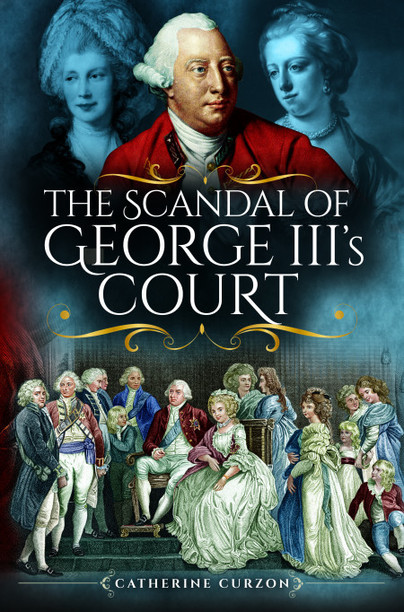
From Windsor to Weymouth, the shadow of scandal was never too far from the walls of the House of Hanover. Did a fearsome duke really commit murder or a royal mistress sell commissions to the highest bidders, and what was the truth behind George III’s supposed secret marriage to a pretty Quaker?
With everything from illegitimate children to illegal marriages, dead valets and equerries sneaking about the palace by candlelight, these eyebrow-raising tales from the reign of George III prove that the highest of births is no guarantee of good behaviour. Prepare to meet some shocking ladies, some shameless gentlemen and some politicians who really should know better.
So tighten your stays, hoist up your breeches and prepare for a gallop through some of the most shocking royal scandals from the court of George III’s court. You’ll never look at a king in the same way again…
My Review
What a family! I’d be so embarrassed if I was directly related to them. An overbearing matriarch and patriarch, daughters confined to the palace, sons and brothers making ‘unsuitable’ marriages, girlfriends and illegitimate children here there and everywhere, the odd murder. Sounds like most families. Except this one had money and power to back up their behaviour and silence people. And they were the centre of press focus for decades. And what fun the press had with them…
I sat and read this book yesterday after I’d finished reading about pirates. Sometimes a bit of gossip is fun, especially when those concerned have been dead for two centuries. It was fun, amusing. Curzon’s jaunty writing style lends itself to the subject and it’s obvious that the eighteenth century is her passion. She writes sympathetically and makes evenhanded judgements on the truth or otherwise of the rumours and scandal. She uses contemporary sources, later literature and current scholarship to provide a rounded picture of events and the people involved.
This book is a an accessible, fun, introduction to the period and people of George III’s court.
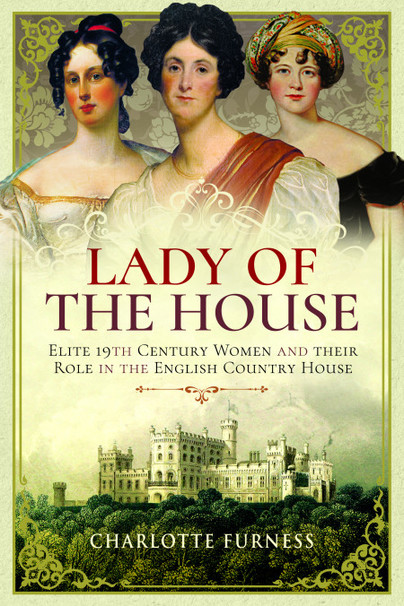
Published by: Pen & Sword Publication Date: 3rd July 2018 Format: Paperback I.S.B.N.: 9781526702746 Price: £12.99
Blurb
This book tells the true stories of three genteel women who were born, raised, lived and died within the world of England’s Country Houses. This is not the story of ‘seen and not heard’ women, these are incredible women who endured tremendous tragedy and worked alongside their husbands to create a legacy that we are still benefitting from today.
Harriet Leveson-Gower, Countess Granville was the second born child of the infamous Georgiana, Duchess of Devonshire who married her aunt’s lover, raised his illegitimate children and reigned supreme as Ambassadress over the Parisian elite.
Lady Mary Isham lived at Lamport Hall in Northamptonshire with her family where, despite great tragedy, she was responsible for developing a house and estate whilst her husband remained ‘the silent Baronet’.
Elizabeth Manners, Duchess of Rutland hailed from Castle Howard and used her upbringing to design and build a Castle and gardens at Belvoir suitable for a Duke and Duchess that inspired a generation of country house interiors.
These women were expected simply to produce children, to be active members of society, to give handsomely to charity and to look the part. What these three remarkable women did instead is develop vast estates, oversee architectural changes, succeed in business, take a keen role in politics as well as successfully managing all the expectations of an aristocratic lady.
Published by: Pen & Sword ISBN:9781473893153 Published: 19th November 2018
Price: £19.99
Format: Hardback
Blurb
When the thirteen year old Margaret Tudor, eldest daughter of Henry VII and his wife Elizabeth of York, married King James IV of Scotland in a magnificent proxy ceremony held at Richmond Palace in January 1503, no one could have guessed that this pretty, redheaded princess would go on to have a marital career as dramatic and chequered as that of her younger brother Henry VIII.
Left widowed at the age of just twenty three after her husband was killed by her brother’s army at the battle of Flodden, Margaret was made Regent for her young son and was temporarily the most powerful woman in Scotland – until she fell in love with the wrong man, lost everything and was forced to flee the country. In a life that foreshadowed that of her tragic, fascinating granddaughter Mary Queen of Scots, Margaret hurtled from one disaster to the next and ended her life abandoned by virtually everyone: a victim both of her own poor life choices and of the simmering hostility between her son, James V and her brother, Henry VIII.
My Review
Margaret Tudor, the eldest daughter of Henry VII and Elizabeth of York. Ever heard of her?
As a child she lived in luxury in the royal nursery with Prince Henry and Princess Mary. There were others but they died young, and Prince Arthur had his own household elsewhere. At the age of 13, after losing her brother Prince Arthur, her mother and then her grandmother, Lady Margaret Beaufort, Princess Margaret married King James IV of Scotland, who was 29.
That’s about the time her life got complicated. Poor lass, her first husband slept around on her, her second and third husbands were abusive theives, her brother was a dick to her, she was separated from her daughter, and people who were supposed to support her didn’t. She wasn’t the most intelligent or educated woman and didn’t really care for politics, but she did her best when she was dropped in the muck, to help her son on to the throne and keep him there. She tried to act as peace maker between her husband, and then her son, and her brother, however the distrust between monarchs put paid to all her efforts.
This is a sympathetic and easy to read biography of a rather unfairly obscure but important woman in a formative time in early modern Europe.
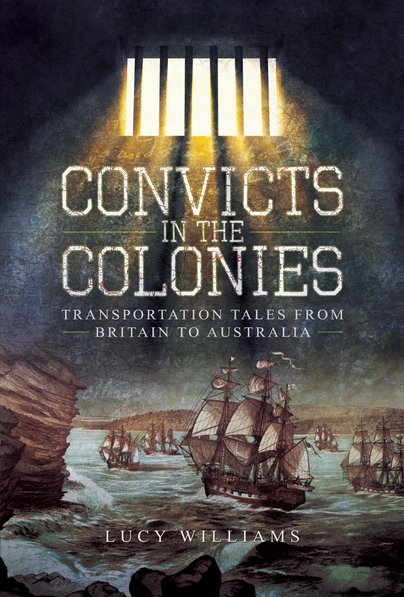
In the eighty years between 1787 and 1868 more than 160,000 men, women and children convicted of everything from picking pockets to murder were sentenced to be transported ‘beyond the seas’. These convicts were destined to serve out their sentences in the empire’s most remote colony: Australia. Through vivid real-life case studies and famous tales of the exceptional and extraordinary, Convicts in the Colonies narrates the history of convict transportation to Australia – from the first to the final fleet.
Using the latest original research, Convicts in the Colonies reveals a fascinating century-long history of British convicts unlike any other. Covering everything from crime and sentencing in Britain and the perilous voyage to Australia, to life in each of the three main penal colonies – New South Wales, Van Diemen’s Land, and Western Australia – this book charts the lives and experiences of the men and women who crossed the world and underwent one of the most extraordinary punishment in history.
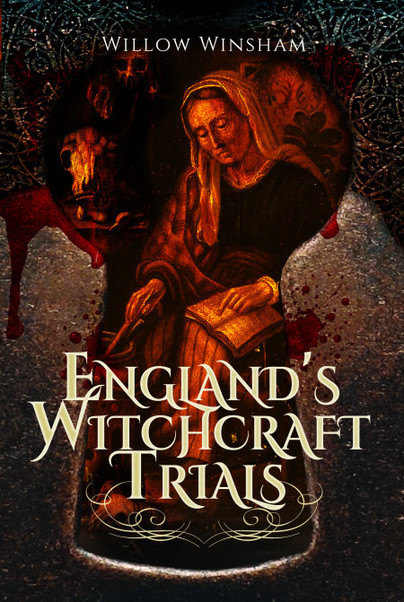
With the echo of that chilling injunction hundreds were accused and tried for witchcraft across England throughout the 16th and 17th centuries. With fear and suspicion rife, neighbour could turn against neighbour, friend against friend, with women, men and children alike caught up in the deadly fervour that swept through both village and town.
From the feared “covens” of Pendle Forest to the victims of the unswerving fanaticism of The Witch Finder General, so-called witches were suspected, accused, and dragged into the spotlight to await judgement and their final fate.
Following an assassination attempt on George III in 1800, new legislation significantly altered the way the criminally insane were treated by the judicial system in Britain. This book explores these changes and explains the rationale for purpose-built criminal lunatic asylums in the Victorian era.
Specific case studies are used to illustrate and describe some of the earliest patients at Broadmoor Hospital – the Criminal Lunatic Asylum for England and Wales and the Criminal Lunatic Department at Perth Prison in Scotland. Chapters examine the mental and social problems that led to crime alongside individuals considered to be weak-minded, imbeciles or idiots. Family murders are explored as well as individuals who killed for gain. An examination of psychiatric evidence is provided to illustrate how often an insanity defence was used in court and the outcome if the judge and jury did not believe these claims. Two cases are discussed where medical experts gave evidence that individuals were mentally irresponsible for their crimes but they were led to the gallows.
Written by genealogists and historians, this book examines and identifies individuals who committed heinous crimes and researches the impact crime had on themselves, their families and their victims.





 Published By: Pen & Sword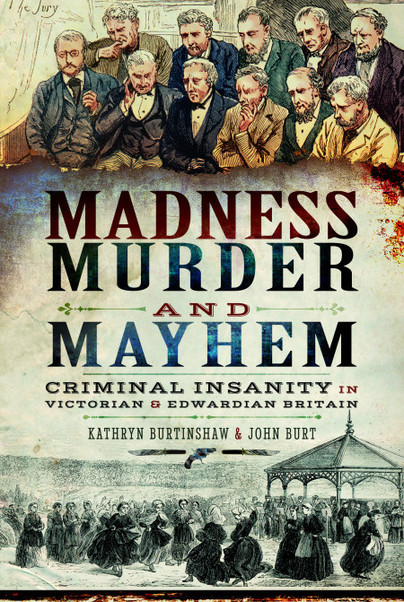
 Everything Is Better With Dragons