Publication date Thursday, January 18, 2024 Price £16.99 EAN\ISBN-13 9781804191354
Description
Every good hero needs a villain! Explore the hidden world of magnetic and mysterious villains, often cast aside and misunderstood in tales of mythology and folklore. Through the pages of Queer Villains of Myth and Legend, discover a diverse community of fascinating characters, ranging from seductive and cunning to powerful and awe-inspiring.
Experience the dark allure of Circe and Medusa through to David Bowie’s Jareth in Labyrinth and delve into their complex and multifaceted personalities and motivations. Take a deep dive into the intersection of queerness and villainy, re-examine some of our favourite characters, and discover why so many ‘bad’ characters are queer-coded.
From ancient mythology to contemporary pop culture, Queer Villains of Myth and Legend celebrates the fascinating stories of these often-overlooked characters. Join Dan Jones on a journey of discovery, as he explores the hidden depths of queer villainy and sheds light on the queer identities of these compelling figures. It’s a powerful celebration of queerness through the ages in all its legendary complexity.
Format: 208 pages, Paperback Published: September 20, 2023 by Pluto Press ISBN:9780745349015 (ISBN10: 0745349013)
Blurb
For decades, conservative evangelicals and Trans-Exclusionary Radical Feminists (TERFs) have worked hand-in-hand to oppose trans liberation. But how did this alliance come about? What makes it tick? And how can trans people and allies respond?
This book, written by a transfeminist who is also an evangelical Christian, is a history and genealogy of reactionary ideas. Gender Heretics traces how a shared belief in the essential unity of the mind and the body, together with a common fear of ‘dualist’ or ‘Gnostic’ philosophies, first brought these groups into contact in the 1970s.
Morgan explores how theological arguments snaked their way from anti-trans feminist tracts into the everyday practices of evangelical churches today. She offers a hopeful way forward, advocating for a full recalibration of evangelical thought on gender identity and trans activism.
My Review
I bought my copy of this book from Lighthouse Bookshop In Edinburgh in September and I’ve finally got around to reading it. I was intrigued by the title. Over the years I’ve had some run-ins with evangelicals and TER’F’s. Sorry, they ARE NOT FEMINISTS. There’s nothing feminist about hating people because they’re different from you and seeking to prevent people from living authentically, with bodily autonomy. Anyway, one of the things that really confused me was that evangelicals, especially the American ones, hate feminism, but they will align with people who are nominally feminists to spread trans fear, hate and misinformation, and to take away the bodily autonomy of others. They all seem to think the ‘born in the wrong body’ analogy is a universal trans experience and don’t realise it’s an analogy for those who can never understand what it means to have a gender that doesn’t match one’s assigned sex.
Quite often the answer to the puzzle is a simple: well they’re using each other. Possibly, but it’s deeper than that. The evangelicals are hung up on what they perceive as ‘gnostic’ tendencies, and the TERFs are struggling with what they perceive as a body/mind binary. These are essentially the same thing in different words and conceptual frameworks, if I’m reading this book correctly. The author is both an Evangelical Christian and a trans woman feminist academic. She has just the right background to explore the strange relationship between people who hate trans people for nominally feminist reasons, and people who hat trans people for nominally religious reasons. Her lived experience informs the academic exploration, and the quotes from other trans Christians that inform the text are often heart-breaking to read. I just want to hug them and turn into a dragon to breath fire at their attackers.
I’ve been asked if there’s some ‘gendered soul’ before, and been utterly confused, because I don’t believe in souls (I’m agnostic, mostly). So why would I think I have a differently gendered soul in a female body? Apart from anything else I’m genderfluid/agender. I don’t have a gender that I can discern, and what I can discern fluctuates regularly. My body is nominally female in that I have a vulva and uterus, but I’ve never had hormone levels checked, not my chromosomes. For all I know I might have an intersex condition, most people don’t know they’re intersex until they reach puberty or want children and find they have a fertility issue. I couldn’t get a clear answer from that person when I asked how they reached their conclusion about ‘gendered souls’ being a ‘belief of gender ideology’ (and honestly, I think they were repeating TERF talking points). I blocked them not long after because they constantly insulted and misgendered me. Should have barbecued Cassandra (yes, the delusional twit called herself Cassandra because she reckoned Autistic girls were being ‘transed’ and she was the only one warning about it *insert eye-roll here*).
Anyway.
I found this book really interesting and useful, even to those of us who are atheists or agnostics, or are deists of a different religion to the author, because it explains the complex interplay between the two groups leading the anti-trans campaigns that are infecting political, social and religious life in the UK and US at the moment. There is a certain level of knowledge of both evangelical and transphobe beliefs needed, but the author does her best to make things clear. The references to Biblical verses went over my head (I haven’t read the Bible for 25 years, at least) and while I have copies of the Bible floating around the library, I don’t have the energy to look up particular passages so I’m just taking Morgan’s word for it. This is quite niche specialism, but an important one, so I recommend this book to everyone interested in religion and transgender issues.
By Amanda J Thomas Imprint: Pen & Sword History Pages: 280 ISBN: 9781473875678 Published: 23rd June 2020
Blurb
The Nonconformist Revolution explores the evolution of dissenting thought and how Nonconformity shaped the transformation of England from a rural to an urban, industrialised society.
The foundations for the Industrial Revolution were in place from the late Middle Ages when the early development of manufacturing processes and changes in the structure of rural communities began to provide opportunities for economic and social advancement. Successive waves of Huguenot migrants and the influence of Northern European religious ideology also played an important role in this process. The Civil Wars would provide a catalyst for the dissemination of new ideas and help shape the emergence of a new English Protestantism and divergent dissident sects. The persecution which followed strengthened the Nonconformist cause, and for the early Quakers it intensified their unity and resilience, qualities which would prove to be invaluable for business.
In the years following the Restoration, Nonconformist ideas fuelled enlightened thought creating an environment for enterprise but also a desire for more radical change. Reformers seized on the plight of a working poor alienated by innovation and frustrated by false promises. The vision which was at first the spark for innovation would ignite revolution.
My Review
I received this book in 2020 from the publisher in return for an honest review. It has taken me a long time to read it. I have been reading in in bursts, a chapter or two at a time around other reviewing commitments and work.
This review is all over the place. I have just finished the book. It took me 3.5 years to read the first ten chapters (140 pages) and less than a day to read the last five (68 pages); I’m a bit confuddled.
The book covers developments from the 1300s to the 1800s, in dissenting religious groups and industrial development, and makes the argument that without the unconventional thinking and organisational support Nonconformists and ‘heretics’ provided to each other, England would not have become the driver of Industrial revolution that it was in the early 18th to late 19th century that it was. The focus is on England, the interactions between England and Continental ideas and people, England and the North American colonies, England and France (because, 1066 and all that). It doesn’t look at technology developed in any of the colonies (usually derived from indigenous or enslaved peoples’ knowledge).
There are some interesting ideas in this book:
The author points out the complex family networks of the Midlands and northern Nonconformist families who supported each others’ business ventures and encouraged/funded new developments in ironworks, among other things. The relationships were longstanding and lucrative for many of the families. The connections went from the Tyne to the Severn, through Liverpool, Manchester, Sheffield, Birmingham and Bristol.
The literacy encouraged by Protestant beliefs – that people should be able to read the Bible in their own language – encouraged education in these families and that enabled people to question social structures and norms, as well as make scientific breakthroughs.
Every group looks back to a golden age of freedom and liberty – the Peasant’s Revolt (which was more of a middling sorts revolt with villainage cannon fodder) looked back to a pre-Norman England, the Nonconformists of the 18th century valourised the Puritanism of the Republic. They never were golden ages, there were always tyrants and inequality and war.
The author doesn’t mention much about the slave trade, although some of the Nonconformist families made their money from making guns and cannons, supporting the East India Company and the slave trade. At least one person mentioned, from the 1700s, was disowned by his Quaker congregation for inheriting a gun company and supporting the slave trade. It is safe to say that without the triangular trade a lot of people wouldn’t have had the funds to support the new products produced by Wedgwood, or fund the research of Priestley and the Lunar society (amongst others). The focus of the book is so narrow that the author can’t bring these considerations into the text. I don’t know if that is a good or bad thing. She does mention the above, but briefly, with no exploration. A wider exploration of the developing empire might have added context.
The final two chapter focus heavily on Thomas Paine, his adventures in North America and France, who he knew and what he wrote. Amanda J. Thomas explores the possible developments of his radical thought from his Quaker upbringing to his return to North America in 1800 after imprisonment in France. The author connects his activities to the rise and fall of radical organisations, especially those in Sheffield, demanding governmental reform. As we all should know, the government of the time, and for decades afterwards, was very opposed to any reform, cracking down heavily, violently against anything that would put the high church gentry and the aristocracy out of control. And yet, people kept dissenting…
There were times when the book felt disjointed, as though it were a collection of essays arranged chronologically, and at other times several chapters would naturally follow from each other. This may be an artifact of the development of the book?
The writing is decent and the story is really interesting. What I think slowed me down was all the family trees (tangled shrubs in some cases) that the author felt the need to write out and share with us in the main text. I don’t think it was always necessary to getting the ideas across clearly and could possibly have be left to an appendix, along with the visual representations of the family trees.
The book has a good bibliography and indexing, notes are clearly identified and information sourced. The author has relied heavily on some sources more than others, usually those about specific families or individuals, which gives a possibly partial impression of events, but also provides interesting nuggets of information about individuals and the social and cultural dynamics of their times. I did not know that Joseph Priestley knew Thomas Paine and Thomas Jefferson, for example, or that Benjamin Johnson was a member of the Royal Society at the same time. I knew Erasmus Darwin and Wedgwood knew each other, because of the weird family dynamics of Charles Darwin and his cousin-wife. In-bred the lot of them -the Wedgwoods, Darwins and Galtons.
So, final thoughts. Interesting ideas and social history that tries to illuminate the development of the co-occurring scientific, religious and political though that brought about the 18th and 19th century Industrial Revolution in England, and makes some attempt to put it into the wider North Atlantic context. Quite well written and extensively researched. Excellent bibliography. Could do with some editing.
Also, I noted some references that make it into Discworld.
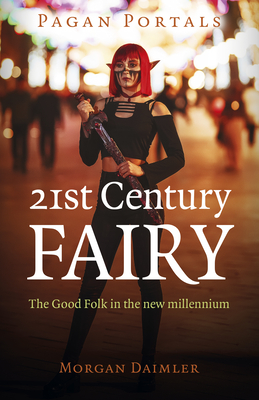
When people think of fairies they often picture beings who dwell in the wilderness, solidly anchored in the past. Yet the truth is that fairies are as present and active in the world today as ever, found as easily in cities as they are in wild places. 21st Century Fairy explores fairy beliefs and encounters in the modern world, framed by folklore, modern fiction and personal experience, to show readers the possibilities that are out there. Learn whether fairies evolve and what a modern city in the fairy world might be like. Be open to the possibility of tech fairies existing alongside fairies in nature and learn how they interact with human technology. Much like the human world, the fairy world is stunningly diverse and constantly changing. 21st Century Fairy is a guide to seekers who want a modern context for these ancient beings.
Hardcover, 256 pages Published June 4th 2020 by Piatkus (first published January 1st 2020) ISBN: 0349425469 (ISBN13: 9780349425467)
Blurb
We all want to lead a happy life. Traditionally, when in need of guidance, comfort or inspiration, many people turn to religion. But there has been another way to learn how to live well – the humanist way – and in today’s more secular world, it is more relevant than ever.
In The Little Book of Humanism, Alice Roberts and Andrew Copson share over two thousand years of humanist wisdom through an uplifting collection of stories, quotes and meditations on how to live an ethical and fulfilling life, grounded in reason and humanity.
With universal insights and beautiful original illustrations, The Little Book of Humanism is a perfect introduction to and a timeless anthology of humanist thought from some of history and today’s greatest thinkers.
We all want to lead a happy life. Traditionally, when in need of guidance, comfort or inspiration, many people turn to religion. But there has been another way to learn how to live well – the humanist way – and in today’s more secular world, it is more relevant than ever.
In The Little Book of Humanism, Alice Roberts and Andrew Copson share over two thousand years of humanist wisdom through an uplifting collection of stories, quotes and meditations on how to live an ethical and fulfilling life, grounded in reason and humanity.
With universal insights and beautiful original illustrations, The Little Book of Humanism is a perfect introduction to and a timeless anthology of humanist thought from some of history and today’s greatest thinkers.
My Review
I bought myself this book and a couple of Alice Roberts’ books for my birthday, with my birthday voucher from my friend Fi. I have been a subscriber to The New Humanist magazine for a couple of years, but I don’t really understand the philosophical underpinnings of Humanism, and I wanted to understand a bit more.
I found this book very touching. It’s concise and illustrated with examples that demonstrate the points made. It covers life and death, which I found very comforting, given the sudden loss of my uncle three weeks ago. There were quotes that I felt would be appropriate for a funeral reading. I found in reading this book that my personal ethics and philosophy already fell in to the Humanist category. If you need a god to tell you how to behave ethically, you have a problem.
I would describe myself as a Humanist Heathen – that is I combine humanism with heathenry, which may seem contradictory considering Humanists don’t accept the existence of gods and heathenry has lots of gods. I tend to think the gods and their stories are not literally real but are explanations for events that worked for people two and a half thousand to fourteen hundred years ago and they can still be useful ways of experiencing the world. For example, I don’t need Nehalennia to bless any sea crossings I make or any international trade I might do (haha – like that’s ever going to happen) but I still find it comforting and a focus of attention. I don’t need to believe literally in Sunna to be overwhelmed with awe in a beautiful sunrise, either. It’s a bit weird, I know, but it works for me.
This book is a little book that fits in a pocket, and it obviously isn’t a comprehensive discussion of Humanism, its history and philosophy, but if you want to dip in and get the basics it is a good start.
Hardcover, 320 pages Published June 15th 2021 by Harper Wave ISBN: 0062993151 (ISBN13: 9780062993151)
Blurb
The author of the widely praised Wordslut analyses the social science of cult influence: how cultish groups from Jonestown and Scientology to SoulCycle and social media gurus use language as the ultimate form of power.
What makes “cults” so intriguing and frightening? What makes them powerful? The reason why so many of us binge Manson documentaries by the dozen and fall down rabbit holes researching suburban moms gone QAnon is because we’re looking for a satisfying explanation for what causes people to join—and more importantly, stay in—extreme groups. We secretly want to know: could it happen to me? Amanda Montell’s argument is that, on some level, it already has . . .
Our culture tends to provide pretty flimsy answers to questions of cult influence, mostly having to do with vague talk of “brainwashing.” But the true answer has nothing to do with freaky mind-control wizardry or Kool-Aid. In Cultish, Montell argues that the key to manufacturing intense ideology, community, and us/them attitudes all comes down to language. In both positive ways and shadowy ones, cultish language is something we hear—and are influenced by—every single day.
Through juicy storytelling and cutting original research, Montell exposes the verbal elements that make a wide spectrum of communities “cultish,” revealing how they affect followers of groups as notorious as Heaven’s Gate, but also how they pervade our modern start-ups, Peloton leaderboards, and Instagram feeds. Incisive and darkly funny, this enrapturing take on the curious social science of power and belief will make you hear the fanatical language of “cultish” everywhere.
Growing up Mormon during America’s early-1980s satanic panic, Bigelow escapes the religion’s bland conformity by playing Dungeons & Dragons. After graduating from high school in 1984, he dives into sex, drugs, and the counterculture via Salt Lake City’s punk and new-wave scenes, as echoed from London, New York, and especially Los Angeles.
As Bigelow explores the underground, he rejects myths of supernatural good vs. evil, living instead by the D&D concept of chaotic neutrality. During LSD trips, however, he starts sensing an unseen dimension. Then Stephen King’s post-apocalyptic novel The Stand gets him reconsidering good vs. evil. After an alarming otherworldly attack, can Bigelow find spiritual protection in Mormonism’s processed, regimented, corporate culture?
High priestesses are few and far between, white ones in Africa even more so. When Diane Esguerra hears of a mysterious Austrian woman worshipping the Ifa river goddess Oshun in Nigeria, her curiosity is aroused.
It is the start of an extraordinary friendship that sustains Diane through the death of her son and leads to a quest to take part in Oshun rituals. Prevented by Boko Haram from returning to Nigeria, she finds herself at Ifa shrines in Florida amid vultures, snakes, goats’ heads, machetes, a hurricane and a cigar-smoking god. Her quest steps up a gear when Beyoncé channels Oshun at the Grammys and the goddess goes global.
Mystifying, harrowing and funny, The Oshun Diaries explores the lure of Africa, the life of a remarkable woman and the appeal of the goddess as a symbol of female empowerment.
Published By: Independently published Publication Date: 20th May 2018 Format: Paperback I.S.B.N.: 9781719390163 Price: £10.20 Purchase Links
Blurb
Throughout the history of Christianity there have been those claiming a monumental secret. Often centered around the Church of St. Sulpice in Paris and associated with French esoteric circles like Debussy who wrote in a review:
“Perhaps it’s to destroy that scandalous legend that Jesus Christ died on the cross.”
But even Canon Alfred Lilley came back from St. Sulpice questioning the crucifixion. There must have been some documentation in the church that convinced these people of something portentous. BUT now searching links between the history of Rome and the latest Biblical research, we finally reveal the extraordinary facts that prove exactly what the monumental secret was and its validity making the revaluation of Christianity, as we knew it, inevitable.
The Hedge Druid’s Craft blends the traditions of Wicca, Witchcraft and Druidry into a spiritual path that uses the techniques of “hedge riding” to travel between the worlds, bringing back wisdom and enchantment into our everyday lives. It is about working with boundaries, with a foot in either world, living around the edges and working with liminal times and places. For those whose paths meander and often overlap, and those who would not be constrained nor confined by labels, yet who seek some definition, this book is for you. If you are interested in Witchcraft, Wicca or Druidry, this book will sing to your soul.





 Published by: Moon Books
 Everything Is Better With Dragons