I’ve just finished reading a couple of good books:
Silent Witnesses
Nigel McCrery
and
The Burglar Caught by a Skeleton
And Other Singular Tales from the Victorian Press
Jeremy Clay

Everything Is Better With Dragons
Book blogger, Autistic, Probably a Dragon
I’ve just finished reading a couple of good books:
and
10th September 2013
Bantam
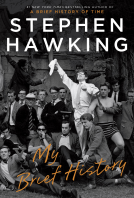
Stephen Hawking has written several popular science books that have been incredibly well received. And now he has written his own story. I have read an uncorrected e-book and am now able to review it.
Continue reading “Review: ‘My Brief History’ by Stephen Hawking”

2012
Profile Books
Covering everything from Pythagoras’s theorem to Schrodinger’s Equation and chaos theory, Professor Ian Stewart takes the reader through seventeen important equations that have helped to advance human understanding of the universe (and how to measure it) over the last 2500+ years.
I wish I’d had this book while I was studying A level maths and later while studying for my degree. Ian Stewart explains the concepts involved clearly and comprehensively, including their history.
A great book for students and general readers.
Ebury Press
2013

I had plans for this afternoon, then I thought ‘I’ll just read a bit, I need to finish it before Thursday’; the afternoon disappeared. If that’s not the best compliment to a book I don’t know a greater one.
This is the forth installment of the ‘Science of Discworld’ books, the first was published in 1999 and as the authors point out things have changed in the last 14 years.
Theories have been tested in new ways and been modified as new information had been made available. And that is the central argument of this book. Science is uncertain and ever questioning. Faith does not question, it merely ignores data that doesn’t fit.
Interweaving this discussion with a short story about Roundworld, the pretty bauble accidentally made when the Wizards of Unseen University made a booboo in the first Science of Discworld book, the authors illustrate their arguments using the best method possible when trying to explain concepts to Pan narrans : storytelling.
A radically fundamental sect of the Church of Om demands that the wizard hand over Roundworld. The Patrician decides to hold a tribunal into the matter. Into this milieu comes Margery Daw, librarian of Four Farthings, London, England, Earth. Highly educated and intelligent, with a firm belief in truth, and also the best runner at Roedean in her day, Margery has been transported to Discworld by the Unseen University’s Great Big Thing. Purely accidentally.
Continue reading “Review: ‘The Science of Discworld IV Judgement Day’ by Terry Pratchett, Ian Stewart & Jack Cohen”
I offered to review this book because the title suggested it would be of interest to someone of my education and background. I was wrong. Within the first twenty pages I became frustrated by the author’s polemic, ignorance of the subjects, scientific and historical, on which he was commenting, disjointed arguments and outdated assumptions in statements such as ‘’Under monotheism, man shifted from a maternally structured society to a paternally structured society’’ and ‘’There was a time religious men feared science.’’
Among the basic mistakes the author makes is to suggest that matter can’t be created or destroyed only change form, and that ‘Electricity, for example, is a faster moving, less consolidated form of matter than the matter that comprises a rock.’ He is wrong, it is energy which is neither made nor destroyed but merely changes form. It’s called the conservation of energy. Electricity is the movement of electrons through a substance and rocks are made up of atoms in a crystal structure.
The author makes contradictory statements as well as blatantly incorrect ones. He also displays latent racism and sexism on occasion. Examples:
(1) ‘The average European cranial capacity is 90 cubic inches. The Hottentot natives have a capacity of about 65 cubic inches. Some Hindus have capacities as low as 45 cubic inches. This approaches the capacity of gorillas.’
(2) ‘Women, in general, have a greater sensitivity to emotions, such as love, than men. They are less capable of separating love and sex than men. Many women convince themselves that sex without love is impossible.’
He has a terrible habit of dumbing down his prose, assuming all readers will be as historically uneducated as well as scientifically ignorant, and that all atheists have the same beliefs as he does, despite claiming that he doesn’t.
I looked at the sources the author provided. Only four were less than ten years old, many much, much older. With such outdated attitudes I am not surprised he had had to find outdated sources to back his assertions.
The author clearly has a problem with religion but his sweeping generalisations about the nature of religion and the religious, and his ham-fisted attempts at scientific refutation of some religious beliefs does nobody any good. His tract may provide those with no education some basic, if inaccurate, knowledge, but anyone with even a basic education will be frustrated with this book.
Don’t bother with it.
It took me a good couple of months to read and I had to force myself to finish it. I wanted to punch the author after about ten pages. The spelling is atrocious (even if one takes Americanisms into account) he’s bombastic and insulting. Sorry I got really riled by this book. If you believe in something poorly disguised insults to your intelligence and education will not convince a person to take someone’s arguments seriously. if you are already an atheist or agnostic poorly constructed sources will do nothing to strengthen your resolve. Scientific arguments for evolution and the obvious great age of the Universe are strong enough that the this sort of pamphlet are no longer necessary.
Rant over, sorry again,
Rose
 Everything Is Better With Dragons