
Blog tour calendar: Prey, by Vanda Symon
Book blogger, Autistic, Probably a Dragon

Blurb
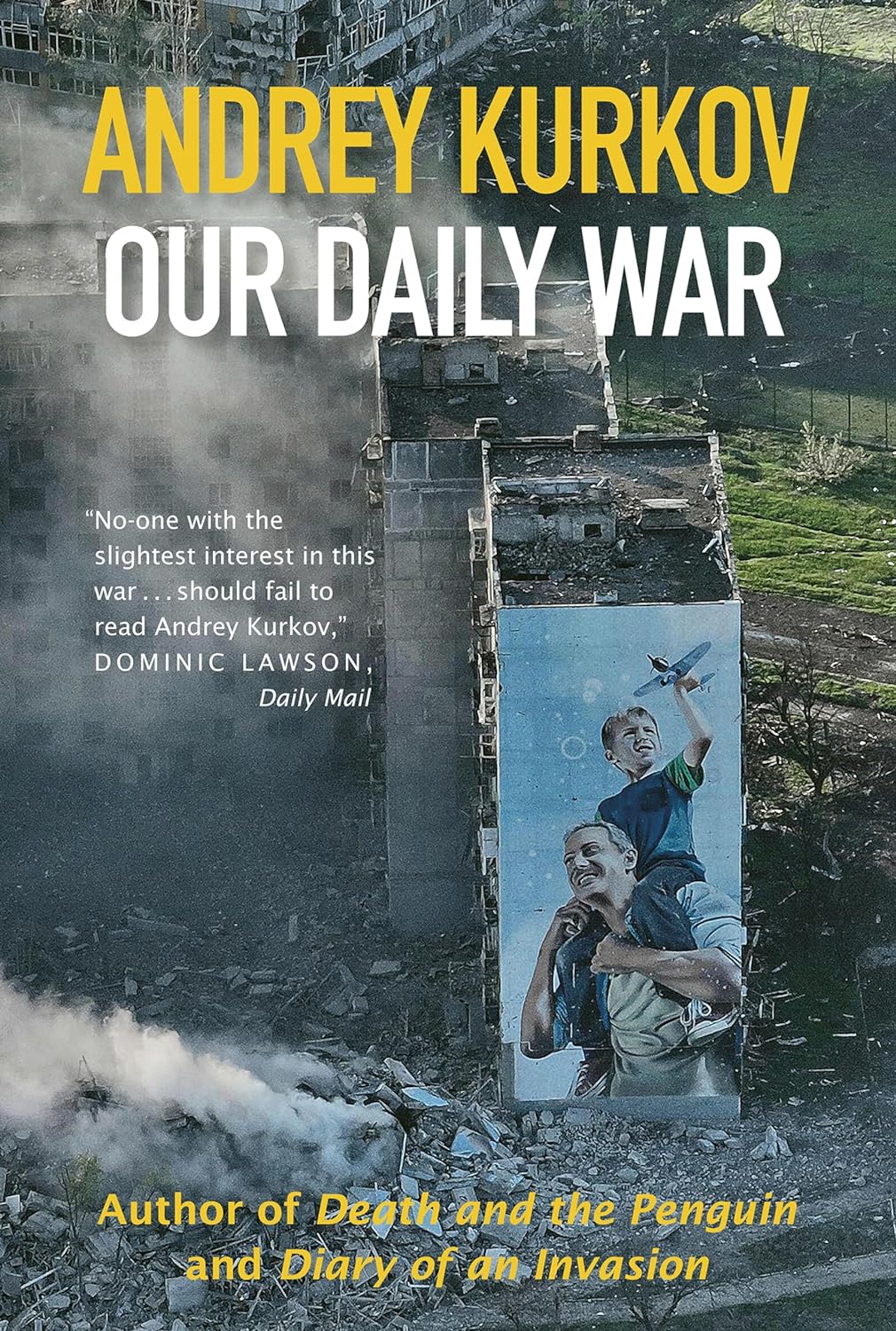
Ten years on from the annexation of Crimea, two years on from Russia’s all-out invasion of Ukraine, the Ukrainian people continue to fight back. In the second volume of his war diaries, Andrey Kurkov gives a fresh perspective on a people for whom resistance and solidarity have become a matter of survival.
Our Daily War is a chronological record of the heterogeneous mix that comprises Ukrainian life and thought in the teeth of Russian aggression, from the constant stress of air raids, the deportation of citizens from the occupied regions and the whispers of governmental corruption to Christmas celebrations, crowdfunding and the recipe for a “trench candle”.
Kurkov’s human’s-eye view on the war in Ukraine is by turn bitingly satirical, tragic, humorous and heartfelt. It is also, in the manner of Pepys, an invaluable insight into the history, politics and culture of Ukraine.
Our Daily War is the ideal primer for anyone who would like to know what life is like in that country today.
Continue reading “Review: Our Daily War, by Andrey Kurkov”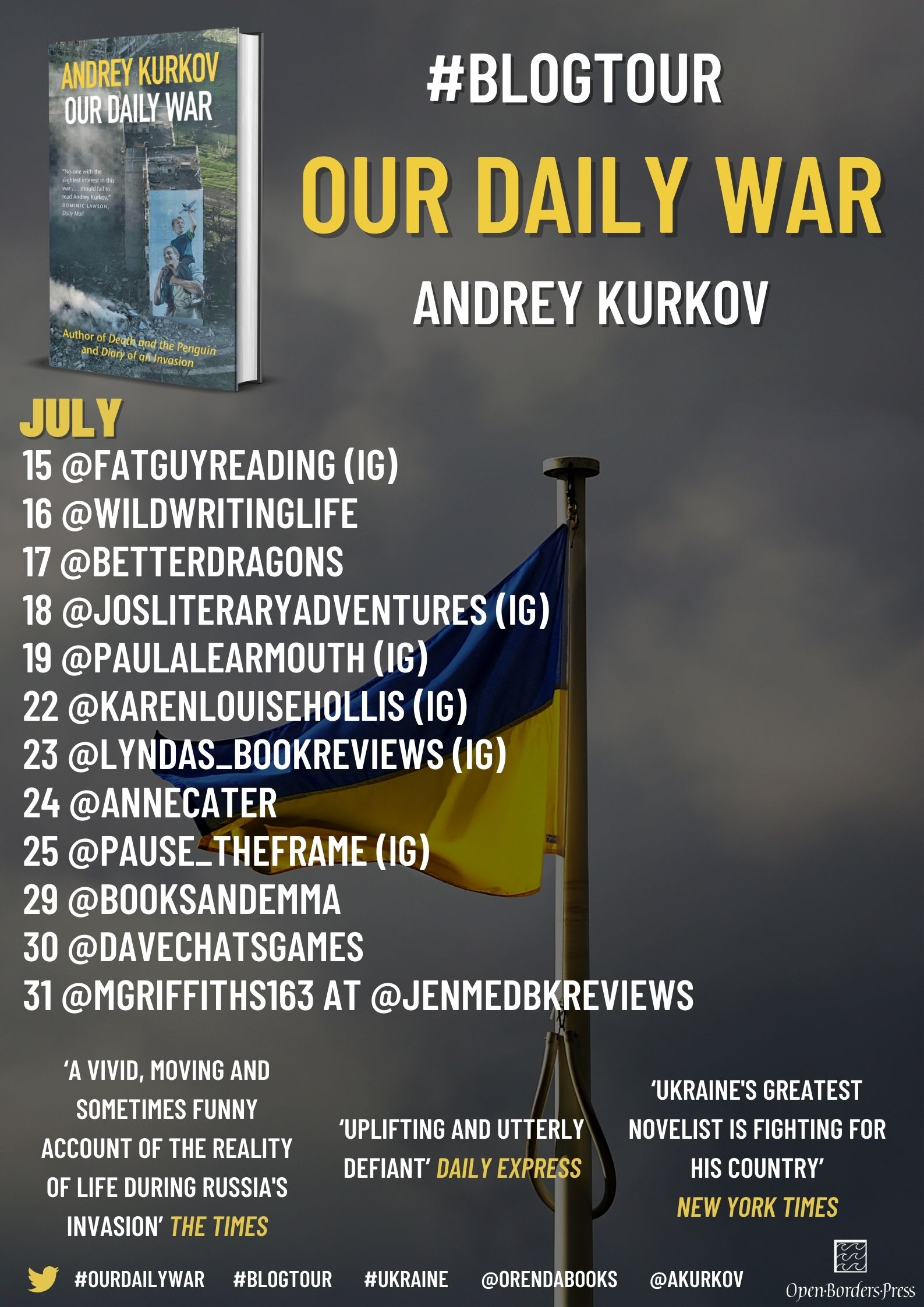
Lah-Shah took the pilot’s seat, gazing through the currently unshielded screen out into the hanger. The ship was a standard shuttle, with all the usual screens and operation boards, but being an Academy ship probably had some hidden features. He’d need to play around at some point to work out what they all were, but now was not the time.

Kinch Na Shannack owes the Takers Guild a small fortune for his education as a thief, which includes (but is not limited to) lock-picking, knife-fighting, wall-scaling, fall-breaking, lie-weaving, trap-making, plus a few small magics. His debt has driven him to lie in wait by the old forest road, planning to rob the next traveler that crosses his path.
But today, Kinch Na Shannack has picked the wrong mark.
Galva is a knight, a survivor of the brutal goblin wars, and handmaiden of the goddess of death. She is searching for her queen, missing since a distant northern city fell to giants.
Unsuccessful in his robbery and lucky to escape with his life, Kinch now finds his fate entangled with Galva’s. Common enemies and uncommon dangers force thief and knight on an epic journey where goblins hunger for human flesh, krakens hunt in dark waters, and honor is a luxury few can afford.
My Review
I appear to be late to the party on this one. I only realised this book existed in June because The Broken Binding sent me an email about a special edition set they’re doing of The Blacktongue Thief and The Daughters’ War, the first book’s stand-alone prequal about Galva. I didn’t order them in the end because I’m trying to save money for FantasyCon in October, but I did like the sound of the books, so I ordered a paperback copy of this book, and I have a paperback of The Daughters’ War on pre-order. It’ll be out next March.
Kinch is a thief who owes his Guild money, so they send him on a mission. With a blind cat. Who has swallowed an assassin. Don’t ask, it makes sense in context. Galva is a veteran of the goblin wars and is heading west to find her king’s niece, heir to the throne, lost in the giant-ravaged capital of her husband’s kingdom. Galva needs help, and Kinch has no choice, so off they go. Along the way they pick up a witchlet, who turns out to be more than anyone expected; an old neighbour of Kinch’s who resents Kinch for going to be a thief instead of a soldier; and Galva’s old sword master, who is faster than lightning.
They also fight a kraken, goblins, and giants, meet the powerful magician who created the war ravens that won the goblin wars, (and who might be Kinch’s father), after which Kinch may or may not have lost a bet with a criminal boss that resulted in him going to bed with said criminal boss in the city of Hrava (Kinch isn’t into men, but needs must when a queen needs rescuing).
In the mountains they find their answers, and more questions, before Galva and her queen leads an army riding the only stallion in the world, and Kinch heads further west, running from his Guild with the weapons that could potentially defeat them for good.
Other stuff happens, but I’ve summarised the salient points. Hopefully, I haven’t given away too much.
I enjoyed this book, Kinch is a funny narrator, and as the story is told from his perspective he has to be to keep things interesting. First -person limited and be quite a difficult point of view, but Buehlman does it well. the story is told in chronological order, but Kinch gives us the important bits of his memories and his reactions, missing the dull days of traveling where nothing happens. He includes the odd ballad or piece of history to locate us in the world he’s traveling through and add depth.
Kinch falls in love with Norrigal, a witchlet, great niece of Deadlegs, a famous witch who has to cut off the legs of the dead because her own have died. The relationship is short but intense and I was quite lost at the end of the book. I want to know what happens to them, even changed as they are. Norrigal utterly entrances Kinch and his falling in love is described delightfully, although not graphically.
The other characters, seen from Kinch’s perspective, aren’t as solid, but then that’s one of the difficulties of writing 1st person limited. We don’t get the interiority of other characters, only what they do and say in the view of the narrator and the narrator’s thoughts about them. Kinch develops a lot of respect for Galva and his shock at certain aspects of her character and physicality helps flesh her out. I definitely want to know what happens next for Galva, and also how she came to be a warrior of the Death Goddess. So, I need to read The Daughters’ War, and hopefully there will be a follow up, with events after The Blacktongue Thief as well.
I hope the giants find out they were tricked by the Takers too, and help bring down the Guild. We only really get to know one giant, Misfa, at the end, who tells the humans what happened, and helps them defeat the assassin in the cat (again, it makes sense in context) but Kinch hints, when he first encounters giants in the city of Hrava, that he knows more about giants at the time he’s writing his narrative than he did at that time, so presumably, at a later date, after the narrative in the novel, he spends time around Misfa’s people and learns about their culture? I want to know what they do with all those horses tattooed on to her.
The magical systems were really well thought out, clearly drawing on folk traditions, like the power of iron to break a spell, or with rules found in ttrpg (like you can only use a spell once and it only lasts a certain amount of time) but were also original enough to be entertaining. The hand tattooed on Kinch’s cheek which can only be seen in firelight, but allows someone to slap him without retaliation in return for an alcoholic drink, made me laugh. Especially when Norrigal made some alterations of her own.
The descriptions of places and people are very memorable, from the upside down tower of Deadlegs, to the cities they travel through and the creatures they meet, to the fights with other humans, goblins and giants. They’re all very vivid.
The underlying conspiracy is slowly revealed, with some dropped hints and interesting consequences, and sets the main characters on their future paths. It leaves the story open ended, the author could leave the novel where it is, as a stand-alone work, but I hope he doesn’t. I want to see how Kinch and Deadlegs reveal the conspiracy to the world and the fall out for everyone, what the giants do after conquering Oustrim, and how Galva and her queen fight the false king in Ispanthia.
This is clearly a world based on a pseudo-Renaissance Europe, and written by someone who’s played a bit of D&D or other fantasy table-top role-playing games (ttrpg). It has the structure you’d expect, with magical artifacts appearing that might or might not be useful later, random unexpected events that throw off the expected narrative, and traps everywhere.
Criticisms: The pseudo-Irish got a bit much at times, almost parodying Irish accents and turns of phrase. The same with Galva and the Spanth – they’re patterned on the people of the Italian or Greek regions of the Mediterranean – black hair, fanatic cleanliness, wine, olive oil, and garlic. I get that the author is using real world inspirations to people his secondary world, but it was a bit much. Felt like he was taking the piss, at times, honestly, or was working from caricatures rather than reality.
A fun bit of fantasy and an enjoyable world I’d happily come back to for more adventures.

Unashamed: Why do people pay for sex? BLURB
Elizabeth G. was twenty-two years old and travelling around Australia when she came across a job opportunity at an erotic massage parlour in Sydney. Fast forward eighteen years and she had built up a trusted list of regular clientele working as a high-end London escort and was frequenting some of the city’s most exclusive hotels.
This is an inspirational story of resilience and self-belief in the face of adversity. It gives a fascinating insight into what it’s like to work week in and week out as a sex worker and how it feels to hide who you are from your friends and family. It’s about understanding why a person would pay for sex in the first place. It’s about the positive effects of sex work. It’s about love, connection, nurture and healing. It’s about change. It’s about acceptance. It’s about hitting rock bottom and picking yourself back up, time and time again. It’s about growth, embracing the struggles and learning from your mistakes. And, above all, it’s about breaking through the barriers of shame, and staying true to yourself no matter what.
In shedding a spotlight on the sex industry, Elizabeth hopes to challenge the misconceptions and shame surrounding sex work, and to help provide better protection for those who are forced into the industry as a result.
Unashamed is a no-holds-barred, taboo-busting account of the life of a sex worker, and what it’s like to build a highly successful career in a multimillion-pound industry that exists largely in the shadows. If you want to feel inspired and embrace yourself as a sex worker, or develop an understanding of the profession, or you simply want to eradicate shame in any aspect of your personal life, then look no further.
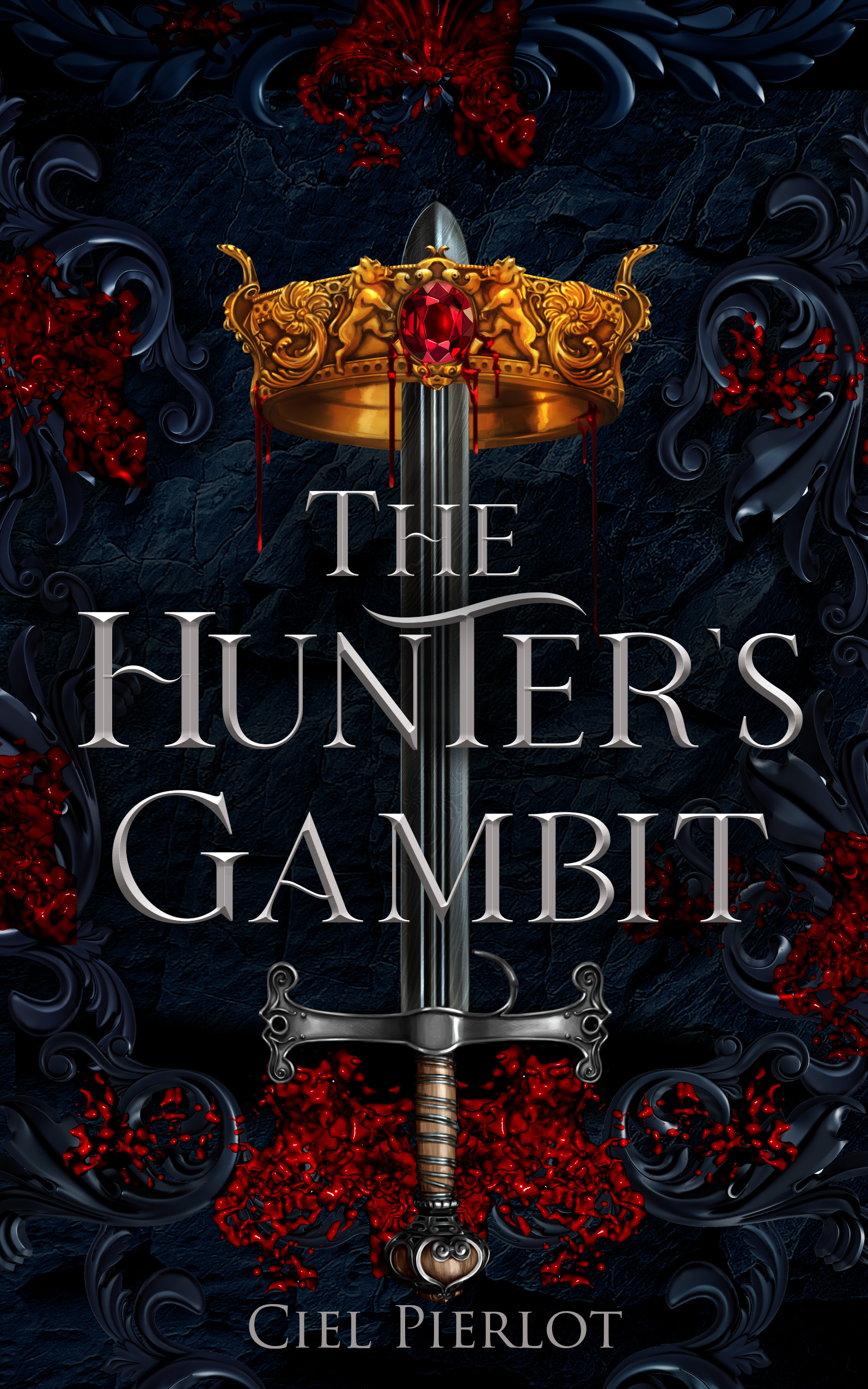
From the award nominated author of Bluebird comes a tale of seduction, sadism, and survival featuring malevolent vampires and a locked-room escape adventure…
Locked in a castle with a clan of devious vampires, one woman is caught in a literal fight for her life.
Vampires have always fascinated Kazan Korvic, so much so that she’s made it her life’s work to craft weapons designed solely to kill them. But when she is attacked and captured by an entire clan, Kazan’s fascination turns ferocious.
In their Citadel, Kazan is forced to attend the Vampire Court where she must act as their Queen. She is told that she will be waited-and-doted upon, until the end of her reign in three days’ time. Then, an extravagant and lavish feast will be held… where the vampires will consume their newly crowned Queen.
Desperate and afraid, Kazan finds no allies in the castle except for a pair of distractingly alluring vampires who seem sympathetic to her plight. But as she devises her escape plan, she comes to realise that she is not the only one who is trapped, and no one is prepared for how far she’s willing to go to survive…
Continue reading “Review: The Hunter’s Gambit, by Ciel Pierlot”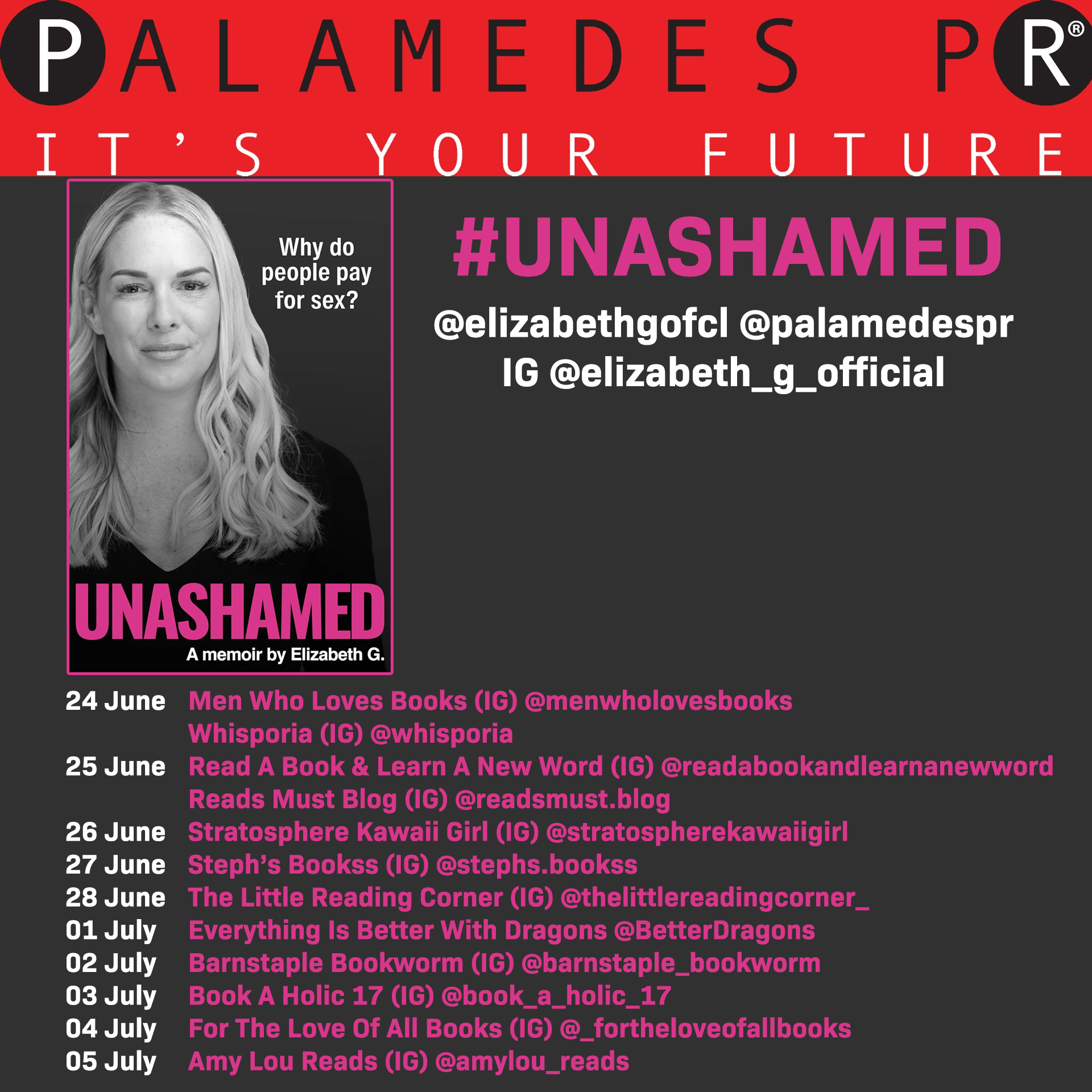


 Everything Is Better With Dragons