What if your best friend wanted your new life too?
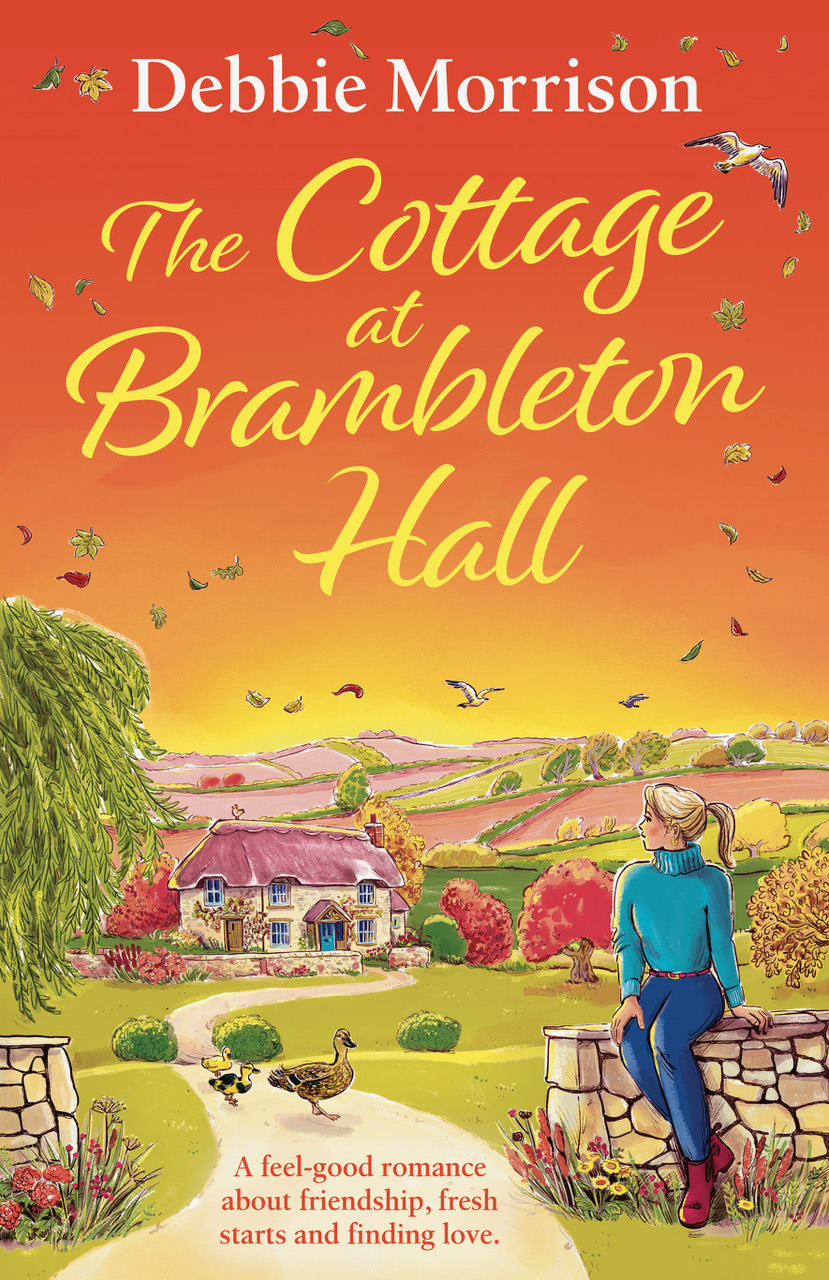
Sammy Jenkins only comes to Brambleton because her best friend Chloe needs a favour. Again.
One shift serving canapés at a North Devon country mansion. Then it’s back to mounting bills and a life that’s going nowhere. Except the owner of the estate sees something in her.
Suddenly, Sammy is being offered a full-time job as housekeeper, complete with a cottage of her own. It’s more than she ever dreamed of, even if Chloe thinks it should all have been hers.
But settling into life at Brambleton Hall isn’t easy. Magnus, the butler, demands perfection. And Nate, the handsome, reserved gardener, gives nothing away. Somehow, though, Sammy is making it work. She has a home that’s just for her, a job she’s good at and Nate might not be quite as distant as he first seemed.
Then Chloe comes to stay.
And while Sammy understands the rules that keep Brambleton Hall running smoothly, Chloe doesn’t see why any should apply to her…
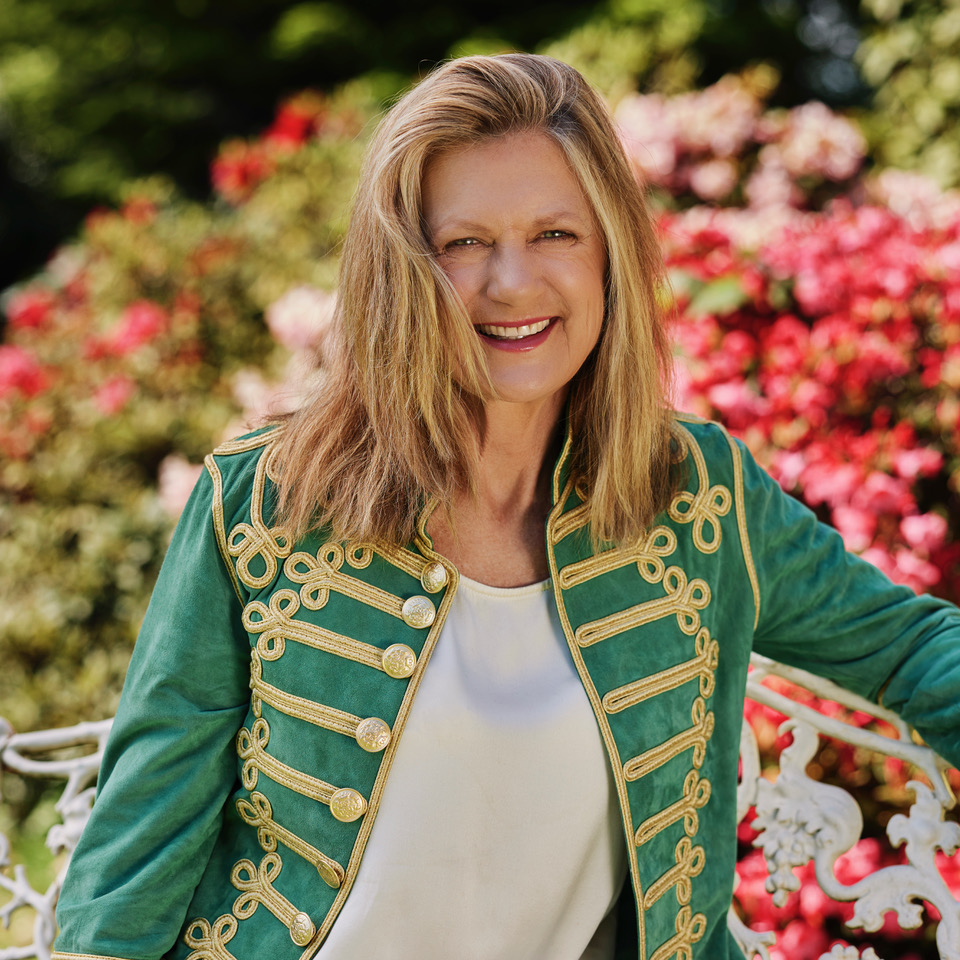
Hi! I’m Debbie. Once upon a time, I was a perfectly respectable London professional – a chartered accountant with a law degree, a Blackberry (remember those?), and too many sensible shoes. Then common sense prevailed, romance called, and I swapped London’s Zone One for Devon’s Zero Signal. I still wonder if leaving the City was brave or simply plot research taken to a reckless extreme.
Currently my “head office” is a polytunnel: no Wi-Fi, but plenty of fresh air and flourishing tomatoes. The plants photosynthesise while I draft havoc; technically off-grid, creatively on fire.
Meanwhile, the dogs run the editorial obstruction department. They possess zero publishing experience yet veto scenes with a single raised paw. Oh, and their union insists on edible compensation only.
These days, I know the real price of life’s essentials: a good haircut, a great friend, and the joy of a proper night’s sleep. I write love stories for grown-ups – warm, witty, stuffed with second chances and the kind of relationships where affection and exasperation create irresistible chemistry – for better for worse.
Think of my indie “publishing house” as one woman, no award-strewn empire, no two-legged staff – just me, two obstinate dogs, and a biscuit budget.
I’ve tried not writing. It didn’t go very well. So I need readers. Not many, just the excellent sort who laugh in the right places. I hope you’ll be one of them.
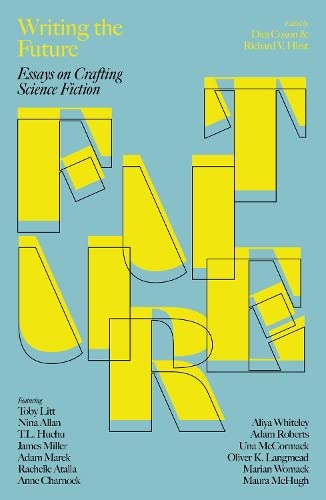
Format: 265 pages, Paperback Published: September 7, 2023 by Dead Ink ISBN: 9781915368027
Description
WINNER OF BRITISH FANTASY AWARD FOR BEST IN NON-FICTION 2024
For as long as humans have existed, they have asked: What if?
Science fiction was a defining genre of the postwar era, and its current boom across books, film and TV shows no sign of slowing. Space ships, time travel, aliens and artificial intelligence continue to obsess us, and dreams of the apocalypse haunt our own post-pandemic age. But what is it that compels writers to imagine the future?
Writing the Future gathers some of the best contemporary writers of science fiction, speculative fiction, dystopia and eco-fiction to explain their craft and explore the many worlds upon which our imaginations might land. Authors such as Toby Litt, Nina Allan, Adam Roberts and Una McCormack reveal how to balance scientific research with creative freedom, examine the different forms the written text might evolve into, and offer practical advice on giving life to your own vision of the future.
Whether you’re a reader, a seasoned writer looking to hone your skills, or a beginner who’s just starting out, Writing the Future provides valuable insights into the craft of imagining the worlds of tomorrow.
Featuring contributions from –
Nina Allan Rachelle Atalla Anne Charnock Tendai Huchu Oliver Langmead Toby Litt Adam Marek Una McCormack Maura McHugh James Miller Adam Roberts Aliya Whiteley Marian Womack
According to GoodReads I started reading this one in late July 2025 and I finished it yesterday. One year, one month. Nothing to do with the book, I’ve had a busy year, what with becoming a Director of an Arts CIC, having my Brighton adventure, doing work for exhibitions, giving up my salaried job to do self-employed work, and getting evicted. I’ve got another exhibition later this month and I’m no where near finished. Oh, and my cat has discovered windows that open (new bungalow has windows that aren’t just top opening windows); she’s using them like cat doors. I’m writing this while she is climbing out of my office window and walking along the outside window ledge.
And now she’s in the front garden.
Sorry, you didn’t come here to read about Phoenix’s explorations of our new environment. I got distracted.
Back to the book.
This is a fascinating collection of essays on a range of subjects related to writing science fiction. It gets a bit philosophical at times, which was fun, for a given value of fun. I found it stretched my thinking in helpful ways. I enjoyed the spotlight chapters about different authors, especially J.G. Ballard. I thought I’d read something by him, but looking at a list of Ballard’s work, I haven’t. Might have to remedy that.
Aliya Whiteley’s chapter on research and knowing when to stop procrastinating and start writing was helpful for me personally, because I will world build and research for years before actually writing the story (see my current WIP for example) and the image of a time travelling dog using black holes was just ‘brain-sparkle’ making.
I’m pretty certain science fiction writers of all stripes (I tend to mix my science fiction with fantasy – shape shifting alien space dragons, anyone?) will find something useful in this collection.
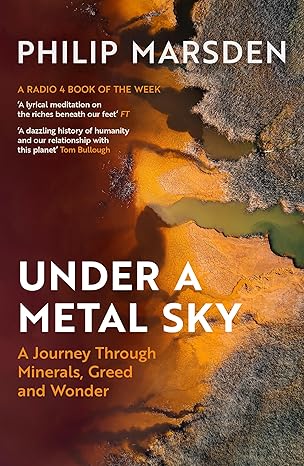
The discovery of minerals beneath our feet has transformed our species. Ochre first prompted humans to express themselves in art; tin and copper helped instigate the Bronze Age and later the Industrial Revolution; silver kick-started the engines of global trade. Each of these substances generated a leap forward in technology, each one opened the imagination a little further – and each one brought with it a cache of unexpected dangers.
Under A Metal Sky begins and ends in Philip Marsden’s homeland of Cornwall, one of the world’s great geological hotspots. Travelling eastwards into Europe, he examines how the extraction of peat propelled the Netherlands to world prominence but also imperilled its very existence. Continuing on up the Rhine by barge, into the heart of the continent, he uncovers more stories of potent and tempting resources, from iron-rich meteorites to radium and mercury, and the gold-bearing mountains of Georgia. At the same time he explores precious seams of ideas, from science to alchemy, mysticism to ecology – and those questing souls who pursued them, likeParacelsus, the Habsburg Emperor Rudolf II, Goethe,William Blake and Marie Curie.
Rich with revelations, Under A Metal Sky traces the dazzling achievements and dark consequences of our ability to extract what we want from the earth, and presents a fascinating new perspective on European history and on our troubled relationship with the natural world.
My Review
This book is subtitled ‘ A Journey Through Minerals, Greed, and Wonder’; it follows the authors journey east from Cornwall to the Caucuses and back, via the Netherlands, Germany, Austria, Serbia, and a whole host of European countries. In each chapter he talks about a different element, metal or mineral, and the connections it has to everything else around it.
The journey is a deeply personal one for the author, starting with his childhood fascination with rock and fossil collecting, to his awe at the ability of early humans to turn lumps of rock into tools and decorations, to dig mines with nothing but antler horn, and the beauty found in the earth. He also discusses the damage resource extraction does to the land and water around it, the continuing harm to life, and the way forward for humans.
Marsden makes the connection to imagination through reference to Rudolf II’s Prague castle/collection/laboratory, Blake’s poetry and copper engraving artwork, and his own awe at the world. It’s actually a rather lovely idea, all things are connected.
We like to put things in little boxes, taxonomy is king. Except everything is connected, temporally and spatially. What happened then effects what happens now, how we react, what we do now, effects the future. What happens here, determines what happens there. We can only see things from where and when we are, usually, and that’s how it’s often treated, as disconnected boxes with discrete edges, but it’s really more of a fluid with occasional clumps. Like a really thick lava erupting form a shield volcano (think Hawaii).
If you’re interested in geology, mining, archaeology, poetry, history, or any of a number of other subjects, I recommend this book. It’s readable, understandable, and gives an interesting personal perspective on some of the many important minerals we depend on.
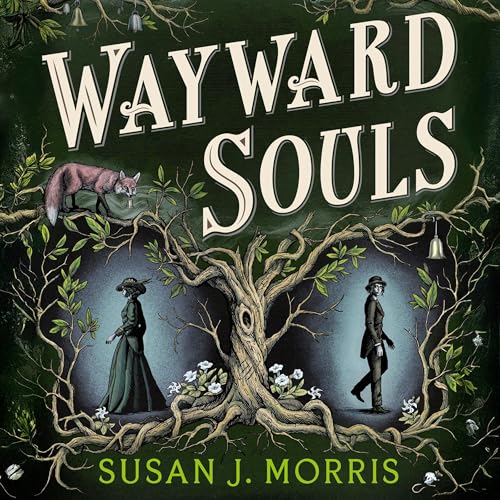
In the cities and untamed wilds of Ireland, monsters are rising up against Unionists. Luckily, Sam and Hel aren’t English.
Samantha Harker and Dr. Helena Moriarty might have solved the Paris case, but that doesn’t mean the Royal Society for the Study of Abnormal Phenomena trusts them. Sam’s power to see into the minds of monsters is a slippery slope to corruption. Worse, Hel’s uncanny habit of turning up wherever her notorious father’s hand is felt has the Society questioning whether he exists at all . . . or whether it’s been Hel all along.
So when Special Branch requests aid in Ireland, the heart of Professor Moriarty’s hidden empire, they send another agent to monitor them: Van Helsing, who is perpetually suspicious of Sam and a bit of an arse.
Their investigation takes them from ancient ruins to the clandestine clubs of the rich and powerful, untangling the mysteries of magic, monsters, and men. But even as Sam and Hel fall deeper into each other’s orbit, the secrets between them multiply. Things Hel can’t bear to confess; things Sam doesn’t dare confide. Things which not only put Sam in terrible danger from Van Helsing, but leave her haunted by death omens, mysterious black feathers, and a song no one else can seem to hear. And, as ever, Professor Moriarty lurks in the shadows, waiting to make his next move
My Review
Hel and Sam are back! And Van Helsing is hanging around being a pain in the arse.
The trio head to Ireland to investigate strange deaths and phenomena. Moriarty is thought to be behind it, but there are other possible causes, including a strange society of rich men interested in the occult. And a goddess. It’s a mystery that the three must solve. Hel and Sam just need Van Helsing to get out of the way and let them do their jobs.
Hel and Sam’s relationship makes tentative steps forward once they’re in Ireland but the appearance of a ghost and death omens, plus their individual secrets, really get in the way. That and Van Helsing hanging around.
The mystery is well structured and the development of their personal stories is integrated into the plot.
I liked the story and the narration was good. If you enjoyed Susan Morris’ first Harker and Moriarty novel, I think you’ll enjoy this book.
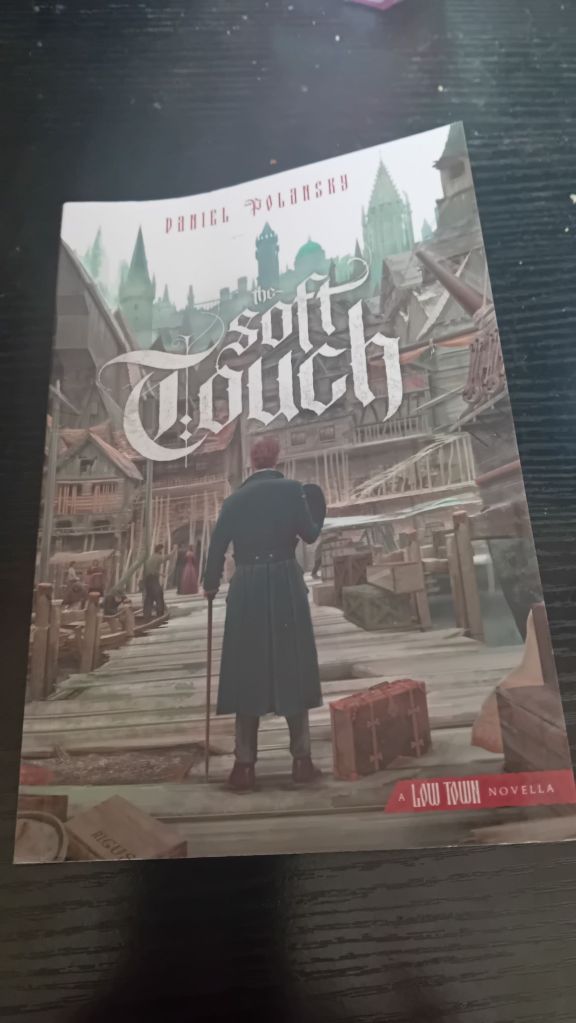
Low Town is the worst slum in the Empire, where lives are sold on the penny. Once its heir apparent, Wren returns after fifteen years to a city in turmoil, the syndicates feuding and the city on the brink of rebellion. Drawn into a tangled web of intrigue and murder, Wren finds himself the pawn in a conspiracy threatening to drive the Empire to war.
But all is not as it seems. Because Wren was trained by the most brilliant crime lord that ever lived—and he’s come back to Low Town to find him.
I was sent an ARC of this book after I signed up on the GdM newsletter. I haven’t read any of the author’s books before but I liked the sound of it and now I’m intrigued by the Low Town novels. Which I will not be buying because I’m being evicted and I need to stop collecting books for the foreseeable. Once I’ve found somewhere stable to live, I’ll work my way through the collection, and then I’ll buy them. Or at least the first one. I want to know more about the background to this novella.
We meet Wren as he steps off the boat and into the Low Town. He’s clearly on a mission and affecting a rather insouciant air about the whole thing. At the same time, a very important peace treaty is being negotiated. Someone is trying to stop that treaty and Wren has a job to do, preferably without getting his coat dirty. Picking up a young assistant, picking fights with various gangs, and upsetting the secret police are just the start of things. Wren is looking for his father, who is supposed to be dead.
It’s a mystery and I loved every second of it.
There will be spoilers from here. Skip two paragraphs if you don’t want to know.
Wren is a pain in the arse to all the wrong people and charming, although it’s superficial – just to get what he needs – as he takes control of the Low Town, deals with gangsters and Black House effectively, and stops a violent uprising. He’s a cynical, violent man, who really doesn’t want to be. He hates killing, although he’s able to end lives easily, and he has a secret no one else knows, a skill he uses subtly. I don’t think it’s supposed to be a surprise to the reader when he uses his magic to defeat Katarina, since all the hints are obvious, but the magic he does is small magic, building up to his easy defeat of the Academy trained mage.
What was a surprise was the conspiracy he takes apart, I wasn’t ever sure who was doing what and why Wren was involved, until it all came together in Uncle’s office in Black House. That was a marvellous reveal.
Spoilers end here.
The setting is extremely well realised. Obviously, the author has written in this world a lot, so he is familiar with it. I’m not, and that could have been difficult, but the novella doesn’t assume previous readers, and describes the city and wider world in enough detail to understand events.
The complex politics going on around the main character, how the machinations of those with power affect those without power and how people are influenced by propaganda are explored in this novella, almost incidentally to the made plot. It’s very well done.
The Low Town makes me think of an seventeenth century London, with magic. The High Line, that connects workers to the upper reaches of society reads as though someone has dropped a maglev train into a medieval city on a hill. It is a good description of what happens when you put a major road through long-established communities that then become left behind and separated.
The secret police, Black House, is very reminiscent of so many real-world organisations, with paid informants, junior officers fighting for position willing to stab each other in the eye, and a tough leader at the top. There have been so many of those, all over the world. They usually aren’t a good thing. Think of all those killed/had their lives ruined by the FBI or the Stasi on the rumour of dissent.
The main characters, other than Wren, are Geraldine, the young person who somehow becomes Wren’s assistant, and Katarina, the Black House operative that he works with. These women are intelligent, ambitious and street smart. And violent. I found them fun to read, and their motives are not clear, although Geraldine’s growing loyalty to Wren is subtle enough that the ending isn’t that surprising but there’s still some question of where she’ll jump in the final confrontation.
The perspective of the novella is generally close 3rd person present, with Wren being the POV character, but sometimes other perspectives come in, and we never see Wren’s plans or motivations, beyond finding his father, the Warden. The writing is easy to read and I could follow events fairly well. The dislocation between perspectives – jumping from Wren in one situation to Katarina in another, for example – is used well and makes sense in context, especially when Wren turns up immediately after. It’s as though he’s actually been observing events, but the reader and the observed people don’t know he’s there.
In summary, this is an accomplished novella by an experienced writer. The world is dark, gritty, and quite realistic. The title is a hint of what’s to come and when you’ve finished the novella makes total sense.
Format: 320 pages, Paperback Published: May 12, 2026 by Tachyon Publications ISBN: 9781616964566 (ISBN10: 1616964561)
Book Description
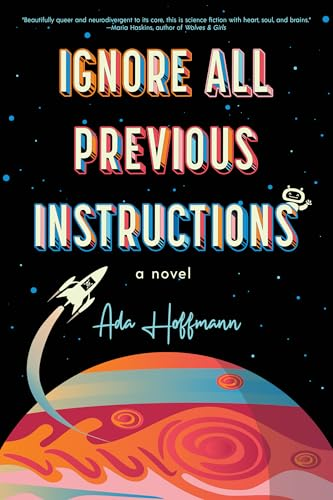
A script supervisor for an AI media conglomerate is caught between her intense need for an orderly life and her deeper, darker queer desires. From the creator of the Outside trilogy, a heartfelt interplanetary epic of identity, longing, and a space pirate who smuggles inappropriate stories.
Kelli Reynolds loves creating stories more than anything in the world. But on Callisto, a generative AI company called Inspiration owns everything, including all the media, and only Inspiration determines which stories can be told.
Kelli has a rare and coveted job in which her autism is to her advantage: She precisely edits AI output into “appropriate” stories for Inspiration’s massive TV audience. Her proudest creation is the pirate Orlando—a dashing do-gooder based on stories she used to tell friends.
Reenter Kelli’s ex-boyfriend Rowan, the person Kelli based Orlando on. Back when they were teenagers, their relationship was a secret. Kelli had thought that Rowan, a trans man, was her schoolmate Em, a girl.
Rowan is tangled up in the black market after he needed to get money for gender reassignment surgery. He needs Kelli’s help with something . . . illegal. So, now Kelli has to decide: Will she risk the safe, tidy story of her life now for the world she once wished for? What would Orlando do?
Passionate, dangerous, and tender, Ignore All Previous Instructions is a sweeping, poignant novel about censorship, forbidden love, and growing up.
My Review
I’ve known about this book for a while, because I get Ada Hoffmann’s newsletter. I got a NetGalley copy in April when I made myself go back to NetGalley, but I was struggling with the ebook version. Then my pre-ordered copy arrived on Thursday, and I started reading it yesterday. I have finished it after spending all day reading, non-stop, other than to get food. Totally immersed!
Kelli is autistic, and not the easy to empathise with cute child who is scared and shy type, but the screaming meltdowns, biting, punching type. I recognise her in me. When it all gets too painful and you can’t push the feelings down anymore, then it just explodes. Also, if you or your child are having screaming meltdowns, that’s a sign of some severely unmet needs. Instead of beating yourself or your child up for it (literally or figuratively), work out what that unmet need is AND MEET IT.
You can also be both the screaming meltdowns and the shy, scared type of Autistic, we’re complex like that.
Because we’re human.
Rowan is obviously ADHD, and as a child is misunderstood and bullied by teachers even if the kids all like him. Yeah, that sounds familiar too. Rowan’s need to transition and his need for stimulation lead him into a life that might be considered criminal. He smuggles illegal media to people in the Jovian system – that’s any media made by anyone not Inspiration.
Inspiration is the mega-corp that controls everything on Callisto. Its LLM is in everything and nobody can escape it. Human creativity is cut and controlled by models that decide on the appropriate content that will keep people happy. It’s a way to turn people into mindless robots while telling them that the company is generous and loving.
Kelli has tried not following the rules and it caused a lot of pain. Kelli tried to follow the rules and was successful – one of the 10% who had an actual job on Callisto, and one she finds fulfilling. She is a script supervisor for Inspiration, going through the outlines and scripts the genAI produces for a series featuring a character Kelli has developed since she was 8. But she can’t own the work or have her name on it, because that would be ‘stealing’ from Inspiration.
After a terrible event when they were 14, Rowan and Kelli don’t speak to each other for ten years. Rowan returns, having transitioned (in a world where transition is illegal and no one talks about Queerness lest it should ‘infect’ children) and asks for a favour. Would Kelli join him on a trip to Io to meet someone who really loves the series she’s written?
Reluctantly, Kelli agrees, and takes a few precautions, because Rowan is ‘bad’ and doesn’t follow the rules. It can’t just be talking to someone. She finds things are very much not the way Rowan said they were. For a start, the person they are meeting is the daughter of a crime boss and they want her to steal from Inspiration for the girl’s sixteenth birthday.
What follows is a heist that goes remarkably well, they get what they need and no-one gets hurt.
It all goes to hell when they get back to Io, and Inspiration’s law enforcement team arrive just at the critical moment. There is violence, explosions, a mad dash to the ship. It’s all very exciting. The emotional resolution is slow to come for Kelli but she finally works things out, just a little bit, enough to realise she wants to be with Rowan again, even if it means she loses her life on Callisto.
Their story as children is told in flashback chapters where we discover that Inspiration prevents children from learning that humans come in more than two binary heterosexual varieties, and children who look for information are prevented from learning anything. Trans people ‘don’t exist’ in this world, and what two adults do in private is no one’s business, but ‘we don’t want that in public’, so lesbian and gay people are shunned and bullied, seen as an inherant threat to children. Does that sound familiar?
Some people are so certain of their righteousness they don’t care who dies so long as they can have their exclusively cis het world. When Kelli and Rowan’s friend Elaine dies by suicide at the age of 14, Kelli decides to squash her queerness down, lock it in a box, and follow the rules. Rowan decides that he’s getting out as soon as possible. He’s already started sharing ‘illegal’ media among their tiny three person queer community, and finding ways to hack or us injection prompts to bypass controls on the computers and internet (what there is of it on Callisto) in order to jail break them, so it’s just a matter of scaling up, taking media to other frightened, isolated LGBTQIA+ people across the system, and helping to form a community.
Kelli is a realistic autistic character, Rowan is realistic as an ADHDer, while their friend Elaine has some clear mental health issues that the therapy bot is not helping. Therapy bots do not help, just like robots can’t help Autistic kids with social skills. Sorry, but trying to make us neurotypical as cheaply as possible won’t work. People with mental health problems need actual therapy and neurodivergent kids need to have their needs and learning styles respected. Just fucking do that.
These are two major parts of the narrative – neurodivergence and queerness. These are important to the author – they are autistic and genderfluid – and can speak with authority from experience of growing up in a system than pathologises both. This book benefits from that knowledge and experience; in providing realistic characters and experiences that the reader can relate to, Ada Hoffmann does what Rowan tries to do in the novel – give people stories about people like them. We all need to see ourselves in stories, being ourselves honestly and openly, finding hope and community in the stories, with other readers, and in the real world.
Reading the Afterward, I found a lot of common ground with the author, and appreciated the citations for their positions. I also understand the use of stories and using fiction to help interpret the world. I am not joking when I say I learnt to be human by reading books. Made for a strange combination at times, since I’ve liked fantasy since I was 12, but also read classics like Pride and Prejudice. Unlike me, Ada Hoffmann did something with their love of storytelling and makes a bit of a living from it.
Ada Hoffmann, under their legal name, is a PhD adjunct professor at a Canadian university, who works in computer sciences. They did their PhD in ‘creative computing’ – how can computers be used in creative work, what does it mean to sat a computer programme has been creative, that sort of thing. They thought LLMs would be used by creatives playing around and generating starting points. In the last few years, they have changed their approach, and done research into how the proliferation of LLMs/genAI has affected creatives – the damage it has done to writers and artists who live precariously as it is, including having their work stolen to train the LLMs.
LLMs are just scaled up predictive text, working from statistical analysis of what the next word in a sentence could be; they do not create, nothing they produce is original, and it amplifies any biases already present in the material it scrapes for training. The ‘artwork’ it creates is derivative and frankly bloody crap in most cases, it can’t do hands or faces, and videos are obviously faked – look for juddering on moving faces.
Basically, Ada Hoffmann is something of an expert in all the things this book is about. And they know how to write a good story. What’s not to like?
I really enjoyed the realistic space craft and space flight. The idea of sitting on top of an explosive in order to get out of a planet or moon’s gravity well does not appeal, as much as I’d love to travel the stars and see what’s out there. There’s also a discussion of how long it would take to get from Jupiter to Saturn, putting these things in perspective.
The colonies are described in enough detail to give each one its own character, and they also seem to be sensible renderings of what a colony on Callisto or Ganymede would mean.
Don’t go to Io.
It’s too volcanic for a colony.
Everyone will die.
This story was gripping, I raced through it, and I needed to know what was going to happen next. The emotional arcs were realistic and the ending satisfying. Highly recommended.
Format: Audible Audio Published: November 11, 2025 by Macmillan Audio ASIN: B0DVBCXB4V Language: English
Description
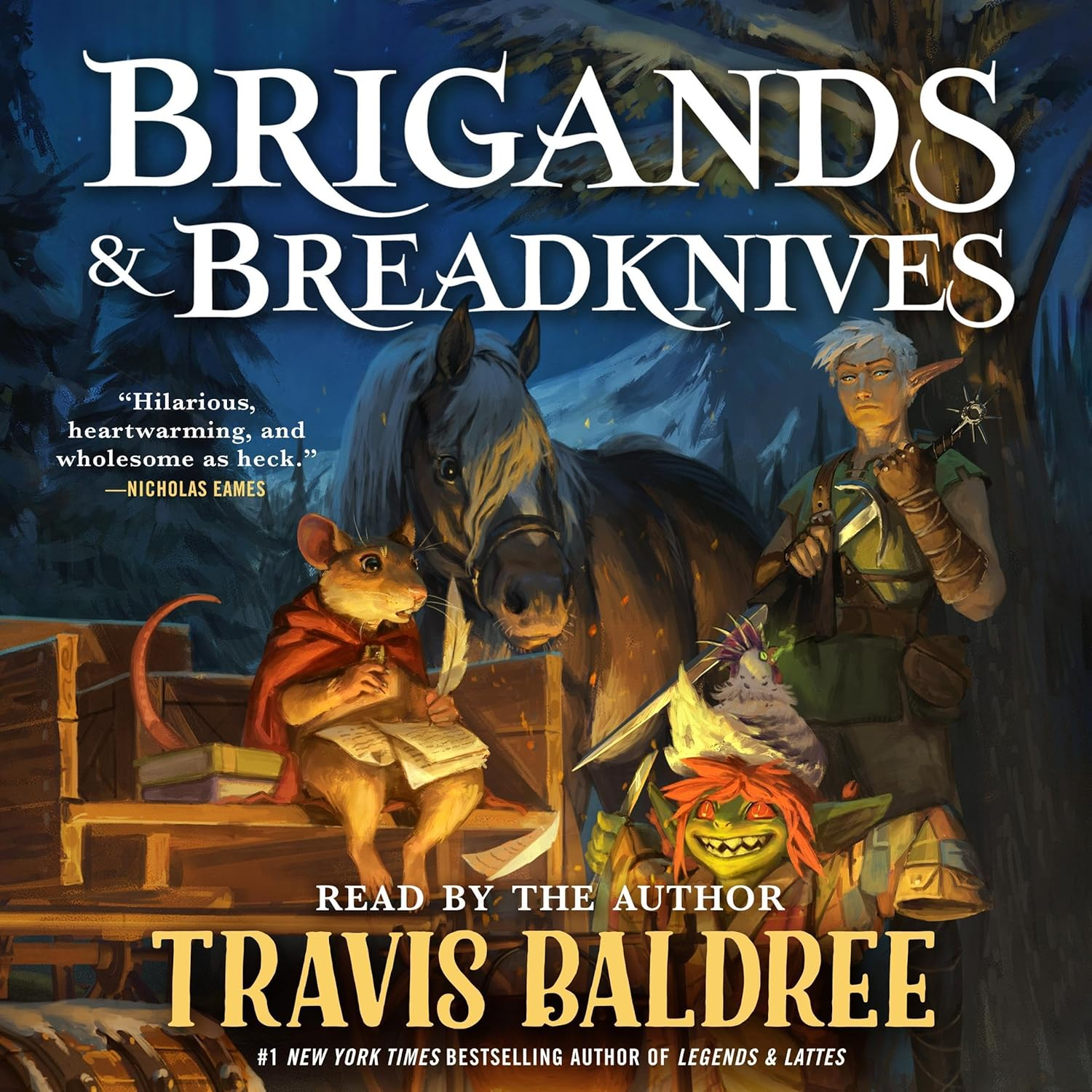
Return to the cosy fantasy world of the #1 New York Times bestselling Legends & Lattes series with a new adventure featuring fan-favourite, foul-mouthed bookseller, Fern.
Fern has weathered the stillness and storms of a bookseller’s life for decades, but now, in the face of crippling ennui, transplants herself to the city of Thune to hang out her shingle beside a long-absent friend’s coffee shop. What could be a better pairing? Surely a charming renovation montage will cure what ails her!
If only things were so simple…
It turns out that fixing your life isn’t a one-time prospect, nor as easy as a change of scenery and a lick of paint.
A drunken and desperate night sees the rattkin waking far from home in the company of a legendary warrior surviving on inertia, an imprisoned chaos-goblin with a fondness for silverware, and an absolutely thumping hangover.
As together they fend off a rogue’s gallery of ne’er-do-wells trying to claim the bounty the goblin represents, Fern may finally reconnect with the person she actually is when there isn’t a job to get in the way.
My Review
I have multiple copies of this book and fully intend to get more. There are different editions and bindings! So far I have two different hardback editions and the audiobook. I was going to hold off reading until the paperbacks came out, but then I remembered I’d started the audiobook, so, after finishing Tales From The Territory, I started listening to the audiobook again. I needed to know what Zyll was up to. Zyll is the chaos goblin in the first short story, and she’s a main character in this book, along with Fern the bookseller from Bookshops & Bonedust, and Astryx, the elf-maiden, a famous hero of adventures in the Territory.
Fern moved to Thune as part of her midlife crisis, only to realise that she doesn’t actually want to sell books anymore. She gets rat-arsed and falls asleep in a wagon. Waking up with a nasty hangover, she realises she’s accidentally stowed away with Astryx and Zyll. Zyll is technically a prisoner, but she’s not very good at being one. She keeps escaping, then turning back up whenever she wants.
Astryx agrees to carry Fern to the nearest town so she can get a lift back to Thune. Along the way, they deal with carnivorous chickens and other bounty hunters desperate for the massive bounty on Zyll, and develop a friendship. Fern remains with the pair after sending a short and unhelpful letter to Viv, and they travel onwards. After multiple attacks, betrayals, monsters, Fern meeting an attractive rattkin who wants her to join him, Asteryx almost dying several times, meeting penitent monks, and then a showdown with an orc and her gang, the three (plus Nigel the sword and Breadly the breadknife) arrive at their destination. Zyll is surprisingly helpful at the bounty office, and that’s all I’m going to say.
I enjoyed this novel immensely, and getting to hear Travis Baldree narrate it was fun. He’s got a funny accent but he does do the voices well. Especially Nigel’s posh sword voice. Unlike some audiobooks I’ve listened to recently, he doesn’t make the female voices sound unnaturally squeaky. They are distinct for each character.
The emotional and character development in Fern and Asteryx is very satisfying to read, and to watch develop over the course of their journey. While they both return to where they started – Fern in Thune with Viv, Asteryx on the road – they are internally changed, and they don’t stay where they were.
Spoilers: Fern goes on to meet up again with her rattkin friend, write books and secretly sign them, and Asteryx starts to hang around after her missions, getting to know people.
The descriptions of the Territory they move through is quite poetic at times, Baldree is good at describing enchanting landscapes and moving scenes. He’s equally good at the emotional elements, describing Fern’s complicated feelings and difficulties. I cried, lots, when Asteryx asked Fern to ride with her, and when Fern apologised to Viv. I am emotional, sorry, I love a happy ending, especially when it’s friends finding each other.
Overall, I’m happy I got my three different editions, and this will join Legends & Lattes and Maps, Magic, & Mischief on my cosy fantasy comfort rotation.
ISBN: 9780857506436 PRICE:£22.00 (GBP) PAGES: 336 Publisher: Random House UK Publication Date: 28th May 2026
Description
Meet the women throughout history who, quite literally, came before us.
From the host of award-winning History Hit podcast Betwixt the Sheets.
There is a common misconception that before modern day feminism, women throughout history simply lay back and thought of England or their respective place of origin; that the modern ‘sex positive’ movement is a radical break from the past. But women demanding better sex did not arrive with free love or the Rampant Rabbit. It has been a very long fight indeed.
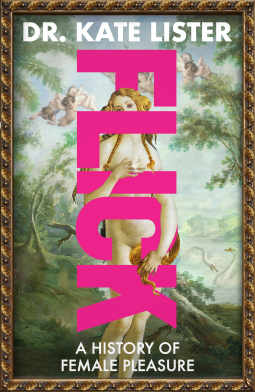
From Ancient Mesopotamian sex goddesses to the contraceptive pill, Kate Lister takes us through history to show us how women’s sexual pleasure was controlled, understood and thoroughly, thoroughly enjoyed.
FLICK is a rousing history of women enjoying sex: sex with themselves, sex with each other, and occasionally sex with men as well.
My Review
Yes, it’s another Netgalley book! Took me a whole month to read it! This was actually a really fun read. But then I wouldn’t expect anything less from Dr Kate Lister, sweary Yorkshire monarch of sex history. I love her podcast. Betwixt The Sheets, so obviously when I saw this book available on NetGalley I had to request it.
The book is exactly what it says on the cover, a history of female pleasure. It covers goddesses, ancient approaches to female sexuality, masturbation, sapphic love, menopause, medicalisation of female sexuality, and everything in between. It mostly focuses on what can broadly be called Western traditions, occasionally venturing further afield, but mostly Europe, south west Asia (when talking about ancient goddesses), and North America.
The overarching theme is one of suppression due to fear. Blame the ancient Greeks, they were weird about women and worshipped the almighty cock (or Zeus as he was also known (my joke)), made up crap about the Mesopotamian civilizations, and then infected the rest of the European world with their misogyny and dodgy medicine for millennia. I am paraphrasing, obviously, and attempting to condense a lot of information into one paragraph, but there is a throughline from ancient Mediterranean civilisations to the modern world, in which female sexuality is feared and vilified, and so is suppressed and made shameful. Whether it’s the Roman disgust at the ‘unmanly’ cunniligus (I learnt so many new euphemisms!), or wandering wombs, or clitorectomies for ‘over sexed’ women, the result is the same. Suppression of female sexuality is a tool in the oppression of women in a patriarchal culture.
Dr Lister’s final point in the book is that until female sexuality is held to be equally acceptable as male sexuality, there is no full equality. While girls are told it’s dirty to touch themselves, but boys are ‘just being boys’; while women are called sluts for having sex because they enjoy it, but men are ‘proper men’ if they get laid a lot; while older women are bullied into dying their hair and having facelifts, but older men are silver foxes, there can be no true equality.
I found it easy to follow and entertaining to read. I could almost hear Dr Lister’s voice, and filthy laugh. This book is not an in-depth exploration focusing on one specific topic in one place and time, but an overview of a variety of related topics that circle around female sexuality and the ways it has been suppressed, controlled and vilified over the last couple of thousand years.
EDITION: Other Format ISBN: 9781035083350 PRICE: £18.99 (GBP) PAGES: 224 Publication date: 1st October 2026 Publisher: TOR
Description
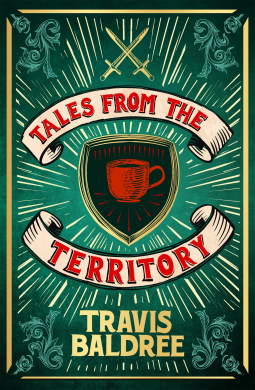
From Sunday Times bestseller Travis Baldree, Tales from the Territory is a beautiful collection of cosy fantasy tales, set in the much-loved world of Legends & Lattes.
There are many tales yet untold . . .
‘GOBLINS & GREATCOATS’: Chaos goblin Zyll is involved in a case of mistaken identity, where she solves a murder at an inn whilst simultaneously stealing all the cutlery.
‘JUST A THIMBLEFUL’: The sweet rattkin baker Thimble finds a new home for his soon-to-be famous cinnamon rolls.
‘PAGES TO FILL’: An act of mercy leads to a life-changing discovery for warrior orc Viv.
In ‘MIROGRAPH’, young succubus Tandri assists a university professor on a mysterious project where art and science collide.
In ‘CAVALIERS & COFFEES’, Viv, now the owner of Legends & Lattes coffee shop, discovers that imitation is not the highest form of flattery.
Featuring bespoke, full-page colour illustrations and endpapers, this is a deluxe collection of cosy short stories.
My Review
I got this one from Netgalley. I know, look at me reading ebooks again. Admittedly, it’s a collection of short stories and I read a few pages, get up, do something else, then go back to reading, but it’s something. Plus, I need to distract myself from all the eviction stress.
This is a collection of short stories featuring, for the most part, characters from Legends & Lattes in their lives before the coffee shop, and one set between the first book and Brigands & Breadknives, which I will review eventually. I’m waiting for the paperback because I don’t want to damage my special editions. The character in the first short story, Zyll, is a major character in Brigands & Breadknives. I love Zyll, she’s a delightful chaos monster.
We already know the characters, but their lives immediately before the events of L&L are only hinted at. In this collection we get to learn a bit more about them and their world. Thoroughly entertaining and colourful, the stories add depth to the world of the Territory, and the city of Thune particularly. I wish there were morse stories in this collection, maybe featuring more characters from the books and new characters?
I will definitely be getting a copy of this book, if possible, to add to my collection.
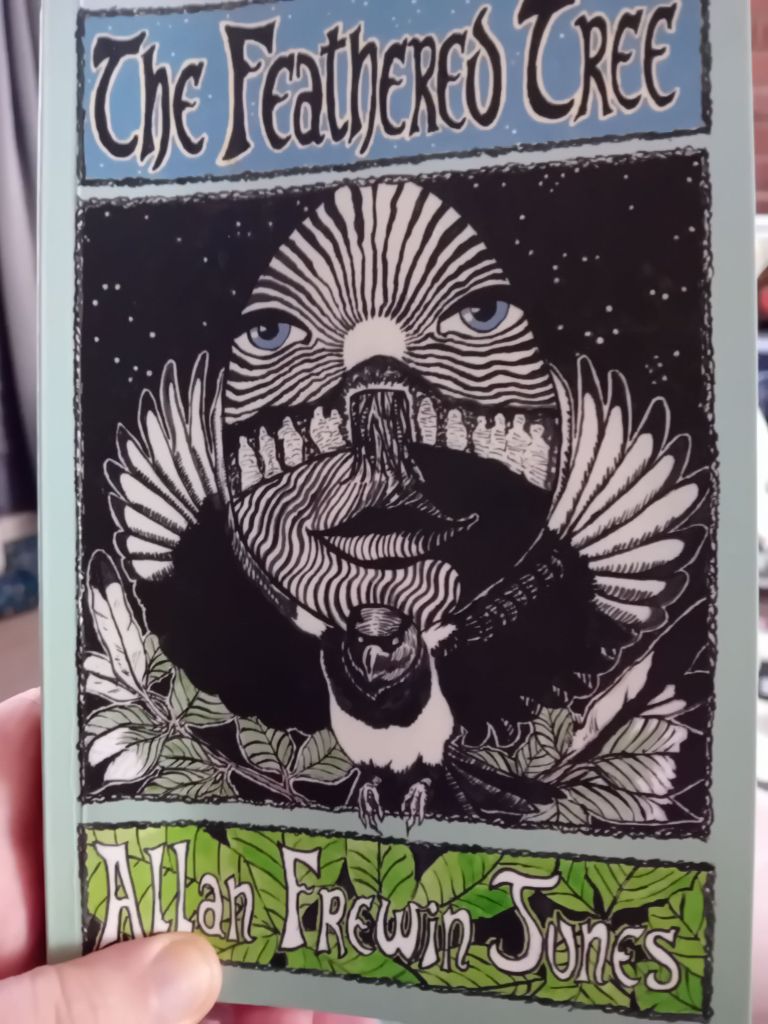
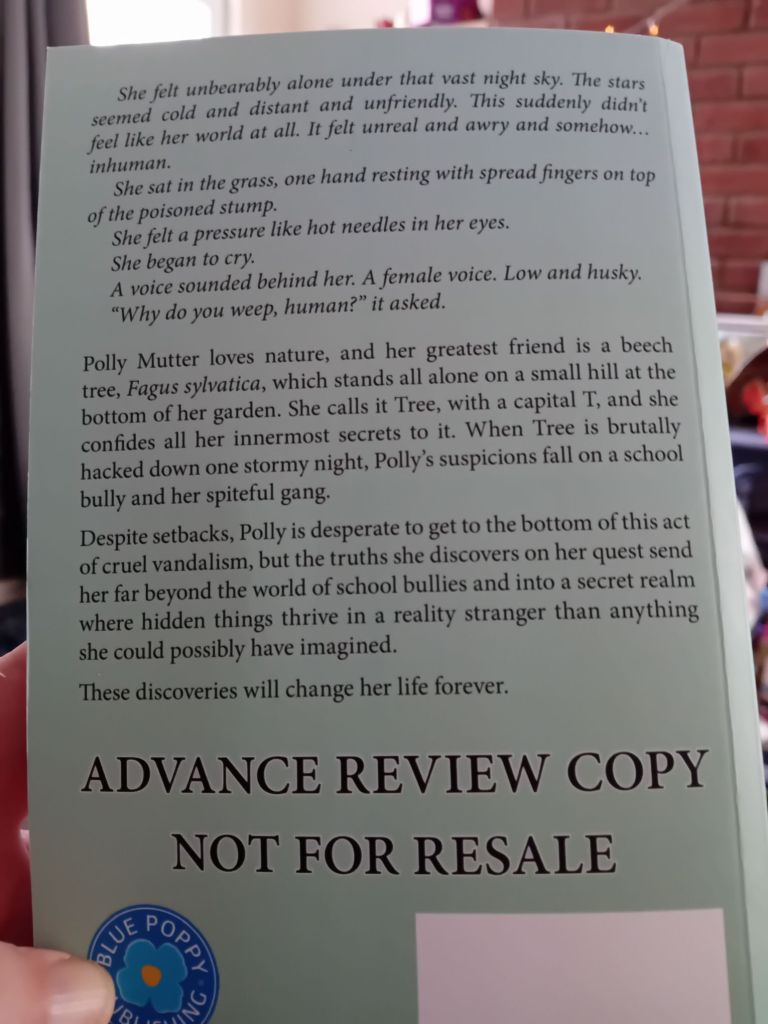
The publisher sent me this ARC a couple of months ago and it was on my list for June, but I’ve got a gap and I thought I’d read it now. It came with a lovely letter, a magpie feather and some beech seeds.
I made a post on Instagram last week when I had read the first 23 chapters. Here’s my summary from there:
The MC is 16 but acts younger in some ways. Immediately got Au vibes, from her and her new friend, Quinn. Tree and corvid special interests.
The writing is probably more what I’d have read at 12 rather than 16. It actually reminds me of the tone and comprehension level of the first two Song of the Lioness books but obviously not set in a secondary world or with knights and battles.
The supernatural element of the dryad and setting in the west country feels familiar but also unfamiliar, a weird, uncannyness. Could be real, could be a traumatised teenager on her summer hols daydreaming, if you see what I mean.
Easy to read, short chapters.
Bullying element is sensitively handled, and an experience I recognise. Just because they aren’t beating you up doesn’t mean they aren’t bullies. Teenage girls are absolute bitches at times and their boy ‘friends’ are nasty little cowards hoping to touch a boob if they are just unpleasant enough. Touched a nerve, sorry.
Now, having finished the book, I have more to add:
The way Polly and Quinn share their joy in their interests is really sweet, they really want to know each other and their interests, and the description is an amazing description of two autistic people sharing their special interests and being intoxicated with it and each other.
The final trick from Ashley and her friends is awful, but Quinn seeing the truth about his sister, and Nyssa and the tree-wights coming to the rescue is really engrossing.
I cried. The way Polly and Quinn celebrate planting saplings and joining the song of nature is so powerful. I couldn’t help myself, I cried so much.
This is a story for younger teenagers, but it explores things they will be interested in, like first love, dealing with family difficulties and unusual family structures, being bullied, and the transition from secondary school to Further Education. It is written in a way that would have appealed to me as a younger teenager, but these days I don’t know what twelve-year-olds are reading.
The environmental theme is strong in this book, and I can see the intention – humans have messed up, we can do better, and some people are. I can see that the author is linking folklore to modern environmental issues, but it is a little unsubtle at times. Maybe it needs to be for the intended readership age to get the message over, but it can also put them off. Kids don’t like being told what to think, it’s better to let the theme speak for itself.
Frewin Jones has done a good job of integrating the folklore elements in with the coming of age story. It’s possible that the characters could be imagining things, like Polly and her friendship with Nyssa could be a teenager going through a difficult time telling stories to make things better, but the way it’s written pulls it together so that we the reader knows that Polly is really experiencing these things.
There’s something of a romanticism of the past and folklore, which is fine, but can be slightly misleading about history. We don’t know the beliefs of people in the West Country pre-Christian conversion. There are a lot of folk stories, and the Cornish saints had some good stories, but no one knows the significance of the stone circles or the individual stones that they set up. I read a lot of Rosemary Sutcliffe etc. as a young teen, I know this stuff when I see it – it’s based on 19th and 20th century beliefs about prehistoric beliefs and lives, based on limited understanding of the archaeological evidence available at the time. See also, the green man etc. for 19th century fuckery with folk traditions and folklore. I’ll forgive it because 30 years ago I wouldn’t have known that. I’ve read a lot of mythology and folklore because I read books where the author wasn’t quite correct. Go forth children and read all the archaeology, history, mythology, and folklore!
I enjoyed this story. It was well-written, pitched well for the target audience and sensitively deals with difficult topics. Some of the Devon dialect from the elderly neighbour was fun; my gran is an old lady from Devon but she doesn’t use a lot of dialect anymore, which is a shame.