


Review: Knot in Time (Tales of Uncertainty Book 1) by Alan Tucker
2012
Dare Heisenberg (adopted great-nephew of the great Heisenberg of Uncertainty Principle fame) is a drop-out living on the streets of Denver. A disappointment to his adopted-parents, his teachers and just about everyone he ever met, including himself, Dare doesn’t really see much of a future for himself. That is until one night he meets a blob named Bob. Bob has an offer for Dare that changes his existence. Dare can go on as he is or join the Keepers, who regulate time and space.
Naturally he accepts.
Dare is sent on his first mission, which goes horribly wrong and sets off a chain of events which results in Dare ending up on (and above) Mars with giant hamster aliens and an indestructible spider-creature. Oh, yes and four anti-matter bombs. Dare and his new friend Lauri must race against time to prevent the destruction of a species.
I was sent this e-book to review at the request of www.everythingbooksandauthors.com (thanks Toni); it’s been a while since I read much science fiction but I used to enjoy it so I thought I’d give this book a go.
Overall I’d say I enjoyed the novel, especially the final third, when it felt like the author had really got in to his storytelling stride, describing the scenes and action well. I grew to sympathise with Dare, a character whose self-centredness irritated until he started to develop.
The only significant negative point I could make is that the pacing is a little uneven. The first hundred pages were slow, but once the action started it sped up. The change in pace came at a point that, when I read it, felt disjointed; as though this were two separate stories that had been put together but the join wasn’t smooth. It also felt a little rushed towards the ending, with an element of deus ex machina. I also found some of the early descriptions of Dare’s family background and education repetitive and laboured.
These are minor quibbles and this is an enjoyable sci-fi novel, with an interesting premise; the author clearly has some understanding of current theories in physics. In addition, I especially liked the pahsahni (giant hamster aliens) and their back-story. It is a good introduction to Sci-Fi suitable for YA audience.
I’m hoping to do write a few more reviews for www.everythingbooksandauthors.com, Toni the Admin is really nice, she gets back to you quickly and doesn’t preasurise readers/reviewers. I’ve got a great long list of books I’m reveiwing at the minute, so expect a few more over the next week or so!
Rose
Review: ‘Alexander At The World’s End’ by Tom Holt

Abacus 2000
This edition printed 2011
Originally published by Little, Brown and Company, 1999
This is one of the books I got from the library a couple if weeks ago. I’ve read a few of Tom Holt’s comic fantasy novels but I hadn’t known he’d also written historical novels. It was a pleasant surprise.
‘Alexander At The World’s End’ tells the tale of Euxenus son of Eutychides, who started life in Athens and ended up as governor if Alexandria-at-the-End-of-the-World, in Sogdiana (otherwise known as Iskander, 50 miles NE of Tashkent). When he was a youth his father arranged for him to be apprenticed to a philosopher so that he could learn a trade. Unfortunately he choose Diogenes, the Yapping Dog, the Cynic, the man who told Alexander the Great to get out of his light.
Under Diogenes’s tutelage Euxenus learnt Yapping Dog philosophy, and politics. He made a good living at it in Athens, the the assistance of an invisible snake in a jar. Unfortunately Phillip of Macedon is making a nuisance of himself, and Euxenus is one of the lucky, lucky ambassadors sent to Pella to discuss the matter. It went badly.
But not for Euxenus, who managed to make the acquaintence of young Prince Alexander while rounding up bees, gain Queen Olympias’s favour (her snake obsession came in handy for a change) and get a job tutoring the Prince and his Companions.
Completely ill equiped for such a position, Euxenus throws himself into his work with all his usual dedication until Philip decides to send Euxenus and a couple of thousand Illyrian mercenaries he no longer needs off to Olbia on the Black Sea to found a colony.
After many years and assorted adventures Euxenus returns to Athens and settles down on the old family farm. Time passes, Euxenus becoming the good farmer his family always assumed he’d never manage to be, until his once pupil, now king of the known world, sends a couple of soldiers for him.
Alexander needs a governor for his newest city, in Sogdiana, so Euxenus must once more go travelling, this time across Asia, because when Alexander wants something, Alexander gets. In his new home Euxenus once again tries to build the Perfect Society and write his History, which is very difficult for a man constantly looking the wrong way when important events are taking place.
Funny yet poignant, this novel explores the difference between who we really are, who we believe ourselves to be and how the world sees us. It’s really quite sadly beautiful. It’s also a grand history lesson and philosophy primer. Written with the deft touch of a great storyteller, gripping from first to last and full of detail, I would heartily recommend this novel.
Rose
What Makes a Manuscript Stand Out?
Useful advice and information 😀

 Every month Simone Kaplan answers questions in her newsletter that people send into her. I thought the one she answered this month was a good one that you would be interested in reading. Here it is:
Question: Let’s say a number of good manuscripts come into an editor’s office. All have good grammar, good punctuation, etc.; and all are by first-time writers. In other words, all things are equal. What would make one manuscript stand out so much that the editor would want to publish it? Donna R
Simone’s Answer: First, Donna, I have a question for you: when was the last time you walked into a bookstore and asked for a book with “good grammar, good punctuation, etc.”?
I thought so!
Good grammar, clear sentences, and a cohesive structure are the basic requirements of a manuscript. Without them the manuscript doesn’t stand a chance of publication.
So let’s turn…
View original post 623 more words
Ten Underrated Shakespeare Plays
I’ve heard of most of them and I’m going to see Coriolanus in London next February. I’ll know how to pronounce it properly now 😀

Everyone knows Romeo and Juliet, Twelfth Night, Hamlet, Macbeth, and Richard III (or knows of them at least). Even Richard II, As You Like It, and Antony and Cleopatra can be said to be well-known William Shakespeare plays. But what about the others? He wrote or collaborated on nearly forty, after all. Here are ten of the least-known plays by the Bard, with the reasons why people should read them (or reread them), along with an interesting fact about each. We hope you enjoy them. If you like this list, be sure to check out our follow-up pick of Shakespeare’s ten best plays (complete with interesting trivia about them) our interesting facts about Shakespeare too.
 1. King John. This is one of the Bard’s least-performed plays, although it was popular with the Victorians because of its pageantry and medieval pomp. Nevertheless, the play has been…
View original post 1,573 more words
Ten More Words We Got from Literature
Our previous post, on ‘Ten Words We Got from Literature’, was so popular with readers that we have decided to write a sequel. We had several great suggestions from readers which we’ve incorporated into this list. As with the previous post, we’re interested only in words which have a definite origin in a literary work.
View original post 954 more words
Guest Blog: Writing Against Captivity: Phillis Wheatley’s Illimitable Imagination
By Laura Linker
Phillis Wheatley (1753-84), an eighteenth-century black slave taught to read by her owners, composed over 100 poems in her lifetime, many of them drawing on the Bible as a source of infallible authority. The first slave to publish a book, Wheatley often urges America to repent of its participation in the slave trade. (She was also the originator of ‘Columbia’ as a term for America, which she invented in her 1776 poem ‘To His Excellency George Washington’.) Steeped in western canonical authors, including Ovid, Virgil, Shakespeare, and Milton, she draws on classical and religious allusions to challenge legal and social limitations that denigrate slaves, adopting established poetical forms only to use them as sites of resistance. Her poetry demonstrates remarkable technique and learning.

One of her most interesting poems, ‘On Imagination’, employs art as a means of freeing the mind and the muse, conceptualized as a figure…
View original post 732 more words
Twitter Terms and Literature
 The word ‘tweet’ – meaning to post a message or item of information on Twitter – has this month (June 2013) been added to the Oxford English Dictionary or OED. In honour of this occasion, we thought we’d offer some interesting facts about terms associated with Twitter, and the stories surrounding their earlier uses. Many of them have a literary connection.
The word ‘tweet’ – as a verb – is first attested in 1851. It may have been in use earlier than this, but the OED cites 1851 as the earliest known date of the verb’s use. The word features in a poem by George Meredith, novelist and poet, author of Victorian sonnet sequence Modern Love. (Meredith was also the author of the poem ‘The Lark Ascending’, which would later inspire Ralph Vaughan Williams to compose his celebrated piece of music.)
The poem, one of Meredith’s ‘Pastorals’, contains the lines:…
View original post 633 more words
Servants, Sex & Scandal: divorce in C18th century England
The 100-Year-Old Man Who Climbed Out the Window and Disappeared (part the first), Jonas Jonasson
Sometimes I wish I could read more languages fluently because as much as I enjoy reading translations it would be nice to read books in their original language.

I started reading this book last week during my mother’s visit, and I was probably thirty-five pages in when I stopped and asked her if she read a lot of Swedish authors. She told me she hadn’t (and claimed it wasn’t at all because she was Norwegian); she wondered why I had asked such a question, and I said I was having a little trouble getting into Jonasson’s book. I felt, I told her, the same way I did when I tried to read The Girl With the Dragon Tattoo – everyone told me it was great, but I couldn’t get further than the first sixty pages. The style was just so…reserved.
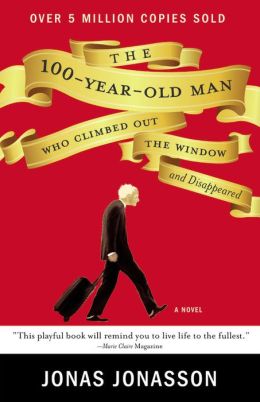 I was struggling with the same issue when it came to this book. I liked the protagonist well enough that I was going to plow onward, but it made me wonder if these two books were a reflection…
View original post 583 more words
 Everything Is Better With Dragons