TBL List Review: The Incredible Unlikeliness of Being, written and read by Alice Roberts

Format: 392 pages, Paperback
Published: January 1, 2014 by Heron Books
ISBN: 9781848664791 (ISBN10: 1848664796)
Language: English

Alice Roberts takes you on the most incredible journey, revealing your path from a single cell to a complex embryo to a living, breathing, thinking person. It’s a story that connects us with our distant ancestors and an extraordinary, unlikely chain of events that shaped human development and left a mark on all of us. Alice Roberts uses the latest research to uncover the evolutionary history hidden in all of us, from the secrets found only in our embryos and genes – including why as embroyos we have what look like gills – to those visible in your anatomy. This is a tale of discovery, exploring why and how we have developed as we have. This is your story, told as never before.


My Review

The book takes the foetal development from before ovum and sperm meet to birth, and going from head to toe, to discuss both foetal development and evolution. The author is uniquely place to write this sort of book, having spent years as both a scientist and a science communicator. I enjoyed Alice Roberts’ documentaries that I’ve seen, and this book from ten years ago holds up well, although the science continues to move on.

I found this book really interesting. I have some background in biology, but not a huge amount, I only did a year of university chemistry, mostly biochemistry and molecular biology. I suspect if you didn’t manage to pass GCSE biology and don’t watch documentaries, you might struggle with this book, but for the reasonably educated, it’s a good book. It’s a foundation at least, for university study. It’s not a textbook however, it is written with a general audience on mind. If you enjoy Dr Roberts’ documentary series’ you’ll be fine with this book.

I giggled at the occasional digs at creationists, because they deserve it for their wilful ignorance. If you’re sensitive about that, you probably need a slightly less advanced book before you get to this one. And you need to escape whatever cult you’re in that’s stopping you from getting an education…

I’m listening to Ancestors, by Alice Roberts next.

TBR Pile Review: A Brief History of Everyone Who Ever Lived, by Adam Rutherford

Paperback, 419 pages
Published November 14th 2017 by W&N (first published September 8th 2016)
ISBN: 1780229070 (ISBN13: 9781780229072)

Blurb

This is a story about you. It is the history of who you are and how you came to be. It is unique to you, as it is to each of the 100 billion modern humans who have ever drawn breath. But it is also our collective story, because in every one of our genomes we each carry the history of our species births, deaths, disease, war, famine, migration, and a lot of sex.

Since scientists first read the human genome in 2001, it has been subject to all sorts of claims, counterclaims, and myths. In fact, as Adam Rutherford explains, our genomes should be read not as instruction manuals, but as epic poems. DNA determines far less than we have been led to believe about us as individuals, but vastly more about us as a species.

In this captivating journey through the expanding landscape of genetics, Adam Rutherford reveals what our genes now tell us about history, and what history tells us about our genes. From Neanderthals to murder, from redheads to race, dead kings to plague, evolution to epigenetics, this is a demystifying and illuminating new portrait of who we are and how we came to be.

My Review

This is another one of my random books I bought because it looked interesting. I like biology, history and all that connected stuff. Yes, it really is all connected; it makes no sense to teach them as separate subjects, they all overlap. But that’s not really important right now…

Adam Rutherford writes amusingly of genomics, history and archaeology, as he explains how modern humans came to be the only hominids left and where we are now. It’s basic stuff that people really should know, but unfortunately they don’t and that causes a lot of problems in society.

Seriously, how can anyone believe in ‘race’ these days when genomics can show that it doesn’t exist in a scientific sense? I understand it is a social classification that has real effect in the world, race is a social construct that is used to unite people and divide them, to build a social identity and to deny social advantages, but that doesn’t make it any less illogical.

I actually found his discussion of his PhD research fascinating. Eyes are really odd, but clearly not ‘designed’. Like much of the body, it’s really daft and clearly made up of changes over time. Eyes break so easily, they’re so often a mess from the start too. How anyone can believe they were created perfectly by some god is again, beyond me. Octopuses managed to do it better, for crying out loud!

Human evolution is fascinating! No really, I love it. I found the way Rutherford described the multiple times different human species mixed and shared genes really informative.

The book is fairly introductory and includes a glossary and further reading, so it’s a good place to start if you’re interested.

Problems: Adam Rutherford shouldn’t talk about Autism, because he clearly knows nothing; he still refers to us as having Autism Spectrum Disorder. We are not disordered!

His grasp of human sex and gender is limited. He often refers to ‘the two sexes’ and ‘male is XY, female is XX’, completely ignoring the fact that sex is more complicated than that, and he dismisses intersex people in a footnote as negligible disorders. Way back in 2016 I reviewed a book on the subject that clearly explains how much variety there is in human sex and gender. He also uses ‘male’ and ‘women’, rather than ‘male’ and ‘female’, or ‘men’ and ‘women’; it’s confusing and I’m not sure why he does it. In context, it doesn’t make sense. If you’re talking about sex or presumed sex (because someone’s external genitalia may be one thing but their chromosomes and hormones could be different) use male, female or intersex; if you’re talking about gender, use gender labels – men, women, non-binary, agender etc.

Definitely one to read and share with all your embarrassing relatives.

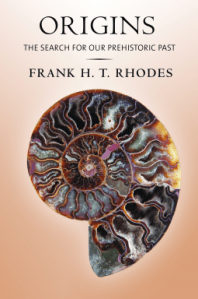
Review: Origins, by Frank H. T. Rhodes

cover92529-medium

Published by: Cornell University Press

Publication Date: 6th Septhember 2016

Format: Hardback

Price: £22 (approx.)

I.S.B.N.: 9781501702440

Continue reading “Review: Origins, by Frank H. T. Rhodes”

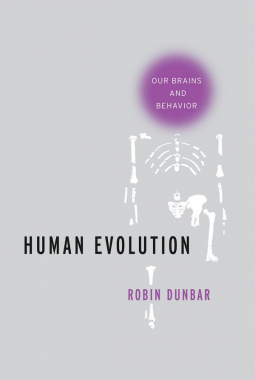
Review: ‘Human Evolution’ by Robin Dunbar

cover89943-medium

Published by: Oxford University Press

Publication Date: 1st November 2016

ISBN: 9780190616786

R.R.P.: $29.95

Continue reading “Review: ‘Human Evolution’ by Robin Dunbar”

Review: ‘A World From Dust’ by Ben McFarland

cover79671-small

A World From Dust

How the Periodic Table Shaped Life

by Ben McFarland

Continue reading “Review: ‘A World From Dust’ by Ben McFarland”