
TBL Post: Psychedelics: The Revolutionary Drugs That Could Change Your Life – A Guide from the Expert, by Professor David Nutt

By: Professor David Nutt
Narrated by: Professor David Nutt
Length: 7 hrs and 50 mins
Unabridged Audiobook
Release date: 29-06-23
Language: English
Publisher: Yellow Kite

Summary

The definitive guide to psychedelics, science and our health by a world-renowned, leading authority, Professor David Nutt.

We are on the cusp of a major revolution in psychiatric medicine and neuroscience. After fifty years of prohibition, criminalisation and fear, science is finally showing us that psychedelics are not dangerous or harmful. Instead, when used according to tested, safe and ethical guidelines, they are our most powerful newest treatment of mental health conditions, from depression, PTSD, and OCD to disordered eating and even addiction and chronic pain.

Professor David Nutt, one of the world’s leading Neuropsychopharmacologists, has spent 15 years researching this field and it is his most significant body of work to date. In 2018, he co-founded the first academic psychedelic research centre – underpinned by his mission to provide evidence-based information for people everywhere. It revived interest in the understanding and use of this drug in its many forms, including MDMA, ayahuasca, magic mushrooms, LSD and ketamine. The results of this have been nothing short of ground-breaking for the future categorisation of drugs, but also for what we now know about brain mechanisms and our consciousness.

At a time where there is an enormous amount of noise around the benefits of psychedelics, this book contains the knowledge you need to know about a drug that is about to go mainstream, free from the hot air, direct from the expert.

Are you ready to change your mind?


My Review

I started listening to this audiobook yesterday when I went for my walk, and finished it today while I was out on my walk. Honestly, I was looking for a short book that I would be able to get through fairly quickly. I’m putting off diving into a whole library of fantasy books that I really want to listen to, but I need a good run up to because I know they’ll hurt. Also, I’m trying to get my total up for the GoodReads Challenge. Yes, yes, I know, gamification of reading, bad, etc. I can’t help it! I read a lot, but none of it seems to count. I don’t think they have New Scientist or New Humanist magazines on GoodReads. They do have the BFS Journal and BFS Horizons, as well as Interzone, so some of my magazine reading does count.

Back to the book.

I thought this was an interesting, comprehensive look at the research around psychedelics and their potential uses in medicine. The author is obviously passionate about his work and helping people with mental illnesses using psychedelics, but I think he might have some blind spots when it comes to criticism. He’s clearly still upset about being sacked in the 1990s. I get it, it’s frustrating when you’re trying to share information and people refuse to listen because it doesn’t fit their narrative, but he’s had a massively important career in academia since then.

I’ve never taken drugs, it’s not my thing; in fact, I’ve said I would only try these drugs under clinical, research conditions, and since I respond well to my medication, I’d never qualify for the research trials. I found Nutt’s descriptions and his quotes from others, including research participants, fascinating. It’s one of the reasons I got this audiobook, I want to know what people experience without actually trying psychedelics. People I know have told me about their experiences but I’m interested in it from a scientist’s position.

I’m interested in the science of how they work. The explanations of the way the chemicals work on the brain are really easy to understand. Er, for me at least, but I have some background in biochemistry. I think a general reader without a science background should be able to make sense of it. Nutt’s frustration at the waste of research time and opportunity caused by unsupported bans and high costs seems well-founded.

Nutt narrated his book and he has a reasonable narration voice. His accent sounds comforting, he has clear diction and a warm tone.

Nutt has a shallow understanding of neurodiversity. I appreciate him mentioning that he doesn’t want to get rid of neurodivergent people, but he needs to actually understand what he’s saying. Neurodiversity covers everyone, neurodivergent refers to those who’s brains don’t fit the social norm. Neurodiversity is a social and political movement for disability rights; saying you don’t ‘want to get rid of their neurodiversity’ about treating anxiety in Autistic people, doesn’t really mean anything. Why didn’t an editor check that? Why hasn’t Nutt looked into it more deeply if he’s concerned about helping us? Also, ADHD isn’t a mental illness. It’s a form of neurodivergence, like autism, like OCD, like schizophrenia, etc. There are things we need help with and I’m sure psychedelics could be useful in some cases.
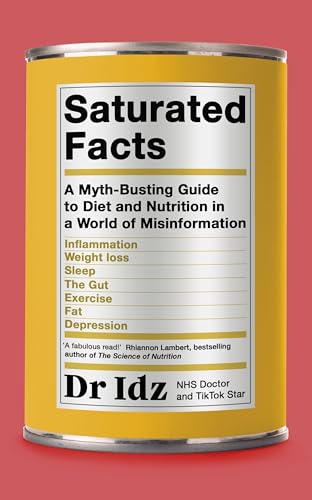
TBR Pile Review: Saturated Facts, by Dr Idrees Mughal

Publisher ‏ : ‎ Penguin Life (14 Mar. 2024)
Language ‏ : ‎ English
Paperback ‏ : ‎ 272 pages
ISBN-10 ‏ : ‎ 0241588227
ISBN-13 ‏ : ‎ 978-0241588222

Are carbs the enemy? Am I getting enough protein? Should I worry about inflammation? Do calories count? And do any diets really work?

We are constantly bombarded with advice on how to live a ‘healthier’ life. From the benefits of intermittent fasting and the keto diet, to the growth of veganism and the dangers of inflammation, poor-quality, dubiously sourced information on how we can live and feel better is everywhere. But where should we turn for advice we can trust?

Dr Idrees Mughal (Dr Idz), an NHS doctor with a masters in nutritional research and a board certification in lifestyle medicine, has made it his mission to educate, inspire and empower the public when it comes to diet and lifestyle. His signature videos have attracted millions of followers online, and now he’s collected this wealth of information in his first book, Saturated Facts – your science-backed guide to living better.

Whether you’re looking to lose weight, sleep better, avoid disease or just have more energy as you go about your day, Saturated Facts is the comprehensive guide you need to make smarter decisions about your health.


My Review

This book arrived on publication day. I spent a couple of days reading and digesting it. There was a lot to think about. I’m interested in nutrition science, I’ve read a few other books on the subject, and I’ve even done a couple of level 2 nutrition courses. I like the science. The human body and how it processes food is fascinating and not generally as simple as people believe. It really is more complicated than individual nutrients and calories in-calories out.

I really liked the structure of this book, the references to specific studies and scientific consensus, and all the sources are listed at the back. There should always be sources! It made my brain happy to read this book. Dr Mughal makes the scientific papers legible to the non-specialist and lay reader (I did chemistry, biochemistry and geology, and I understand autism paper, everything else I need translating). I appreciate the effort. I also appreciate the author’s debunkings of myths.

A lot of the information wasn’t new to me, but the level of detail was, and I found that satisfying. The nutrition advice is sound, as far as I know and I generally eat quite well roughly following the advice, something I learnt years ago. I think this book would be really useful for people needing a clear explanation, backed up by named sources, before they engage in a change in diet.

I read a couple of statements in the book, also ostensibly supported by scientific sources, but which are actually a bit dodgy. In fact I found some of them rather upsetting and ignorant.

The first is a reference to Autistic people and faecal transplants, and how after a faecal transplant Autistic children showed ‘less autistic symptoms’. For a start that paper you referenced, Dr Idz, was from October 2005 and has already been debunked by better people than me. Common criticisms include: the children weren’t asked if it helped, their parents were asked for their subjective observations; the language used by the researchers was prejudicial and biased – comparing autistic children vs ‘healthy’ children; the researchers failed to consider the fact that autistic people often have gastric difficulties and limited diets due to sensory sensitivities so it’s hard for us to get balanced diets when we need our safe foods. If children are forced to eat food that upsets them either digestively or sensorily, they will have ‘more autistic symptoms’, because they’re in pain! Strangely enough, you’d probably be grumpy if you can’t eat something because it makes you want to vomit from the texture/taste/smell/sight (baked beans, mushy peas, avocado, I’m looking at you, or not actually because bleurgh) or because your belly hurts because you’re having a response to the food. Children don’t have the words, often, to specifically describe their pain or to work out the cause. This is especially true of those with other complex conditions or who struggle with verbal speech. Instead of giving us faecal transplants, try working out what’s causing the problems in the first place?

If you use a paper that’s so thoroughly wrong to make a point, why should I trust you’re other citations? I know about autism. I don’t know as much about nutrition, you could be bullshitting me and passing it off as scientific consensus. Also, the phrase ‘in mice’ is important in some of the cited papers about helping fat people be less fat.

On to the second one. Doctors and health care professionals generally engage in a lot of anti-fat bullying. I generally get nurses, for some reason, telling me I need to lose all the weight or I’ll get a horrible illness and die. Completely ignoring my genetics, my actual lifestyle, my medical conditions and neurotype. Doctors get funny when I need procedures that require anaesthetic (if you can mutilate healthy stomachs in the name of weight loss, you can do a fucking colposcopy under anaesthetic, stop being a dick about it). Doctor Mughal does in fact acknowledge the anti-fat biases of his colleagues but moves on extremely quickly and seems to push it off as a minor issue. On the subject of fatness he’s quite contradictory – it’s a disease that needs treatment, but also fat people are responsible for being fat, fat people are treated badly by doctors but doctors can’t help their biases.

And Dr Idz is no better than the rest of them on that count. He doesn’t question statements about fat people being more anxious (what do you think happens when people are bullied all their lives?) and doesn’t question the cause and effect of fatness and type-2 diabetes, even though genetics has been shown to be more of an influence than body size.

I’m fat so of course I must live on take aways and sit around all day. Who can afford to live on takeaways? Plus they upset my digestion. I probably have some sort of irritable bowel conditions (or as I call it ‘the anxiety shits’) and I have a hiatus hernia. Also, autistic food pickiness. I know what I can and can’t eat. But still, I like learning more about this stuff as a science-minded person. Don’t be too shocked, will you?

He also misunderstands the purpose of fat activism – it’s a movement for equality. Even if fat people lost that magical 10% of their starting weight, there would still be lots of fat people in the world, and we shouldn’t be excluded from participating in life, shouldn’t be denied healthcare and employment, and we shouldn’t be bullied because of ignorance and prejudices. That’s it. It’s not a difficult concept.

So, over all, watch it if you’re fat and kinda sensitive about stuff, because this book repeats a lot of the biased bollocks we already hear from HCPs, but when he sticks strictly to nutritional advice, Dr Idz really does a good job of explaining the science in an easily understandable way, with citations, mostly from the last decade, with a small number of exceptions (yes, I looked). I like citations, have I mentioned that.

I gave this book a 3/5 on GoodReads purely for the autism bollocks he repeated without question. I’d have got a 4 or 5 if he’d refrained from that and I hadn’t started questioning his sources.

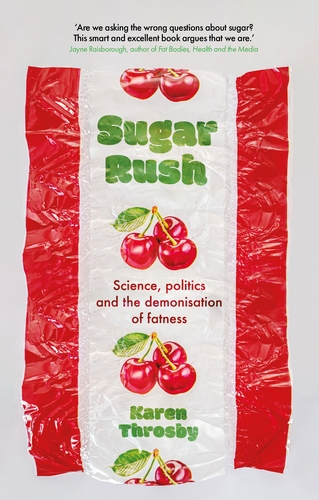
TBR Pile Review: Sugar Rush, by Karen Throsby

Format: Paperback
ISBN: 978-1-5261-5155-1
Pages: 304
Price: £19.99
Published Date: June 2023
Published by Manchester University Press

DESCRIPTION

In the second decade of the twenty-first century, the crusade against sugar rose to prominence as an urgent societal problem about which something needed to be done. Sugar was transformed into the common enemy in a revived ‘war on obesity’ levelled at ‘unhealthy’ foods and the people who enjoy them. Are the evils of sugar based on purely scientific fact, or are other forces at play?

Sugar rush explores the social life of sugar in its rise to infamy. The book reveals how competing understandings of the ‘problem’ of sugar are smoothed over through appeals to science and the demonization of fatness, with politics and popular culture preying on our anxieties about what we eat. Drawing on journalism, government policy, public health campaigns, self-help books, autobiographies and documentaries, the book argues that this rush to blame sugar is a phenomenon of its time, finding fertile ground in the era of austerity and its attendant inequalities.

Inviting readers to resist the comforting certainties of the attack on sugar, Sugar Rush shows how this actually represents a politics of despair, entrenching rather than disrupting the inequality-riddled status quo.


My Review

Throsby uses a variety of sources from 2016 to 2019 to interrogate the focus on sugar are ‘the’ bad nutrient. She links this to pre-existing food hysterias, and austerity, with its focus on punishing the poor, the fat, the abject Other.

The structure of this book is that of an academic textbook, with an introduction, sources used, and chapter conclusions, while the writing is more like that one would find in a popular science book, easy to read and understand. The tone is one of enquiry and interest, rather than anger or scoffing at the writers of the source materials. The arguments and conclusions are supported strongly and are convincing, at least to this reader.

I highly recommend this to fat activists, disability rights activists, anyone interested in social equity, and dietitians. Really considering buying a copy to give my dietitian…

Audiobook TBR Review: Move! by Caroline Williams

Move! cover art
By: Caroline Williams
Narrated by: Catrin Walker-Booth
Length: 5 hrs and 38 mins
Unabridged Audiobook
Release date: 15-04-21
Language: English
Publisher: Profile Audio

Summary

Did you know that walking can improve your cognitive skills? That strengthening your muscular core reduces anxiety? That light stretching can combat a whole host of mental and bodily ailments, from stress to inflammation? We all know that exercise changes the way you think and feel. But scientists are just starting to discover exactly how it works.

In Move!, Caroline Williams explores the emerging science of how movement opens up a hotline to our minds. Interviewing researchers and practitioners around the world, she reveals how you can work your body to improve your mind. As lockdown throws us back on our own mental and physical resources, there is no better time to take control of how you think and feel.

©2021 Caroline Williams (P)2021 Hachette Audio UK

My Review

This was a short listen that accompanied me on my walk to and from the pool yesterday and while crocheting today. I heard about it through New Scientist, reading the first paragraph of Williams’ article in this weeks magazine online. I bought the book on the strength of those paragraphs, and I also got this week’s magazine yesterday on the way back from swimming. The magazine article is a much condensed version of the book.

I found that there was very little in this book I didn’t already know or understand on an intellectual basis, although I didn’t know of the researchers and others she interviewed. I probably picked the information up from general reading. What this book does is bring all the information together in one place and provide simple, easy to follow advice to get the best from the research findings. The interviews are fascinating, and I especially like the idea of ‘natmov’, or natural movement training – training where people re-learn how to use their bodies like a human should by playing in nature. I think it’s something children do naturally, but school and time knock it out of us.

My only issue comes when Neurodivergent people are mentioned – dyslexics, ADHDers, Autistics specifically in this book – and people with mental distress. We have long known that researchers tend not to believe us until they ‘discover’ things for themselves. Like the link between neurodivergence and connective tissue disorders. Williams mentions the high incidence of EDS and IBS etc. is ND populations but somehow makes it sound like it’s our fault for not moving enough. She interviews a researcher who has hypermobility and then goes on to say ‘while some people with these conditions don’t like to be called disordered…’ the intonation suggests she thinks we are.

Same with mental illness – we just need to get out and about more. Maybe I’m interpreting it harshly, the author does have a history of mental distress herself, so maybe she’s just passing on the tone of research articles she’s read and the researchers she’s interviewed? She doesn’t consider any of the sociological factors that affect mental health, like increasingly unstable employment, housing difficulties, social fragmentation and loneliness.

I have shared this book with my equally autistic colleague, because the trauma section might come in handy for her mentoring, and our groups, but I warned her the author was ‘a bit neurotypical’. So, it comes with a warning to ND readers for that.

Over all, if you want some encouragement to get up and move a bit more but aren’t sure where to start or why bother, this is a useful book.

I am only resolved to act in that manner, which…

…will, in my own opinion, constitute my happiness, without reference to you, or any person so wholly unconnected with me.

Yes, I did just quote Jane Austen’s Pride & Prejudice.

Firstly, Happy New Year.

Secondly, thanks for reading my scribbling for another year.

Thirdly, I’m not going to add to the list of bloggers sharing their New Year’s Resolutions. Continue reading “I am only resolved to act in that manner, which…”