I will have a round up of all the books I really enjoyed from 2022 in January, but as a Midwinter treat, here’s my favourite SFF that I’ve read and/or listened to this year. I do like to mix media with books.
Maintaining its appealing style and presentation, the Yearbook of Astronomy 2023 contains comprehensive jargon-free monthly sky notes and an authoritative set of sky charts to enable backyard astronomers and sky gazers everywhere to plan their viewing of the year’s eclipses, comets, meteor showers and minor planets as well as detailing the phases of the Moon and visibility and locations of the planets throughout the year. To supplement all this is a variety of entertaining and informative articles, a feature for which the Yearbook of Astronomy is known. Presenting the reader with information on a wide range of topics, the articles for the 2023 edition include, among others, The Incomparable Sir Patrick Moore; Shining a Light on Jupiter’s Atmosphere; A Brief History of the End of the Universe; The Closing of Historic Observatories; The Ability to Believe: Bizarre Worlds of Astronomical Antireality; Optical SETI at Harvard; The Future of Spaceflight; and Male Family Mentors for Women in Astronomy: Caroline and William Herschel.
This iconic publication made its first appearance way back in 1962, shortly after the dawning of the Space Age. Now into its seventh decade of production, the Yearbook continues to be essential reading for anyone lured and fascinated by the magic of astronomy and who has a desire to extend their knowledge of the Universe and the wonders it plays host to. The Yearbook of Astronomy is indeed an inspiration to amateur and professional astronomers alike, and warrants a place on the bookshelf of all stargazers and watchers of the Universe.
My Review
This book is a comprehensive yearbook covering the skies of both northern and southern hemispheres, with monthly notes and a wide selection of articles. It’s a slickly produced, full-colour, yearbook that will appeal to astronomy enthusiasts.
I found it fascinating, although my knowledge of astronomy is not as extensive as I would like it to be. I think I have learnt something from reading this book.
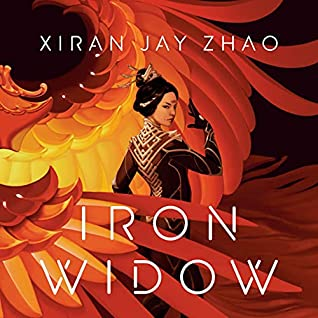
When an army of giant robot AIs threatens to devastate Earth, a virtuoso pianist becomes humanity’s last hope in this bold, lightning-paced, technicolor new space opera series from the author of A Big Ship at the Edge of the Universe.
Jazz pianist Gus Kitko expected to spend his final moments on Earth playing piano at the greatest goodbye party of all time, and maybe kissing rockstar Ardent Violet, before the last of humanity is wiped out forever by the Vanguards–ultra-powerful robots from the dark heart of space, hell-bent on destroying humanity for reasons none can divine.
But when the Vanguards arrive, the unthinkable happens–the mecha that should be killing Gus instead saves him. Suddenly, Gus’s swan song becomes humanity’s encore, as he is chosen to join a small group of traitorous Vanguards and their pilots dedicated to saving humanity.
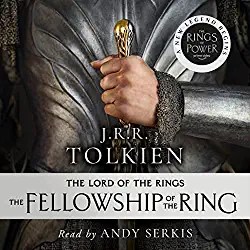
I don’t need to introduce LOTR; by now everyone has heard of this book, read it or watched the films. You might even be watching Rings of Power on Amazon Prime. I have a rather large Tolkien collection, different editions of LOTR and The Hobbit, a couple of copies of The Silmarillion and a few of Tolkien’s other works. The collection isn’t as large as my Discworld/Pratchett collection, but it’s not bad.
Last September new audiobooks, narrated by Andy Serkis, who played Gollum in The Hobbit and LOTR films, were released. I only found out earlier this year. Obviously, I had to add them to my collection.
I like Andy Serkis. He’s an excellent narrator. His familiarity with the story and characters is obvious. He provides each one with a distinctive voice, showing their characteristics, and bringing the story to life. Reading LOTR can sometimes be a slog, but listening to Serkis read the book is not. He even sings the songs, rather well in my estimation. Highly recommended.
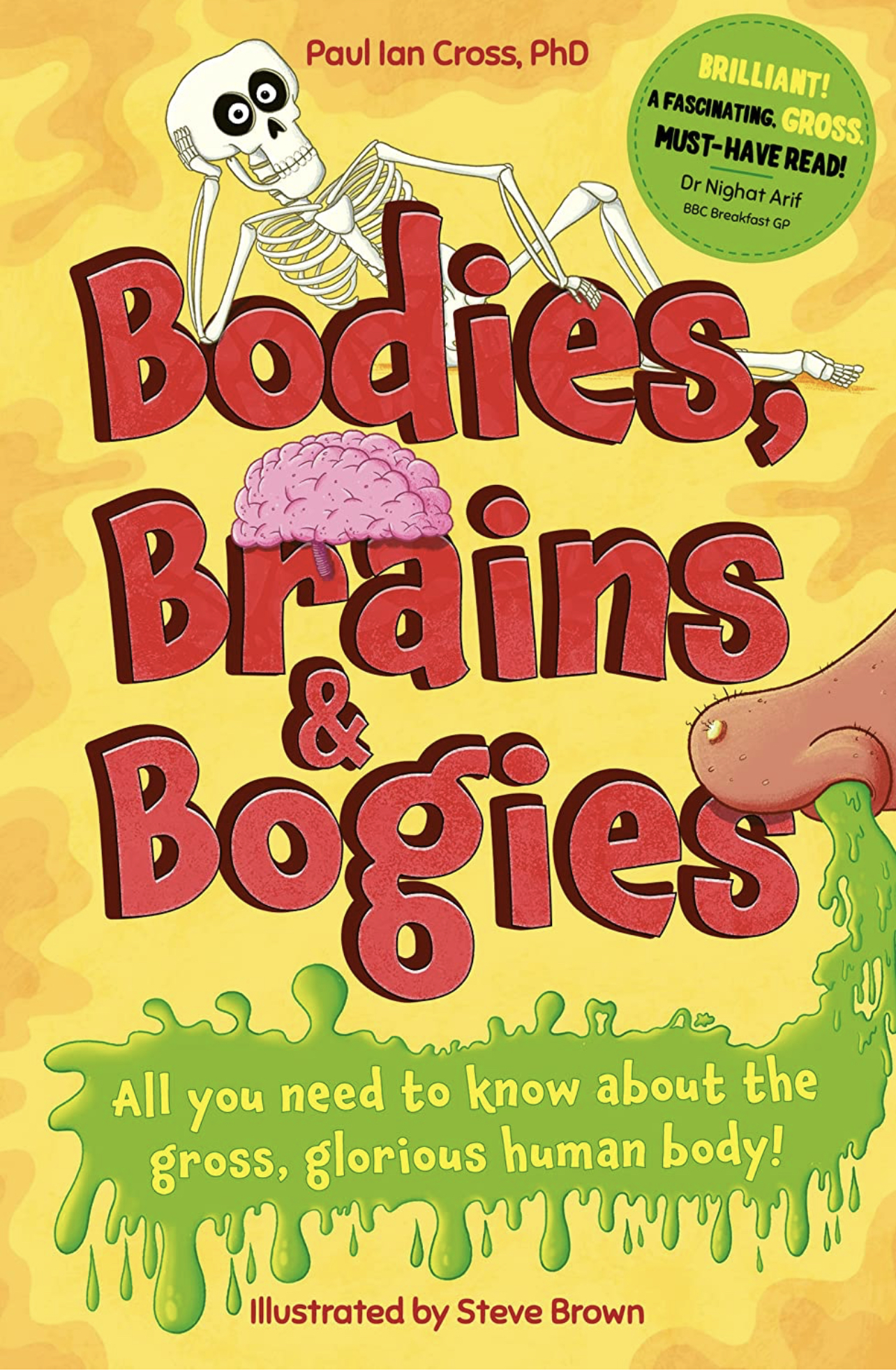
This fantastic title from Paul Ian Cross, the writer of How to Vanquish a Virus, takes the reader on a whirlwind tour of everything that’s disgusting, unusual and amazing about the human body. Find out everything about poo, pus and bogies, while learning a whole lot about how our bodies work hard in hundreds of fascinating ways to keep us alive.
With tons of hilarious and informative illustrations, it includes lashings of Paul Ian Cross’s trademark laugh-out-loud humour, in-depth knowledge and infectious optimism. It’s the perfect funny, accessible way to discover everything you’ve ever wanted to know about the human body, but were too grossed-out to ask!
The Unorthodox Creator: How to Survive and Thrive in the Digital World explores the digital world, anything from social media to Web3. It embarks on a journey taking you from the past to the present to the future. Technology as we know it is evolving at a rapid pace and there are many opportunities that come with this evolution if we’re willing to adapt. Author Derron Payne walks us through the case studies, research, and everyday people that are proving the world is going digital fast and soon it will be hard to succeed without an online presence.
Reading this book, you will discover what it takes to be a digital creator, how to start creating, and how to position yourself for success in the digital world. Entrepreneurs and business executives who are looking for ways for their company to stay ahead of the curve can also gain insight and helpful tips. The Unorthodox Creator is an essential tool for everyone and it will help guide you through this new world.
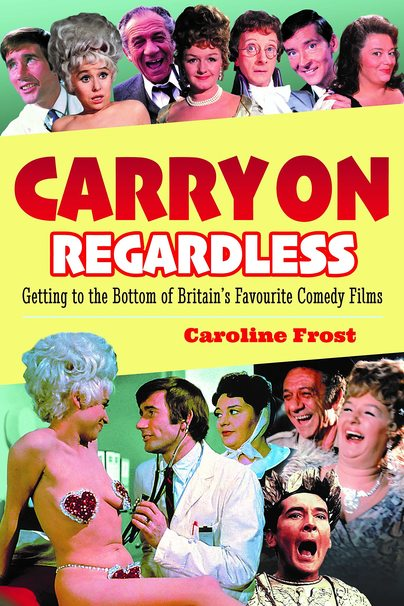
By Caroline Frost Imprint: White Owl Pages: 232 Illustrations: 32 black and white illustrations ISBN: 9781526774781 Published: 5th May 2022 Expected Re-release Date: 30th June 2022
Blurb
The completely updated story of Carry On, Britain’s largest film franchise, all the way from the gentle capers of the 1950s, through the raucous golden age of the 1960s, to its struggles in the years that followed.
We take a happy walk down memory lane to enjoy again Sid James’s cheeky chuckle, Kenneth Williams’ elongated vowels, Charles Hawtrey’s bespectacled bashfulness and Barbara Windsor’s naughty wiggle.
It all seemed effortless, but exclusive interviews with the series’ remaining stars including Bernard Cribbins, Angela Douglas and Kenneth Cope shed new light on just how much talent and hard work went into creating the laughs. For the first time, the loved ones of some of the franchise’s biggest names – on and off screen – share their personal memories from this unique era.
Was Carry On really as sexist, racist and bigoted as critics claim? Three of the films’ female stars explain why they never felt remotely exploited, plus we take a fresh look at some of the series’ biggest titles and discover that, in reality, they were far more progressive than their detractors would have you believe.
Finally, with constant talk about new films, fresh productions and tantalising speculation about a brand new era of Carry On, we ask – does this unique series still have legs?
My Review
Thanks to the publisher for sending me a copy of this book. It came with my latest box of books from Pen & Sword. I have always enjoyed the Carry On… films, they are a fond memory from my childhood, where we collected the VHS tapes and then the DVDs. I still have the DVDs but got rid of my tapes when I moved out in 2014. I have always been fascinated by the personalities behind the films, especially the ensemble cast of the 60s who come to mind when I think about the films. I’ve been re-watching the films lately. They’re a nostalgic blanket on a wet Sunday afternoon.
I can also quote quite a few lines from most of the films.
This book is an overview of the films, the cast and crew, going from the earliest film, Carry On Sergeant, to the final film, Carry On Columbus. Over the series the films poked gentle fun at institutions, cracked jokes and threw out double entendre all over the place. Unfortunately, by the late seventies, they struggled to cope with changing social mores and the attempts at keeping up with the times fell flat.
Frost writes from a position of fondness and the author clearly enjoyed interviewing as many people as she could who had been involved, and using the auto/biographies of those she could not, to give a positive view of the films. However, she doesn’t give us many details of the actual production process, and she gets repetitive at times. We hear time and time again how much the cast enjoyed filming, and how it was ‘just like going back to school’ every time they went back to Pinewood Studios. It also gets a bit ‘Great British Humour’ at times, all a bit jingoistic.
I found the discussion of criticism of the films interesting. Certainly the sort of stuff they got away with wouldn’t happen now, such as the black face used in Carry On…Khyber and …Up The Jungle. The roles for women could be a bit limited, although as the author points out, many of the women characters were strong, determined women. Carry on Cabby is a fantastic early example. However, the cheap jokes at the expense of women’s appearances is galling, and actually contributed to Joan Sims’ possible Binge Eating Disorder. I thought that Frost’s attitude to the criticism of what she and others refer to as ‘Woke’ and ‘PC’ critics is a bit hypocritical. People have made valid points about the films and the attitudes they display, and you have to be a very canny viewer to realise there’s a bit more going on.
There is a discussion of the likelihood of new Carry Ons…end the book; there are some deluded people out there that think it could happen. I’m sorry, but times and humour have changed. The films are a snap-shot of a time and place, a period of social change that is reflected in the attitudes of the films and the tension between the past and present in the 1960s and early 1970s. The films also worked because they had an ensemble cast of comedic actors. As we saw with the rebooted ‘St. Trinians’ films, what worked in 1960 doesn’t work in the 2000s; social mores and humour have changed, and there is a dearth of the sorts of comedic actors who would be willing to work as part of an ensemble cast, or with the training on stage, TV and film that the cast had.
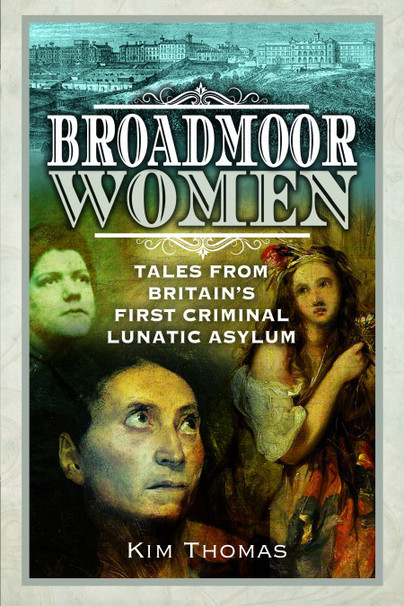
By Kim Thomas Imprint: Pen & Sword History Pages: 192 Illustrations: 20 black and white illustrations ISBN: 9781526794260 Published: 12th April 2022
Blurb
Broadmoor, Britain’s first asylum for criminal lunatics, was founded in 1863. In the first years of its existence, one in five patients was female. Most had been tried for terrible crimes and sent to Broadmoor after being found not guilty by virtue of insanity. Many had murdered their own children, while others had killed husbands or other family members.
Drawing on Broadmoor’s rich archive, this book tells the story of seven of those women, ranging from a farmer’s daughter in her 20s who shot dead her own mother to a middle-class housewife who drowned her baby daughter. Their moving stories give a glimpse into what nineteenth-century life was like for ordinary women, often struggling with poverty, domestic abuse and repeated childbearing. For some, Broadmoor, with its regime of plain food, fresh air and garden walks, was a respite from the hardships of their previous life. Others were desperate to return to their families.
All but one of the women whose stories are recounted in this book recovered and were released. Their bout of insanity was temporary. Yet the causes of their condition were poorly understood and the treatment rudimentary. As well as providing an in-depth look at the lives of women in Victorian England, the book offers a fascinating insight into the medical profession’s emerging understanding of the causes and treatment of mental illness.
My Review
Rosie Crofts, who does the marketing for Pen & Sword, sent me an email about this book a couple of weeks ago. I sat down and read it over the weekend.
I quite enjoy microhistories; the life of a single person or building can tell you something about the world around them. This book investigates the lives of seven women who were incarcerated in Broadmoor in the first forty years.
Most of them killed their children, one killed her husband and one killed her mother. Most of them had hard lives, limited by social conventions and/or poverty. Respectability was important to them all, and in court could be leveraged by a defendant so that they received a ‘guilty but insane’ or ‘not guilty by reason of insanity’ verdict. Often judges and juries were sympathetic to women who killed new born children in ‘puerperal insanity’ or ‘lactation insanity’. Psychiatrists and doctors didn’t really understand what was going on in people’s minds, and were still clinging to the idea that uteruses could cause madness; one particular belief was that women were so fragile that breast feeding for too long would cause madness.
Some of them had pre-existing mental health conditions before they committed their crimes and hadn’t received any or very limited care. Medical care for mental illness was limited at the time, as people were expected to look after their family members and doctors didn’t really understand how brains and hormones worked. Really bad cases were dropped in asylums and either left or experimented on, observed and drugged. Except in rare cases, like Tukes’ Retreat in York where the Quakers believed in calm, purposeful activity and loving kindness.
They averaged about 7 years in Broadmoor and were often released back to their families. Some husbands started petitioning for their release almost immediately after they were convicted, out of love or desperation for someone to care for their children. Returning to their families was often the worst thing that could happen to the women for several years, since it was the family/home environment that triggered the mental breakdown in the first place.
The regime at Broadmoor in the early years was based on improvement and calm, providing patients with a safe place to recover from their madness, time to heal and return to equanimity before being released. The early superintendents took after Dr. Tuke in their care of the patients; nutritious food, rest and care by sympathetic staff. Their regime was based on the latest (in the 1860s) scientific information. It would still be considered good care, now. Unfortunately, in between 1900 and 2000 there was a change in attitudes from care to abuse and back again. Seriously, I’m working on a project about this for work and it gives me nightmares to think about what happened to people with mental illnesses, learning disabilities or who were otherwise neurodivergent in asylums and residential centres.
I found this book interesting, it humanises the history of Broadmoor and gives us a snapshot into the social conditions of the late Victorian period. It would have been interesting to learn about the lives of the women warders alongside the patients. How did some working class women end up as warders and some as patients?
Blending fantasy and science fiction, N.E. Davenport’s fast-paced, action-packed debut kicks off a duology on loyalty and rebellion, in which a young Black woman must survive deadly trials in a racist and misogynistic society to become an elite warrior.
It’s all about blood.
Blood spilled long ago between the Republic of Mareen and the armies of the Blood Emperor, ending all blood magic.
Now there is peace in the Republic – but there is also a strict class system, misogyny, and racism. Her world is not perfect, but Ikenna survived in it.
Until now.
With the murder of her grandfather, Ikenna spirals out of control. Though she is an initiate for the Republic’s deadly elite military force, Ikenna has a secret only her grandfather knew: she possesses the blood magic of the Republic’s enemies.
Ikenna throws herself into the gladiatorial war games at the heart of her martial world: trials that will lead her closer to his killers. Under the spotlight, she subjects herself to abuse from a society that does not value her, that cherishes lineage over talent – all while hiding gifts that, if revealed, would lead to execution or worse. Ikenna is willing to risk it all to find out who killed her grandfather…
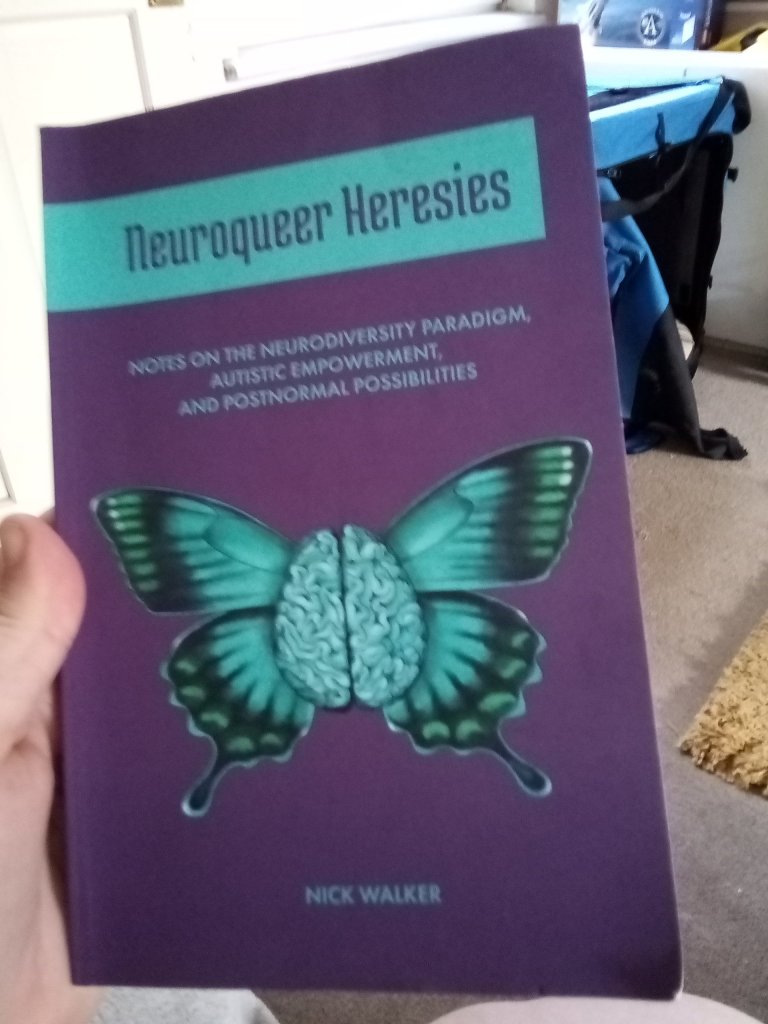
I’ve come across Nick Walker’s work before, seen neurocosmopolitan and Neuroqueer referenced by other writers, and used Walker’s list of definitions in my own work, particularly the heritage project I’m working on – many people are unfamiliar with neurodiversity, the concept, paradigm and movement, and the vocabulary tha to has developed around it – but I hadn’t done more than skim until someone suggested we read some of her work for a Narratives of Neurodiversity Network Salon. Since I like to support small presses, I bought a copy of Walker’s book.
I’m very glad I did. I’ve spent a decent amount of time reading and cogitating in the contents. I am slightly annoyed to find that the ideas I thought I had that were original have actually been thought before, and articulated more elegantly than I could have done.
Although the stars and constellations metaphor is still mine and mine alone. So far as I know.
Nick Walker has been part of the neurodiversity movement for the last couple of decades, and knows people who were there at the beginning when autistic people started meeting and building culture online. She coined a lot of the words, or knows the people who did, and gives difinative histories and meanings for the words. This book also goes on to explain concepts like neurocosmopolitan and Neuroqueer in ways that people can understand. With examples.
I’m donating a new, un-Rosie-marked copy of this book to the little autistic library I’m building at my work. I think it’ll be helpful in giving people a different way of looking at their diagnosis and understanding of themselves through the neurodiversity paradigm rather than the pathology paradigm.











 Everything Is Better With Dragons