Pen & Sword TBR Pile Review: The Nonconformist Revolution, by Amanda J. Thomas

By Amanda J Thomas
Imprint: Pen & Sword History
Pages: 280
ISBN: 9781473875678
Published: 23rd June 2020

Blurb

The Nonconformist Revolution explores the evolution of dissenting thought and how Nonconformity shaped the transformation of England from a rural to an urban, industrialised society.

The foundations for the Industrial Revolution were in place from the late Middle Ages when the early development of manufacturing processes and changes in the structure of rural communities began to provide opportunities for economic and social advancement. Successive waves of Huguenot migrants and the influence of Northern European religious ideology also played an important role in this process. The Civil Wars would provide a catalyst for the dissemination of new ideas and help shape the emergence of a new English Protestantism and divergent dissident sects. The persecution which followed strengthened the Nonconformist cause, and for the early Quakers it intensified their unity and resilience, qualities which would prove to be invaluable for business.

In the years following the Restoration, Nonconformist ideas fuelled enlightened thought creating an environment for enterprise but also a desire for more radical change. Reformers seized on the plight of a working poor alienated by innovation and frustrated by false promises. The vision which was at first the spark for innovation would ignite revolution.


My Review

I received this book in 2020 from the publisher in return for an honest review. It has taken me a long time to read it. I have been reading in in bursts, a chapter or two at a time around other reviewing commitments and work.

This review is all over the place. I have just finished the book. It took me 3.5 years to read the first ten chapters (140 pages) and less than a day to read the last five (68 pages); I’m a bit confuddled.

The book covers developments from the 1300s to the 1800s, in dissenting religious groups and industrial development, and makes the argument that without the unconventional thinking and organisational support Nonconformists and ‘heretics’ provided to each other, England would not have become the driver of Industrial revolution that it was in the early 18th to late 19th century that it was. The focus is on England, the interactions between England and Continental ideas and people, England and the North American colonies, England and France (because, 1066 and all that). It doesn’t look at technology developed in any of the colonies (usually derived from indigenous or enslaved peoples’ knowledge).

There are some interesting ideas in this book:

  • The author points out the complex family networks of the Midlands and northern Nonconformist families who supported each others’ business ventures and encouraged/funded new developments in ironworks, among other things. The relationships were longstanding and lucrative for many of the families. The connections went from the Tyne to the Severn, through Liverpool, Manchester, Sheffield, Birmingham and Bristol.
  • The literacy encouraged by Protestant beliefs – that people should be able to read the Bible in their own language – encouraged education in these families and that enabled people to question social structures and norms, as well as make scientific breakthroughs.
  • Every group looks back to a golden age of freedom and liberty – the Peasant’s Revolt (which was more of a middling sorts revolt with villainage cannon fodder) looked back to a pre-Norman England, the Nonconformists of the 18th century valourised the Puritanism of the Republic. They never were golden ages, there were always tyrants and inequality and war.

The author doesn’t mention much about the slave trade, although some of the Nonconformist families made their money from making guns and cannons, supporting the East India Company and the slave trade. At least one person mentioned, from the 1700s, was disowned by his Quaker congregation for inheriting a gun company and supporting the slave trade. It is safe to say that without the triangular trade a lot of people wouldn’t have had the funds to support the new products produced by Wedgwood, or fund the research of Priestley and the Lunar society (amongst others). The focus of the book is so narrow that the author can’t bring these considerations into the text. I don’t know if that is a good or bad thing. She does mention the above, but briefly, with no exploration. A wider exploration of the developing empire might have added context.

The final two chapter focus heavily on Thomas Paine, his adventures in North America and France, who he knew and what he wrote. Amanda J. Thomas explores the possible developments of his radical thought from his Quaker upbringing to his return to North America in 1800 after imprisonment in France. The author connects his activities to the rise and fall of radical organisations, especially those in Sheffield, demanding governmental reform. As we all should know, the government of the time, and for decades afterwards, was very opposed to any reform, cracking down heavily, violently against anything that would put the high church gentry and the aristocracy out of control. And yet, people kept dissenting…

There were times when the book felt disjointed, as though it were a collection of essays arranged chronologically, and at other times several chapters would naturally follow from each other. This may be an artifact of the development of the book?

The writing is decent and the story is really interesting. What I think slowed me down was all the family trees (tangled shrubs in some cases) that the author felt the need to write out and share with us in the main text. I don’t think it was always necessary to getting the ideas across clearly and could possibly have be left to an appendix, along with the visual representations of the family trees.

The book has a good bibliography and indexing, notes are clearly identified and information sourced. The author has relied heavily on some sources more than others, usually those about specific families or individuals, which gives a possibly partial impression of events, but also provides interesting nuggets of information about individuals and the social and cultural dynamics of their times. I did not know that Joseph Priestley knew Thomas Paine and Thomas Jefferson, for example, or that Benjamin Johnson was a member of the Royal Society at the same time. I knew Erasmus Darwin and Wedgwood knew each other, because of the weird family dynamics of Charles Darwin and his cousin-wife. In-bred the lot of them -the Wedgwoods, Darwins and Galtons.

So, final thoughts. Interesting ideas and social history that tries to illuminate the development of the co-occurring scientific, religious and political though that brought about the 18th and 19th century Industrial Revolution in England, and makes some attempt to put it into the wider North Atlantic context. Quite well written and extensively researched. Excellent bibliography. Could do with some editing.

Also, I noted some references that make it into Discworld.

Pen & Sword Review: The History of Video Games, by Charlie Fish

55182782
By Charlie Fish
Imprint: White Owl
Pages: 120
Illustrations: 150 colour illustrations
ISBN: 9781526778970
Published: 28th May 2021

This book is a potted history of video games, telling all the rollercoaster stories of this fascinating young industry that’s now twice as big globally than the film and music industries combined. Each chapter explores the history of video games through a different lens, giving a uniquely well-rounded overview.

Packed with pictures and stats, this book is for video gamers nostalgic for the good old days of gaming, and young gamers curious about how it all began. If you’ve ever enjoyed a video game, or you just want to see what all the fuss is about, this book is for you.

There are stories about the experimental games of the 1950s and 1960s; the advent of home gaming in the 1970s; the explosion – and implosion – of arcade gaming in the 1980s; the console wars of the 1990s; the growth of online and mobile games in the 2000s; and we get right up to date with the 2010s, including such cultural phenomena as twitch.tv, the Gamergate scandal, and Fortnite.

But rather than telling the whole story from beginning to end, each chapter covers the history of video games from a different angle: platforms and technology, people and personalities, companies and capitalism, gender and representation, culture, community, and finally the games themselves. 

My Review

This book was sent to me by the publisher in return for an honest review.

I hang around with gamers. It would be nice to have some idea of what they’re babbling on about. This book provides a history of computer games from several different angles. I found this a useful way of understanding the developments, especially the chapters about console development and about culture.

There are lots of pictures, some quite nostalgic – my sister had an original game boy with Tetris and Super Mario for instance. The biographies of important people involved in games and console development were interesting. A couple of them are definitely autistic.

There was quite a bit of detail and the references are fairly extensive so as a place to start, this potted history is a good one.

Unfortunately, the two chapters I was really interested in were truncated. Between pages 65 and 81 – most of the chapters on the important personalities of games development and gender and representation in games – had been replaced by a repeat of the previous chapter, on console development. I understand that I got an an ARC so errors happen, but it is disappointing.

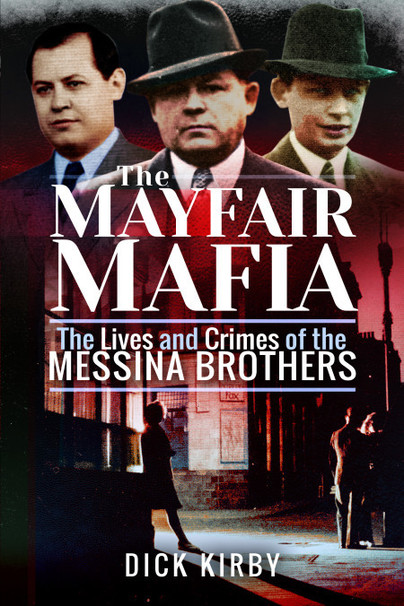
Review: The Mayfair Mafia, by Dick Kirby

The Mayfair Mafia
By Dick Kirby
Imprint: Pen & Sword True Crime
Pages: 198
Illustrations: 32
ISBN: 9781526742612
Published: 1st May 2019

It is a little known fact that one immigrant Italian family ran London’s thriving vice trade unchecked from the mid-1930s for some twenty years.

The five Messina brothers imported prostitutes from the Continent on an industrial scale, acquiring the women British citizenship by phoney marriages. Demanding 80% of earnings, the Messina became fabulously wealthy, purchasing expensive properties, cars and influence.

As this revealing and absorbing account describes, the brothers ruled with a ruthless combination of charm, blackmail and all too credible threats of disfigurement and death.

It took a sensational Sunday newspaper exposé to get the authorities to act. A series of dramatic arrests and trials followed and one by one the brothers were imprisoned and deported for crimes including immoral earnings, attempted bribery and firearms offences.

Such was their fortune that numerous potential beneficiaries came forward, most recently in 2012.

The author, a much published former Metropolitan police officer, has researched the remarkable criminal careers of the five Messina’s and the result is a riveting and shocking read.

Continue reading “Review: The Mayfair Mafia, by Dick Kirby”

Unexpected Review: ‘From the Flying Squad to Investigating War Crimes’, by Ron Turnbull

From the Flying Squad to Investigating War Crimes
By Ron Turnbull
Imprint: Pen & Sword True Crime
Pages: 236
Illustrations: 32
ISBN: 9781526758668
Published: 18th November 2019
https://www.pen-and-sword.co.uk/From-the-Flying-Squad-to-Investigating-War-Crimes-Hardback/p/16871
Price: £15.99

For over ten years he was the first detective on the scene when a murder was committed in south London. In the confusion and horror of the crime scene he identified the forensic clues that would later be needed to convict the killer in the calm and measured atmosphere of the Old Bailey; calling out the necessary experts from pathologists to ballistics specialists; protecting the scene against contamination. One slip and a case would crumble; one moment of inspiration and the Yard would have its man.

He was the natural choice when the UN were looking for an experienced detective to create a trail of evidence linking the mass graves of Bosnia to the people who ordered the worst war crimes seen in Europe since the Second World War.

From the Flying Squad to Investigating War Crimes tells of the rise of forensic evidence against the true story backdrop of a detective who has spent a career at the front line in the war against murder – the ultimate crime. It traces the development of forensic science and techniques from the days of the fingerprint to the battery of tests now available to homicide investigators. It is told in the no nonsense style of a pioneer cop who has seen the worst that human beings can do to each other.
Continue reading “Unexpected Review: ‘From the Flying Squad to Investigating War Crimes’, by Ron Turnbull”

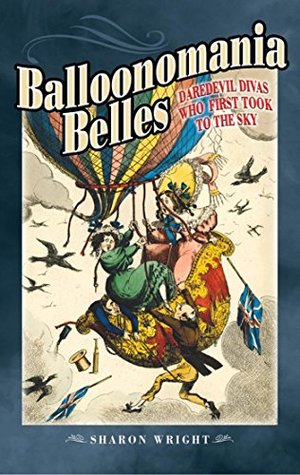
Review: ‘Balloonomania Belles’, By Sharon Wright

40830298

Published By: Pen & Sword

Publication Date: 26th February 2018

I.S.B.N.: 9781526708342

Format: Hardback

Price: £19.99


Blurb

Balloonomania Belles reveals the astonishing stories of the fabulous female pioneers of balloon flight. More than a century before the first aeroplane women were heading for the heavens in crazy, inspired contraptions that could bring death or glory and all too often, both. Award-winning journalist Sharon Wright reveals their hair-raising adventures in a book that brings the stories of the feisty female ballooning heroines together for the first time.

Women were in the vanguard of the “Balloonomania” craze that took hold in the eighteenth and nineteenth centuries and swept across Europe then the world. Their exploits were a vital element of our first voyages into the sky. When women’s options were often severely limited by law and convention they managed to join the exhilarating quest for spectacle, adventure and danger among the clouds.

Many of the brightest stars of this extraordinary era of human flight were women. From the perilous ascent in 1784 by feisty French teenager Elisabeth Thible, female aeronauts have never looked back… or down. Who were these brave women who took to the air when it was such an incredibly dangerous and scandalous thing to do? Sharon Wright brings together in one book the show-stopping stories of the very first flying women.

Continue reading “Review: ‘Balloonomania Belles’, By Sharon Wright”

Bonus Review #4. Also, Merry Christmas, and all that.

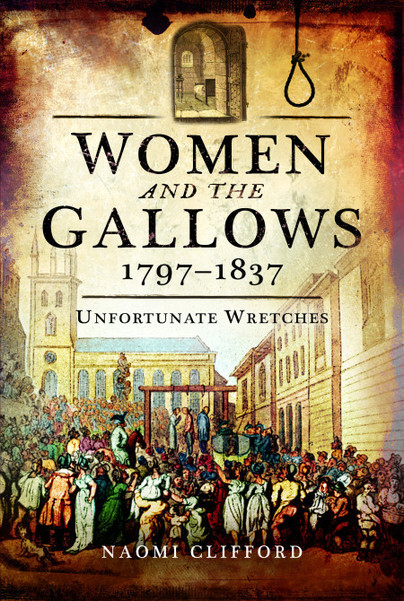
Women and the Gallows 1797 – 1837: Unfortunate Wretches

By Naomi Clifford

Women and the Gallows 1797 – 1837


Published by: Pen and Sword History

Publication Date: 2nd November 2017

I.S.B.N.: 9781473863347

Price: £15.99

Format: Hardback


Blurb

131 women were hanged in England and Wales between 1797 and 1837, executed for crimes including murder, baby-killing, theft, arson, sheep-stealing and passing forged bank notes. Most of them were extremely poor and living in desperate situations. Some were mentally ill. A few were innocent. And almost all are now forgotten, their voices unheard for generations.

Mary Morgan – a teenager hanged as an example to others.
Eliza Fenning – accused of adding arsenic to the dumplings.
Mary Bateman – a ‘witch’ who duped her neighbours out of their savings.
Harriet Skelton – hanged for passing counterfeit pound notes in spite of efforts by Elizabeth Fry and the Duke of Gloucester to save her.

Naomi Clifford has unearthed the events that brought these ‘unfortunates’ to the gallows and has used contemporary newspaper accounts and documents to tell their stories.

Continue reading “Bonus Review #4. Also, Merry Christmas, and all that.”

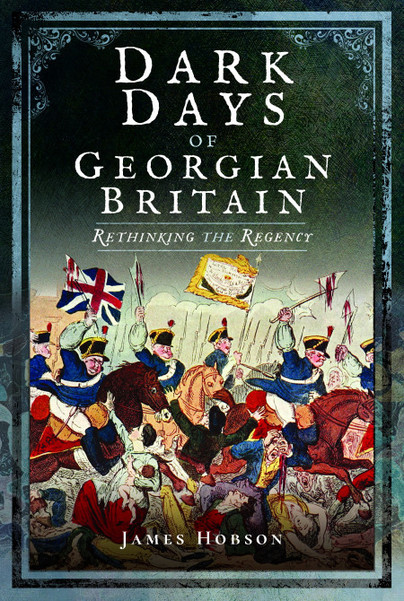
Review: ‘Dark Days of Georgian Britain’, by James Hobson

Dark Days of Georgian Britain

Published by: Pen and Sword Books

Publication Date: 15th November 2017

ISBN: 9781526702548

Format: Hardback

Price: £15.99

Blurb

In Dark Days of Georgian Britain, James Hobson challenges the long established view of high society during the Regency, and instead details an account of a society in change.

Often upheld as a period of elegance with many achievements in the fine arts and architecture, the Regency era also encompassed a time of great social, political and economic upheaval. In this insightful social history the emphasis is on the life of the every-man, on the lives of the poor and the challenges they faced.

Using a wide range of sources, Hobson shares the stories of real people. He explores corruption in government and elections; “bread or blood” rioting, the political discontent felt and the revolutionaries involved. He explores attitudes to adultery and marriage, and the moral panic about homosexuality. Grave robbery is exposed, along with the sharp pinch of food scarcity, prison and punishment. It is not a gentle portrayal akin to Jane Austen’s England, this is a society where the popular hatred of the Prince Regent was widespread and where laws and new capitalist attitudes oppressed the poor. With Hobson’s illustrative account, it is time to rethink the Regency.

Continue reading “Review: ‘Dark Days of Georgian Britain’, by James Hobson”

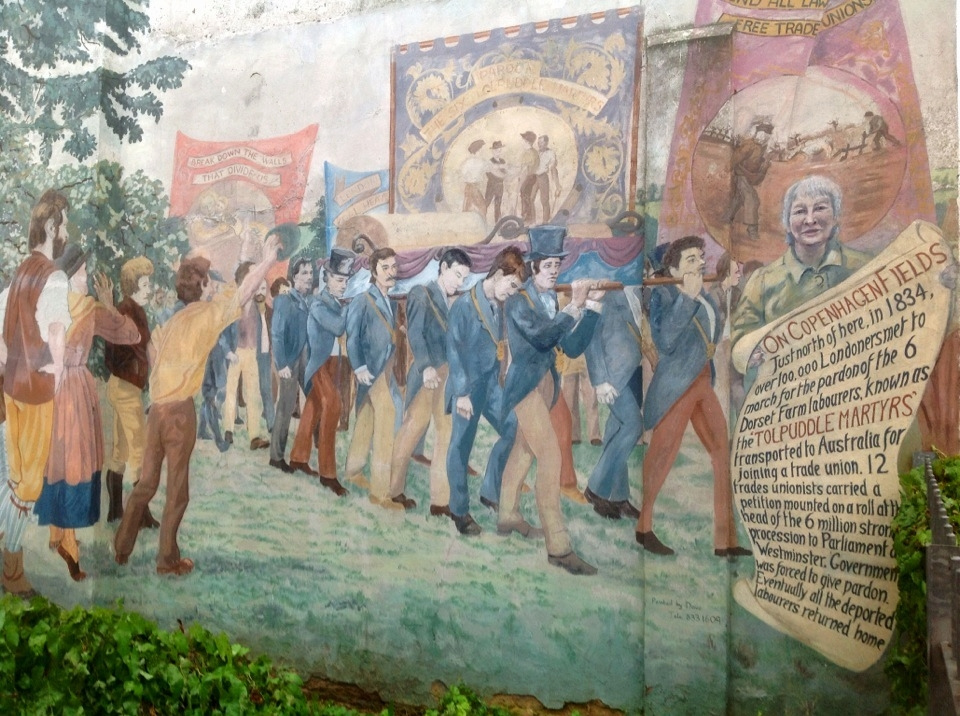
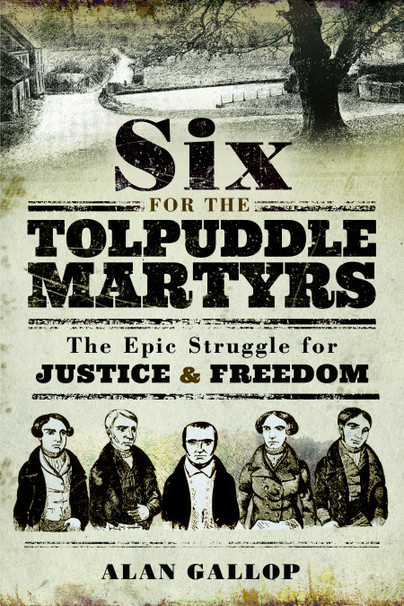
Review: ‘Six for the Tolpuddle Martyrs’, by Alan Gallop

Six For The Tolpuddle Martyrs Published by: Pen & Sword  History 
Published: 5th June 2017

ISBN: 9781526712509
Price: £14.99

Blurb

In 1834 six farm labourers from the Dorset hamlet of Tolpuddle fell foul of draconian Victorian laws prohibiting ‘assembly’. Today the names of George Loveless and his brother James, Thomas Standfield and his son John, James Brine and James Hammett, who made up the Tolpuddle Martyrs, stand high on the roll of British men who have been victimised for their beliefs but stood steadfast in the face of persecution. They refused to be persuaded to betray their principles either by the promise of release or by transportation to Australia. The Tolpuddle men fought to win their freedom sustained by their passionate conviction that their sacrifices would not be in vain. Their experience and example have proved to be an inspiration for future generations and they remain icons of pioneering trade unionism.

The Author has thoroughly researched their story and the result is a fascinating and revealing re-examination of this legendary saga. Their triumph over legal persecution and abuses of power over 180 years ago is told afresh in this comprehensive and attractively illustrated book which delves deeper into their story than ever before.

More details here

Continue reading “Review: ‘Six for the Tolpuddle Martyrs’, by Alan Gallop”

Review: ‘Lunatics, Imbeciles and Idiots’, by Katheryn Burtinshaw and Dr John Burt

Published by: Pen & SwordLunatics, Imbeciles and Idiots

Publication Date: 3rd April 2017

I.S.B.N.: 9781473879034

Price: £15.99

Click cover for link to publishers page.

As ever, I was sent this book in return for an honest review. Thanks to Alex and Pen & Sword for sending me the book.


Blurb

In the first half of the nineteenth-century treatment of the mentally ill in Britain and Ireland underwent radical change. No longer manacled, chained and treated like wild animals, patient care was defined in law and medical understanding, and treatment of insanity developed.

Focussing on selected cases, this new study enables the reader to understand how progressively advancing attitudes and expectations affected decisions, leading to better legislation and medical practice throughout the century. Specific mental health conditions are discussed in detail and the treatments patients received are analysed in an expert way. A clear view of why institutional asylums were established, their ethos for the treatment of patients, and how they were run as palaces rather than prisons giving moral therapy to those affected becomes apparent. The changing ways in which patients were treated, and altered societal views to the incarceration of the mentally ill, are explored. The book is thoroughly illustrated and contains images of patients and asylum staff never previously published, as well as first-hand accounts of life in a nineteenth-century asylum from a patients perspective.

Written for genealogists as well as historians, this book contains clear information concerning access to asylum records and other relevant primary sources and how to interpret their contents in a meaningful way.

Continue reading “Review: ‘Lunatics, Imbeciles and Idiots’, by Katheryn Burtinshaw and Dr John Burt”