
£16.99 | Hardback
Blurb
A summary of my book:
- I’m diagnosed with autism
20 years after telling a doctor I had it. - My terrible Catholic childhood: I hate my parents etc.
- My friendship with an elderly man who runs the
corner shop and is definitely not trying to groom me. - Homelessness.
- Stripping.
- More stripping but with more nervous breakdowns.
- I hate everyone at Edinburgh uni etc.
- REDACTED as too spicy.
- After everyone tells me I don’t look autistic,
I try to cure my autism and get addicted to Xanax. - REDACTED as too embarrassing.
If you’ve ever been on a night out where you got blackout drunk and have laughed the next day as your friends tell you all the stupid stuff you said, that’s what being autistic feels like for me: one long blackout night of drinking, except there’s no socially sanctioned excuse for your gaffes and no one is laughing.
In this book, Fern uses her voice as an autistic, working class woman from Scotland to bring her experiences with sex work, abusive relationships and her time spent in a teenage mental health unit to the page. Written with unflinching honesty, Strong Female Character is a game-changing memoir on sexism and autism.
(I changed some of the blurb copy because Fern Brady has made it clear she doesn’t like being referred to as neurodivergent and wants people to use ‘autistic’ instead.)
My Review
Thanks to the author and publisher for sending me a copy of this book. Thanks to Anne for organising this blog tour.
I need to express some ambiguity in reading this memoir. Fern Brady’s already had a verbal battering from the online autistic community for things she’s said and supported in the past and I don’t want to reinforce the idea that we’re judging her. I am speaking as an autistic person who works with autistic people (colleagues and clients), who has a lot of autistic and otherwise neurodivergent friends on and offline, and who generally spends a lot of time in autistic space. People can be arseholes, especially when they’re upset, and if you don’t realise you’re treading on delicate ground, because you don’t know it’s delicate ground, you can get shouted down rather than helpfully, calmly informed. It’s a trauma response, but it’s hurtful, because we don’t know what we don’t know. Therefore, I am going to state here and now, I am not having a go at Fern Brady, there’s nothing to read between the lines, I am being honest. With her and with you, the reader.
Fern Brady briefly entered my consciousness in 2021, when she got her diagnosis and she tweeted about it. I remember the kerfuffle on autistic twitter, because she sort of implied she wasn’t ‘one of those autistics’, you know, the ones who make everything about being autistic. I found it interesting to see it from her perspective. She seems to have been carrying a lot of internalised anti-autistic bias, without realising it. She went through the familiar stages of imposter syndrome and then obsessively reading everything she could about being autistic. That’s a normal part of post-diagnostic reaction, in my experience. She does seem to have come out the other side and proudly states she’s autistic.
This is the first time I’ve thought about her since, although I might have seen her on a panel show? I enjoy reading memoirs by other autistic people. I could probably write one but I’m not famous and I haven’t done anything particularly interesting, so no one would read it.
I am Autistic, I was diagnosed at 34, I’m working class, and I come from a small town. Thus far we have similar experiences. We have a lot of differences, though. I’m not a women, I’m not from a Scottish/Irish Catholic background, my parents and family weren’t borderline abusive to me as a child, I didn’t get sent to a mental health unit as a teenager, or truant. I managed to get through university on the first go, I have never done sex work. And I’m not a well-known comedienne with quite a lot of success.
I found this book entertaining to read, it’s really well-written, and slightly distressing. I identified with a lot of Fern Brady’s experiences as a teenager. I still identify with the accidentally insulting people as an adult and my utter confusion at the lies people tell each other and themselves, and I don’t understand why people feel the need to ‘fit in’. How dull!
I recognised elements of her experiences as an unidentified autistic person. I totally get being overwhelmed by school, not knowing how to talk to other children, being bullied and taken advantage of. Of being the clever weird kid, but I was too scared to even talk to the other clever weird kids as a teenager. I remember being at university and not knowing how to get to my lectures because I couldn’t remember where the rooms and buildings were. And the posh kids who had no idea about anything but thought they were better than ‘poor people’. Durham and Edinburgh Universities are infested with them. They couldn’t bribe their way into Oxbridge despite being spoon fed the exams, so they go to Durham and Edinburgh to look down their noses at people who worked and struggled to get there. I recognise the sudden fits of violence that people misdiagnose as anger management issues, the anxiety that is treated as depression, and the utter lack of understanding from most medical professionals.
Fern Brady has had a pretty rough life at times, and the health care system, schools, and quite frankly, her parents, failed her. I’m glad her partner did a better job and supported her, because she needed it. He sounds an absolute sweetheart. She writes extremely honestly, and bluntly, about her experiences and it’s refreshing. She explores her experiences as a bisexual woman and as a woman in a profession heavily dominated by men, too. She relates a lot of her experiences back to the fact that she is a woman and the aspects of womanness and autisticness that are unacceptable in society, like blunt honesty and speaking ‘out of turn’.
I found her experiences of mental health care services interesting. I’ve heard so many bad experiences from others, and this really ties in with those. Mental health services aren’t well supported financially, and the right support isn’t getting to the people who need it. GPs have a habit of assuming anxiety and depression and sending you off with a prescription rather than referring to mental health specialists. A lot of the mental health specialists don’t have a clue about neurodivergent people and there’s a subset that take things too far in the hippy-dippy direction. CBT doesn’t work on a lot of autistic people and medications have a weird effect too. I enjoyed the caustic commentary on the staff she encountered and their ‘care’. I hope they read this book and realise what jerks they were to their vulnerable, traumatised patients.
I enjoyed the way she dealt with misconceptions about the autistic spectrum and why we don’t use ‘Asperger’s Syndrome’ anymore. They were funny, and more or less accurate. She does mention other misconceptions about autistic women and girls, and recommends a couple of books that were recommended to me when I was going through diagnosis and still thought I was a woman. There were a couple of generalisations about masking and special interests and how they differ between men and not-men, which I personally think aren’t accurate, but they might be for her experience. We’re all different, because we’re all individuals.
Any criticisms I might have are not related to the writing style, which I enjoyed, or the way she reports the events of her life, which was witty and caustic and I’m sure people thoroughly deserved any roasting they got. It’s more to do with what I generally file under ‘political’, because it’s about social attitudes and their influences on the book. Some of it may be that the publishers expected a certain tone or had stereotypical ideas of autistic life and experiences in mind, or don’t properly understand the subject, so again, this is not a personal attack on Fern Brady or her book.
After reading the first 183 pages and feeling a bit off about it (might have been because I was hungry – poor interoception is a thing) I consulted other terminally online/professional NDs, and did some looking around on the internet. To check some stuff. Because I’m autistic and that’s what we do. I thought Brady was one of the Spectrum 10K ‘ambassadors’ but I couldn’t find anything on that so I don’t think she was. I’m still boycotting Chris Packham’s work until he apologises to everyone he insulted when they raised concerns about the purpose and ethics of the Spectrum 10K project. Calling people ‘deluded’, ‘anti-science’ and ‘conspiracy theorists’ is a bad move. Liam O’Dell’s work has shown we were right to be concerned.
I did find some other upsetting stuff though. I repeat, not having a go! Brady is less than two years post-diagnosis, we all said ignorant stuff before we knew better. I’m here to provide education.
Firstly, Brady doesn’t seem to know what Neurodiversity is other than once or twice using the word ‘neurotypical’. She never once brings it up in her book, and I saw a thread on Twitter in which she got mad because her book was described as being about neurodiversity. It isn’t. It’s her experiences as an autistic woman and she doesn’t want people using euphemisms for being autistic, like ‘neurodivergent’ or ‘neurodiverse’.
Fair enough, I agree, euphemising is insulting. There’s nothing wrong with being autistic. Autistic isn’t a bad word.
What was upsetting was the way she responded to people explaining that no, of course she wasn’t ‘neurodiverse’, because a person can’t be diverse. She also got snotty at people talking about neurodiversity and being neurodivergent. She also made ignorant remarks about the relationship between Autism and ADHD in other threads on her Twitter and refused to listen to people explain the overlap in experiences and common co-occurance of Autism and ADHD. We even have a word for it: AuDHD. Where autism occurs with other neurodivergent conditions it’s ‘spicy’. I honestly don’t think she knows what neurodivergent, neurodivergence, neurodiverse and neurodiversity are, as concepts, as paradigms, as ways of describing experiences. I get the feeling she’s seen people using them wrongly (thus the confusion of neurodiverse and neurodivergent) and thinks that’s what they mean.
Seriously, Fern, on the off chance you’re reading this, pick up Neuroqueer Heresies by Nick Walker, or even look at my other website Neurodivergent History, because both sources explain what the words mean. Extend that avid reading you’re doing on the subject beyond the ‘approved’ or ‘recommended’ lists from the ‘experts’.
Moving on, I’ve heard of the person who diagnosed Fern Brady at the Lorna Wing Centre, Dr Sue Smith; she also works for the National Autistic Society and I think she’s been mention in online conversations I’ve read. I haven’t heard anything bad about her and apparently she knows her job well. There were comments from her included in the memoir, and I’ve seen some articles about or by her. I think she’s on track to become the default ‘autistic women expert’ for newspapers, like Simon Baron-Cohen is the ‘autism expert’ for the BBC. Hopefully she’s less stigmatising and self-aggrandising than he is. It does look like she uses stigmatising language, though. Fern frequently refers to ASD in her early chapters, as does Dr Smith in her NAS bio, and so do people who she quotes frequently (see below). I almost threw the book across the room. How many times do we have to keep saying it! We. Are. Not. Disordered! That’s pathologising and insulting. Also, they’re going against NHS and NICE guidelines which are to use ASC or Autistic.
Brady keeps quoting Attwood and Grandin, who are really questionable ‘experts’. Temple Grandin is an animal management specialist and a staple of the autism charity and professional conferences circuit who thinks it’s fine if we find a way to eliminate autistic people with high support needs, or who have other disabilities. Attwood didn’t recognise autistic traits in his own child, and has shared some really dodgy takes on autistic women and trans people. The claim that autistic kids are being pressured into being trans because they’re gender non-conforming (because gender roles and constructs are made up bullshit and we cans see through them), and thus autistic kids shouldn’t have any gender-affirming care seems to have originated with one of his talks. At least, I can’t find anything before he mentioned it a couple of years ago. They’re as bad as Simon Baron-Cohen and his misogynist/eugenicist chums.
A lot of this stuff is only important if you’re a part of the Autistic or wider Neurodivergent communities. As a society, we’re really not at all comfortable with neurodivergent people and understanding of the concepts hasn’t really filtered out beyond those of us who do this for a living, although getting things out to a wider audience is a part of the work many people are doing (including me!). The people Brady quotes are commonly recommended reading for people newly diagnosed or going through diagnosis, so it’s understandable that she would quote them and their work. She has quoted papers from 2019 to 2021 so she’s obviously trying to get and stay up to date, which is admirable for someone who doesn’t talk about this stuff for a living. Some of us who do talk about this stuff for a living struggle to keep up with everything (lots of journals, books, podcast, inter-disciplinary stuff).
If you want to read a memoir from a funny autistic woman, ignore all that stuff and enjoy the book. It really is a good memoir. Then read more and more, because it’s a really interesting subject!
ABOUT THE AUTHOR
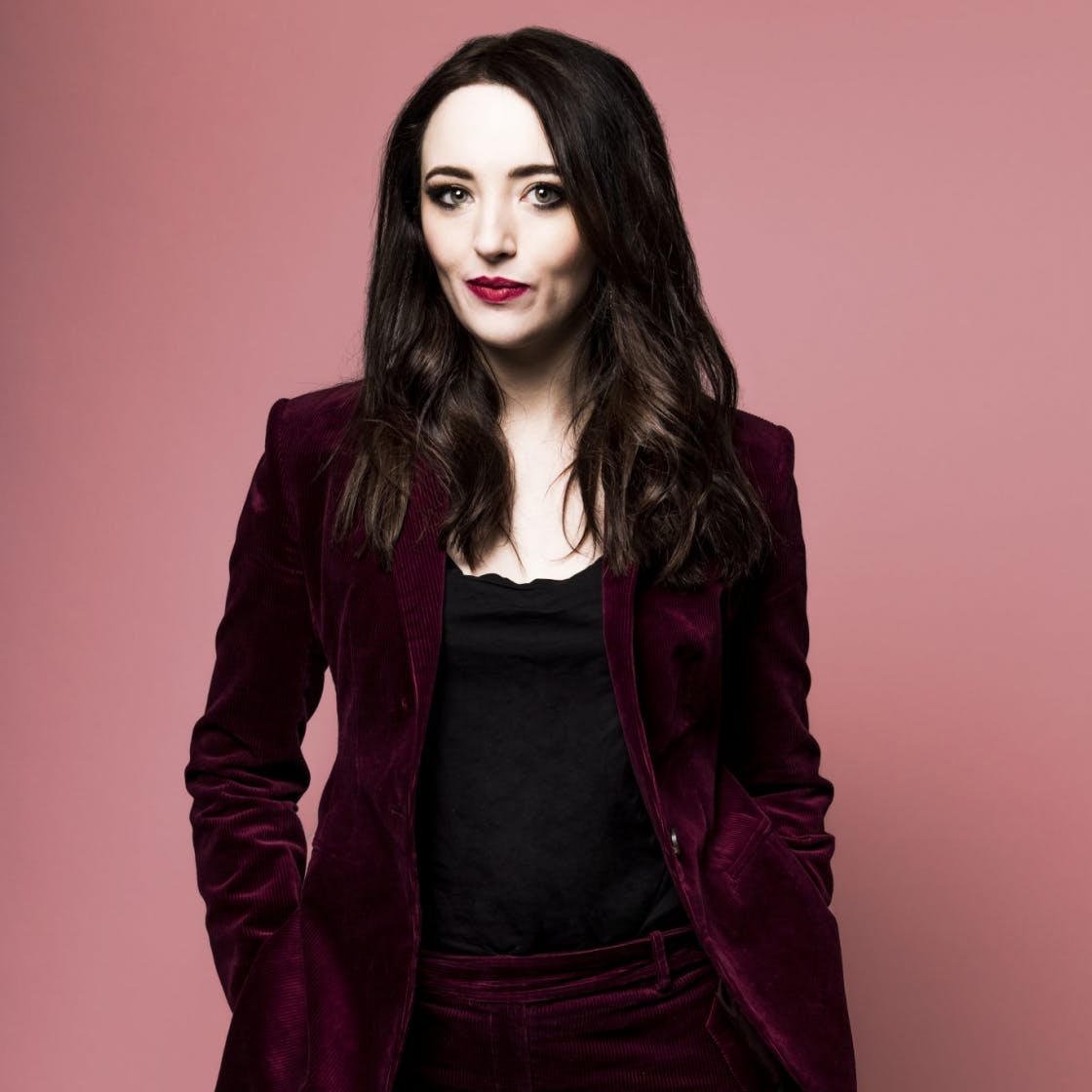
Fern Brady is a woman. She is also autistic. She was born in Scotland (no, not Glasgow). She has no presets for being a ‘good woman’ – she never hated her body or indulged in messy millennial shame. She now lives out of wedlock in London. She has zero children.
Fern’s caustic wit, exceptional writing and electric stage craft has made her one of the UK’s hottest comedy stars. As seen on Live from the BBC, Live from the Comedy Store, The Russell Howard Hour, and Live at the Apollo. She regularly writes for The Guardian and her career has gone stratospheric in the last 18 months. She’s had viral success with her BBC Life Lessons, stormed the Australian comedy scene and supported Frankie Boyle and Katherine Ryan on tour. She can currently be seen on Taskmaster on Channel 4.

 Everything Is Better With Dragons
Thanks for the blog tour support x
I found this really helpful if a hard read! I think you are spot on that language is important and that this should be led by autistic voices . There is a real risk that someone in my role is perceived as ‘ expert ‘ by the media and in fact I am just a person who has had privilege of conversations with many autistic people. I have autistic family members but am not autistic so my comments are always going to be limited by this . Your thoughts made me quite reflective about ‘ what is out there ‘ linked to my name . I rarely look at my bio and you are quite right about the language . My role is one where I need to be called to account and really listen to autistic people for feedback .
I really want to see Disorder disappear from any discussions about autism and for emphasis to be on the impact for autistic people dealing with neurotypical environments and assumptions.
Very happy to chat more if you think you could help my thinking and understanding to develop more !
Hi,
I apologise for the delay, I wasn’t sure if I should respond or not. I’m glad you found my comments helpful. And weren’t offended. People get offended when I point things out to them, sometimes; they assume I’m being critical in a negative way.
The default of looking to non-autistic experts for comment about autistic people is a problem of the media, and it would be really great if there was a pool of autistic and otherwise neurodivergent people who were willing to give comment and that non-autistic/otherwise ND experts could direct journalists to, so that the message might get through that the experts on being autistic/ND are autistic/ND people. There are increasing numbers of ND people in research, who can speak on the subject, but they’re mostly ignored. I suspect there are an awful lot of ND people who don’t know or at least don’t let other people know, who are acting as non-ND ‘experts’.
Best wishes.