

Description
When Varg Veum reads the newspaper headline ‘YOUNG MAN MISSING’, he realises he’s seen the youth just a few days earlier – at a crossroads in the countryside, with his two friends. It turns out that the three were on their way to a demonstration against a commercial fish-farming facility in the tiny village of Solvik, north of Bergen.
Varg heads to Solvik, initially out of curiosity, but when he chances upon a dead body in the sea, he’s pulled into a dark and complex web of secrets, feuds and jealousies.
Is the body he’s found connected to the death of a journalist who was digging into the fish farm’s operations two years earlier? And does either incident have something to do with the competition between the two powerful families that dominate Solvik’s salmon-farming industry?
Or are the deaths the actions of the ‘Village Beast’ – the brutal small-town justice meted out by rural communities in this part of the world.
Shocking, timely and full of breath-taking twists and turns, Pursued by Death reaffirms Gunnar Staalesen as one of the world’s greatest crime writers.
My Review
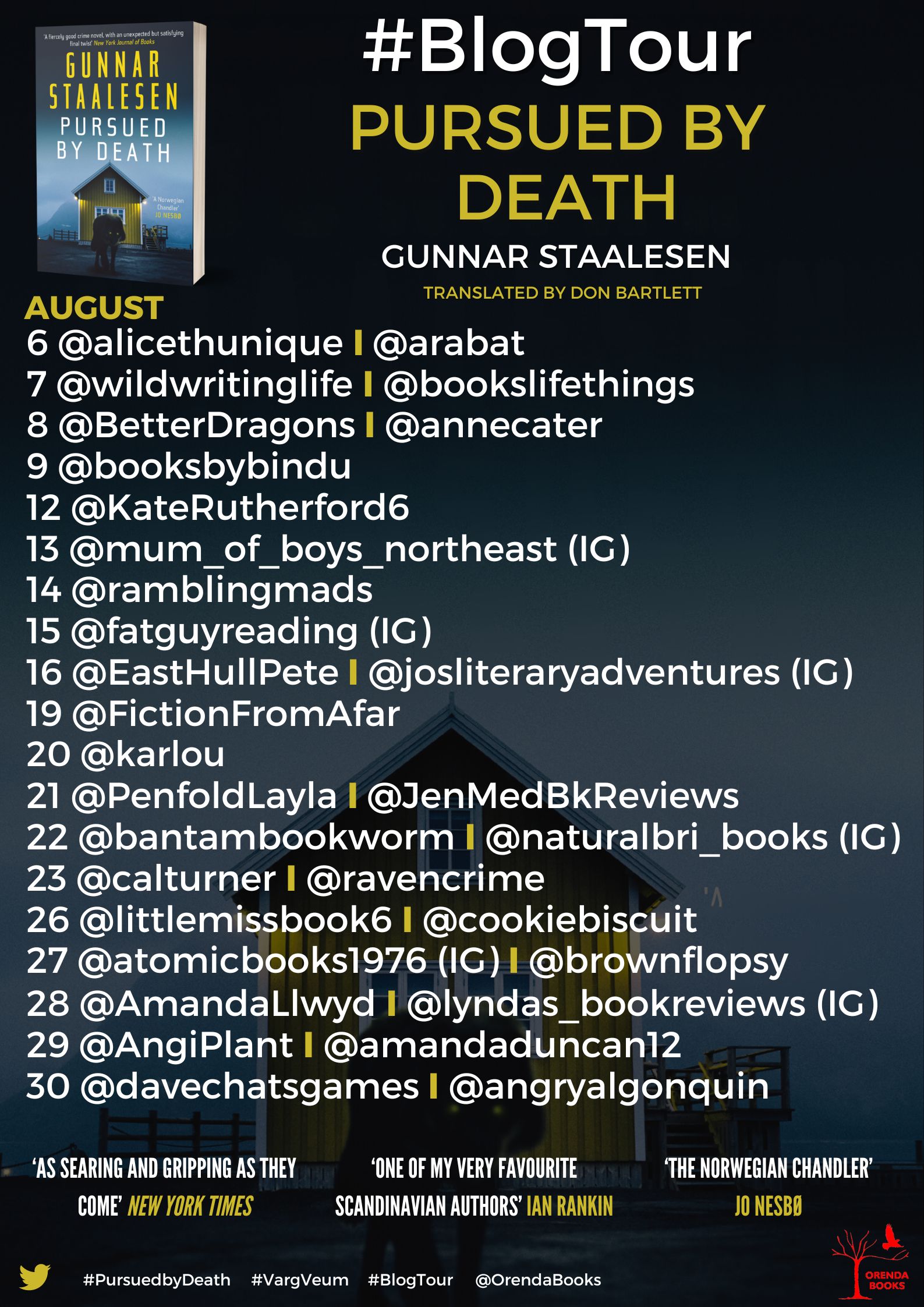
Thanks to Anne Cater for organising this tour and to the team at Orenda Books for my review copy.
First blog tour of the month and it’s an absolute delight of a book. I’m probably not going to do it justice.
Varg Veum is back. Forced to take a bus, he sees the meeting between three young people. Sometime later he realises one of them is missing, and out of curiosity he visits the place the person disappeared from. In Solvik he discovers a mess of village rumour, contradiction and a simmering resentments about fish farming. A widow with a reputation, a shop keeper with flapping ears, and an angler who mourns the dying fjords become part of Varg’s investigations after he finds the missing person’s VW campervan in the fjord and the police don’t take kindly to his help.
Set in 2004, the novel focuses jealousy in love against a backdrop of environmental disaster and the climate crisis. How do we balance the need to feed people with the need to not destroy our environment any more than we already have done?
I was definitely not expecting the killer to be who it was. I actually suspected one of the very helpful residents rather than the one the police suspect or the one who actually committed the crime. When it’s all laid out, the evidence is circumstantial, but probable. The way the eventually revealed killer describes Betty, the younger victim’s mother, colours the way the reader and Varg interpret the interactions between Betty and Varg, in contrast to the impressions her actions and own statements make. Its very cleverly done. There are other potential murderers, characters of the billionaire variety, who come off as creepy or standoffish, and willing to murder anyone who gets in their way, but surprisingly didn’t. Although a few of them get blown up, which is a bonus, I suppose.
Varg’s personal life features as a backdrop to events, as he turns 62 alone after a phone call with his son and grandson, while waiting for the case to progress. His developing relationship with the journalist, Torunn, a woman of a similar age is based on mutual respect, while his new contact in the Bergan Police, a distant cousin called Signe, is a balance of scepticism and developing familial affection. Varg is self-reflective but not navel gazing, even on his birthday weekend. I enjoyed his descriptions of the Icelandic crime novels he’s reading in the novel, and tried to work out if I recognised any of them. I didn’t.
The nuances of the landscape and cultures of western Norway are detailed but not overwhelming, revealed in dialogue and description that builds tension and suggests often, rather than outright stating. The conflicts of small town life, the differences between the isolated villages and the ‘big city’, and the shifting perspectives as time passes, represent one aspect of this novel, bringing a slow, measured pace, which contrasts with sudden action, rockfalls, ramraiding trucks and explosions. It really reflects the true pace of an investigation.
There are salmon farms, dead bodies, rockfalls , ramraids and explosions. All told from Varg’s perspective and starting with him grumbling about having his driving licence confiscated. I enjoyed this novel, and spent a pleasant afternoon reading it while recovering from two very busy days and two bad nights.
Highly recommended for fans of Nordic Noir. Better than Jo Nesbo, who I find unreadable.
THE AUTHOR
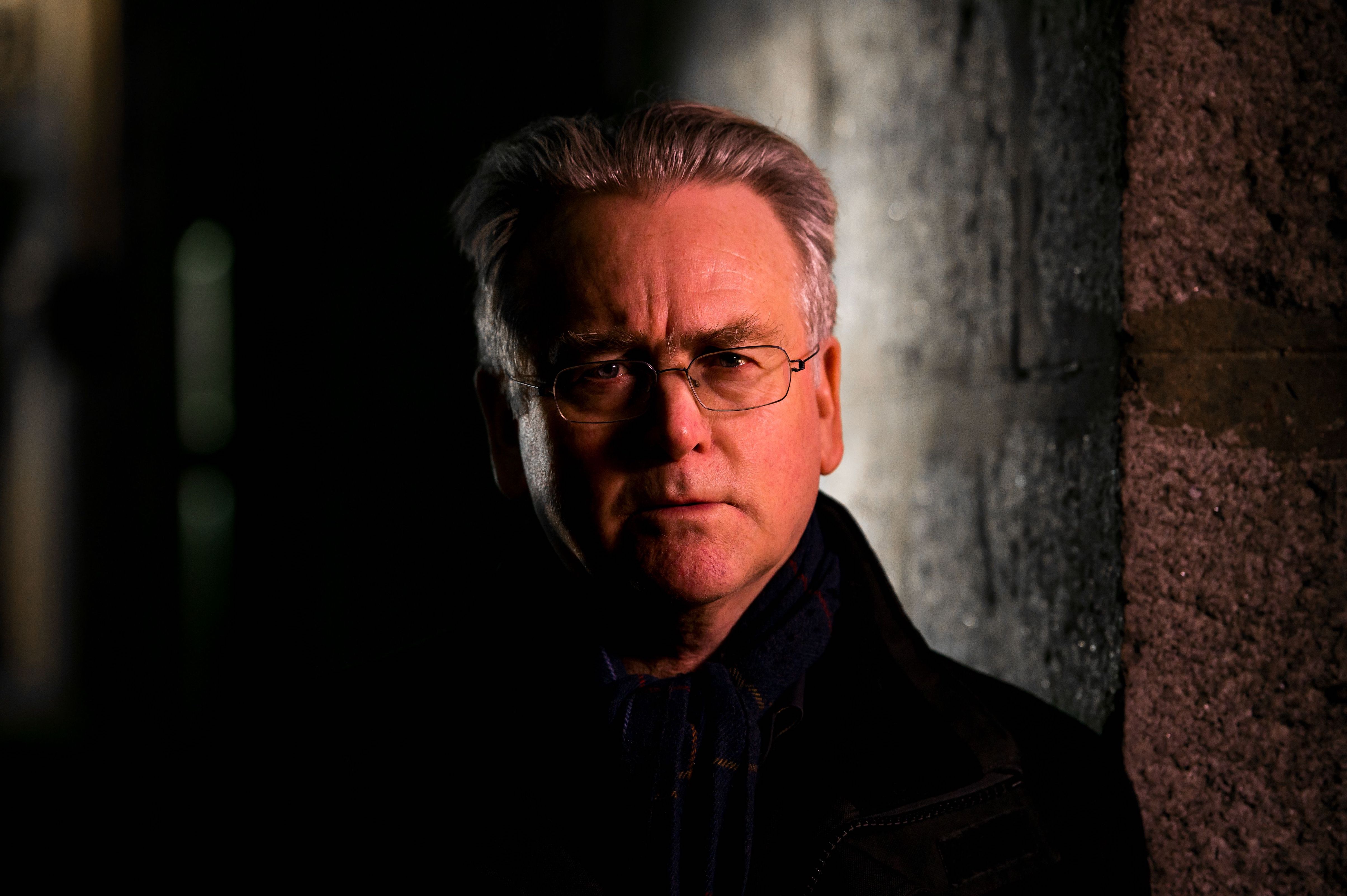
One of the fathers of Nordic Noir, Gunnar Staalesen was born in Bergen,
Norway, in 1947. He made his debut at the age of twenty-two with Seasons of Innocence and in 1977 he published the first book in the Varg Veum series. He is the author of over twenty titles, which have been published in twenty-four countries and sold over four million copies. Twelve film adaptations of his Varg Veum crime novels have appeared since 2007, starring the popular Norwegian actor Trond Espen Seim. Staalesen has won three Golden Pistols (including the Prize of Honour). Where Roses Never Die won the 2017 Petrona Award for Nordic Crime Fiction, and Big Sister was shortlisted for the award in 2019. He lives with his wife in Bergen.


Thanks for the blog tour support x