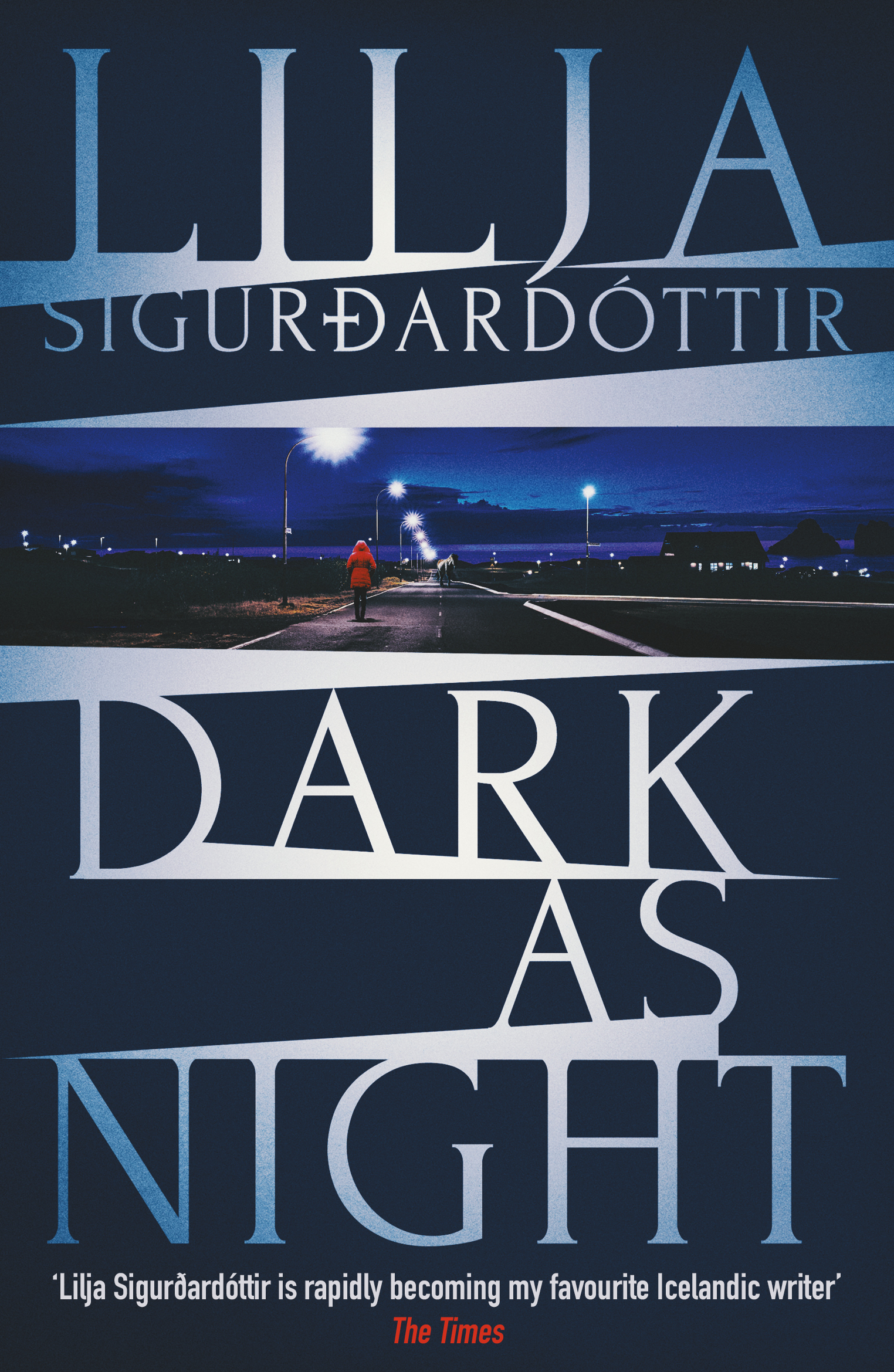
PAPERBACK ORIGINAL | £ 9. 99 | ORENDA BOOKS
Description
When Áróra receives a call telling her that a child she’s never met is claiming to be her missing sister reincarnated, she is devastated … as ridiculous as the allegations might seem. For three years she has been searching for her sister without finding a single clue, and now this strange child seems to have new information.
On the same day, Icelandic detective Daníel returns home to find a note from his tenant, drag queen Lady Gúgúlú, giving notice on her flat and explaining that she has to leave the country. Daníel is immediately suspicious, and when three threatening men appear, looking for Lady, it’s clear to him that something is very wrong…
And as Iceland’s long dark nights continue into springtime, that is
just the very beginning…
My Review
Thanks to Anne Cater for organising this tour, and to the team at Orenda for sending a copy of this book. I do enjoy Lilja’s mysteries.
Arora is struggling; she’s found no new information about her sister Isafold, volcanic eruptions threaten to hide Isafold’s resting place forever, and she’s become obsessed with gaining muscle and strength, so she’s taking steroids at the gym.
Daniel is a very happy man. He loves Arora, although he’s finding her sudden bursts of anger worrying.
The sudden news that Lady is missing and a child is claiming to be Isafold reincarnated throws the pair for a loop. They each go about their separate investigations until violent assault forces them to think again.
Arora takes a trip and discovers the truth behind Lady’s disappearance, while Daniel causes upset at home.
We also hear from Lady, under her real name, Robbi, as he puts his plan b into action. He’s on the run and knew he’d be caught eventually, because very powerful people are after him.
Arora does her sleuthing and finds out everything she need to know to help Robert/Lady be free to be him/herself, and reunite with his family and friends. Meanwhile, Daniel and the police finally discover the truth about Isafold and Bjorn (see Cold As Ice).
The narrative is told from Arora, Daniel, Lady Gugulu/Robbi, and Helene’s perspectives.
I’ve reviewed all four of these Arora Investigation books. Reviews are here, here, and here, if you want to know what I think about the first three. I was very pleased to get a copy of this ARC. They’re like gold dust! I really wanted to know if Arora would find her sister. I mean, having read Cold As Hell, I know what happened to Isafold, as the reader sees the murderer’s perspective as well as Arora’s. The tension in the series is based on Arora’s need to find out, while the reader already knows.
In Dark As Night, the non-police/Arora perspective, usually provided by the criminal or victim in other books in the series, is provided by Lady Gugulu, as she goes into hiding, regaining the name given as a child, Robbi. Robbi is a gay man who does drag, and so, when he’s not Lady Gugulu, he uses masculine pronouns. The author is very careful with using the correct pronouns for each character. The reader discovers more about Robbi’s background and origins as slowly the reason he has to hide and why he goes on the run come to light. There’s the hint of the supernatural that runs through the series, but explained by science. I honestly don’t think the weapon can actually exist, but it’s a nice bit of sci-fi!
But then there’s little Ester, who claims to be the reincarnation of Isafold; three years old and with clear memories of Isafold’s last day and death. Daniel, the police, child protective services, and an open-minded psychologist look into the case, but can’t find anything suggesting something questionable is happening. Even the parents, at first suspected of feeding Ester information, are desperate to know what is happening, especially after she clearly describes the violent assault that injures Isafold so badly. Read Cold As Hell for the details. I’m still not convinced by reincarnation, although it does add a bit if the supernatural to the story.
Lady tells Daniel at the end of the novel that reality is more complex than can be perceived. Which is true. I don’t understand physics well enough to comment on the private life of nuclear particles, honestly, but it’s fun to play with possibilities in fiction. Pax is a brilliant idea – if it worked in the real world. But at the same time, even as Robert realises, a tool can easily become a weapon, which is why good people don’t work for arms manufacturers. You invent something useful, for example a way to make mining safer and more energy efficient, and some bastard will find a way to make billions from it by selling it as a weapon for killing thousands of people at a time.
Helene, Daniel’s colleague is drawn into both investigations, while simultaneously pining for her partner, who is in prison. They can’t have conjugal visits because they’re pretending a trafficked woman Helene helped rescue in the previous novel is married to Helene’s partner. The stress keeps distracting her from her job and causes her worries, in case they’re found out by Immigration Services. Helene discovers over the course of this novel that she is finally past the point in her life where she wants to live alone and see multiple women at the same time. She’s in love with her partner and she’s ready to share a life with her.
Arora faces her demons in this novel, dealing with her need to be strong, and her grief for her sister that can’t be openly acknowledged. She’s forced to face her steroid use and her treatment of Daniel when people start to question where he got a split lip. Her investigation into the disappearance of Lady Gugulu/Robbi brings her face to face with the complex lives of the people who fall through the cracks in society, the shady dealings of arms manufacturers, and just how corrupt people with power are. She might use that corruption against them, but it’s a bittersweet fight. There will always be more corrupt billionaires who need their hidden funds extracting from them.
I like the idea of defunding the billionaires. No one needs that much money.
The tension in this series was always ‘will Arora find Isafold in the lava field’ and now we know the answer to that question. This leaves us with the next question: will Arora stay in Iceland or return to Newcastle? There’s still the question of who killed Isafold if Bjorn is also dead, and also, how does Ester know?
The developments of Arora and Daniel’s relationship, the stresses events put them through and how they individually and as a couple cope with those stresses, are at the heart of this novel. Their different characters – Arora being a driven, intense person, Daniel a more relaxed person who usually blames himself for things going wrong – clash in the early part of the novel, but once they work out what’s causing the tension they make a plan and work through their problems in a healthy way.
I enjoyed the ‘Robbi being a smallholder’ parts of the novel, because they are tranquil episodes in between intense actions, although it’s also bittersweet, because we know something bad is going to happen to him. It’s frustrating when it does, however. Who will look after the hens?
Luckily, Arora (and Colin) to the rescue!
Robbi’s joy in developing his skills as a smallholder and his plans to escape are actually a fun part of the novel. I found the experimenting with water barrels for night time temperature control and planting schedules engaging. It’s a fun thought experiment – how would you survive off-grid in Iceland? Honestly, I probably wouldn’t, the rescue volunteers would be pulling me out of a fissure within a week. I get too close to a volcano or turn my ankle on uneven ground. I did like his idea for a hiding spot over the hen house though. Very sensible.
The recurring characters continue to develop and be fleshed out with complex backgrounds and lives. Characters like Helene and Lady aren’t the focus of the books but their lives are effected by events in earlier books and the previous novel focuses on Helene’s life as it intersects with an investigation, and this time Lady/Robbi is the focus of the investigation. I don’t know it it was the plan all along to make Lady Gugulu’s elf mound actually be Robbi’s weapon hiding spot, but it is a clever use of mythology to add a bit of whimsy to the plot that later takes on an important role.
I found the eventual discovery of Isafold and Bjorn satisfying, and the opening of a new mystery is exciting. I want to know how they go about tracing the murderer – last seen heading to Canada. Arora’s response to her mother leaves an opening for more novels and developments in Arora and Daniel’s relationship, although her mother does keep referring to him as Arora’s uncle (he was formerly married to a paternal cousin or possibly a great-aunt, I can’t remember – they’re all related in Iceland).
I enjoyed the aerial comparisons of Iceland and the West Midlands, and the different ways Arora feels about them in spring. We hear a lot about the jagged lava fields of Iceland, or the towns, but also about the small plants and abundant birds, the smaller but still fertile farmland, in comparison to the patchwork of large open green fields, the flowering plants in pots, the ribbons of roads between small clusters of brown brick houses that grow larger and eventually merge into the city of Birmingham. The contrast reflects both the geographic positions of Reykjavik and Birmingham, and Arora’s feeling about England and Iceland, her two homes. One is associated with love and family, and the other with painful memories and a confusing present. Nonetheless, she chooses grey-blue Iceland in the end.
I did feel it took a bit to get going and the reincarnation plot line felt a bit of a deus ex machina way to find Isafold, but it still worked because Daniel automatically treated it like a normal investigation.
If you’ve enjoyed the previous novels in this series, I recommend reading this one, for the closure of one mystery and opening of another, as well as learning more about Lady (and how she got that name!). If you haven’t read the other books, you should before reading this one or a lot of things won’t make sense. And you should read them anyway, because they’re good books.
ABOUT LILJA SIGURÐARDÓTTIR
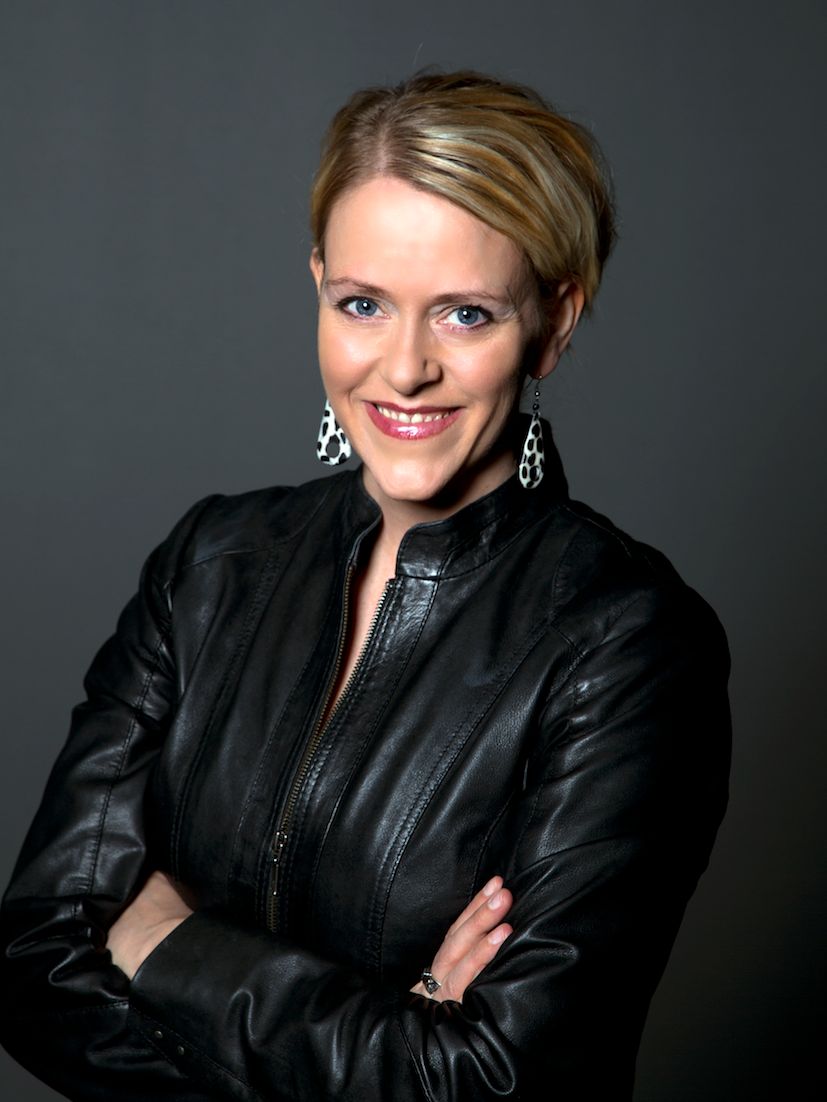
Bestselling crime-writer Lilja Sigurðardóttir was born in the town of Akranes in 1972 and raised in Mexico, Sweden, Spain and Iceland. An award-winning playwright, Lilja has written ten crime novels, including Snare, Trap and Cage, making up the Reykjavík Noir trilogy, and her standalone thriller Betrayal, all of which have hit bestseller lists worldwide and been long- and shortlisted for multiple awards. The film rights for the Reykjavík Noir trilogy have been bought by Palomar Pictures in California, and the An Áróra Investigation series is now in production for a major TV series. Cold as Hell was published in the UK in 2021 and reprinted twice, followed by Red as Blood and White as Snow, both number-one digital bestsellers. Lilja lives outside of Reykjavík with her partner and a brood of chickens.


 Everything Is Better With Dragons
Thanks for the blog tour support x