2023-07-11
Formats: Ebook, Paperback
EBook ISBN
11th July 2023 | 9781915202529 | epub & mobi | £4.99/$6.99/$7.99
Paperback ISBN
11th July 2023 | 9781915202192 | Paperback
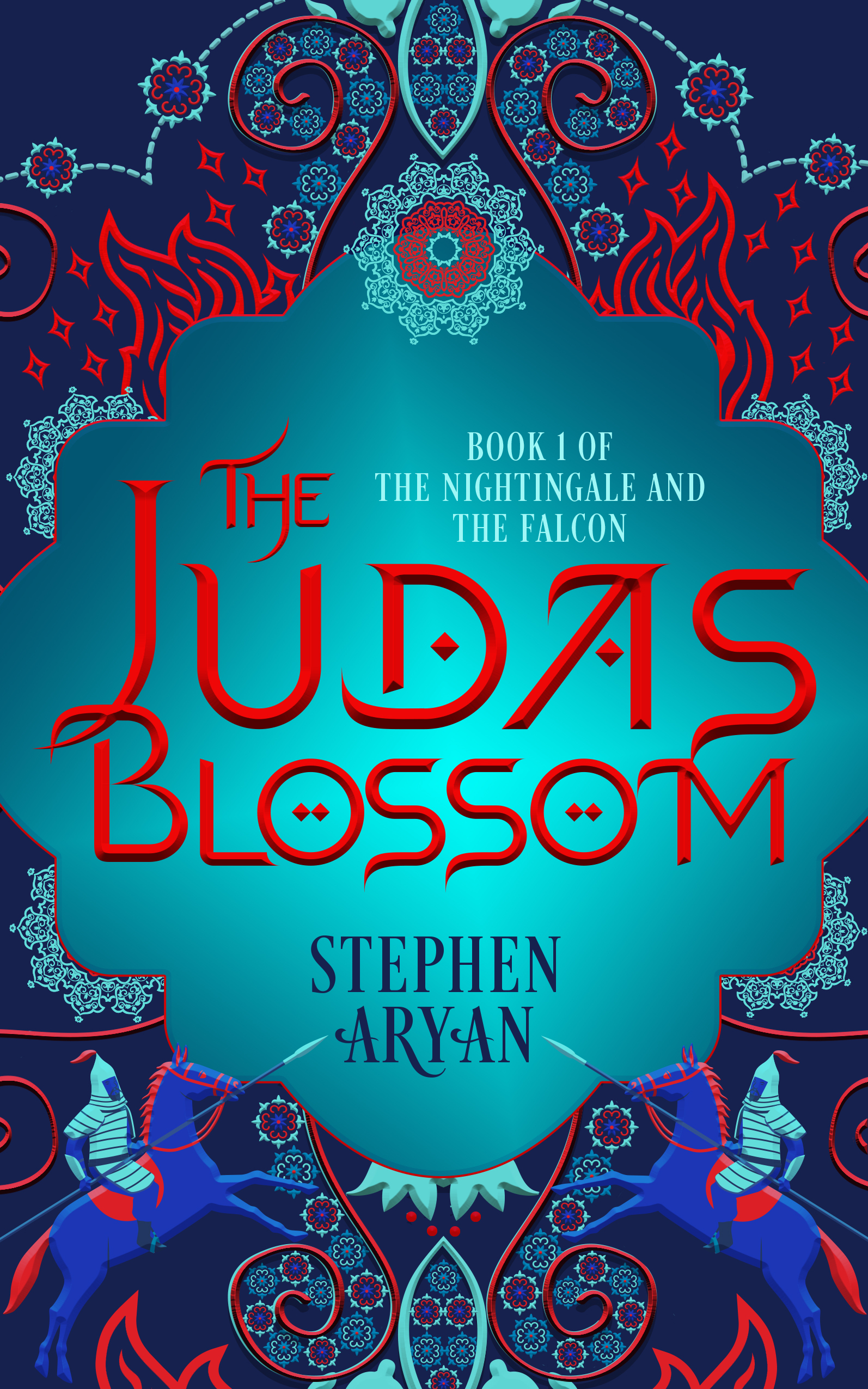
Book I of The Nightingale and the Falcon
1260, Persia:
Due to the efforts of the great Genghis Khan, the Mongol Empire covers a vast portion of the known world. In the shadow of his grandfather, Hulagu Khan, ruler of the Ilkhanate, is determined to create a single empire that covers the entire world. His method? Violence.
His youngest son, Temujin Khan, struggles to find his place in his father’s bloody rule. After another failure, Temujin is given one last chance to prove himself to Hulagu, who is sure there is a great warrior buried deep inside. But there’s something else rippling under the surface… something far more powerful and dangerous than they could ever imagine…
Reduced to the position of one of Hulagu’s many wives, the famed Blue Princess Kokochin is the last of her tribe. Alone and forgotten in a foreign land, Kokochin is unwilling to spend her days seeking out trivial pursuits. Seeking purpose, she finds herself wandering down a path that grants her more power than a wife of the Khan may be allowed.
Kaivon, the Persian rebel who despises the Mongols for the massacre of his people, thirsts for revenge. However, he knows alone he cannot destroy the empire. When given the opportunity to train under the tutelage of Hulagu, Kaivon must put aside his feelings and risk his life for a chance to destroy the empire that aims to conquer the world.
Family and war collide in this thrilling and bloody reimagining of the Mongol Empire’s invasion of Persia.
Stephen Aryan is the author of The Coward and The Warrior (the Quest for Heroes Duology), as well as the Age of Darkness and Age of Dread trilogies. His first novel, Battlemage, was a finalist for the David Gemmell Morningstar Award for best debut fantasy novel. It also won the inaugural Hellfest Inferno Award in France. He has previously written a comic book column and reviews for Tor.com. In addition, he has self-published and kickstarted his own comics.
You can find out more about Stephen and his books on his website: Stephen-Aryan.com
My Review
I picked this book up at Fantasy Con in 2023. It is signed and dedicated by the author. I have all three books in this series now, so I’m reading them in order. I’m currently about halfway through book 2, The Blood Dimmed Tide. Angry Robot sent me a review copy last year, after I’d already bought a signed copy at It’s Strange Up North.
The book is told from multiple POVs. There is Kaivon, a Persian general who lead the defence against the Mongols and was reduced to a rebel by defeat. He accidentally saves the Khan and ends up as one of his generals, while also planning the downfall of the empire.
Then we have Hulagu, grandson of Genghis Khan, ruler of the Ilkhanate, which is the part of the Mongol Empire covering Persia, from the Arabian sea to the Black Sea and the Caspian Sea. He has to hold his empire together while his sons prove difficult, and his brothers and cousins start a civil war. His wives are also giving him trouble.
Next, we have one of those wives, Princess Kokochin. Her whole tribe has been killed by Hulagu’s brother and she’s been dumped in a foreign palace with people she doesn’t know, and she’s bored. Under instruction from the Empress, Kokochin goes out to find herself a cause or industry to take an interest in. That goes well…
There is The Twelve, a shadowy group determined to bring down Hulagu.
And finally, we have Temujin, named for his great-grandfather (Genghis Khan changed his name from Temujin to Genghis for political reasons – Genghis means ocean. He never saw the ocean.) Temujin does not like war. He can’t fight, won’t kill, and he doesn’t want to die in battle, thanks ever so much. He likes to read and eat good food. Ever a disappointment to his father, he’s forced to join the army as a ordinary soldier, and learns that he does actually have strengths of his own. After the sack of Baghdad, he saves an elderly librarian and learns that his mismatched eyes mean something. He is a Kozan, one who can tap into a fire that burns in all living things. He just has to make it useful to his father.
Halugu’s a dick, but the others are pretty cool. They’re in impossible situations. Temujin and Kokochin are Mongols in Persia. Theorectically they should be top of the food chain, but their relative positions as younger son and youngest, least important wife, puts them at a disadvantage within their own sphere, leading them to empathise strongly with the Persians. Kaivon is a Persian, forced by circumstances to side with his enemy, while secretly fighting against him. All of them need to hide their activities, or they’re going to die, probably slowly and painfully. The characters are fully realised and have rich inner lives, even Hulagu. He’s just a dickhead. His Empress and war wife aren’t much better.
The conflict between the conquering Mongols and the conquered Persians is the main building block of this story, with the personal stories of the four POV characters built around and determined by it. As the Mongols extend their control and face their own internal conflicts, the conquered take advantage to sow discord in the Khanates. It’s a gripping narrative. While it’s fiction, Aryan has based his narrative in historical events, although timelines are squished and stretched where necessary, and characters are amalgams of multiple people. Also, there is magic.
The magic is difficult to access and mostly useless in war. There are rules to the magic which limit who can use it and what they can do. It is part of Temujin’s personal growth as he tries to be a soldier, fails, and learns about being a Kozan. He learns that he doesn’t need to be a typical Mongol or make his father proud, he just needs to be himself.
I enjoyed Kokochin’s journey to fulfilment and her own self-discovery as she learns to make jewellery and fight. She also finds love outside of her marriage and tries to build a family after losing everything to her own people. Her relationship with Layla is adorable, but it draws her into the orbit of The Twelve, a resistance group of Persian women. With contacts across all four Khanates, The Twelve, are reluctant to trust her, especially when one of them has apparently lost her own sister to the Hord.
Kaivon is a sympathetic character, clearly struggling with his position as both a rebel and a general. I love his duplicity! It’s great, I can’t wait to see who he murders next. His relationship with Esme is lovely, even if they have to pretend to be non-consenting, because they are both slaves of Hulagu. They draw strength from each other and that drives their part of the narrative.
The setting is thirteenth century Asia. Asia is a large continent with lots of different cultures, languages, and ways of life. The Mongols are nomadic, the Persians settled. This makes it difficult for them to understand each other. That and the murdering. Lots of murdering.
The Mongols are a fascinating culture, but there was a lot of murder, theft, and rape during the expansion of their Empire. The ability to incorporate and adapt new cultures and ideas into their own culture, the flexibility and adaptability, is quite admirable. The inevitable collapse due to infighting, among other things, as they stretched too far away from their heartlands, suggests that they weren’t quite as adaptable as they needed to be. They incorporated multiple religions with an unusual level of tolerance, especially at a time when European Christianity and Islam were at each other’s throats in the Levant and Spain, Jewish people were being ghettoised and pogrammed, and there was disagreement between Confucians, Bhuddists, and Toaists in China. It’s quite amazing really, and I did not know this. I’m listening to a book called The Hoard: How The Mongols Changed The World, by Marie Favereau now so that I can learn about it.
The Persians are fascinating too. The culture, the food, the architecture, the literature…Shame that religious nutters, and American and European empires fucked them over in the last couple of centuries…I really need to find a book about medieval Persian, so I can learn more. Anyone got any recommendations?
This book explores a time and place usually ignored in Europe, and does it with an entertaining and gripping narrative, strong, fully developed characters, and introducing a magical system that is complex and ‘realistic’. I loved the details of daily life and the cultures of the characters. Once I finished this book I needed to start The Blood Dimmed Tide straight away. I did, I’m halfway through it now.
One thing: There were no tomatoes in Persia in 1260. Sorry Stephen, you can’t get away with the ‘it’s fantasy’ excuse with this one. Although I think I know the dish being referenced, because I have a very good Persian recipe book.

 Everything Is Better With Dragons
1 Comment