Review: The Girl with a Thousand Faces, by Sunyi Dean

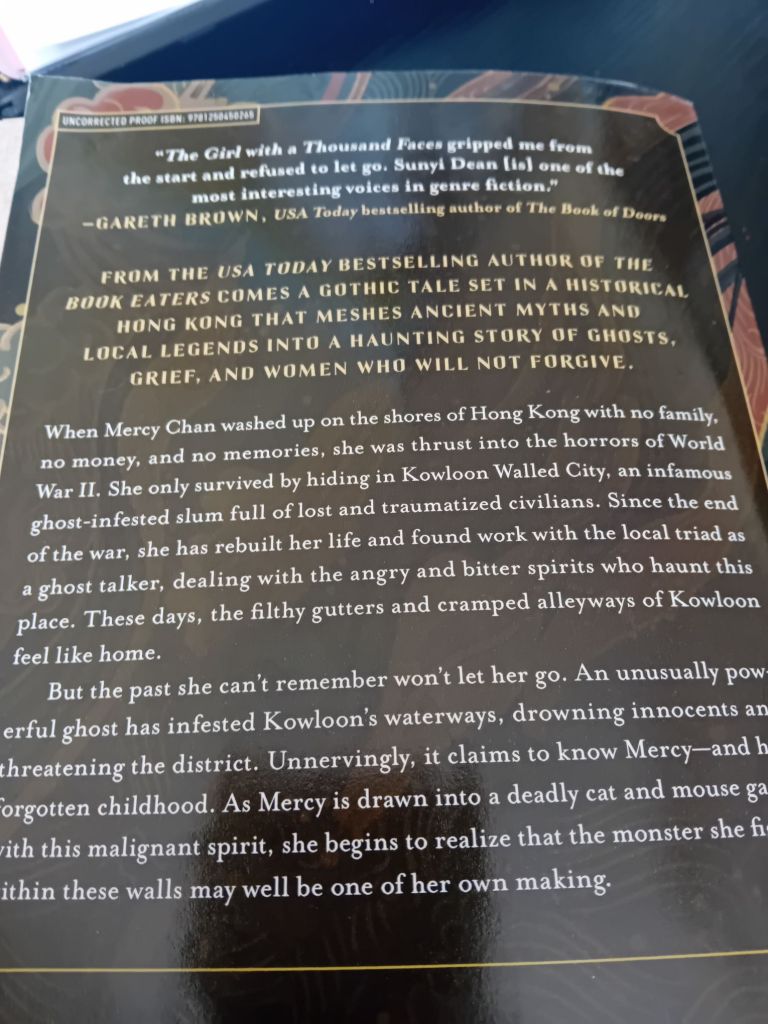
A haunting dark urban fantasy set in historical Hong Kong, where ancient myths and local legends combine in a story of ghosts, grief and women who will not forgive.
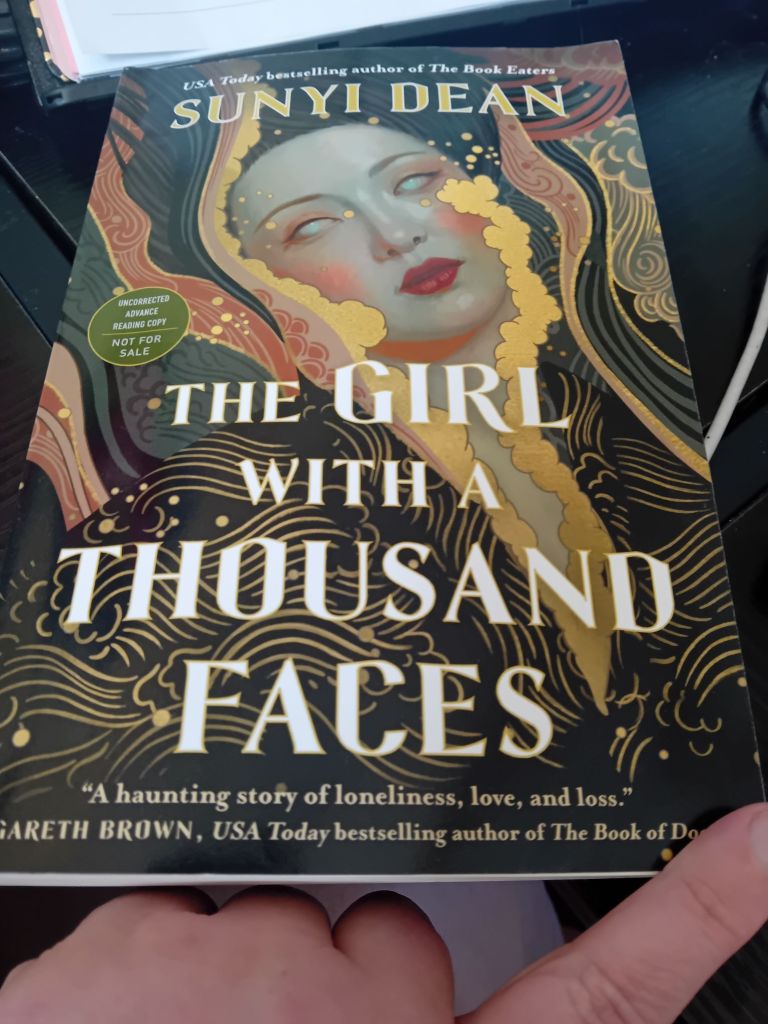

Mercy Chan is a triad exorcist with a mysterious past. After washing up on the shores of Hong Kong with no memory during World War II, she found a home in Kowloon Walled City, an infamous, ghost-infested slum full of lost and traumatised civilians. Since the war ended, Mercy has rebuilt her life and found work as a ghost-talker for the local triad, dealing with the angry and bitter spirits who haunt this place.

But the past she can’t remember won’t let her go. An unusually powerful ghost lurks in Kowloon’s waterways, drowning innocents and threatening the district. Unnervingly, it claims to know Mercy – and her forgotten childhood.

As Mercy is drawn into a deadly cat-and-mouse game with this malignant spirit, she begins to realise that the monster she fights within these walls may well be one of her own making.

My Review

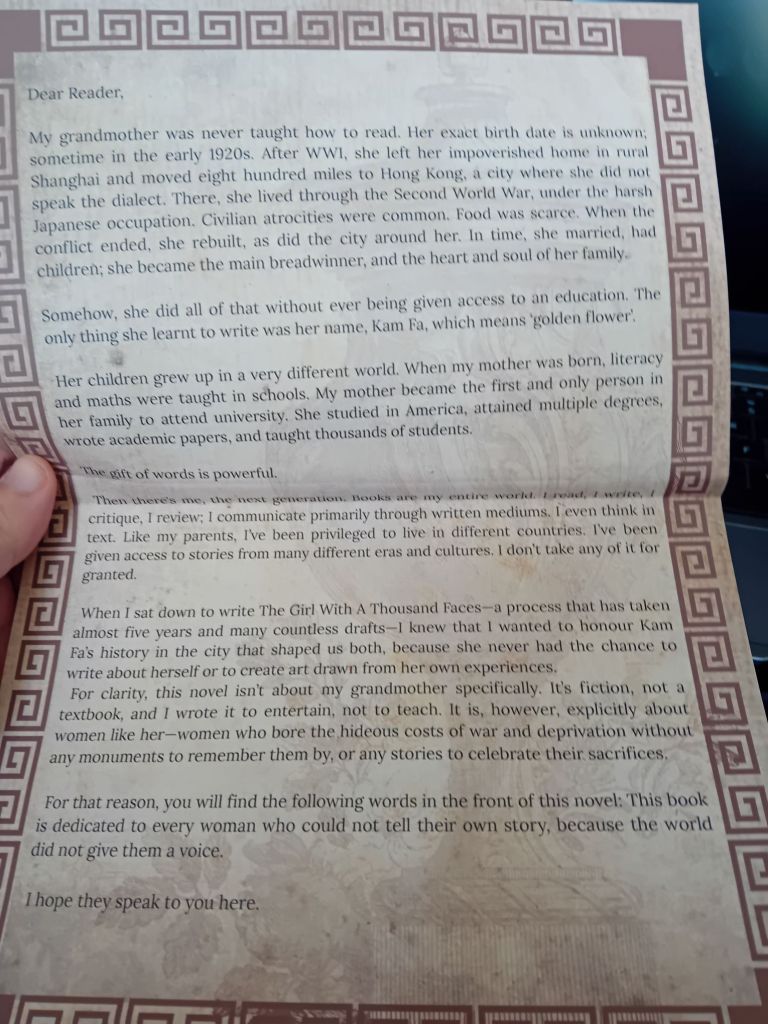
Thanks to the author for my ARC of this book. I’m not sure how I got a copy, Sunyi Dean must have put something on social media, and I’ve got an email from her, so I assume we connected that way. Anyway, late last year I got a package from Sunyi with the book, a letter and a fu talisman for my front door.
This book is due out 7th May-ish, so I spent my Saturday reading. I actually planned to go for a walk to the shop yesterday afternoon but that would have meant stopping reading and I really couldn’t do that, so I ordered a Morrisons delivery for this morning and carried on reading until almost midnight, because I needed to know how Kwun Yam was going to resolve the problems between Chen Mei Chi/Mercy Chan and Sung Siu Yin.

The book is in four parts jumping between the 1920s, 1940s, and 1970s, and from three perspectives, Mercy Chan, Sung Siu Yin, and Kwum Yam, who narrates half the story while the other half is told in close third person from Mercy and the Siu Yin’s perspectives. It’s a really clever way of exploring the lives of the two main characters and how they got where they are.

In 1975 Mercy is a ghost talker in Kowloon, an old, dilapidated district of Hong Kong, a city that has sprouted shiny towers and wide roads after surviving the destruction of the Japanese invasion. Kowloon on the other hand is a slum in the grips of the triads and ghosts. Mercy, originally Chen Mei Chi, doesn’t remember her history or how she’s able to talk to ghosts, but she can, and accompanied by her ghost cat, Bao, she helps ghosts deal with their trauma and move on. She lives well, a comparatively wealthy life working for Cobra Lily, queen of the snakeskin triad.

In 1942, she arrived in Hong Kong with no memory and no money, and hid in Kowloon from the rampaging Japanese. Her Hakka origins and ability to go out at night make her useful to the resistance as a night time message runner. No one else will go out at night, because the ghosts are angry and they are hunting. There are a lot of ghosts in Kowloon – refugees from the city chased out by Japanese exorcist, refugees from the countryside and the victims of massacres. Angry ghosts are dangerous, but they listen to Mei Chi and if they don’t Bao eats them.

In the early 1920s a little girl, her sister, and their grandmother are chased from their village on a remote island by frightened villagers who believe the girl is bad luck. The escape and pray to the Lady of Compassion, Kwun Yan. The temple is hidden in a sea cave below their feet, and when the ground crumbles under them, the girl and her grandmother fall in. The sister runs for help, and the same men who chased them from the village eventually turn up. They condemn her to a slow death by drowning. A storm comes and kills everyone except the sister, who goes to Hong Kong. The sister grows up, marries, has a daughter of her own.

In 1942 the sister and her daughter, running from the Japanese invasion return to the island, and the ghosts are waiting for them. A few months later, both leave again, but to different fates.

And that is all I’m telling you about the story, because I don’t want to spoil it too much.

I really enjoyed this novel; as I said earlier, I spent a day reading it and couldn’t put it down. The characters are fascinating and the worldbuilding, drawing on real history and beliefs, is marvellous. The Chinese experience of WWII is often forgotten, but this book brings to life the times and places it covers, and draws on some of Sunyi Dean’s grandmother’s own experiences as a young woman who left her rural Shanghai community to live in Hong Kong between the world wars. She survived WWII in Hong Kong, which is very impressive. The depictions of life under Japanese military rule are graphic and powerful.

The history was interesting, especially the bits about the Chinese resistance. It was largely lead by Hakka, who also made up much of various Chinese armies. I looked up the Hakka because I hadn’t heard of them before. According to Wikipedia, the Hakka are a sub-division of the Han Chinese who were more nomadic and lived on marginal land. They live all over the world now and speak the Hakka dialect, which is different from Cantonese and other Chinese dialects. They had different cultural traditions to other Han Chinese in that they didn’t bind feet, because women worked in the fields and men often worked in towns or the military, and they built different communal housing structures to other Han Chinese communities. They were often subject to discrimination because they migrated into areas already settled by Han Chinese and were forced on to marginal land.

The central mystery of the novel is who is Sea Sister and why can’t Mercy remember anything before 1942. We follow Mei Chi and Sui Yin as they work out their trauma and their fates collide in a typhoon. There are multiple typhoons in this story, but it’s the South China Sea, I’d be worried if at least one wasn’t mentioned. Discovering the identities and complex relationship of the characters, the trauma they inflicted on each other and how they resolve that trauma, is gripping. The family dynamics, the cultural expectations and the environmental factors make this a complex, insightful tale.

The descriptions of Kowloon, the changing Hong Kong, the island, and swimming in the ocean are tactile; I don’t know if that makes sense, but I could almost see the places and feel the water. The emotional connection built between Mei Chi and Sui Yin, described by Kwam Yam as She narrates the latter half of the novel, is powerful and I cried at least twice.

The underlying theme of this novel is the long term trauma of war and the damage a war can do for generations, as well as the need to forgive, for ourselves as part of finding peace. I get that. There is a lot of pain in the world, if we carry it from one generation to the next, either through karma if you believe in reincarnation or through teaching children to hate in education and cultural contexts, we prolong the pain, we keep the wound open, infected and weeping the pus of hate. Clean it out, cauterize the wound, let it heal.

I wouldn’t dare tell the Chinese they have to find peace with Japanese, or the Indians they have to find peace with Britain; we really don’t deserve it after the fucked up things the Empire did, but if the various European countries could try to heal wounds that would be great, we got too much stuff to do to keep old grudges going. I speak especially to the English. Time to forget the arguments with France and the animosity; the living French ain’t the Normans, the source of our trauma; their descendants are here and we know where they are, what land they’re hoarding, what power they have, and we can deal with them without continuing the generational trauma aimed at the French or the Germans. The living ain’t our enemies and the dead are gone. A little bit of land redistribution and wealth taxes wouldn’t go amiss is all I’m saying…

The setting, a world like our own where spiritual beings, ghosts and gods, are real and treated as such, is interesting. I have heard this called magical realism in a South American context but I’m not sure we can transfer the genre name from there to here. The author uses her own heritage and cultural traditions to infuse the story, essentially an historical novel about two women surviving the massive events of the 20th century in China, into a fantastical, gothic tale of ghosts, spirits, demons and goddesses.

The background details of how to write fu talismans and the relative abilities of Daoist and Catholic priests in exorcisms adds something to the realism. Their joint efforts and contrasting methods of dealing with Resistance ghosts were detailed at one point and while the contrasts are fascinating, the similarities point to a human need, I think. Both use specific prayers, both recognise that an exorcism is forcing a spirit for a body that already has an inhabiting soul, both find ways to contain or release the spirit using incense. The attitude towards the occupying spirit displayed is interesting. The Daoist priests in the story are respectful and realise the ghost is a person, while the English Catholic priest is more dismissive. It reflects different cultural attitudes to death and ancestors.

In most parts of Europe we don’t really go in for ancestor worship anymore (I blame Christianity and the ‘Enlightenment’), and we’ve developed some violent ways of dealing with the unquiet dead (beheadings, mainly, which will deal with the unquiet living as well). We don’t really invite them to tea for a chat about why they’re hanging about, or leave out offerings, unless you count the annual wreathe on the grave stone? It’s probably not a healthy way to deal with grief.

I’m rambling, aren’t I? I found the cultural and historical context of this book absolutely fascinating and it triggered lots of thoughts. I really enjoyed the story and the author’s note was insightful, explaining how the author respectfully changed some things for the story but providing background information in the note. The ways Hinduism and Buddhism are related and change from India to China are interesting topics and I’ll probably go down a rabbit hole learning about it one day, but not today. My neighbour is playing terrible music really loudly, again, and I can’t really concentrate now. It’s a good thing I woke up early and read another book that’s scheduled for review 11th May, or that racket would have interfered in that as well.

No, seriously, the music is awful. I’ve had to put up with it on and off since Friday afternoon, because they’ve had visitors all weekend.

Enjoy your Sunday afternoon, I have another review to write and then I’m going listen to this week’s Small Town Murder bonus episode.
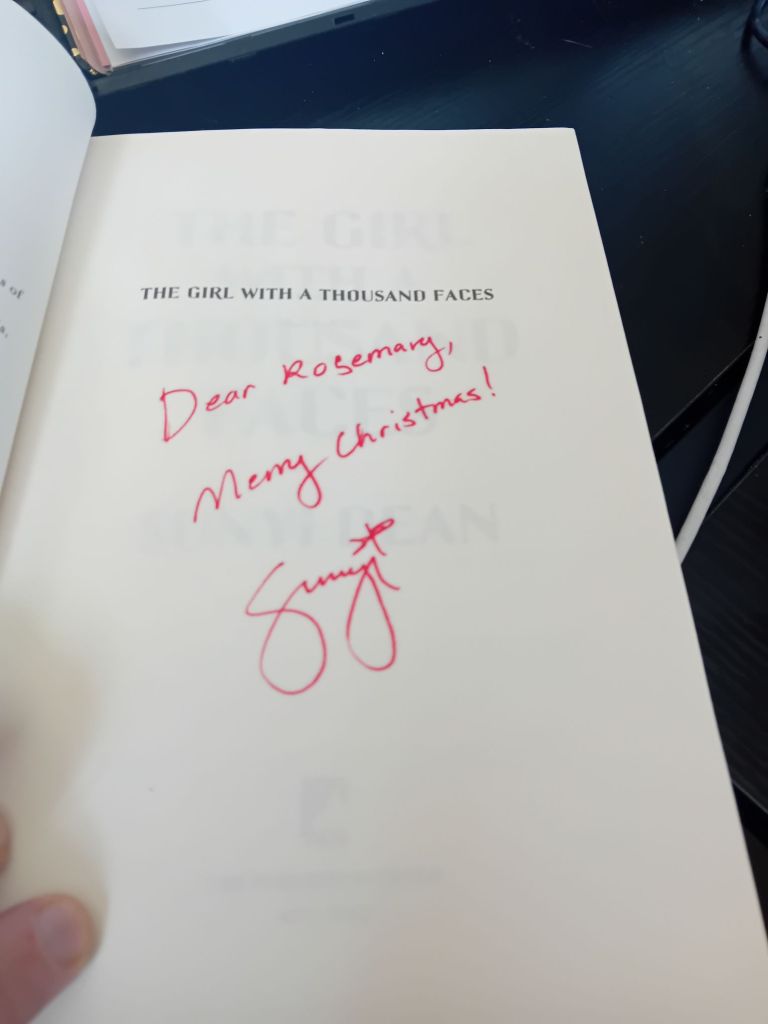
Also, Sunyi, it’s Rosemarie, not Rosemary. See you in Leeds sometime.

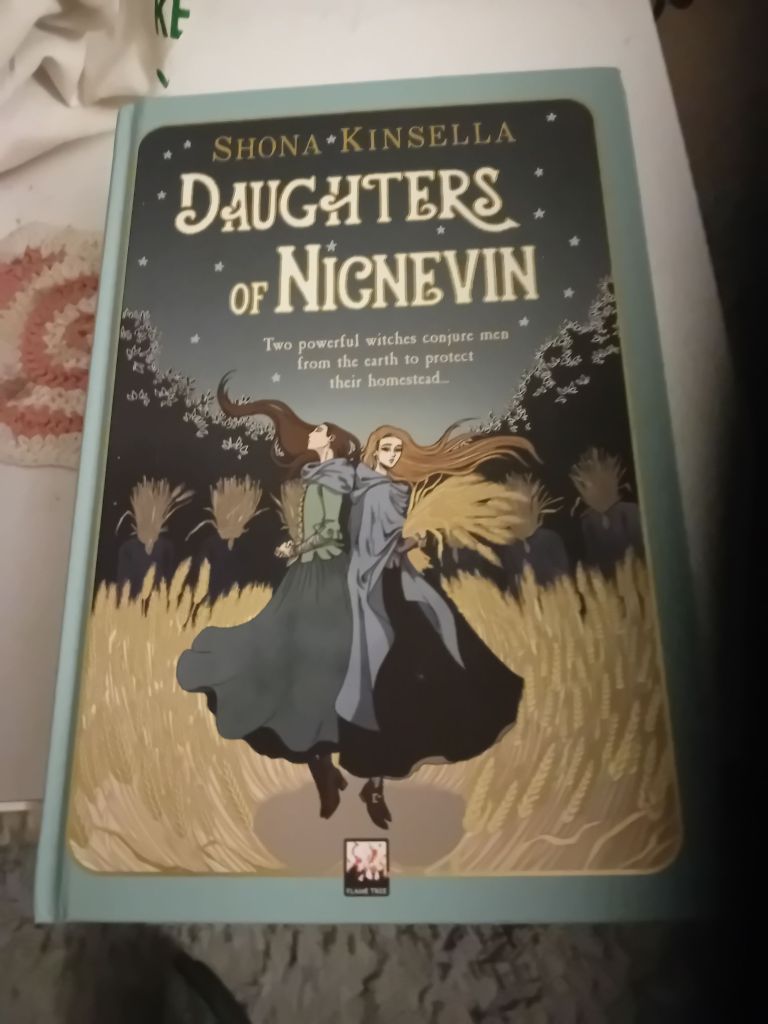
Blog tour review: Daughters of Nicnevin, by Shona Kinsella

Blurb

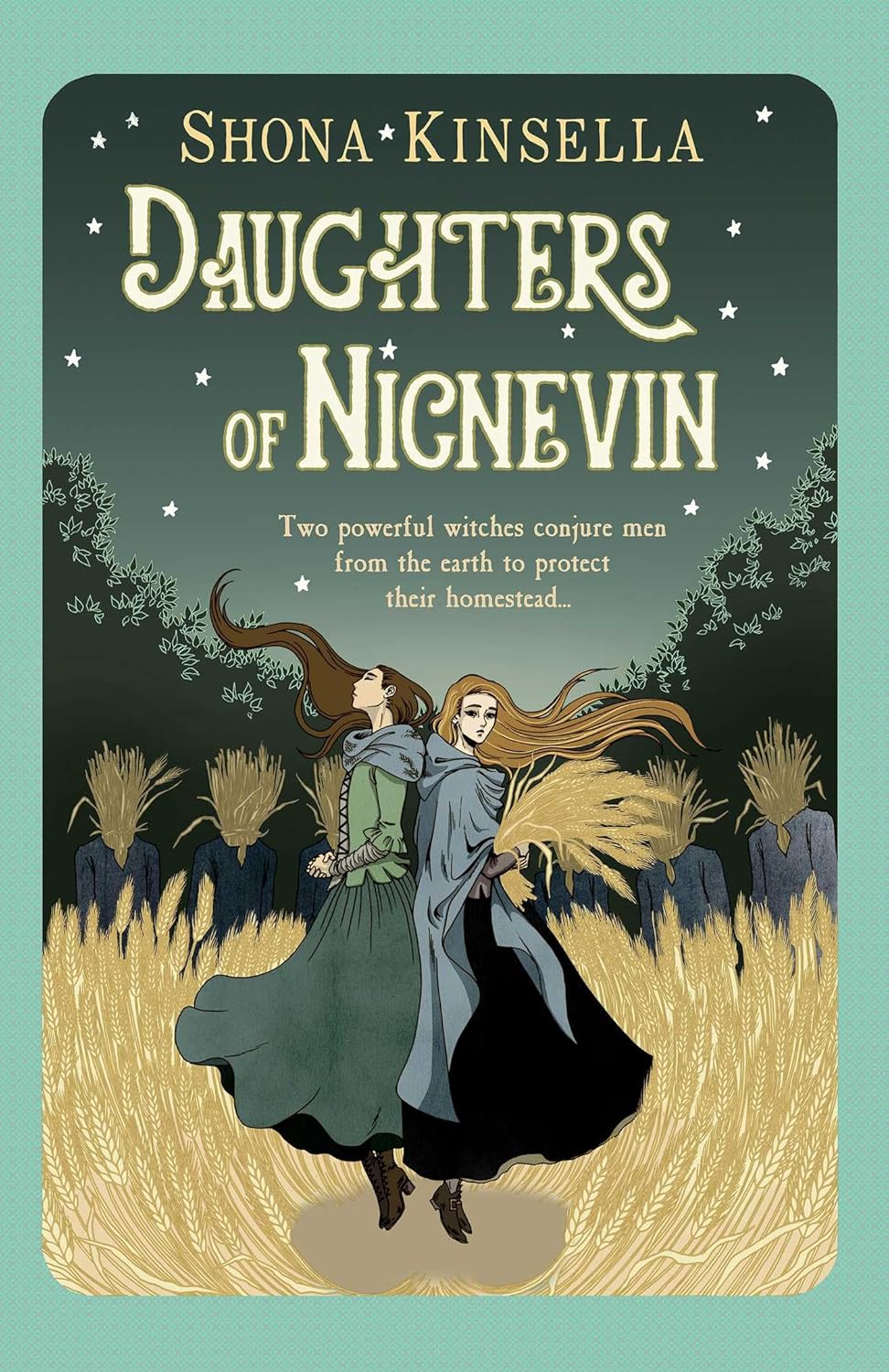
Mairead and Constance, two powerful witches, meet in the early days of
the 1745 Jacobite uprising. While the men of the village are away fighting,
the villagers face threats from both the Black Watch and raiders, and the
women are confronted with their vulnerability. They enlist the help of
Nicnevin, fae queen of witches, to bring men made of earth to life to help
protect their village. But just who do they need protection from? And what
will happen when the village men return?

Continue reading “Blog tour review: Daughters of Nicnevin, by Shona Kinsella”

TBR Pile Review: The Judas Blossom, by Stephen Aryan

Release Date
2023-07-11
Formats: Ebook, Paperback
EBook ISBN
11th July 2023 | 9781915202529 | epub & mobi | £4.99/$6.99/$7.99
Paperback ISBN
11th July 2023 | 9781915202192 | Paperback
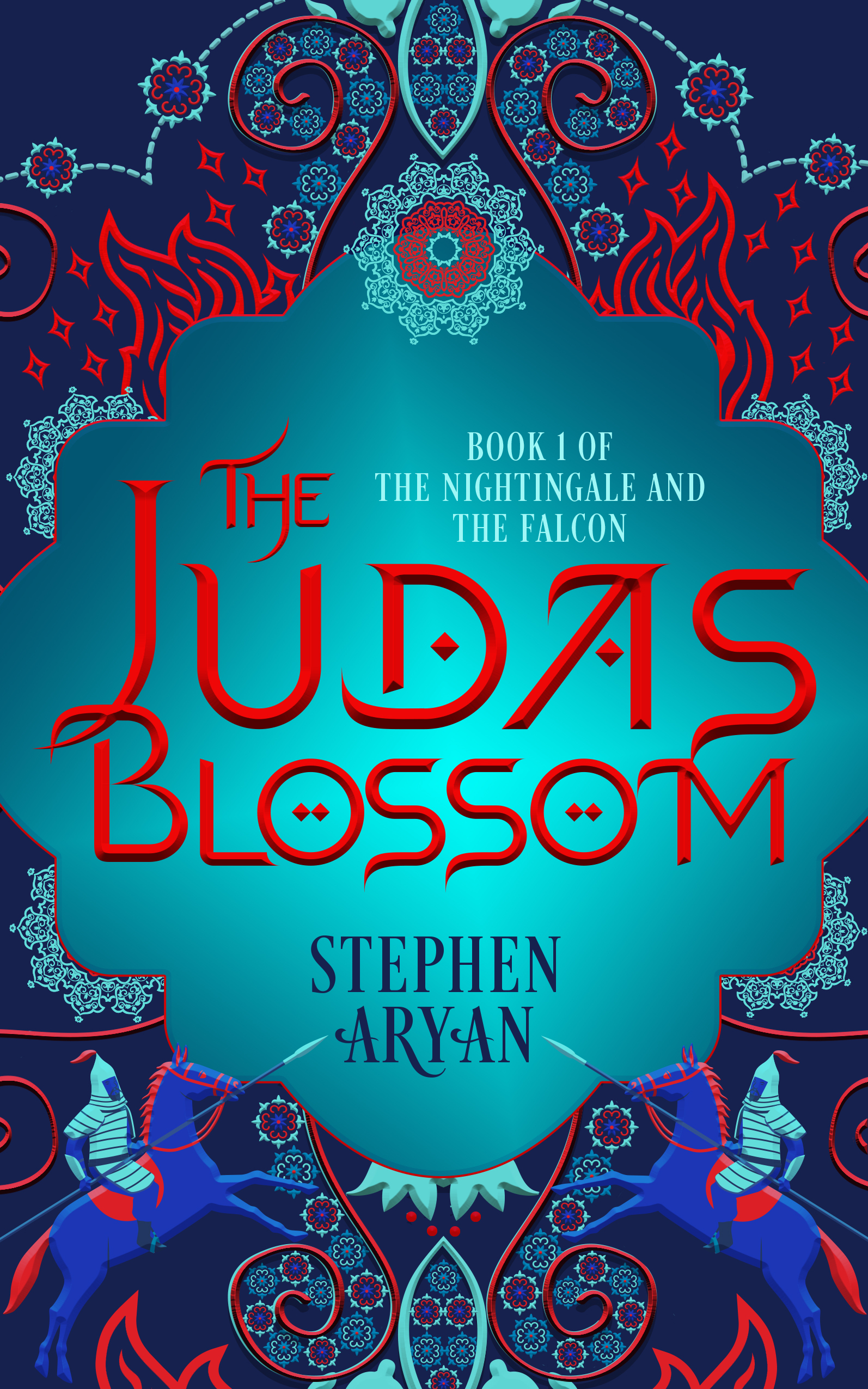
Book I of The Nightingale and the Falcon
1260, Persia:

Due to the efforts of the great Genghis Khan, the Mongol Empire covers a vast portion of the known world. In the shadow of his grandfather, Hulagu Khan, ruler of the Ilkhanate, is determined to create a single empire that covers the entire world. His method? Violence.

His youngest son, Temujin Khan, struggles to find his place in his father’s bloody rule. After another failure, Temujin is given one last chance to prove himself to Hulagu, who is sure there is a great warrior buried deep inside. But there’s something else rippling under the surface… something far more powerful and dangerous than they could ever imagine…

Reduced to the position of one of Hulagu’s many wives, the famed Blue Princess Kokochin is the last of her tribe. Alone and forgotten in a foreign land, Kokochin is unwilling to spend her days seeking out trivial pursuits. Seeking purpose, she finds herself wandering down a path that grants her more power than a wife of the Khan may be allowed.

Kaivon, the Persian rebel who despises the Mongols for the massacre of his people, thirsts for revenge. However, he knows alone he cannot destroy the empire. When given the opportunity to train under the tutelage of Hulagu, Kaivon must put aside his feelings and risk his life for a chance to destroy the empire that aims to conquer the world.

Family and war collide in this thrilling and bloody reimagining of the Mongol Empire’s invasion of Persia.

Stephen Aryan is the author of The Coward and The Warrior (the Quest for Heroes Duology), as well as the Age of Darkness and Age of Dread trilogies. His first novel, Battlemage, was a finalist for the David Gemmell Morningstar Award for best debut fantasy novel. It also won the inaugural Hellfest Inferno Award in France. He has previously written a comic book column and reviews for Tor.com. In addition, he has self-published and kickstarted his own comics.

You can find out more about Stephen and his books on his website: Stephen-Aryan.com

Continue reading “TBR Pile Review: The Judas Blossom, by Stephen Aryan”

My favourite Sci Fi and Fantasy 2024

Midwinter greetings.

The year isn’t over yet, so more might be added before 31st December.

TBR/L Pile books

Blog Tour Books

Non-fiction TBR/L

TBR Review: The Masquerades of Spring, by Ben Aaronovitch

Format: 182 pages, Hardcover
Published: September 5, 2024 by Orion Publishing Co
ISBN: 9781398723887 (ISBN10: 1398723886)

Description

New York City, New York.

Meet Augustus Berrycloth-Young – fop, flaneur, and Englishman abroad – as he chronicles the Jazz Age from his perch atop the city that never sleeps.

That is, until his old friend Thomas Nightingale arrives, pursuing a rather mysterious affair concerning an old saxophone – which will take Gussie from his warm bed, to the cold shores of Long Island, and down to the jazz clubs where music, magic, and madness haunt the shadows…

My Review

A fun novella set in jazz-age New York, with a queer cast and inter-racial love. Nightingale turns up unexpectedly, and Gussie must help him rescue a fae. Interrupting things in the US, and upsetting lots of politicians, businessmen and mobsters, and people of a magical persuasion, events culminate at a drag ball, with policemen amusingly debagged, and explosions on lonely roads.

Aaronovitch conjures the air of excitement and danger that pervades New York in the 1920s and 30s, as jazz clubs and bathtub gin fill the need for escape after the horrors of war, and chronicle a forgotten period of cultural explosion, particularly exemplified by the Harlem Renaissance, in which Black culture and Queer culture flourished, before being appropriated and repressed after the second world war. He also captures the culture of corruption in the city, from police shakedowns for personal gain to gang violence. I loved the inclusion of the drag ball. I’ve heard about them, and how popular they were, but I don’t think they’re particularly well known outside of people interested in Queer history.

Gussie and Lucy are adorable, and I was sure Beauregard is some species of fae, although he might just be a practitioner with connections. I hope Lucy, Gussie and the gang all have long and fun lives, although I think they’d be old before their relationship becomes legal.

I enjoyed the ‘Jeeves and Wooster’ tone of the narrative, and Gussie is a funny narrator. He’s self-deprecating and observant, and astute enough to know when and when not to be himself, even if he has a low opinion of his own intelligence. The references to golden age crime fiction made me laugh – especially when Gussie decides to be a detective for a minute.

Enjoyable novella that introduces new aspects of the Rivers of London universe. Highly recommended.

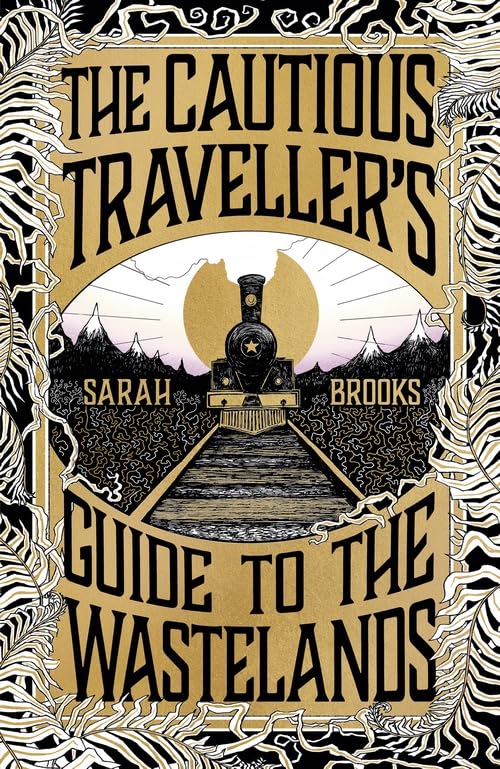
TBR Pile Review: The Cautious Traveller’s Guide to The Wastelands, by Sarah Brooks

Format: 384 pages, Hardcover
Published: June 20, 2024 by W&N
ISBN: 9781399607537

It is said there is a price that every passenger must pay. A price beyond the cost of a ticket.

It is the end of the 19th Century and the world is awash with marvels. But there is nothing so marvellous as the Wastelands: a terrain of terrible miracles that lies between Beijing and Moscow.

Nothing touches this abandoned wilderness except the Great Trans-Siberian Express: an impenetrable train built to carry cargo across continents, but which now transports anyone who dares to cross the shadowy Wastelands.

On to the platform steps a curious cast of characters: a grieving woman with a borrowed name, a famous child born on the train and a disgraced naturalist, all heading for the Great Exhibition in Moscow.

But the old rules are changing, and there are whispers that the train isn’t safe. As secrets and stories begin to unravel the passengers and crew must survive their journey through the Wastelands together, even as something uncontrollable seems to be breaking in . . .


My Review

I picked this book up at the ‘It’s Strange Up North’ event in June. Sarah Brooks is delightful, and signed this book for me. Actually, I think the books sold at that event were officially sold before publication date.
We have here a tale of a train that runs through the Siberian landscape from Beijing to Moscow, but a landscape transformed by some magical power. The land is utterly strange and bizarre creatures live there. It’s dangerous for humans to travel across the ‘Wasteland’, but trade demands that they must, so ‘the Company’ built a railway track and sends one train back and forth across it.

But the landscape is changing, it’s mimicking the the world that is intruding on it and eventually things go very wrong.

In this novel, set in 1899, we follow Marya, a young woman grieving the deaths of her parents, out to find the truth of the last crossing, and Weiwei, the child of the train – born on the train and raised by the crew – who also wants to know what happened. In the process of their separate investigations, they rouse the suspicions of the Company consultants, known as ‘Crows’.

As they seek answers they are changed, and the choices they, and their allies make – the Wasteland Girl, Elena, Alexei the engineer, Suzuki the Cartographer, and The Professor – bring changes to the whole world.

The action builds up as the train travels, there’s tension as they struggle with water shortages and mad English naturalists running off to get samples, while a Russian priest screams about blasphemy, and French aristocrats laze about. Someone has clearly been reading Agatha Christie.

This was something like Murder On The Orient Express, in that there’s a mystery to be solved – what happened on the last crossing? It’s also a historical fantasy of the late nineteenth century, with luxury carriages for the wealthy, crowded third class accommodation, steam trains, fantastical technology, and a landscape that is utterly strange but entrancing. The transformation of the train from a mechanical wonder to another kind of wonder, a terrifying, moving forest, luxuriant and free, a travelling Eden, is the central narrative, around which everything else is built, everything else is just the humans trying to understand it, understand their places in this new reality, and decide if they want to be a part of it or not.

It reminds me a bit of the magic used by Priya in Tasha Suri’s The Burning Kingdoms series. Except the magic isn’t controlled by anyone, the train and the landscape decides where it’s going.

The train and the landscape are intertwined, and the people realise they are intertwined with the landscape too, and the Walls are false promises of strength holding up ultimately weak Empires and greedy corporations.

How lovely! What a wonderous thought, a wonderous world it would be, if the old empires fell because a magical forest rose, rather than because we started murdering each other by the millions.

‘The Company’ is clearly modelled after the East India Companies of the 17th to 19th centuries (Dutch and British – both equally greedy and murderous, with their own armies), with a Victorian railway company thrown into the mix. If the East India Company hadn’t fallen apart by the 1850s, they might have got into trans-continental railways, I suppose, and the trans-Siberian train route has been around for about 100 years. It’s actually three or four connected routes, that started when the Russian Empire decided it would quite like to get to it’s furthest eastern reaches, near China, more easily. You can travel all the way from Moscow to Beijing, which would be fun, if you didn’t have to go to multiple dictatorships to do so. The train network made it easy for Russian troops to support China during the Japanese invasion in the 1940s, but also meant the Chinese and Russians could kill each other easily over bits of territory they both claimed in the 1910s.

I would call them silly buggers, but come on, we didn’t do much better. Empires are bad for everyone.

Anyway, I was quite enthralled by this book. I loved the lavish descriptions of the Wastelands and the way the train transformed. I found Marya and Weiwei, two very different people, to be sympathetic and engaging characters, and the narrative tightly constructed.

Enjoyable historical fantasy. Especially if you like trains. And magical, murderous landscapes.

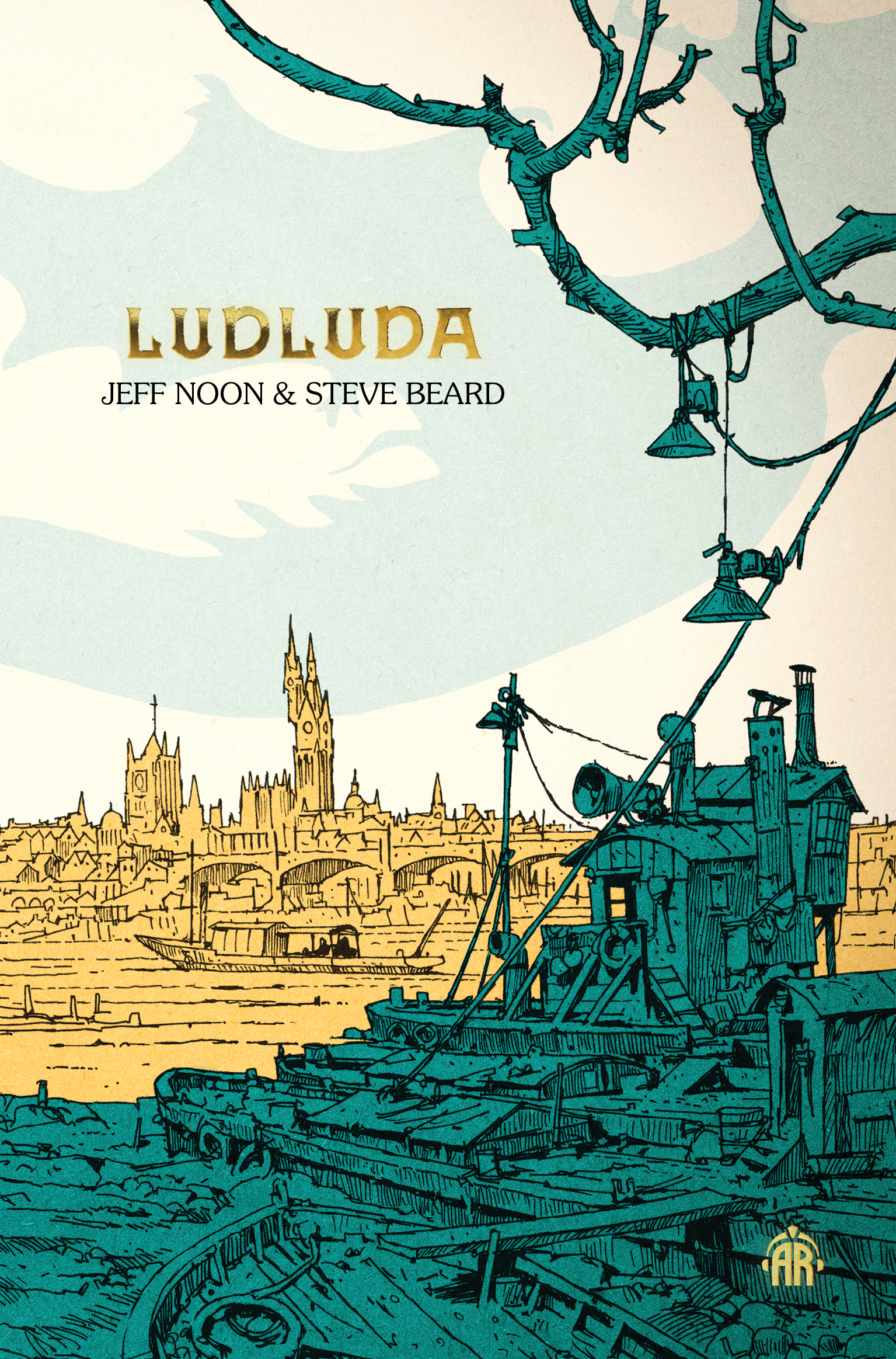
Review: Gogmagog, by Jeff Noon & Steve Beard


13th February 2024 | 9781915202826 | Paperback | £9.99 / $17.99 / $23.99

Gogmagog tells the story of an epic journey through the sixty-mile long ghost of a dragon.

Travel is by boat, a rickety steam launch captained by veteran taxi pilot Cady Meade, on the river Nysis. In her heyday Cady carried people and goods from the thriving seaports of the estuary into Ludwich, the capital city. Now she’s drunk, holed up in a rundown seaside resort, telling her bawdy tales for shots of rum. 

All that’s about to change, when two strangers seek her out, asking for transport, one of whom – a young girl – is very ill, and in great danger. The other, an artificial being of singular character, has secrets hidden inside his crystal skull. So begins the voyage of the Juniper.

The Nysis is unlike any other river. Mysteries unfold with each port of call. Not many can navigate these channels, not many know of its whirlpools and sandbanks, and of the ravenous creatures that lurk beneath the surface. 

Cady used to have the necessary knowledge, and the powers of spectral navigation. 

But her glory days are well behind her now. This might well be her final journey.

Continue reading “Review: Gogmagog, by Jeff Noon & Steve Beard”

TBR Pile Review: Civilisations, by Laurent Binet, translated by Sam Taylor

54345837. sy475
Hardcover, 352 pages
Published April 15th 2021 by Harvill Secker 
(first published August 14th 2019)
Original Title: Civilizations
ISBN: 1787302296 (ISBN13: 9781787302297)
Edition Language: English
Literary Awards: Grand prix du roman de l’Académie française (2019)

c.1000AD: Erik the Red’s daughter heads south from Greenland.
1492: Columbus does not discover America.
1531: the Incas invade Europe.

Freydis is the leader of a band of Viking warriors who get as far as Panama. Nobody knows what became of them…
Five hundred years later, Christopher Columbus is sailing for the Americas, dreaming of gold and conquest. Even when captured by Incas, his faith in his superiority and his mission is unshaken.

Thirty years after that, Atahualpa, the last Inca emperor, arrives in Europe. What does he find? The Spanish Inquisition, the Reformation, capitalism, the miracle of the printing press, endless warmongering between the ruling monarchies, and constant threat from the Turks.

But most of all, downtrodden populations ready for revolution. Fortunately, he has a recent guidebook to acquiring power – Machiavelli’s The Prince. It turns out he is very good at it. So, the stage is set for a Europe ruled by Incas and, when the Aztecs arrive on the scene, for a great war that will change history forever.

Civilisations is a wildly entertaining counterfactual story about the modern world, colonisation, empire-building and the eternal human quest for domination. It is an electrifying novel by one of Europe’s most exciting writers. 

Continue reading “TBR Pile Review: Civilisations, by Laurent Binet, translated by Sam Taylor”

Audiobook Review: The Jasmine Throne, by Tasha Suri, narrated by Shiromi Arserio

54818327. sx318
Audiobook
Published June 8th 2021 by Orbit
ISBN:154910487X (ISBN13: 9781549104879)
Series: Burning Kingdoms #1

Tasha Suri’s The Jasmine Throne begins the powerful Burning Kingdoms trilogy, in which two women–a long-imprisoned princess and a maidservant in possession of forbidden magic–come together to rewrite the fate of an empire.

Exiled by her despotic brother when he claimed their father’s kingdom, Malini spends her days trapped in the Hirana: an ancient, cliffside temple that was once the source of the magical deathless waters, but is now little more than a decaying ruin.

A servant in the regent’s household, Priya makes the treacherous climb to the Hirana every night to clean Malini’s chambers. She is happy to play the role of a drudge so long as it keeps anyone from discovering her ties to the temple and the dark secret of her past.

But when Malini bears witness to Priya’s true nature, their destinies become irrevocably tangled. One is a vengeful princess seeking to steal a throne. The other is a powerful priestess seeking to find her family. Together, they will set an empire ablaze.

Continue reading “Audiobook Review: The Jasmine Throne, by Tasha Suri, narrated by Shiromi Arserio”