Review: ‘Alexander At The World’s End’ by Tom Holt

image

Abacus 2000
This edition printed 2011

Originally published by Little, Brown and Company, 1999

This is one of the books I got from the library a couple if weeks ago. I’ve read a few of Tom Holt’s comic fantasy novels but I hadn’t known he’d also written historical novels. It was a pleasant surprise.

‘Alexander At The World’s End’ tells the tale of Euxenus son of Eutychides, who started life in Athens and ended up as governor if Alexandria-at-the-End-of-the-World, in Sogdiana (otherwise known as Iskander, 50 miles NE of Tashkent). When he was a youth his father arranged for him to be apprenticed to a philosopher so that he could learn a trade. Unfortunately he choose Diogenes, the Yapping Dog, the Cynic, the man who told Alexander the Great to get out of his light.

Under Diogenes’s tutelage Euxenus learnt Yapping Dog philosophy, and politics. He made a good living at it in Athens, the the assistance of an invisible snake in a jar. Unfortunately Phillip of Macedon is making a nuisance of himself, and Euxenus is one of the lucky, lucky ambassadors sent to Pella to discuss the matter. It went badly.

But not for Euxenus, who managed to make the acquaintence of young Prince Alexander while rounding up bees, gain Queen Olympias’s favour (her snake obsession came in handy for a change) and get a job tutoring the Prince and his Companions.

Completely ill equiped for such a position, Euxenus throws himself into his work with all his usual dedication until Philip decides to send Euxenus and a couple of thousand Illyrian mercenaries he no longer needs off to Olbia on the Black Sea to found a colony.

After many years and assorted adventures Euxenus returns to Athens and settles down on the old family farm. Time passes, Euxenus becoming the good farmer his family always assumed he’d never manage to be, until his once pupil, now king of the known world, sends a couple of soldiers for him.

Alexander needs a governor for his newest city, in Sogdiana, so Euxenus must once more go travelling, this time across Asia, because when Alexander wants something, Alexander gets. In his new home Euxenus once again tries to build the Perfect Society and write his History, which is very difficult for a man constantly looking the wrong way when important events are taking place.

Funny yet poignant, this novel explores the difference between who we really are, who we believe ourselves to be and how the world sees us. It’s really quite sadly beautiful. It’s also a grand history lesson and philosophy primer. Written with the deft touch of a great storyteller, gripping from first to last and full of detail, I would heartily recommend this novel.

Rose
Review of several e-books

I had a bit of a foray in to Amazon the other day and found several free e-books (thanks to the freebie page at  http://www.everythingbooksandauthors.com) and read them quite quickly. Most were short stories but one,‘Georgiana Darcy’s Diary’, is probably more of a novella. Since I took the time to read to them I thought I should probably review them.

Georgiana Darcy’s diary: Jane Austen’s Pride and Prejudice Continued

Anna Elliott, with illustrations by Laura Masselos

2011

Wilton Press

It’s 1814 and the war with Napoleon is coming to an end, Elizabeth and Darcy have been married a year, Georgiana is 18 years old and still living at Pemberley with them, and their Aunt De Bourgh has organised a house party. She’s trying to marry Georgiana off too some suitable gentleman.

Georgiana feels the need to start writing a diary again, and starts writing about her life. Sick of the fawning fortune hunters, Georgiana is in love with her cousin Colonel Fitzwilliam. Unfortunately rumour tells her he is engaged to someone else, and when he returns to Pemberley to recover from a wound taken at Toulouse she is determined not to give in to her feelings.

‘It is a truth universally acknowledged that a young lady of rank and property will have packs of money- or land-hungry suitors yapping around her heels like hounds after a fox.

In the interests of not giving the whole plot away, all I’ll say is the denouement of the storyline is fairly obvious. I mostly liked the story but was slightly unsatisfied by it. I would be interested to read the other two books in this Pride and Prejudice Chronicles, Pemberley to Waterloo, and Kitty Bennet’s Diary.

3/5


Cait the Cat Burglar (55 Portobello Road)

Christine London

2013


Cait is a waitress, stranded in London as she tries to earn money to send home to her sick mother and sister in America. Bribed and threatened in to becoming a thief by the sinister Rothwell, Cait tries to steal the work of an Australian musician. The first time she fails miserably. There were croquet hoops involved.

At work the next day her target comes in for a meal and Cait finds herself questioning her resolve.


This short story is entertaining, although I found it a little too soppy for my taste and too much ‘fairy-tale ending’. I’m not sure I’d bother to read the series of books that this short story is a part of.

2/5


How to talk to girls at parties, A short story

Neil Gaiman

2006

Headline

Originally published 2006 and republished as an e-book 2013 with an exclusive first chapter from Neil Gaiman’s new book, ‘The ocean at the end of the lane’, due out mid-June. Vic and Enn are going to a party Vic heard about from his friend Alison, unfortunately they end up at entirely wrong party with interesting consequences. It’s a fun little story, but then I like Neil Gaiman’s work, having read a couple of his books. He’s a truly original writer.

4/5


A Little Bit of Everything for Dummies 20th Anniversary Edition

John Wiley & Sons, Inc

2011

This book is exactly what it says on the cover, a sample of their published work since the first …For Dummies book in 1991. Covering everything from Windows 7 to Puppies to Sex, this book is an interesting one to flip through.

3/5


And that’s the lot for now.

Bye,

Rose


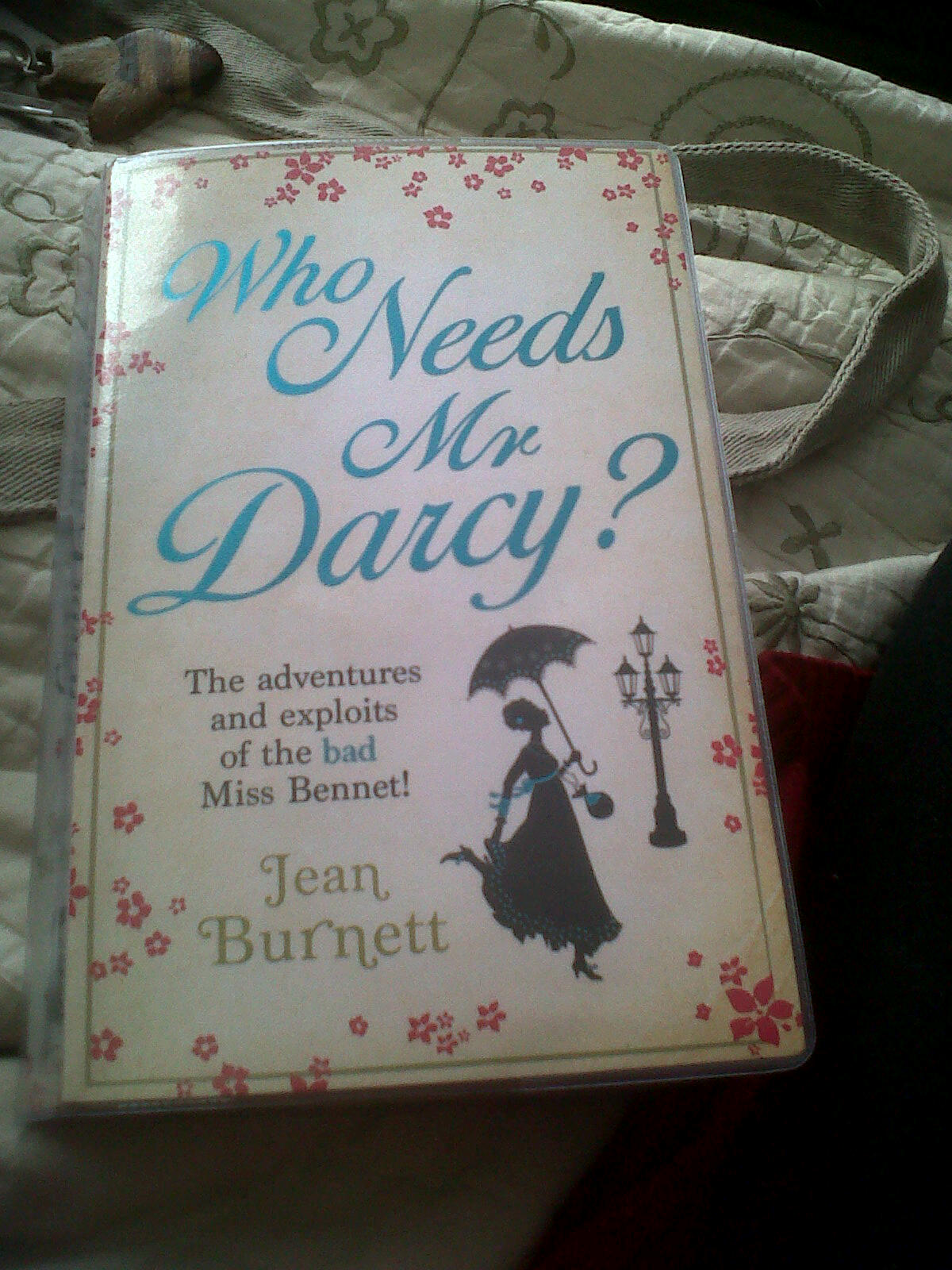
Review: ‘Who Needs Mr Darcy?’

Jean Burnett

2012

Sphere (Little Brown Book Group)

Opening at Pemberley in September 1815 and concluding aboard a ship to Brazil in 1818, this novel follows ‘The adventures and exploits of the bad Miss Bennet’. Lydia Wickham, married three years and widowed at Waterloo, when her husband had the decency to die in battle (although not as heroically as Lydia was telling people), is at a loose end. Currently in residence at Pemberley, living as a dependant of her humourless brother-in-law Darcy and her sister Lizzy, Lydia dreams of escape, of London, Paris and Lord Byron, of making her fortune by marriage to a rich man and dancing among the fashionable world at Almack’s. She has become her husband’s mirror image. Darcy wants rid of her, and Lydia is eager to be got rid of, provided she can have an allowance from her relatives and the freedom to do whatever she wants.

By subterfuge Lydia gets her way and travels to London to stay with the impecunious and immoral Selena and Miles Caruthers, friends from her days as an army wife. On the way she is robbed by a handsome highwayman, in London she plays with marked cards and becomes involved with a banker. Travelling to Brighton she meets the Prince Regent, becomes involved in a murder and robbery, and is kidnapped by her highwayman

Eventually Lydia finds her way to the no longer fashionable Bath, as her banker is arrested and she acquires a new admirer. Plans are made for Paris, but first she must go to Pemberley. Here a letter arrives from Longbourne; Kitty, who Lydia has kept informed of all her adventures, has had an attack of conscience and drops Lydia in it up to her neck. Sent away to be a companion to a rich, elderly widow (it was that or the asylum, suitable husbands not being forthcoming) in Bath, Lydia despairs.

Until she hatches a plan and her employer is persuaded to end her retired life and go to the Continent. Lydia is ecstatic and finally gets to see Paris and Venice. But her past catches up with her and she is forced to work for the British Government in a delicate matter.

This Lydia is has learnt no restraint, no humility or respectability. She is as immodest, reckless and ignorant as would be expected from the youngest Bennet girl. She blames all her misfortunes on others and takes no responsibility for her actions. She sees her family as interfering, disapproving and spiteful.

She is not an endearing character at all, and the plot has too much gothic extravagance about it to be very enjoyable, and yet I raced through this novel. More could have been made of the royal intrigue, financial scandal and international politics, which are the main drivers of the plot and which effect Lydia’s fate the most, but the story, like it’s narrator is rather shallow. Leaving Lydia and her criminal beau aboard ship and bound for Brazil clearly leaves the way open for a sequel should the author choose to pen one.

I think this would have been a fun book, in the mould of Regency romances, if the main character had been an original rather than a pale attempt at writing Lydia Bennet. Jean Burnett simply does not write Lydia Bennet as well as Jane Austen drew her two hundred years ago. The character is a flat caricature. It’s enjoyable enough I suppose but I wouldn’t go out and buy it. That’s what the library is for.

And that is all I have to say on the subject.

Bye,

Rose

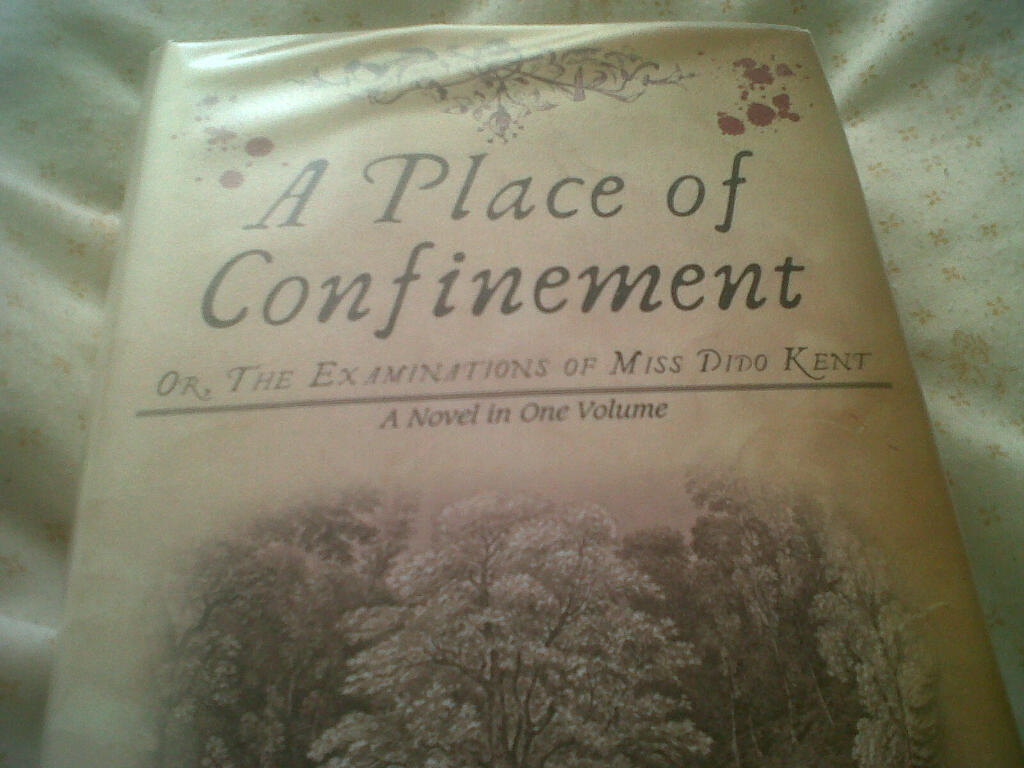
Review: A Place of Confinement by Miss Anna Dean

A Place of Confinement or, The examinations of Miss Dido Kent

By Miss Anna Dean

Allison and Busby
2012

The forth book in The Dido Kent Series finds Dido, the 36 year old spinster, sent off to be companion to her Aunt Manners, for the crime of refusing to marry a widowed rector and his pew and a half of children. Aunt Manners is very wealthy and her nieces and nephews are desperate for her good will.

Arriving at Mrs. Manners family home, Charcombe Manor, they find that another guest, the wealthy Miss Verney, has disappeared. Mr Tom Lomax, an acquaintance of Dido’s is considered the guilty party but swears he is not. For the sake of his father, Mr Lomax, a dear friend who would be more if he could persuade Dido to it, she undertakes to investigate the matter. When a man is murdered it becomes imperative that the truth is known, for more that Tom Lomax’s life is in the balance.

Everyone has their secrets and Miss Dido Kent will know them, in the pursuit of truth and justice, and to find the missing young lady. What emerges from the investigations of the active, intelligent and argumentative Miss Kent, will upset all around her, dig up a secret thirty years forgotten, bring a proposal and an engagement and a massive reconsideration of the characters of those Dido believes she knows well.

I do like the Dido Kent books. She is an engaging, intelligent character who has flaws and admits to them. She is aware of her lack of ‘femininity’ and her lack of freedom in her position as a dependant sister; she is ashamed of being a pawn in her sister-in-laws manoeuvres to gain a fortune but independent enough not to be bullied in to a loveless marriage by her.

Anna Dean is an amusing writer, her plots are well constructed and characters believable. Her understanding of human nature is exquisite, as is her understanding of the structure of a good regency novel and how to mess with it. I do like a good mystery, and a regency novel. So, of course I like this book. And I sympathise with Dido; no one likes being a poor, dependant middle-aged spinster, now or 200 years ago.

Bye for now,

Rose

‘Sense and Sensibility’, or, Jane Austen has a wicked sense of humour

I’ve just finished reading ‘Sense and Sensibility’ for the first time in about 15 years. It struck me as I finished reading it how funny Jane Austen was. I’d heard that her letters to her sister Cassandra were full of wit, but I didn’t know how witty she was until I read the last few pages of the book. Her closing paragraphs discussing the ‘happiness’ of Mr and Mrs John Dashwood, Mr and Mrs Robert Ferrers and Mrs Ferrers struck me especially. She could have said the same things more bluntly but the eloquence and wry tone only added to the reader’s impression that they all ended less than happily.

I’ve read many of Austen’s novels, but most of them I haven’t read in a very long time. Going back to them I have found humour that I missed in the past, either because I was too young to understand the joke when I last read them or because I read them too quickly and didn’t pay enough attention. There are many good reasons to re-read books one has only read in youth, or where a number of years has passed. New appreciation of the same words, coloured by greater age and experience, and finding a new perspective on the same, is one of the best. Along with, ‘I like that book, so I’m reading it again’.

That being said, sometimes it is disappointing to go back to a book much loved as a teenager and realise that it’s shallow or badly written. The image it throws upon your younger self, in choosing to read something like that, can be painful.

Best be off, things to do and all that,

Rose

Review: The Falcons of Fire and Ice by Karen Maitland

I finally finished reading this book a few days ago, and then eventually managed to get a decent internet connection, so at last I can post this review.

‘The Falcons of Fire and Ice’ interweaves the lives of a cast of Icelandic and Portuguese characters in a supernatural adventure.

Isabela must save her father from the machinations of the Inquisition, or risk losing everything. After the king’s prized gyrfalcons are discovered dead she is given a year and a day to replace them. She must travel to Iceland alone.

Cruz is a crook, but the Inquisition have a job for him, a job he can not refuse. He must prevent Isabela from acquiring the falcons. She must die or he will.

Eyedis and Valdis are twins condemned to life chained in a cave, dispensing healing and advice to the people of Iceland. Eyedis must help Isabela find her gyrfalcons, but she needs Isabela’s help in return – to defeat the spirit lurking in Valdis.

Set in a time of religious upheaval and intolerance, the live of these people are inextricably linked. They must defeat monsters out of myth, human monstrosity and save hundreds of innocent lives. But the mountains are stirring and time is running out.


It took me a while to get in to this book, but once the characters make it to Iceland the momentum builds and it becomes a thoroughly enjoyable adventure though early modern Europe. The glossary at the end is also very interesting, and helps to fill in any gaps in understanding that exist.