BLURB Welcome to the world of the forensic psychologist, where the people you meet are wildly unpredictable and often frightening.
The job: to delve into the psyche of convicted men and women to try to understand what lies behind their often brutal actions.
Follow in the footsteps of Kerry Daynes, one of the most sought-after forensic psychologists in the business and consultant on major police investigations.
Kerry’s job has taken her to the cells of maximum-security prisons, police interview rooms, the wards of secure hospitals and the witness box of the court room.
Her work has helped solve a cold case, convict the guilty and prevent a vicious attack.
Spending every moment of your life staring into the darker side of life comes with a price. Kerry’s frank memoir gives an unforgettable insight into the personal and professional dangers in store for a female psychologist working with some of the most disturbing men and women.
I have so many Pen & Sword books to review (because they keep releasing so many that I want to read!) that I’m doing multiple reviews in a single post. Today I’m writing reviews for the true crime books I’ve read recently.
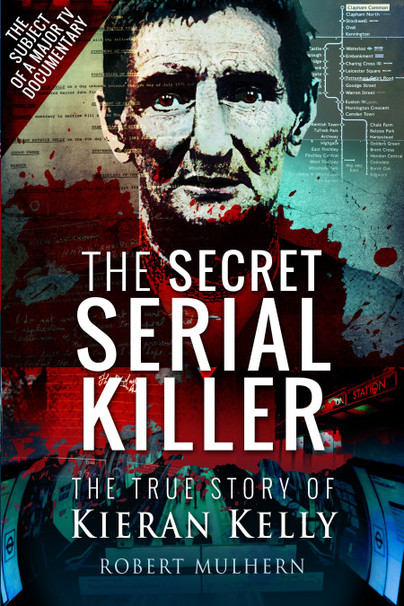
On the evening of 21 August 1983, Metropolitan Police detectives raced to the cells of London’s Clapham Police Station to find a prisoner dead and his cellmate sat cross-legged and quiet in the corner.
Kieran Kelly, a labourer from Ireland, quickly confessed to strangling the prisoner – and then stunned officers by confessing to dozens of unreported and unsolved murders over the previous 30 years.
Detectives believed they were in the presence of Britain’s most prolific serial killer yet Kelly was convicted on just two of his admissions and his story went unnoticed until 2015, when a former police officer who worked on the case claimed the killer’s crimes were covered up by the British Government.
Strangulations, murders on the London Underground, an internal Metropolitan Police review – as the story’s elements whipped the international news media into a frenzy, journalist Robert Mulhern set off on a methodical search for the truth against the backdrop of an ever-increasing body count.
I had not heard of this case before, and I was intrigued because I thought I’d heard of most of the major serial killers in Britain in the last fifty years, There has been a lot of speculation and sensationalisation about Kieran Kelly, much of it encouraged by former Police Officer Geoff Platt, alleging that Kieran Kelly had murdered 31 people, 12 on the tube. He wrote a couple of books about it and apparently does cruises. He also says the crimes were covered up by the government for some reason.
Robert Mulhern does an excellent job of chasing down as much of the truth as possible after so long. The only certainty is that Kelly killed his cell-mate William Boyd in August 1983 and Hector Fisher on Clapham Common in 1975. He may have also killed five or six other homeless people, but the police weren’t able to prove anything and his own solicitor called Kelly a ‘fantasist’.
As much an investigation in to the life of Kieran Kelly and an investigation into the claims that were making headlines and their author. Mulhern travels from London to Ireland and back, trying to check the details and speaking to people who knew Kelly as Ken.
Mulhern spoke to a lot of other people, including more police officers involved with the Kelly case in 1983/1984, and Geoff Platt himself. Among those Mulhern spoke to was ‘Officer A’, who had access to a lot of the paperwork and the new Inquiry, and retired D.I., Ian Brown, a detective on the Boyd case, who objects to being called a liar.
The evidence suggests Kelly murdered five or six homeless people during drunken rages, but had nothing to do with any deaths on the Underground. It also suggests that Platt is making hay from his minor part in an unusual case of murder in a police station. There’s some really good investigative work in this book, with multiple interviews from the people who were there.
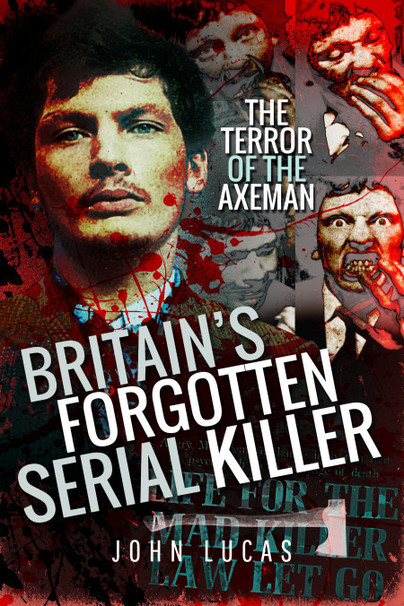
Serial killer Patrick Mackay was dubbed the most dangerous man in Britain when he appeared in court in 1975 charged with three killings, including the axe murder of a priest. The Nazi-obsessed alcoholic had stalked the upmarket streets of West London hunting for victims and was suspected of at least eight further murders.
Now, after more than 40 years behind bars, where he has shunned publicity, Mackay has been allowed to change his name and win the right to live in an open prison – bringing him one step closer to freedom. For the first time, Britain’s Forgotten Serial Killer reveals the full, untold story of Patrick Mackay and the many still-unsolved murders linked to his case. https://www.pen-and-sword.co.uk/Britains-Forgotten-Serial-Killer/p/16439
My Review
Patrick Mackay is a bit of a sad sack, who took out his own insecurities first on his mother and sisters, and then on local kids, before moving on to murder people who tried to help him. Usually elderly women. I’ve heard about him before so I couldn’t understand the title of this book. And then I got to the last chapter.
Patrick Mackay’s crimes were sensational at the time – priests found hacked to death in their baths will cause a fuss – but over the years he’s been forgotten. Murderers with higher body counts have pushed him into the background. He’s changed his name and now lives in an open prison. Brady or Sutcliffe would never have been allowed to do that.
The author sets out a biography of Patrick Mackay and his potential involvement in other unsolved crimes that match the crimes he was convicted for. If you’ve never heard of this particular serial killer, this book is a good place to start.
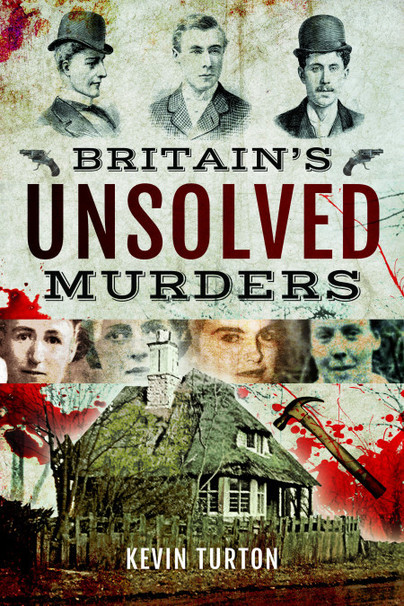
Britain has its fair share of unsolved murders. Crimes that have both fascinated and horrified in equal measure, with many as baffling today as they were when the stories first hit the headlines in the national press. Spanning 100 years between 1857-1957, this book re-examines thirteen of these murder cases and retells the stories that have endured and confounded both police and law courts alike. Each chapter provides an account of the circumstances surrounding the killing, of the people caught up in the subsequent investigation and the impact it had on some of their lives. It also explores the question of guilt and to whom it should, or should not, be attached. Each of these murders poses an undeniable truth; no-one was ever proven to have committed the killing despite, in some cases, accusing fingers being pointed, arrests being made and show trials taking place. Consequently, notoriety, deserved or otherwise, was often attached to both victim and accused. But was it ever merited?
From the questionable court case surrounding Scotland’s now famous Madeleine Smith, and the failed police investigation into Bradford’s Jack the Ripper case of 1888, to the mysterious deaths of Caroline Luard and Florence Nightingale Shore at the start of the twentieth century, this book disturbs the dust, sifts the facts and poses the questions that mattered at the time of each murder. Did Harold Greenwood poison his wife in Kidwelly? Who was responsible for the Ripper-like killing of Emily Dimmock and Rose Harsent? Why did Evelyn Foster die on the moor near Otterburn in what became known as the Blazing car murder and who strangled Ann Noblett to death in 1957?
This book covers thirteen murders from 1857 – 1957, some quite well-known and some less so. The author gives the details then discusses the possible killers, as far as he is able to after so long. Each chapter is detailed and the photographs and images provided are helpful. It’s a fairly easy to read book that you can pick up to read a chapter or two then go back to later.
A good place to start if you’re interested in unsolved murders.
Throughout our islands’ history we find tales of thieves, smugglers, thugs and murderers. Books have been written retelling tales of bandits, footpads, highwaymen, et al, attacking the lone traveller, the horseman, the coachman, shipping line, locomotive engineer, lorry or van driver and even pilot. Yet for almost two centuries the majority of goods travelled on Britain’s famed canal network. This also attracted felons of all kinds and yet many of these tales had been ignored, until now.
Within these pages all manner of crimes are covered. From murders to muggings, parental problems to pilfering, arson, assault, smugglers, counterfeiters and even road rage (albeit canal-style). But it is not all morbidity and misery, humour also plays a significant part in these tales. Why would a hungry man steal the inedible? Follow the policeman on foot chasing down a thief on board the narrowboat. Discover what really lies beneath the waters of the canal. Learn about canal etiquette, the hardships, the kindness and the cruelty.
From an author whose fascination with etymology has produced many books on origins of place names, leading to an interest in the historical modes of travel across our islands, this book is the latest to follow old routes and those found along them. https://www.pen-and-sword.co.uk/Crime-on-the-Canals-Paperback/p/16206
My Review
Well, this one was different. Since the network of canals around England were first dug in the early years of the Industrial Revolution to the modern use of them for pleasure, crime has taken place. Murder, mugging, coal theft.
I found this book sludgy going at times, although at others it was really fascinating.
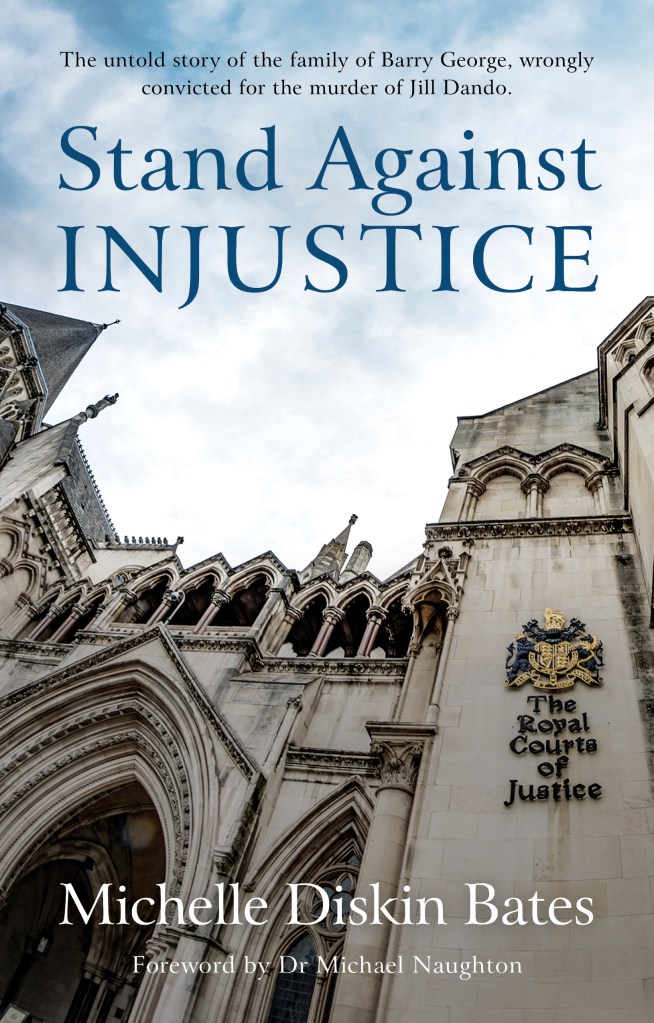
On April 26, 1999, BBC TV presenter Jill Dando was murdered outside her home in London. Barry George was convicted and imprisoned for the murder but was later acquitted after an appeal and retrial. Stand Against Injustice is the powerful memoir of the sister of Barry George. For the first time, Michelle Diskin Bates tells her story, the human side and truth behind one of recent history’s most high profile and damaging miscarriages of justice whose life is inextricably interwoven in the drama, the trauma, the conspiracy and the fight for justice. A self-confessed ‘ordinary housewife’, Michelle’s voice weaves the personal everyday struggles that bring depth, color, and passion into what is an extraordinary account. A troubled childhood weighted with overbearing responsibility, fear and insecurity, depression, and the challenges of marriage and adult relationships, Michelle’s life has never been easy. However, the one constant in her life – her faith in God – underpins and provides the foundation upon which she now stands – against injustice.
Thanks to Rosie Crofts, who emails me with lists of books every now and then. I have quite a pile of books to get through so I’m doing themed review posts. In this case, Women’s History. The next one will be ‘True Crime’.
Publisher: John Blake Publication Date: 8th February 2018 ISBN-13: 978-1786061218
Blurb
When you think of serial killers throughout history, the names that come to mind are ones like Jack the Ripper and Ted Bundy. But what about Tillie Klimek, Moulay Hassan, Kate Bender? The narrative we’re comfortable with is the one where women are the victims of violent crime, not the perpetrators. In fact, serial killers are thought to be so universally, overwhelmingly male that in 1998, FBI profiler Roy Hazelwood infamously declared in a homicide conference, ‘There are no female serial killers’.
Lady Killers, based on the popular online series that appeared on Jezebel and The Hairpin, disputes that claim and offers fourteen gruesome examples as evidence. Though largely forgotten by history, female serial killers such as Erzsebet Bathory, Nannie Doss, Mary Ann Cotton, and Darya Nikolayevna Saltykova rival their male counterparts in cunning, cruelty, and appetite for destruction.
Each chapter explores the crimes and history of a different subject, and then proceeds to unpack her legacy and her portrayal in the media, as well as the stereotypes and sexist cliches that inevitably surround her. The first book to examine female serial killers through a feminist lens with a witty and dryly humorous tone, Lady Killers dismisses easy explanations (she was hormonal, she did it for love, a man made her do it) and tired tropes (she was a femme fatale, a black widow, a witch), delving into the complex reality of female aggression and predation. Featuring 14 illustrations from Dame Darcy, Lady Killers is a bloodcurdling, insightful, and irresistible journey into the heart of darkness.
I haven’t been feeling great so my reviews are a bit behind. I have a stack of books next to my laptop that I need to tell you all about. I’ve got three Pen & Sword books for you and an indie about comic book history.
Published By: Pen & Sword Publication Date: 4th October 2018 Format: Hardback I.S.B.N.: 9781526731241 Price: £1999
Blurb
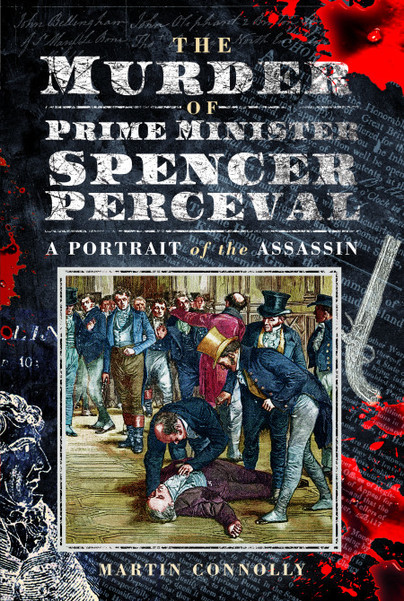
England entered the nineteenth century having lost the American states and was at war with France. The slave trade had been halted and the country was in torment, with industrialisation throwing men and women out of work as poverty haunted their lives. As the merchants of England and America saw their businesses stagnate and profits plummet, everyone blamed the government and its policies. Those in charge were alarmed and businessmen, who were believed to be exploiting the poor, were murdered. Assassination indeed stalked the streets.
The man at the centre of the storm was Prime Minister Spencer Perceval. From the higher reaches of society to the beggar looking for bread, many wanted him dead, due to policies brought about by his inflexible religious convictions and his belief that he was appointed by God. In May 1812 he entered the Lobby of the Houses of Parliament when a man stepped forward and fired a pistol at him. The lead ball entered into his heart. Within minutes he was dead.
Using freshly-discovered archive material, this book explores the assassin’s thoughts and actions through his own writings. Using his background in psychology, the author explores the question of the killer’s sanity and the fairness of his subsequent trial.
Within its pages the reader will find an account of the murder of Spencer Perceval and a well-developed portrait of his assassin.
Honest! I’m not doing anymore this year. I’ve been ill, there’s been a lot of reading time. I’ve been making progress through my Pen & Sword collection.
Published By: Pen & Sword Publication Date: 7th November 2018 Format: Hardback ISBN: 9781526731654 Price: £15.99 Link
Blurb
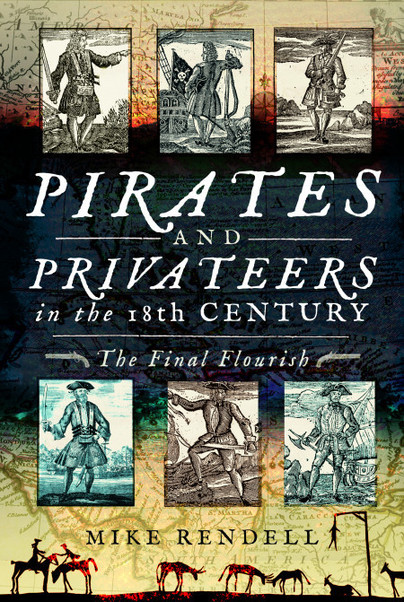
Pirates and Privateers tells the fascinating story of the buccaneers who were the scourge of merchants in the 18th Century. It examines their lifestyle, looking at how the sinking of the Spanish treasure fleet in a storm off the coast of Florida led to a pirate’s gold rush; how the King’s Pardon was a desperate gamble – which paid off – and considers the role of individual island governors, such as Woodes Rogers in the Bahamas, in bringing piracy under control.
The book also looks at how piracy has been a popular topic in print, plays, songs and now films, making thieves and murderers into swash-buckling heroes. It also considers the whole question of buried treasure – and gives a lively account of many of the pirates who dominated the so-called ‘Golden Age’ of Piracy.
My Review
A very good introduction to the subject, concentrating on the era known as the ‘Golden Age’ of piracy, and while the author notes that piracy is still with us and is the result of systemic inequalities, he doesn’t discuss modern piracy – that is outside the scope of the book. The chapters cover the general history of piracy, biographies of various pirates and colonial officials who sought to deal with them, and the ‘pirate’ sub-genre of crime literature and it’s later developments in novels and other popular culture such as plays and films.
The book was very easy to read, the author writes sympathetically but is realistic about the nature of piracy – not heroes but thieves, rapists and murderers – and explores the myths surrounding pirates and their treasures with a keen eye for poppycock. The book explores only a tiny fragment of the subject, but it is a good starting place for further research.
BPublished By: Pen & Sword Publication Date: 19th November 2018 Format: Hardback ISBN: 9781473872516 Price: £15.99 Link
Blurb
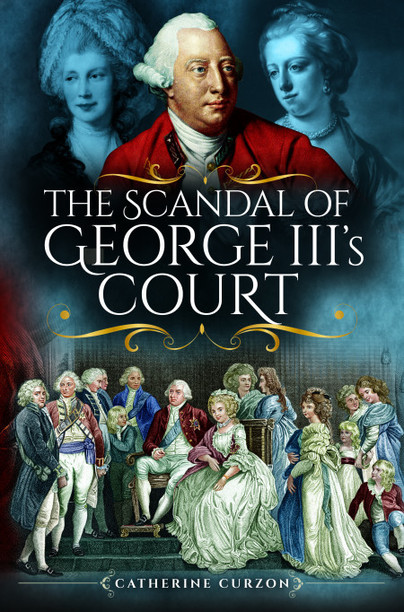
From Windsor to Weymouth, the shadow of scandal was never too far from the walls of the House of Hanover. Did a fearsome duke really commit murder or a royal mistress sell commissions to the highest bidders, and what was the truth behind George III’s supposed secret marriage to a pretty Quaker?
With everything from illegitimate children to illegal marriages, dead valets and equerries sneaking about the palace by candlelight, these eyebrow-raising tales from the reign of George III prove that the highest of births is no guarantee of good behaviour. Prepare to meet some shocking ladies, some shameless gentlemen and some politicians who really should know better.
So tighten your stays, hoist up your breeches and prepare for a gallop through some of the most shocking royal scandals from the court of George III’s court. You’ll never look at a king in the same way again…
My Review
What a family! I’d be so embarrassed if I was directly related to them. An overbearing matriarch and patriarch, daughters confined to the palace, sons and brothers making ‘unsuitable’ marriages, girlfriends and illegitimate children here there and everywhere, the odd murder. Sounds like most families. Except this one had money and power to back up their behaviour and silence people. And they were the centre of press focus for decades. And what fun the press had with them…
I sat and read this book yesterday after I’d finished reading about pirates. Sometimes a bit of gossip is fun, especially when those concerned have been dead for two centuries. It was fun, amusing. Curzon’s jaunty writing style lends itself to the subject and it’s obvious that the eighteenth century is her passion. She writes sympathetically and makes evenhanded judgements on the truth or otherwise of the rumours and scandal. She uses contemporary sources, later literature and current scholarship to provide a rounded picture of events and the people involved.
This book is a an accessible, fun, introduction to the period and people of George III’s court.
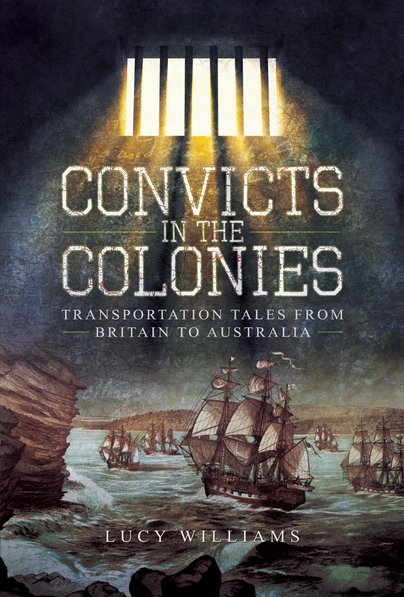
In the eighty years between 1787 and 1868 more than 160,000 men, women and children convicted of everything from picking pockets to murder were sentenced to be transported ‘beyond the seas’. These convicts were destined to serve out their sentences in the empire’s most remote colony: Australia. Through vivid real-life case studies and famous tales of the exceptional and extraordinary, Convicts in the Colonies narrates the history of convict transportation to Australia – from the first to the final fleet.
Using the latest original research, Convicts in the Colonies reveals a fascinating century-long history of British convicts unlike any other. Covering everything from crime and sentencing in Britain and the perilous voyage to Australia, to life in each of the three main penal colonies – New South Wales, Van Diemen’s Land, and Western Australia – this book charts the lives and experiences of the men and women who crossed the world and underwent one of the most extraordinary punishment in history.
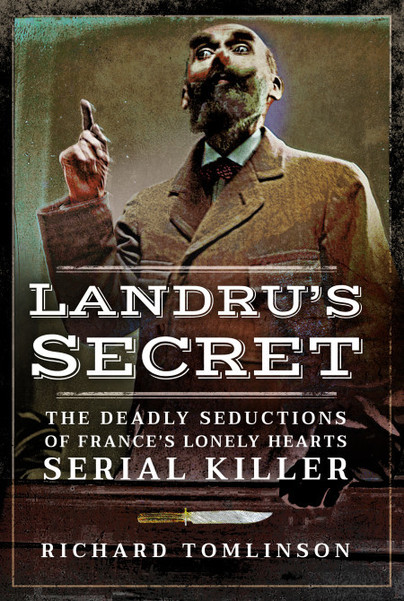
On 12 April 1919, the Paris police arrested a bald, short, 50-year-old swindler at his apartment near the Gare du Nord, acting on a lead from a humble housemaid. A century later, Henri Désiré Landru remains the most notorious and enigmatic serial killer in French criminal history, a riddle at the heart of an unsolved murder puzzle.
The official version of Landru’s lethal rampage was so shocking that it almost defied belief. According to the authorities, Landru had made “romantic contact” with 283 women during the First World War, luring ten of them to his country houses outside Paris where he killed them for their money.
Yet no bodies were ever found, while Landru obdurately protested his innocence. “It is for you to prove the deeds of which I am accused,” he sneered at the investigating magistrate.
The true story of l’affaire Landru, buried in the Paris police archives for the past century, was altogether more disturbing. In Landru’s Secret, Richard Tomlinson draws on more than 5,000 pages of original case documents, including witness statements, police reports and private correspondence, to reveal for the first time that:
Landru killed more women than the 10 victims on the charge sheet.
The police failed to trace at least 72 of the women he contacted.
The authorities ignored the key victim who explained why the killings began.
Landru did not kill for money, but to revel in his power over what he called the “feeble sex”.
Lavishly illustrated with previous unpublished photographs, Landru’s Secret is a story for our times: a female revengers’ tragedy starring the mothers and sisters of the missing fiancées, a lethal misogynist and France’s greatest defence lawyer, intent on saving his repulsive client from the guillotine.




 Published By: Pen & Sword
 Everything Is Better With Dragons