Sex and Sexuality in Medieval England allows the reader a peek beneath the bedsheets of our medieval ancestors, in an informative and fascinating look at sex and sexuality in England from 1250 to 1450. It examines the prevailing attitudes towards male and female sexual behaviour, and the ways in which these attitudes were often determined by those in positions of power and authority. It also explores our ancestors’ ingenious, surprising, bizarre and often entertaining solutions to the challenges associated with maintaining a healthy sex life. This book will look at marriage, pre-marital sex, adultery and fornication, pregnancy and fertility, illegitimacy, prostitution, consent, same-sex relationships, gender roles and much more, to shed new light on the private lives of our medieval predecessors.
My Review
Meh. Felt like more of a gazetteer of examples rather than an exploration of “marriage, pre-marital sex, adultery and fornication, pregnancy and fertility, illegitimacy, prostitution, consent, same-sex relationships, gender roles”.
The author covers sex and sexuality across the whole medieval period. This is a thousand years. Most of the examples are from the latter half of the period, as that’s what survives, and the author draws on academic work by modern researchers. While there are some interesting snippets of information, you can probably learn more from the ‘Betwixt the Sheets’ podcast.
I have books on similar subjects from Pen & Sword, that are either really well organised and explore the subject in detail, or they are more of the gazetteer type with a bit of discussion around lists of people who did things or got arrested for things. It’s repetitive and unhelpful. This is what really frustrates me about Pen & Sword books, they’re either really quite amateur or really professional, with very little in between.
Format: 342 pages, Paperback Published: March 21, 2019 by Two Roads ISBN: 9781473661233 (ISBN10: 1473661234)
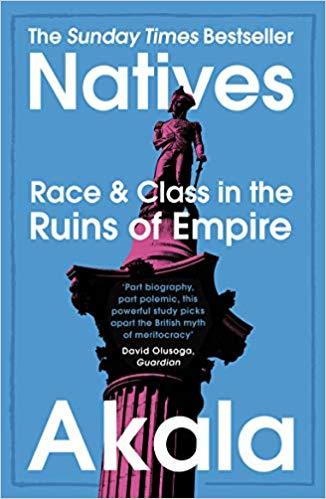
From the first time he was stopped and searched as a child, to the day he realised his mum was white, to his first encounters with racist teachers – race and class have shaped Akala’s life and outlook. In this unique book he takes his own experiences and widens them out to look at the social, historical and political factors that have left us where we are today.
Covering everything from the police, education and identity to politics, sexual objectification and the far right, Nativesspeaks directly to British denial and squeamishness when it comes to confronting issues of race and class that are at the heart of the legacy of Britain’s racialised empire.
Natives is the searing modern polemic and Sunday Times bestseller from the BAFTA and MOBO award-winning musician and political commentator, Akala.
By Julie Cook Imprint: Pen & Sword History Pages: 184 Illustrations: 32 black and white illustrations ISBN: 9781399003414 Published: 10th October 2022 £14.00
Description
A History of Girl Guides and Girl Scouts: Brownies, Rainbows and WAGGGS charts the evolution of the Girl Guides and Girl Scouts from its early days as a movement started before WW1 right through to the modern day. With real life interviews with Girl Guides and Girl Scouts from their 90s down to young children, this book looks at what being a Girl Guide has meant through the ages up to the present day. With dramatic and often emotional stories of what it was like to be an evacuated Brownie in the Second World War, a disabled Girl Guide and with tales of girls’ heroism throughout the two great wars both in the UK and the United States, this book extols the Guiding and Scouting movement as one that has evolved with women and girls’ rights and its hopes for the future.
My Review
Thanks to Rosie Crofts at Pen & Sword for sending me a copy of this book, way back in 2022. I was sent it in return for an honest review.
I wanted to review this book because I was in Brownies and Guides, and have some really good memories of being part of the Guiding movement. I got me through most of my teens and gave me something to do on a Wednesday evening for 7 years, and trips away. I still see my Brownie leader. I was also her Young Leader in a different Guide group when I was 17/18 after I left my original Guide group just before I turned 16. I managed a whole year out of Guides. When I went to university, I joined the Guides and Scouts association there, but didn’t do anything with them. There were so many people and they were not as welcoming as you would expect.
Reading this book brought back memories. I’d completely forgotten about the toadstool and mirror we used as a pool in Brownies to do our Promise. I can’t remember what Six I was in, but I think my sister made it to Seconder in her Six. I must have joined in 1990, or 1991, because I had the ‘new uniform’, a pair of trousers and a jumper, while my sister had the old brown dress and she joined a year before me. You had to wait until there was space before you could join. The leaders, Brownie Owl and Tawny Owl, were school teachers at my cousins’ primary school. We used to play games and make things. My best friend also went to that Brownies, but didn’t stay long because a lot of our games were floor based and she couldn’t take part, and I can’t remember her from then; we met in secondary school in 1994 and we’ve been friends ever since she talked at me until I finally responded. I did a few badges, mostly the walking and camping related ones. I think I tired to do some of the more domestic ones, but I wasn’t very good at the.
I went up to Guides in 1993 when I turned 10. My Guide leader was the vicar’s wife and a Marie Curie nurse. Our Guides, and the Brownies, were attached to the local C of E church. We did a lot of stuff in and around the church and the vicarage, because they had a huge garden, and knew a lot of people. We went camping, to adventure centres, did flower arranging, candle making and jam making, we went to The Body Shop for a special visit about make-up for beauty related stuff, followed by a trip to McDonalds, we went ice skating and to Cleethorpes swimming pool for a special treat. We went to Poacher 96, a big international camp help every four years at Lincolnshire Show Ground. We learnt about child safety and care. I got badges in walking, camping and other random stuff. We got new neckers around 1998, in Royal Stuart Tartan. Before that, I can’t remember what colour we had, or if we even had one.
There was one camp where I wanted to try climbing and abseiling, but I only just managed to climb the climbing wall and had to be helped down the internal stairs of the climbing tower, because I was too scared to abseil once I got to the top. I wet the sleeping bag every night of that camp. I was still bed wetting at that point. Luckily I was sleeping in my own tent, although I shared it with one other Guide who was as anxious as I was. I’d have preferred to have my own tent to myself. That was the camp where the leader went to buy ‘Seventeen’ magazine for a group of fifteen year old Guides (so I must have been 12 or 13) and was scandalised when she realised what was in Seventeen magazine. Some of those girls seemed impossibly more mature and sophisticated than me, even though they weren’t much older really.
At another camp, we stayed in dorms (I had adult nappies for this occasion) at an adventure centre and I fell in a river while canoeing. I don’t mind falling in rivers, that’s fun. We also went climbing on that trip too. I got sunburnt and hid under a rock after doing the easiest climb and abseil.
On one weekend trip to a local water sports centre, my sister and I had a dome tent and we played ‘how many guides can you get in a 2-person dome tent’.
The answer is 12. Twelve teenage Guides full of sugar, who’d just spent the day canoeing around an old clay pit.
I’m sure my experience in a Guide group in the 1990s in a small town in northern Lincolnshire will be different from a Guide in 1990s London or a coastal town in Cornwall.
This book isn’t a deep archival research based book, it outlines the story of Girl Guiding and Girl Scouting in Britain and the US in 1910, and shares the stories of Guides, Scouts, and Brownies from the last 80 years. It was written during the pandemic lockdowns, so the interviews were performed over video calls. Some of the quotes come from previously published memoirs to illustrate the experiences of other Guides.
The book shows there’s a rich social history to be found in the stories of Guides and Girl Scouts, ready to be mined. There are bits and pieces of information in this book that every Guide and Girl Scout should know – like who founded them (Agnes Baden-Powell in the UK, Juliette Gordon-Low in the US) and when, the origins of the names and uniforms, that sort of thing. It also looks to the future and the current needs of girls. GirlGuiding UK regularly surveys members in about the things that are currently important to them and has found some disturbing things about the way girls feel about their bodies and abilities.
Guides and Girl Scouts did consider opening to boys when I was a member, just after Scouting UK and Boy Scouts of American opened up to girls, but they decided that girls need a place away from boys, to develop their identities away from the influence of social expectations of the way children and teenagers of different genders should interact. The GirlGuiding UK website makes it clear that men can volunteer to help units in some capacities, but it is a girls-only organisation and the leaders are all women, for instance, had my grandad still been alive while I was a Guide, he could have taught us knots for a badge and been a tester, but he couldn’t have been a leader, although he’d been a Scout Leader in South Shields while my Dad and Uncle were in the Cub Scouts.
This book was fascinating and reminded me of the fun and adventures I had in my Guiding days. A great addition to any Guide’s library.
By Debbie Blake Imprint: Pen & Sword History Pages: 232 Illustrations: 25 mono ISBN: 9781399094511 Published: 11th November 2022
Description
The Victorian belief that women were the ‘weaker sex’ who were expected to devote themselves entirely to family life, made it almost inconceivable that they could ever be capable of committing murder. What drove a woman to murder her husband, lover or even her own child? Were they tragic, mad or just plain evil?
Using various sources including court records, newspaper accounts and letters, this book explores some of the most notorious murder cases committed by seven women in nineteenth century Britain and America. It delves into each of the women’s lives, the circumstances that led to their crimes, their committal and trial and the various reasons why they resorted to murder: the fear of destitution led Mary Ann Brough to murder her own children; desperation to keep her job drove Sarah Drake to her crime. Money was the motive in the case of Mary Ann Cotton, who is believed to have poisoned as many as twenty-one people. Kate Bender lured her unsuspecting victims to their death in ‘The Slaughter Pen’ before stripping them of their valuables; Kate Webster’s temper got the better of her when she brutally murdered and decapitated her employer; nurse Jane Toppan admitted she derived sexual pleasure from watching her victims die slowly and Lizzie Borden was suspected of murdering her father and stepmother with an axe, so that she could live on the affluent area known as ‘the hill’ in Fall River, Massachusetts.
My Review
Thanks to Rosie Crofts at Pen & Sword for sending me this book almost two years ago now. I’ve been busy and I’ve finally got around to reading my Pen & Sword books. I still have a couple of hundred to work through, but I’ll get there eventually. My TBR pile continues to grow, as always.
This book covers the lives of seven well-known women who committed murder in the 19th century. I’ve heard of all of the women, and I’ve even written reviews of books about some of them.
The book is very competently written, covering the lives, murders and deaths of these women. There is little to no sensationalism and the writer draws on sources from the time, especially newspaper articles.
There is little exploration of the social rules and cultural beliefs surrounding each of the women. Why were some of the women found not guilty but socially punished, while some were found guilty and hanged? Why did some feel the need to kill their children? What prevented them from making other choices? Social class and cultural beliefs about a woman’s place and ‘natural character’ are barely mentioned and not explored.
This book is a good, basic introduction to these women and their crimes. You need to start somewhere, and this book has a good bibliography if you find yourself interested in one or other of the women and want to delve further.
About Debbie Blake
Debbie Blake is a freelance writer whose historical articles have been published in various publications in the UK, Ireland, Canada, and the United States. She has written articles for the internet and runs two blogs Women’s History Bites and The Wee History Blog. She is the author of Daughters of Ireland: Pioneering Irish Women and The Little Book of Tipperary, published by The History Press.
Format: 260 pages, Paperback Published: August 9, 2016 by Plume ISBN: 9780147517609 (ISBN10: 0147517605) Language: English
Description
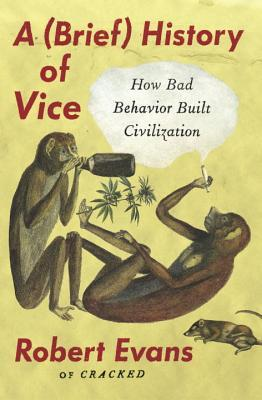
From a former editor at the popular humour site Cracked.com and one of the writers of the bestselling You Might Be a Zombie and The De-Textbook, a rollicking look at vice throughout history, complete with instructions for re-creating debauchery at home.
Part history lesson, part how-to guide, A Brief History of Vice includes interviews with experts and original experimentation to bring readers a history of some of humanity’s most prominent vices, along with explanations for how each of them helped humans rise to the top of the food chain. Evans connects the dots between coffee and its Islamic origins, the drug ephedra and Mormons, music and Stonehenge, and much more. Chapters also include step-by-step guides for re-creating prehistoric debauchery in your modern life based on Evans’s first-hand fieldwork. Readers won’t just learn about the beer that destroyed South America’s first empire; they’ll learn how to make it.
My Review
I really enjoy Robert Evans’ podcast ‘Behind The Bastards’ and thought I’d give this book a read, just for amusement. Apparently he spent the money he was paid for this book on living in a ridiculously big house for a year and almost became homeless. Dafty.
Doing daft things for education and entertainment seems to be Evans’ motivation for a lot of things in life, although he is also a decent conflict zone reporter. This book was written while he was still at Cracked.com, and before he started his podcast. It is a mixture of science, history, anthropology and self-experimentation with a variety of historical intoxicants, from Sumerian early beer, hallucinogens from ancient Greece, nose pipes from Mesoamerica, and the ways tobacco has been used for healing, including as a purgative. I’m surprised only one person ended up in hospital.
The book was entertainingly written and honest about the effects of the various substances tried. I’m not sure the thesis, that ‘bad behaviour’ made civilisation, is substantiated, but it’s an interesting trip through the ancient world, from a very different perspective.
Published by Monoray in February 2024 at £10.99 in Paperback.
Description
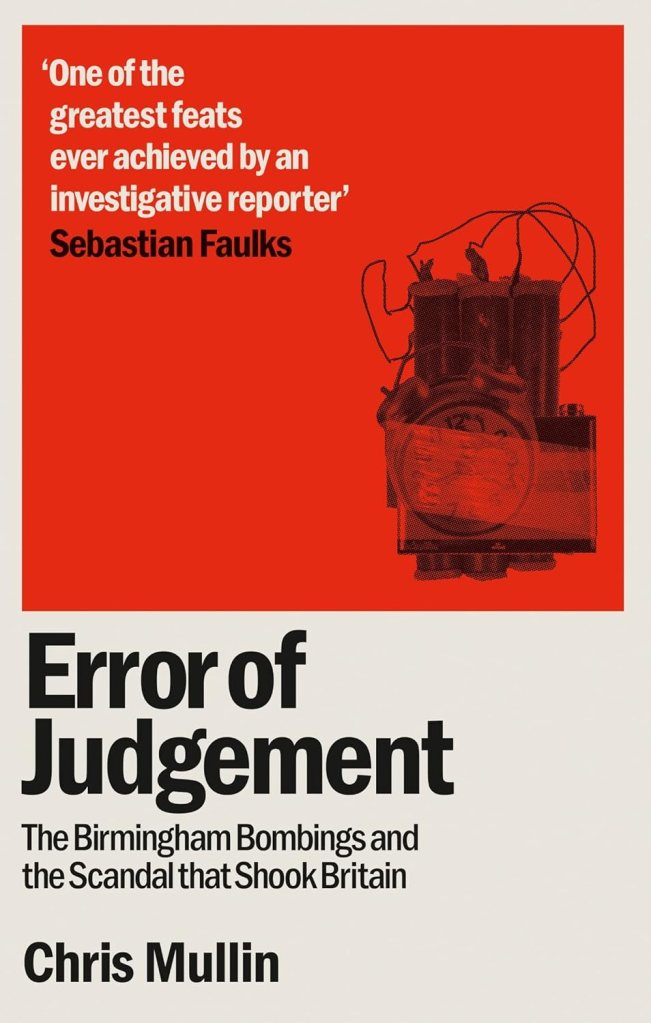
Error of Judgment lit a fire under the political and legal establishment when it was first published, shattering the prosecution case against six Irishmen wrongly convicted of with the Birmingham bombings and going on to change the course of British legal history. It also resulted in significant reforms to the legal system and the quashing of many other wrongful convictions.
Now 50 years on from the bombings and with a new preface and several new chapters covering the aftermath of the case, this new edition of Error of Judgement tells the complete story of one of Britain’s most significant miscarriages of justice.
On the evening of 21st November 1974, bombs planted by the IRA in two crowded Birmingham pubs exploded, killing 21 people and injuring at least 170. Within a day of the explosion, six men – Paddy Hill, Gerry Hunter, Richard McIlkenny, Billy Power, Johnny Walker and Hughie Callaghan – were arrested and charged. All were found guilty.
Methodically, with total clarity and a tone that is both gripping and impassioned, investigative journalist Mullin unpicked every detail of the case, revealing gaping holes in the prosecution case and an establishment determined to close ranks. Error of Judgement is a graphic illustration of what can go wrong when our police and criminal justice system is under pressure to get results and how difficult it is to persuade those responsible to own up once mistakes become obvious.
Format: 224 pages, Paperback Published: November 30, 2023 by Pluto Press ISBN: 9780745348667 (ISBN10: 0745348661) Language: English
Blurb
Neurodiversity is on the rise. Awareness and diagnoses have exploded in recent years, but we are still missing a wider understanding of how we got here and why. Beyond simplistic narratives of normativity and difference, this groundbreaking book exposes the very myth of the ‘normal’ brain as a product of intensified capitalism.
Exploring the rich histories of the neurodiversity and disability movements, Robert Chapman shows how the rise of capitalism created an ‘empire of normality’ that transformed our understanding of the body into that of a productivity machine. Neurodivergent liberation is possible – but only by challenging the deepest logics of capitalism. Empire of Normality is an essential guide to understanding the systems that shape our bodies, minds and deepest selves – and how we can undo them.
Robert Chapman is a neurodivergent philosopher who has taught at King’s College London and Bristol University. They are currently Assistant Professor in Critical Neurodiversity Studies at Durham University. They blog at Psychology Today and at Critical Neurodiversity .
My Review
Robert Chapman works with a couple of neurodivergent academics (Hi Louise and Anna 1 )I know, so I heard about this book months before it was published and pre-ordered it as soon as I could. There was a problem with the publisher’s computer system and my pre-order was lost so I had to re-order it. I did end up getting a discount because of that though, so I’m not complaining. I also ordered a few other books from Pluto Press, which I will get around to reading and reviewing. Eventually.
This book was an absolute joy to read. Chapman explores the history of neurodivergent people and the disability and neurodiversity rights movements. They explicate and critique anti-psychiatry, Freudianism and other areas of psychiatry, and confirming what I’ve said for years, capitalism is to blame for everything!
No, seriously, think about it.
Why do we have to be machines that happily work set shifts every day doing repetitive uncreative tasks? Capitalism.
Why do we have to fight for any form of social support? Capitalism.
Why are so many more people struggling with their mental health? Capitalism.
We live in a society where everything has a price and if you can’t produce you are a drain on society. The Tories have placed the blame and burden of austerity firmly on disabled people. Neolibralism, that monster set loose by Thatcher on our social and educational systems, pushes things further than ever before, and now we have fascism rearing its ugly head again. This is not hyperbole and if you think it is, you haven’t been listening to disability rights and neurodivergent rights activists, anyone who gives a damn about civil society or social equity.
I tried to say similar things to Chapman in my booklet about neurodivergent history, and couldn’t quite express myself the way I wanted to or get the message I wanted across. Part of that was lack of theoretical background (I am not a philosopher) and part was the funding source. Can’t write a socialist history or a manifesto for neurodivergent equality when you’re getting government funding and working for a non-partisan charity.
Yes, I liked this book because it agrees with my personal politics2, but that’s not the only reason. Chapman writes clearly, fluently, and makes convincing arguments for their position. They explain and explore history, making connections between different areas that might not be clear, although their examples show that other people have made those same connections in the past. By putting the neurodivergent experience in the context of capitalism, viewing the changing place of neurodivergent people through a Marxist lens, we can see the connections between the way capitalism has narrowed our lives and shaped the paradigm through which we are viewed by society, the medical and political system, and how they choose to treat us.
I have already recommended this book to several people and will be asking for a copy for our Little Neurodivergent Library at work.
Insert mad waving here. They’re all a part of the Medical Humanities Department at the University of Durham, my alma mater, not that Durham would admit that I ever went there. ↩︎
Burn it down, pull it out by the roots, start all over again with an equitable society from the beginning. ↩︎
3rd September 2023 Ages 9+ | £16.99 Hardback | 60 illus 160pp | 24.0 x 17.2cm
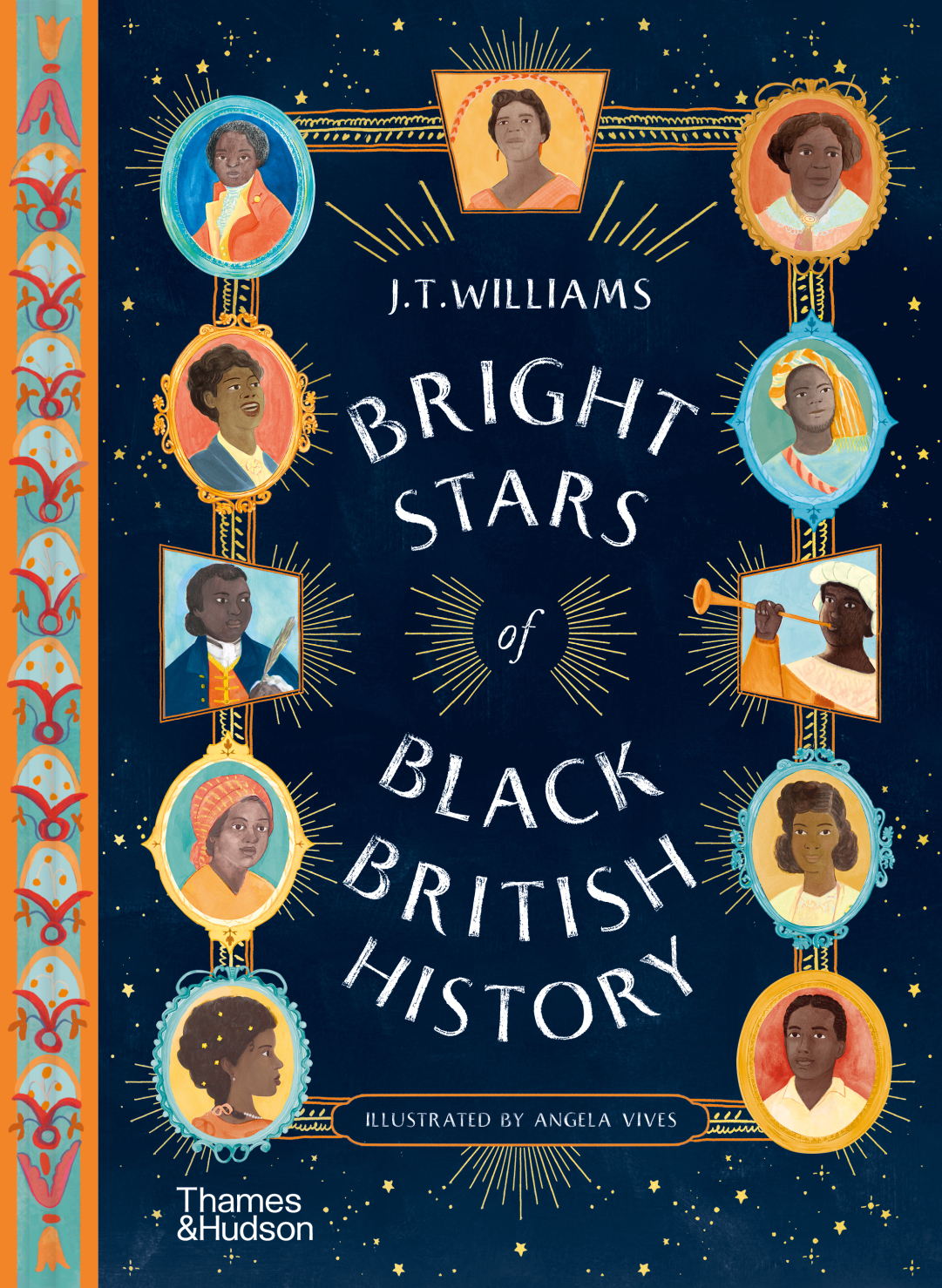
A dazzlingly illustrated collection presenting the extraordinary life stories of fourteen bright stars from Black British history, from Tudor England to modern Britain.
Brought to life through hand-painted illustrations by award-winning illustrator Angela Vives, this important and timely book from author and educator J. T. Williams brings the lives of fourteen shining stars from Black British History into the spotlight, celebrating their remarkable achievements and contributions to the arts, medicine, politics, sport and beyond.
Featuring a constellation of iconic individuals – including storytelling freedom fighter Mary Prince, football star and World War I soldier Walter Tull, and Notting Hill Carnival founder Claudia Jones – ‘Bright Stars of Black British History’ shines a light on the courage, resilience and talent of remarkable individuals who have left a lasting mark on our collective history.
By Amanda J Thomas Imprint: Pen & Sword History Pages: 280 ISBN: 9781473875678 Published: 23rd June 2020
Blurb
The Nonconformist Revolution explores the evolution of dissenting thought and how Nonconformity shaped the transformation of England from a rural to an urban, industrialised society.
The foundations for the Industrial Revolution were in place from the late Middle Ages when the early development of manufacturing processes and changes in the structure of rural communities began to provide opportunities for economic and social advancement. Successive waves of Huguenot migrants and the influence of Northern European religious ideology also played an important role in this process. The Civil Wars would provide a catalyst for the dissemination of new ideas and help shape the emergence of a new English Protestantism and divergent dissident sects. The persecution which followed strengthened the Nonconformist cause, and for the early Quakers it intensified their unity and resilience, qualities which would prove to be invaluable for business.
In the years following the Restoration, Nonconformist ideas fuelled enlightened thought creating an environment for enterprise but also a desire for more radical change. Reformers seized on the plight of a working poor alienated by innovation and frustrated by false promises. The vision which was at first the spark for innovation would ignite revolution.
My Review
I received this book in 2020 from the publisher in return for an honest review. It has taken me a long time to read it. I have been reading in in bursts, a chapter or two at a time around other reviewing commitments and work.
This review is all over the place. I have just finished the book. It took me 3.5 years to read the first ten chapters (140 pages) and less than a day to read the last five (68 pages); I’m a bit confuddled.
The book covers developments from the 1300s to the 1800s, in dissenting religious groups and industrial development, and makes the argument that without the unconventional thinking and organisational support Nonconformists and ‘heretics’ provided to each other, England would not have become the driver of Industrial revolution that it was in the early 18th to late 19th century that it was. The focus is on England, the interactions between England and Continental ideas and people, England and the North American colonies, England and France (because, 1066 and all that). It doesn’t look at technology developed in any of the colonies (usually derived from indigenous or enslaved peoples’ knowledge).
There are some interesting ideas in this book:
The author points out the complex family networks of the Midlands and northern Nonconformist families who supported each others’ business ventures and encouraged/funded new developments in ironworks, among other things. The relationships were longstanding and lucrative for many of the families. The connections went from the Tyne to the Severn, through Liverpool, Manchester, Sheffield, Birmingham and Bristol.
The literacy encouraged by Protestant beliefs – that people should be able to read the Bible in their own language – encouraged education in these families and that enabled people to question social structures and norms, as well as make scientific breakthroughs.
Every group looks back to a golden age of freedom and liberty – the Peasant’s Revolt (which was more of a middling sorts revolt with villainage cannon fodder) looked back to a pre-Norman England, the Nonconformists of the 18th century valourised the Puritanism of the Republic. They never were golden ages, there were always tyrants and inequality and war.
The author doesn’t mention much about the slave trade, although some of the Nonconformist families made their money from making guns and cannons, supporting the East India Company and the slave trade. At least one person mentioned, from the 1700s, was disowned by his Quaker congregation for inheriting a gun company and supporting the slave trade. It is safe to say that without the triangular trade a lot of people wouldn’t have had the funds to support the new products produced by Wedgwood, or fund the research of Priestley and the Lunar society (amongst others). The focus of the book is so narrow that the author can’t bring these considerations into the text. I don’t know if that is a good or bad thing. She does mention the above, but briefly, with no exploration. A wider exploration of the developing empire might have added context.
The final two chapter focus heavily on Thomas Paine, his adventures in North America and France, who he knew and what he wrote. Amanda J. Thomas explores the possible developments of his radical thought from his Quaker upbringing to his return to North America in 1800 after imprisonment in France. The author connects his activities to the rise and fall of radical organisations, especially those in Sheffield, demanding governmental reform. As we all should know, the government of the time, and for decades afterwards, was very opposed to any reform, cracking down heavily, violently against anything that would put the high church gentry and the aristocracy out of control. And yet, people kept dissenting…
There were times when the book felt disjointed, as though it were a collection of essays arranged chronologically, and at other times several chapters would naturally follow from each other. This may be an artifact of the development of the book?
The writing is decent and the story is really interesting. What I think slowed me down was all the family trees (tangled shrubs in some cases) that the author felt the need to write out and share with us in the main text. I don’t think it was always necessary to getting the ideas across clearly and could possibly have be left to an appendix, along with the visual representations of the family trees.
The book has a good bibliography and indexing, notes are clearly identified and information sourced. The author has relied heavily on some sources more than others, usually those about specific families or individuals, which gives a possibly partial impression of events, but also provides interesting nuggets of information about individuals and the social and cultural dynamics of their times. I did not know that Joseph Priestley knew Thomas Paine and Thomas Jefferson, for example, or that Benjamin Johnson was a member of the Royal Society at the same time. I knew Erasmus Darwin and Wedgwood knew each other, because of the weird family dynamics of Charles Darwin and his cousin-wife. In-bred the lot of them -the Wedgwoods, Darwins and Galtons.
So, final thoughts. Interesting ideas and social history that tries to illuminate the development of the co-occurring scientific, religious and political though that brought about the 18th and 19th century Industrial Revolution in England, and makes some attempt to put it into the wider North Atlantic context. Quite well written and extensively researched. Excellent bibliography. Could do with some editing.
Also, I noted some references that make it into Discworld.
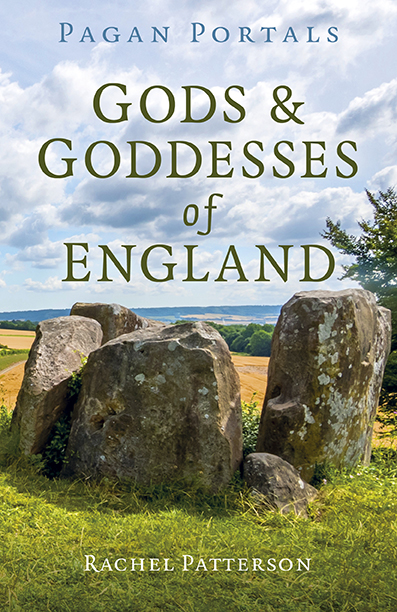
Paperback £9.99 || $12.95 Jun 30, 2023 978-1-78904-662-5
Synopsis
Rachel Patterson unearths and shines light on England’s ancient gods and goddesses – many of whom, until now, had long since been forgotten. Based on archaeological finds and ancient manuscripts, and including information about the tribes that once made their home in England’s pleasant lands, this book serves as a guide to the gods and goddesses of England, with suggested ways to work and connect with these very special deities.
My Review
Trevor at Moon Books sends me emails every now and then with new books and I agree to read and review them. I read this one a while ago, sorry Trevor, I’ve had a bit of a time lately, but I’ve finally got around to writing the review.
Rachel Patterson covers the broad history of Britain from the Iron Age to the Vikings – the broadly speaking non-Christian period, although Christianity existed in Britain and Ireland during the mid to late Roman Imperial period, and continued into the post-Roman period. However, during this period other deities were also worshipped, and some of these were recorded in monuments for the first, and in some cases only, time. Later deities were recorded in manuscripts, the days of the week and personal items.
The second section of the book covers the deities themselves, where they were worshipped and what we know about them, and ways to connect with a few of them.
The book focuses heavily on deities recorded on Roman monuments and in later Christian manuscripts – chronicles, sagas and legal records. The monuments are quite interesting, because they tell us something about the person who erected the monument as well as the deity they were erected to. In the later Cristian documents we obviously get a rather partial and one-sided view – no priest is going to give you a rounded opinion on rival religions, when they believe the gods of that religion are demons and believers are deluded or devil worshippers.
The author doesn’t seem to understand that pagan England is a specific time and place, and that it’s slightly disingenuous to include 2nd century northern British gods and 10th century Scandinavian deities.
The selection of rituals to connect with the deities are fairly standard neo-pagan rituals, that rely on the usual inclusion of elements, calling fairly generic directions, etc., which would not have been included in the original rituals, as they are 18th – 20th century inventions. I honestly don’t think the Matrones care if you call the Quarters, they just want us to remember and honour them.
If you’ve never thought about ancient deities in what is now England, this book is a place to start and if you want to know more, there is a list of books and websites in the further reading section.
I have recommendations of my own, although some are hard to get hold of. Brian Branston wrote ‘The Lost Gods of England’ in 1957, Kathleen Herbert wrote ‘Looking for The Lost Gods of England’ in the early 2000s, and then there’s ‘The Elder Gods: The Otherworld of Early England’, by Stephen Pollington. For the more academic, there is ‘Signals of Belief in Early England: Anglo-Saxon Paganism Revisited’, edited by Carver, Sanmark, and Semple, from 2010. It’s probably the newer and most comprehensive of the sources. These aren’t mentioned in the Further Reading so Patterson may not have heard of them.
Gods and Goddesses of England is easy to read and reasonably informative for those just beginning to explore these ideas.
Rachel Patterson
Rachel is an English witch who has been walking the Pagan pathway for over thirty years. A working wife and mother who has had over 25 books published (so far), some of them becoming best sellers. Her passion is to learn, she loves to study and has done so from books, online resources, schools and wonderful mentors over the years and still continues to learn each and every day but has learnt the most from actually getting outside and doing it.
She likes to laugh…and eat cake…
Rachel gives talks to pagan groups and co-runs open rituals and workshops run by the Kitchen Witch Coven. High Priestess of the Kitchen Witch Coven and an Elder at the online Kitchen Witch School of Natural Witchcraft. A regular columnist with Fate & Fortune magazine, she also contributes articles to several magazines such as Pagan Dawn and Witchcraft & Wicca. You will find her regular ramblings on her own personal blog and YouTube channel. Her craft is a combination of old religion witchcraft, Wicca, hedge witchery, kitchen witchery and folk magic. She lives in Portsmouth, England. Website: www.rachelpatterson.co.uk Personal blog https://www.rachelpatterson.co.uk/blog You Tube:https://www.youtube.com/user/Kitchenwitchuk Instagram https://www.instagram.com/racheltansypatterson/ Twitter https://twitter.com/TansyFireDragon






 Everything Is Better With Dragons