Pen & Sword TBR Pile Review: Hitler’s Housewives, by Tim Heath

Format: 232 pages, Hardcover
Published: May 19, 2020 by Pen and Sword History
ISBN: 9781526748072 (ISBN10: 152674807X)

Blurb

The meteoric rise of Adolf Hitler and the Nazi Party cowed the masses into a sense of false utopia. During Hitler’s 1932 election campaign over half those who voted for Hitler were women. Germany’s women had witnessed the anarchy of the post-First World War years, and the chaos brought about by the rival political gangs brawling on their streets. When Hitler came to power there was at last a ray of hope that this man of the people would restore not only political stability to Germany but prosperity to its people.

As reforms were set in place, Hitler encouraged women to step aside from their jobs and allow men to take their place. As the guardian of the home, the women of Hitler’s Germany were pinned as the very foundation for a future thousand-year Reich. Not every female in Nazi Germany readily embraced the principle of living in a society where two distinct worlds existed, however with the outbreak of the Second World War, Germany’s women would soon find themselves on the frontline.

Ultimately Hitler’s housewives experienced mixed fortunes throughout the years of the Second World War. Those whose loved ones went off to war never to return; those who lost children not only to the influences of the Hitler Youth but the Allied bombing; those who sought comfort in the arms of other young men and those who would serve above and beyond of exemplary on the German home front. Their stories form intimate and intricately woven tales of life, love, joy, fear and death. Hitler’s Housewives: German Women on the Home Front is not only an essential document towards better understanding one of the twentieth century’s greatest tragedies where the women became an inextricable link, but also the role played by Germany’s women on the home front which ultimately became blurred within the horrors of total war.

This is their story, in their own words, told for the first time.

Continue reading “Pen & Sword TBR Pile Review: Hitler’s Housewives, by Tim Heath”
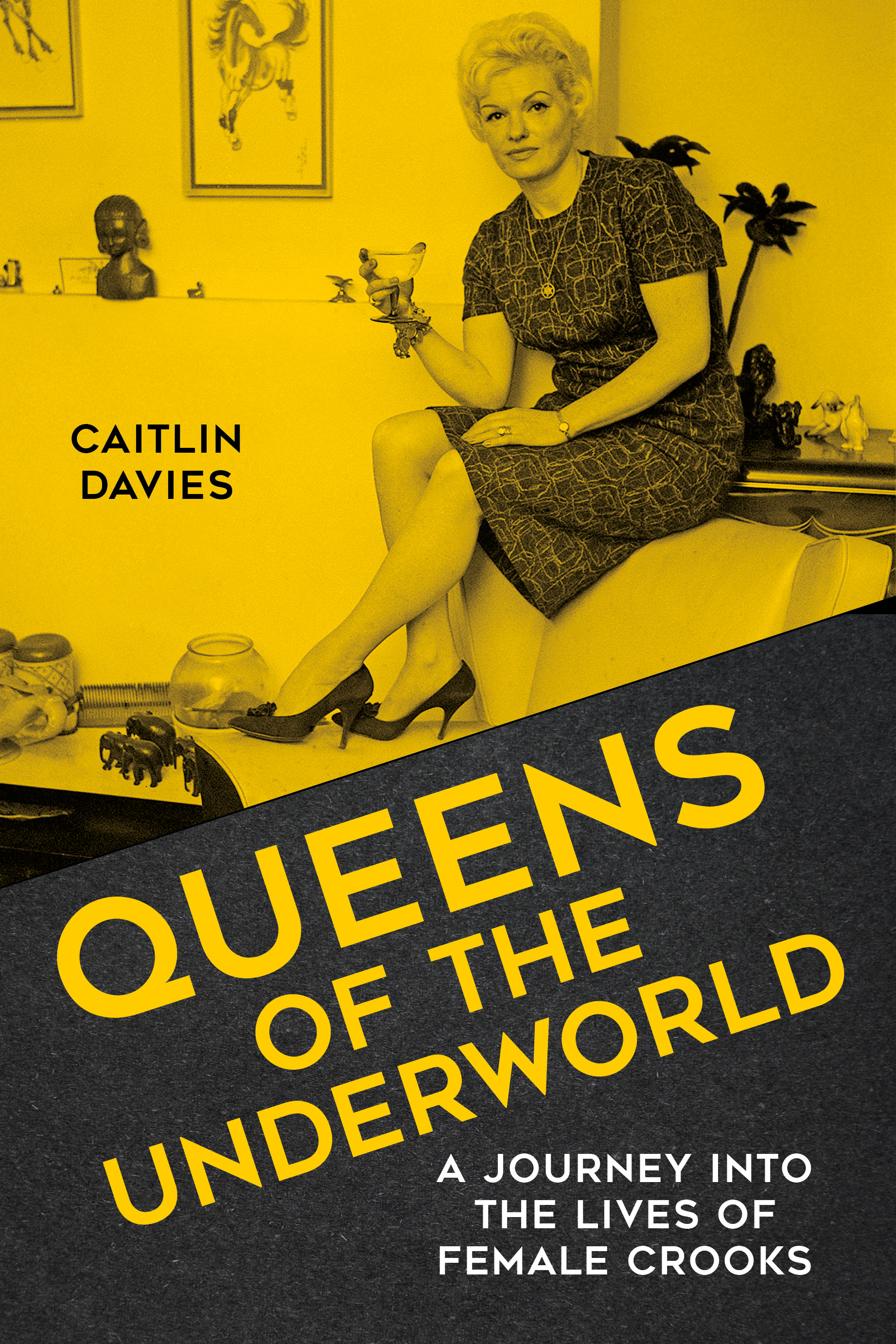
Review: Queens Of The Underworld, by Caitlin Davies

 Paperback
Publication date: April 20th 2023,
The History Press

Blurb

Robin Hood, Dick Turpin, Ronnie Biggs, the Krays … All have become folk heroes, glamorised and romanticised, even when they killed. But where are all the female crooks? Where are the street robbers, gang leaders, diamond thieves, bank robbers and gold smugglers?

Queens of the Underworld reveals the incredible story of professional female criminals from the 17th century to today. From Moll Cutpurse who ruled the Jacobean underworld, to Victorian jewel thief Emily Lawrence and 1960s burglar Zoe Progl, these were charismatic women at the top of their game.

But female criminals have long been dismissed as either not ‘real women’ or not ‘real criminals’, and in the process their stories have been lost. Caitlin Davies unravels the myths, confronts the lies, and tracks down modern-day descendants in order to tell the truth about their lives.

‘A riveting dive into the criminal underworld and the women who queened it there’ – Helena Kennedy QC

‘A rollicking account of all kinds of crime committed by women, who have not only been forgotten or ignored, but who put their male counterparts to shame’ – Julie Bindel, The Spectator

Continue reading “Review: Queens Of The Underworld, by Caitlin Davies”

Review: Wedded Wife, by Rachael Lennon

Imprint: Aurum
Pub Date (UK): Apr 20, 2023
Price: £16.99 GBP
ISBN-13: 978-0-7112-6711-4
Format: Hardcover Book
Pages: 256


Blurb

In this fascinating and insightful book, feminist curator Rachael Lennon provides an intimate and intersectional examination of the history of marriage around the world.
With a lively and accessible style, Lennon tells a remarkable story of how this institution has developed from the ancient customs of the stone age through to the modern form it takes today. This book also explores themes such as the pressure to marry, the politics surrounding proposals, the spectacle of marriage, the business behind it, and the politics tied to consummation as well as issues such as taking a man’s name, the nuances of marriage vows and obedience, ‘having it all’ and trying to keep up the fight to have an enduring marriage.

Having married her wife just a few years after the legalisation of same sex marriage in the United Kingdom, Lennon interweaves her own personal experiences of marriage with stories and anecdotes from throughout
history to explore how marriage has transformed over the years.

Continue reading “Review: Wedded Wife, by Rachael Lennon”

Pen & Sword Review: Plagues and Pandemics, by Douglas Boyd

By Douglas Boyd
Imprint: Pen & Sword History
Pages: 216
Illustrations: 20 black and white illustrations
ISBN: 9781399005180
Published: 10th December 2021

£20.00

Blurb

All you need for a plague to go pandemic are population clusters and travellers spreading the bacterial or viral pathogens. Many prehistoric civilisations died fast, leaving cities undamaged to mystify archeologists. Plague in Athens killed 30% of the population 430-426 BCE. When Roman Emperor Justinian I caught bubonic plague in 541 CE, contemporary historian Procopius described his symptoms: fever, delirium and buboes – large black swellings of the lymphatic glands in the groin, under the arms and behind the ears. That bubonic plague killed 25 million people around the Mediterranean. Later dubbed Black Death, it killed 50 million people 1346-1353, returning to London 40 times in the next 300 years. The third bubonic plague pandemic started 1894 in China, claiming 15 million lives, largely in Asia, before dying down in the 1950s after visiting San Francisco and New York. But it also hit Madagascar in 2014, and the Congo and Peru. The cause, yersinia pestis was identified in 1894. Infected fleas from rats on merchant ships were blamed for spreading it, but Porton Down scientists have a worrying explanation why the plague spread so fast.

Any disease can go epidemic. Everyday European infections brought to the Americas by Cortes’ conquistadores killed millions of the natives, whose posthumous revenge was the syphilis the Spaniards brought back to Europe. The mis-named Spanish ’flu, brought from Kansas to Europe by US troops in 1918 caused more than 50 million deaths. Fifty years later, H3N2 ’flu from Hong Kong killed more than a million people.

One coronavirus produces the common cold, for which neither vaccine nor cure has been found, despite the loss of millions of working days each year. That other coronavirus, Covid-19 was NOT the worst pandemic. Chillingly, historian Douglas Boyd lists many other sub-microscopic killers still waiting for tourism and trade to bring them to us.


My Review

I received this book in return for an honest review. I’ve had this book since mid-2021, along with another book on pandemics. I’ve been reading it slowly for the best past of 18 months, around work, blog tours and my sci-fi and fantasy TBR pile.

This book covers ancient and historical pandemics, the great plague of the 14th and 17th centuries, the epidemics since the, the Covid-19 pandemic (still on-going) and possible future pandemics. The book was published in 2021, so obviously it misses everything after early 2021.

The chapters on ancient and historical pandemics were fascinating and easy to read. The chapters on the 1665 plague in London was really interesting, as it draws heavily on the diaries of Samuel Pepys and John Evelyn, and Daniel Defoe’s later book on the plague year, for details of life in London and Chatham.

I found the historical discussion more interesting that the discussion of SARS-CoV-2/Covid-19. There really hadn’t been enough time between the emergence of the pandemic and the writing and publishing of this book. It feels like the author was working on a book about historical epidemics and pandemics, and inserted the covid chapters and potential future causes of pandemics, at the last minute.

The author didn’t critically interrogate some of the things he repeated from the media. There was the odd repeated page in the chapters on historical pandemics, and he uses what can only be described as racist terms to refer to Indian and Chinese people.

This is not a bad book, if you’re interested in historical pandemics, but for analysis of the early months of the current pandemic, there are probably better sources out there.

Non-Fiction TBR Pile Review: A Short History of Fantasy, by Farah Mendlesohn & Edward James

296 pages, Paperback
Published January 1, 2009 by
Middlesex University Press
ISBN 9781904750680 (ISBN10: 1904750680)

Blurb

A history of the fantasy form, this work traces the genre from the earliest years with The Epic of Gilgamesh and The Odyssey through to the origins of modern fantasy in the 20th century with such acclaimed writers as Terry Pratchett and J. K. Rowling. An exploration of the great variety of fiction published under the heading “fantasy,” this engaging study seeks to explain its continuing and ever-growing popularity.

My Review

I bought myself this book because I am interested in fantasy as a genre. I have been reading fantasy seriously for almost thirty years, and I have joked that I learnt to be human by reading fantasy. I’ve learnt a lot about why people do what they do by reading fantasy. I am interested in the history and theory of the genre because I want to know why it is so popular, yet so disdained by the literary establishment*.

This book covers the development of fantasy as a genre up to 2008. It goes into detail in some areas but not in others. They cover Pratchett and Tolkien, of course, but also children’s fantasy and the cross-over between fantasy and sci fi. It is a comfortable balance between the popular and the academic.

I have only one problem with this book: I keep buying books. Oh, and it needs updating to 2022. Lots has happened in the last 14 years.

*Snobbery, the answer is snobbery.

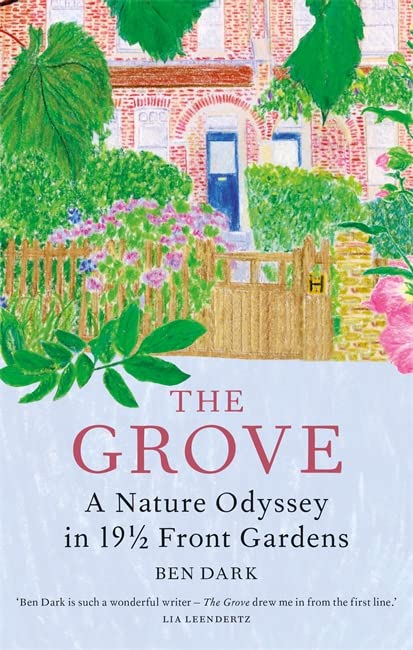
Review: The Grove, by Ben Dark

7th April 2022 | £16.99 | Mitchell Beazley

Recent times have seen a renewed interest in urban nature, as can be witnessed in the work of amateur botanists, identifying wildflowers and chalking their names on pavements.
In The Grove the award-winning writer and head gardener, Ben Dark, reveals the remarkable secrets of 20 commonly found cultivated plants – including the rose, buddleja and the tulip – observed in the front gardens of a typical London street on daily walks over the course of a year. We discover how each species found its way into our gardens, the cast of characters who played their part in its story and what each one tells us about our national obsession with gardening and the urge to cultivate our own patch of nature.

‘Every species in this book was seen from one pavement over twelve months and there is little here that could not be found on any road in any town, but they recount stories of such weirdness, drama, passion and humour that, once discovered, familiar neighbourhoods will be changed forever.’

The Grove is about so much more than a single street, or indeed the plants found in its 19 ½ front gardens. It’s a glorious piece of urban nature writing and a skilful blend of horticultural history, personal narrative and an exploration of why gardens and gardening matter.

Continue reading “Review: The Grove, by Ben Dark”

Pen & Sword Review: Sex & Sexuality in Tudor England, by Carol McGrath

Imprint: Pen & Sword History
Series: Sex and Sexuality
Pages: 176
Illustrations: 25 black and white illustrations
ISBN: 9781526769183
Published: 8th March 2022

Blurb

The Tudor period has long gripped our imaginations. Because we have consumed so many costume dramas on TV and film, read so many histories, factual or romanticised, we think we know how this society operated. We know they ‘did’ romance but how did they do sex?

In this affectionate, informative and fascinating look at sex and sexuality in Tudor times, author Carol McGrath peeks beneath the bedsheets of late fifteenth- and early sixteenth-century England to offer a genuine understanding of the romantic and sexual habits of our Tudor ancestors.

Find out the truth about ‘swiving’, ‘bawds’, ‘shaking the sheets’ and ‘the deed of darkness’. Discover the infamous indiscretions and scandals, feast day rituals, the Southwark Stews, and even city streets whose names indicated their use for sexual pleasure. Explore Tudor fashion: the codpiece, slashed hose and doublets, women’s layered dressing with partlets, overgowns and stomachers laced tightly in place. What was the Church view on morality, witchcraft and the female body? On which days could married couples indulge in sex and why? How were same sex relationships perceived? How common was adultery? How did they deal with contraception and how did Tudors attempt to cure venereal disease? And how did people bend and ignore all these rules?

Continue reading “Pen & Sword Review: Sex & Sexuality in Tudor England, by Carol McGrath”

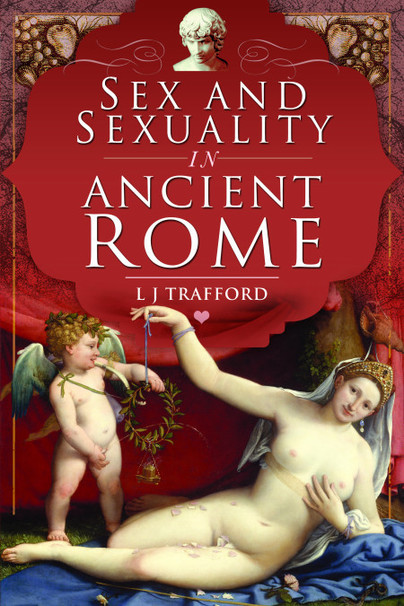
Pen & Sword Review: Sex and Sexuality in Ancient Rome, by LJ Trafford

Imprint: Pen & Sword History
Series: Sex and Sexuality
Pages: 224
ISBN: 9781526786876
Published: 23rd September 2021


Blurb

From Emperors and empresses, poets and prostitutes, slaves and plebs, Ancient Rome was a wealth of different experiences and expectations. None more so than around the subject of sex and sexuality. The image of Ancient Rome that has come down to us is one of sexual excess: emperors gripped by perversion partaking in pleasure with whomever and whatever they fancied during week long orgies. But how true are these tales of depravity? Was it really a sexual free for all? What were the laws surrounding sexual engagement? How did these vary according to gender and class? And what happened to those who transgressed the rules?

We invite you to climb into bed with the Romans to discover some very odd contraceptive devices, gather top tips on how to attract a partner and learn why you should avoid poets as lovers at all costs. Along the way we’ll stumble across potions and spells, emperors and their favourites and some truly eye-popping interior décor choices.

Continue reading “Pen & Sword Review: Sex and Sexuality in Ancient Rome, by LJ Trafford”

Review: The Fall of Roman Britain – and why we speak English, by John Lambshead

By John Lambshead, Foreword by Dr Simon Elliott
Imprint: Pen & Sword History
Pages: 192
ISBN: 9781399075565
Published: 11th May 2022

Blurb

The end of empire in the island of Great Britain was both more abrupt and more complete than in any of the other European Roman provinces. When the fog clears and Britain re-enters the historical record, it is, unlike other former European provinces of the Western Empire, dominated by a new culture that speaks a language that is neither Roman nor indigenous British Brythonic and with a pagan religion that owes nothing to Romanitas or native British practices.

Other ex-Roman provinces of the Western Empire in Europe showed two consistent features conspicuously absent from the lowlands of Britain: the dominant language was derived from the local Vulgar Latin and the dominant religion was a Christianity that looked towards Rome. This leads naturally to the question: ‘what was different about Britannia?’ A further anomaly in our understanding lies in the significant dating mismatch between historical and archaeological data of the Germanic migrations, and the latest genetic evidence. The answer to England’s unique early history may lie in resolving this paradox.

John Lambshead summarizes the latest data gathered by historians, archaeologists, climatologists and biologists and synthesizes it all into a fresh new explanation.

Continue reading “Review: The Fall of Roman Britain – and why we speak English, by John Lambshead”

Pen & Sword Review: Jumping for Joy: The history of platform video games, by Chris Scullion

I am once again too tired to copy and paste from the official website when I can take photos.
Continue reading “Pen & Sword Review: Jumping for Joy: The history of platform video games, by Chris Scullion”