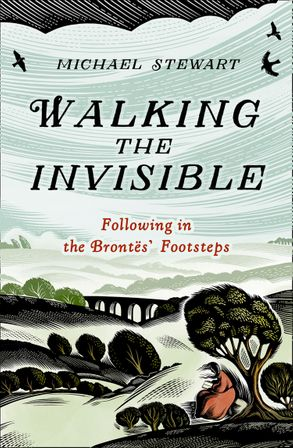
Hardcover, 288 pages Published June 24th 2021 by HarperCollins ISBN: 0008430187 (ISBN13: 9780008430184)
Blurb
Michael Stewart has been captivated by the Brontes since he was a child, and has travelled all over the north of England in search of their lives and landscapes. Now, he’d like to invite you into the world as they would have seen it.
Following in the footsteps of the Brontes across meadow and moor, through village and town, award-winning writer Michael Stewart takes a series of inspirational walks through the lives and landscapes of the Bronte family, investigating the geographical and social features that shaped their work.
This is a literary study of both the social and natural history that has inspired writers and walkers, and the writings of a family that have touched readers for generations. Finally we get to understand the ‘wild, windy moors’ that Kate Bush sang about in ‘Wuthering Heights’, see the imposing halls that may have inspired Thornfield Hall in Jane Eyre, and learn about Bramwell’s affair with a real life Mrs Robinson while treading the same landscapes. As well as describing in vivid detail the natural beauty of the moors and their surroundings, Walking the Invisible also encompasses the history of the north and the changing lives of those that have lived there.
Paperback, 312 pages Published 2021 by Hammeron Press ISBN13: 9781910849309
Blurb
Charlotte Cooper, a fat activist with more than 30 years experience, lifts the lid on a previously unexplored social movement and offers a fresh perspective on one of the major problems of our times. In her expansive, intelligent grassroots study she: – Reveals details of fat activist methods and approaches – Features extensive accounts of fat activist historical roots going back over four decades – Explores controversies and tensions in the movement – Shows that fat activism is an undeniably feminist and queer phenomenon Fat Activism: A Radical Social Movement is a rare instance of fat people speaking about their lives and politics on their own terms. The book is the result of Charlotte’s community-based doctoral research.
Paperback, 80 pages Published July 30th 2018 by Pen & Sword Books ISBN:1526700913 (ISBN13: 9781526700919)
Blurb
What springs to mind when you think of British Victorian men and women? Manners, manners and more manners. Behaviour that was as rigid and constricted as the corsets women wore. From iron-knicker sexual prudery to men so uptight they furtively released their pent up emotions in opium dens and prostitute hot spots. All, of course, exaggerated clichés worthy of a Victorian melodrama. Each generation loves to think it is better than the last and loves to look aghast at the horrifying trends of their ancestors. But are we really any different?
This glimpse at life for Victorian men and women might make millennials think again. Men and women were expected to live very differently from one another with clearly defined roles regardless of class. However, lift the skirts a little and not only will you see that they didn’t wear knickers but they were far less repressed than the persistent stereotypes would have us believe. The Victorians were as weird and wonderful as we are today. From fatal beauty tips to truly hysterical cures for hysteria to grave robbers playing skittles with human bones, we have cherry picked some of the more entertaining glimpses into the lives led by our Victorian brothers and sisters.
Hardcover, 304 pages Published December 30th 2020 by Reaktion Books ISBN:1789143012 (ISBN13: 9781789143010)
Those They Called Idiots traces the little-known lives of people with learning disabilities from the communities of eighteenth-century England to the nineteenth-century asylum and care in today’s society. Using evidence from civil and criminal court-rooms, joke books, slang dictionaries, novels, art and caricature, it explores the explosive intermingling of ideas about intelligence and race, while bringing into sharp focus the lives of people often seen as the most marginalized in society.
I’ve got four for you this evening; I’ve been saving them up. Pen & Sword send me a lot of books, ones I’ve agreed to review, but you know how it is, my eyes are bigger than my belly when it comes to books, so I generally have to read a few at a time then review them all in groups. Sometimes there’s even a theme.
Today there is a theme. Daily life in various historical periods. I’ve just finished reading ‘How to survive in Ancient Egypt’, which I had been waiting on to do this set of reviews.
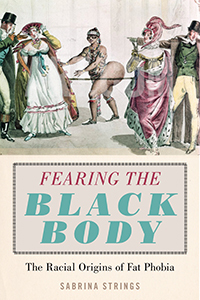
Format: 283 pages, Paperback Published: May 7, 2019 by New York University Press ISBN: 9781479886753 (ISBN10: 1479886750)
Blurb
In her first book, sociologist Strings (sociology, Univ. of California, Irvine) explores the historical development of prothin, antifat ideologies deployed in support of Western, patriarchal white supremacy. Beginning in the aesthetic ideals circulated by Renaissance thinkers and artists and bringing her narrative up into the 1990s, Strings charts how white Europeans and Anglo-Americans developed ideals of race and beauty that both explicitly and figuratively juxtaposed slim, desirable white women against corpulent, seemingly monstrous black women.
The work is divided into three sections. The two chapters in the first part consider how Renaissance white women and women of colour were depicted as plump and feminine, separated by class, yet belonging to the same gender. The second part of the work charts the rise of modern racial ideologies that yoked feminine beauty to Protestant, Anglo-Saxon whiteness. Later chapters and the epilogue consider how Americans normalized the “scientific management” of white women’s bodies for the purpose of racial uplift, a project that continued to situate black women as the embodied Other.
My Review
I’ve been reading this book on and off over the last few months as other commitments permitted; I found it fascinating and always picked up some new information every time I went back to it. I finished it last night with a feeling of disappointment that it wasn’t longer, but also interested in reading more by the author and on the topic.
BMI is, as I have said many times, bullshit, made-up and irrational. That it is still used by the medical profession is a travesty. Historical attitudes to fatness have varied with time and place, but scientific evidence does not support the vilification of fat people. In fact, Ancel Keys, who essentially invented the BMI and pushed for it to replace actuarial tables for insurance and medical purposes, admitted he found fat people ugly and assumed they were unhealthy. You cannot tell anything about a person’s health from a ratio of height to weight, or their appearance.
This book covers Europe and the U.S., because the author is USian, and the U.S. wouldn’t exist without European colonisation, so it covers the period from the Renaissance to the last years of the twentieth century. Five hundred years and three continents it a lot of space and time to cover.
When European’s started Othering people to justify slavery, weight was one of the things they chose to stigmatise. It coincided with Protestant disgust with bodies, with anything that might be fun, and later with changing ideas about ‘polite’ behaviour. By accusing African people of being lazy, gluttonous and dishonest, they could link that to intellect and justify colonisation and enslavement. And of course, to keep Europeans on top of the heap, the same rules had to be applied to Europeans, especially middle and upper class women.
Later still, eugenics came into play and whole new fields of scientific racism and sexism opened up for those white men determined to hold their places at the top of society. In the U.S. one of the ways they did this was to racialise Jewish, Irish, Southern (particularly Italian) and Eastern Europeans as the different groups migrated to the Americas across the 18th and 19th centuries and into the 20th century. They used the same lazy propaganda that earlier European ‘scientists’ had used to racialise and other Africans and then the indigenous populations of the Americas and Australia.
Body size and shape was used as a stick to beat people with. A ‘too thin’ rich white woman was a danger to the nation (whichever nation it was), a ‘too fat’ rich white woman, equally so, at different times. A fat black or African woman – signs of laziness and greediness – moral incontinence and hypersexuality. Because reasons.
Racist shitbags don’t actually have logical reasons, they take their beliefs and make up pseudoscience to support it. Fat hate is the same. It doesn’t matter how much evidence you have to show that ‘normal weight’ doesn’t exist, and that weight variation is just a normal part of human diversity (like the levels of melanin in the skin), they’ll still scream that fat kills.
Strings is a professional, and writes like one, unlike me; I’m just blunt and don’t mind swearing if I think it’s appropriate. I’ve seen other reviews that claim the writing is dry; I disagree. I found it clear and precise, although I would have been interested in more analysis and references from African and African American sources, but I doubt they were available given the systemic erasure and silencing of Black people in the last five hundred years.
The structure of the book puts the different strands of evidence into context and builds on Strings’ argument in a structured and organised way. Strings draws on popular and scientific literature, art and cultural movements to explore the topic and build her arguments. This is not ‘popular history but rewards careful reading and consideration.
Hardcover, 127 pages Published March 20th 2019 by Pen and Sword History ISBN1526727978 (ISBN13: 9781526727978)
Blurb
King Richard III remains one of the most infamous and recognisable monarchs in English or British history, despite only sitting on the throne for two years and fifty-eight days. His hold on the popular imagination is largely due to the fictional portrayal of him by William Shakespeare which, combined with the workings of five centuries of rumour and gossip, has created two opposing versions of Richard. In fiction he is the evil, scheming murderer who revels in his plots, but many of the facts point towards a very different man.
Dissecting a real Richard III from the fictional versions that have taken hold is made difficult by the inability to discern motives in many instances, leaving a wide gap for interpretation that can be favorable or damning in varying degrees. It is the facts that will act as the scalpel to begin the operation of finding a truth obscured by fiction.
Richard III may have been a monster, a saint, or just a man trying to survive, but any view of him should be based in the realities of his life, not the myths built on rumour and theatre. How much of what we think we know about England’s most controversial monarch will remain when the facts are sifted from the fictions?
By Charlie Fish Imprint: White Owl Pages: 120 Illustrations: 150 colour illustrations ISBN: 9781526778970 Published: 28th May 2021
This book is a potted history of video games, telling all the rollercoaster stories of this fascinating young industry that’s now twice as big globally than the film and music industries combined. Each chapter explores the history of video games through a different lens, giving a uniquely well-rounded overview.
Packed with pictures and stats, this book is for video gamers nostalgic for the good old days of gaming, and young gamers curious about how it all began. If you’ve ever enjoyed a video game, or you just want to see what all the fuss is about, this book is for you.
There are stories about the experimental games of the 1950s and 1960s; the advent of home gaming in the 1970s; the explosion – and implosion – of arcade gaming in the 1980s; the console wars of the 1990s; the growth of online and mobile games in the 2000s; and we get right up to date with the 2010s, including such cultural phenomena as twitch.tv, the Gamergate scandal, and Fortnite.
But rather than telling the whole story from beginning to end, each chapter covers the history of video games from a different angle: platforms and technology, people and personalities, companies and capitalism, gender and representation, culture, community, and finally the games themselves.
My Review
This book was sent to me by the publisher in return for an honest review.
I hang around with gamers. It would be nice to have some idea of what they’re babbling on about. This book provides a history of computer games from several different angles. I found this a useful way of understanding the developments, especially the chapters about console development and about culture.
There are lots of pictures, some quite nostalgic – my sister had an original game boy with Tetris and Super Mario for instance. The biographies of important people involved in games and console development were interesting. A couple of them are definitely autistic.
There was quite a bit of detail and the references are fairly extensive so as a place to start, this potted history is a good one.
Unfortunately, the two chapters I was really interested in were truncated. Between pages 65 and 81 – most of the chapters on the important personalities of games development and gender and representation in games – had been replaced by a repeat of the previous chapter, on console development. I understand that I got an an ARC so errors happen, but it is disappointing.
Paperback, 208 pages Published November 23rd 2020 by Pen and Sword History ISBN:1526755262 (ISBN13: 9781526755261)
Delve into the world of the unorthodox burial in seventeenth-century England, including mass interments in times of disease, the burial of suicides, and the unconventional laying to rest of English Catholics.
Death was a constant presence in the lives of the rich and poor alike in seventeenth-century England, being much more visible in everyday existence than it is today. It is a highly important and surprisingly captivating part of the epic story of England during the turbulent years of the 1600s. This book guides readers through the subject using a chronological approach, as would have been experienced by those living in the country at the time, beginning with the myriad causes of death, including disease, war, and capital punishment, and finishing with an exploration of posthumous commemoration. Although contemporaries of the seventeenth century did not fully realize it, when it came to the confrontation of mortality they were living in wildly changing times.
My Review
Thanks to Rosie Crofts at Pen & Sword for sending me a copy of this book. It is one of many that I am working my way through.
This book covers the ways people died, how they were buried and how they were remembered in 17th century England. It’s a very specific subject, and it’s rather fun to read about a single subject sometimes. Sometimes I like learning about specific subjects as well as wider ranging books. This one was fascinating.
Humans have a habit of thinking that how things are now are how things have always been. In life and death. But that’s not always true. And this is one of those ways in which things are the same and different. People still die, are disposed of and are remembered, and most are buried in consecrated ground.
People don’t die from the plague anymore, and rarely die in war, Catholics don’t get buried in ditches and people who complete suicide aren’t buried at cross-roads with a stake through the heart. We don’t hang criminals either.
Which is nice.
This book covers the various ways people died, how they acted on the deathbed, funerals, unusual burials and how people remembered the dead. It has some interesting photographs and extracts from primary documents, to illustrate the descriptions.
I found the writing easy to read. I read a large chunk in one sitting and then had to finish the last chapter some weeks later due to other commitments. I could pick up the thread fairly easily and get back right into the book.
If you want to read a different perspective on the turbulent years of the 17th century, and you’re interested in death, I recommend this book.
For my friend Nicky: There are some good tips on ancient gravestones you could follow up for photographing.
Hardcover, 240 pages Published May 21st 2019 by New York University Press ISBN:1479800651 (ISBN13: 9781479800650)
Reveals the diversity crisis in children’s and young adult media as not only a lack of representation, but a lack of imagination
Stories provide portals into other worlds, both real and imagined. The promise of escape draws people from all backgrounds to speculative fiction, but when people of color seek passageways into the fantastic, the doors are often barred. This problem lies not only with children’s publishing, but also with the television and film executives tasked with adapting these stories into a visual world. When characters of color do appear, they are often marginalized or subjected to violence, reinforcing for audiences that not all lives matter.
The Dark Fantastic is an engaging and provocative exploration of race in popular youth and young adult speculative fiction. Grounded in her experiences as YA novelist, fanfiction writer, and scholar of education, Thomas considers four black girl protagonists from some of the most popular stories of the early 21st century: Bonnie Bennett from the CW’s The Vampire Diaries, Rue from Suzanne Collins’s The Hunger Games, Gwen from the BBC’s Merlin, and Angelina Johnson from J.K. Rowling’s Harry Potter. Analyzing their narratives and audience reactions to them reveals how these characters mirror the violence against black and brown people in our own world.
In response, Thomas uncovers and builds upon a tradition of fantasy and radical imagination in Black feminism and Afrofuturism to reveal new possibilities. Through fanfiction and other modes of counter-storytelling, young people of color have reinvisioned fantastic worlds that reflect their own experiences, their own lives. As Thomas powerfully asserts, “we dark girls deserve more, because we are more.”