Pen & Sword TBR Pile Review: Victorian Fashions For Women, by Neil R Storey & Fiona Kay

Hardcover, 248 pages
Published June 30th 2022 by Pen & Sword History
ISBN:1399004166 (ISBN13: 9781399004169)

Blurb

Victorian Fashions for Women explores the British styles and clothing throughout the long reign of Queen Victoria, from the late 1830s to the first years of the 20th century. Within are a superb overview of the dresses, hats, hair styles, corsetry, undergarments shoes and boots that combined to present the prevailing styles for each decade. From those who had enough money to have day and evening wear and clothes for sports and outdoor activities, to those with limited income and wardrobes or labouring folk with little more than the clothes they stood up in.

All decades are illustrated with original photographs, adverts and contemporary magazine features from the authors’ own remarkable collections, accompanied by a knowledgeable and informative text that describes the fashions, their social history context and influences reflected in the clothes of the time. Laid out in a clear and easy-to-follow chronological order, the key features of styles, decoration and accoutrements will help family historians to date family photographs and will provide a useful resource for students and costume historians or for anyone with a love of fashion and style to enjoy.

My Review

Review number five of the day. Don’t collapse everyone; I know I’ve posted a lot of reviews today, but I stack them up until I find a day to do all the reviews. Today is the day. I woke up early and I’ve had to stay up to wait for my post to be delivered. It was parcels, of meds and sweets. I needed more inhalers. This hot weather is screwing with my asthma so badly that I’m having to use them a lot more than usual. Since I’m awake and haven’t gone back to bed yet, I need to get these reviews done.

As you may know, I enjoy studying history and every area of life has something to tell us about history and society in different time periods, whether it’s food or military actions. Clothes are quite important facets of society and dress history is a growing area. I have visited the V&A museum in the past and was fascinated by the work that went into historical clothing. I also enjoy watching videos on YouTube by dress historians and reenactors, like Morgan Donner, Nicole Rudolph, Abby Cox and Bernadette Banner. It’s an unexpected turn for my interests, I know, because generally I don’t have much interest in clothes, beyond my swimming costumes and fancy underwear. It’s all about comfort for me.

Honestly, upper- and middle-class Victorian clothes look really uncomfortable! Heavy, fussy, and over-decorated. The figure was changed by adding padding and frames, rather than changing the body. Over seventy years fashions and figure changed in a variety of ways, from materials used to the type underwear worn. It really is quite interesting. This book is definitely focused on the dress of middle and upper-class women, because it is those women who could afford the clothes in fashion plates and fashion magazines. The development of fashion magazines and the production of paper patterns in magazines is also mentioned; I have quite a few modern patterns from magazines so the early history of these useful items is interesting to me. It shows that women were making their own fashionable clothes and using the new mechanical sewing machines that were starting to become available to the home sewer. It shows that high fashion was available to everyone if they had the money for material and time to sew.

I would have liked more information on working class clothing and fashions, which were covered only briefly, but I understand the limitations given the information available and the remaining material culture. The writing got a little sludgy at times but wasn’t bad.

Pen & Sword TBR Pile Review: Revolting Recipes From History, by Seren Charrington-Hollins

Hardcover, 216 pages
Published June 16th 2022 by Pen and Sword History
ISBN:1526773023 (ISBN13: 9781526773029)

Blurb

Nothing causes a stir on social media platforms like a topical discussion on the latest food trend. Modern-day chefs like to think that they are creative and often claim to push boundaries of food creation, but if we want to explore real culinary creativity then we need to look to our ancestors.

Writer and food historian, Seren Charrington-Hollins delves into the history of culinary experimentation to bring us some of the weirdest and most stomach-churning food delicacies to ever grace a dining table. She uncovers the rather gruesome history behind some everyday staples, uncovers bizarre and curious recipes, whilst casting light on foods that have fallen from culinary grace, such as cows udders and tripe; showing that revulsion is just a matter of taste, times and perhaps knowledge.

From pickled brains to headcheese, through to songbirds and nymphs’ thighs, this book explores foods that have evoked disgust and delight in diners depending on culinary perspective.

So pull up a chair, unfold your napkin and get ready for a highly entertaining and enlightening journey to explore what makes a recipe revolting? Be warned; you’ll need a strong stomach and an open mind. 

My Review

I actually managed to read and finish a book Pen & Sword sent me within a couple of months of getting it! Actually, I have another one I’ll review soon. I’ve still got a massive Pen & Sword pile to read. I will, eventually get through them all. I read another book by this author, about tea in 2020.

So, why did I read and finish this one so quickly?

Food! I like good food, I like to cook, and I find food a fascinating way to understand societies. Why would anyone eat some of the stuff they have if they didn’t need to? For instance garum sauce – hugely popular in ancient Rome, made of fermented fish. Basically fish left to rot in terracotta pots. Nope, not eating that. Who first thought to try it? And who thought of eating bovine digestive tracts (tripe)? Who gutted a cow and thought, ooh, that looks lovely? Only someone really desperate would consider pigs ears, surely?

And that’s just the stuff people chose to eat.

Imagine thinking you were going to get a decent bit of tinned ham and it turned out to be rotten because the tin wasn’t sealed properly. And you’re on a three year mission to chart the North West Passage. Eurgh! I liked the details about the history of food and the changes in diet over the centuries. It’s mostly Anglo-centric although there are some European and North American stories.

There were some sections that put me right off some foods and some I’m pleased I’ve never eaten. Like goose liver pate. That’s just cruel.

The book started off really strongly but by the last chapter it began to waver a bit and felt like it was unfinished. However, generally a good introduction to food history.

TBR Pile Review: A Brief History of Everyone Who Ever Lived, by Adam Rutherford

Paperback, 419 pages
Published November 14th 2017 by W&N (first published September 8th 2016)
ISBN: 1780229070 (ISBN13: 9781780229072)

Blurb

This is a story about you. It is the history of who you are and how you came to be. It is unique to you, as it is to each of the 100 billion modern humans who have ever drawn breath. But it is also our collective story, because in every one of our genomes we each carry the history of our species births, deaths, disease, war, famine, migration, and a lot of sex.

Since scientists first read the human genome in 2001, it has been subject to all sorts of claims, counterclaims, and myths. In fact, as Adam Rutherford explains, our genomes should be read not as instruction manuals, but as epic poems. DNA determines far less than we have been led to believe about us as individuals, but vastly more about us as a species.

In this captivating journey through the expanding landscape of genetics, Adam Rutherford reveals what our genes now tell us about history, and what history tells us about our genes. From Neanderthals to murder, from redheads to race, dead kings to plague, evolution to epigenetics, this is a demystifying and illuminating new portrait of who we are and how we came to be.

My Review

This is another one of my random books I bought because it looked interesting. I like biology, history and all that connected stuff. Yes, it really is all connected; it makes no sense to teach them as separate subjects, they all overlap. But that’s not really important right now…

Adam Rutherford writes amusingly of genomics, history and archaeology, as he explains how modern humans came to be the only hominids left and where we are now. It’s basic stuff that people really should know, but unfortunately they don’t and that causes a lot of problems in society.

Seriously, how can anyone believe in ‘race’ these days when genomics can show that it doesn’t exist in a scientific sense? I understand it is a social classification that has real effect in the world, race is a social construct that is used to unite people and divide them, to build a social identity and to deny social advantages, but that doesn’t make it any less illogical.

I actually found his discussion of his PhD research fascinating. Eyes are really odd, but clearly not ‘designed’. Like much of the body, it’s really daft and clearly made up of changes over time. Eyes break so easily, they’re so often a mess from the start too. How anyone can believe they were created perfectly by some god is again, beyond me. Octopuses managed to do it better, for crying out loud!

Human evolution is fascinating! No really, I love it. I found the way Rutherford described the multiple times different human species mixed and shared genes really informative.

The book is fairly introductory and includes a glossary and further reading, so it’s a good place to start if you’re interested.

Problems: Adam Rutherford shouldn’t talk about Autism, because he clearly knows nothing; he still refers to us as having Autism Spectrum Disorder. We are not disordered!

His grasp of human sex and gender is limited. He often refers to ‘the two sexes’ and ‘male is XY, female is XX’, completely ignoring the fact that sex is more complicated than that, and he dismisses intersex people in a footnote as negligible disorders. Way back in 2016 I reviewed a book on the subject that clearly explains how much variety there is in human sex and gender. He also uses ‘male’ and ‘women’, rather than ‘male’ and ‘female’, or ‘men’ and ‘women’; it’s confusing and I’m not sure why he does it. In context, it doesn’t make sense. If you’re talking about sex or presumed sex (because someone’s external genitalia may be one thing but their chromosomes and hormones could be different) use male, female or intersex; if you’re talking about gender, use gender labels – men, women, non-binary, agender etc.

Definitely one to read and share with all your embarrassing relatives.

TBR Pile Review: Madness in Civilization, by Andrew Scull

Paperback, 448 pages
Published September 1st 2016 by Thames and Hudson Ltd (first published March 23rd 2015)
ISBN: 050029254X (ISBN13: 9780500292549)

Blurb

This ambitious volume, worldwide in scope and ranging from antiquity to the present, examines the human encounter with Unreason in all its manifestations, the challenges it poses to society and our responses to it. In twelve chapters organized chronologically from the Bible to Freud, from exorcism to mesmerism, from Bedlam to Victorian asylums, from the theory of humours to modern pharmacology, Andrew Scull writes compellingly about madness, its meanings, its consequences and our attempts to understand and treat it. 

My Review

I was recommended this book for some reason and I’ve been reading it for months as part of my research for the neurodivergent history project for work. I finished it the other day and I’m just getting around to reviewing it.

This book is very densely written covering several thousand years. I wouldn’t agree with the blurb that it is global in scope, it is much more focused on Europe and North America, with occasional excursions to other places colonised by European countries and even fewer discussions of places outside of those areas. Africa, most of Asia and all of South America are ignored. It’s very Anglo-centric. Most of the book really only covers the history of psychiatry in England, France and Germany, with some reference to the U.S. later in the book. It’s going to be helpful for my heritage project, but I would have liked to read more about the rest of the world.

I found the sections on madness in the arts fascinating. I had read something about it in Those They Called Idiots, by Simon Jarrett. This book doesn’t cover learning disability, but madness was often conflated with idiocy in the past. If you were too much hard work for your family to care for, you could quite possibly end up in an asylum or workhouse. The presentation of madness in art and literature, as with disability, changed and influenced how people saw madness and disability.

Problems with the book: Scull clearly knows nothing about Autism or being Autistic, and repeats the lie that there’s an epidemic of Autism. He treats other highly heritable neurodivergencies, such as schizophrenia, equally badly and with limited understanding.

Scull clearly doesn’t like psychiatry as a profession, which is fair enough. A lot of people have been harmed by psychiatry and the narrow ideas of psychiatrists using diagnostic manuals as check lists rather than understanding individual patients. His cynicism gets a bit much at times though.

Generally, not a bad book but approach with caution.

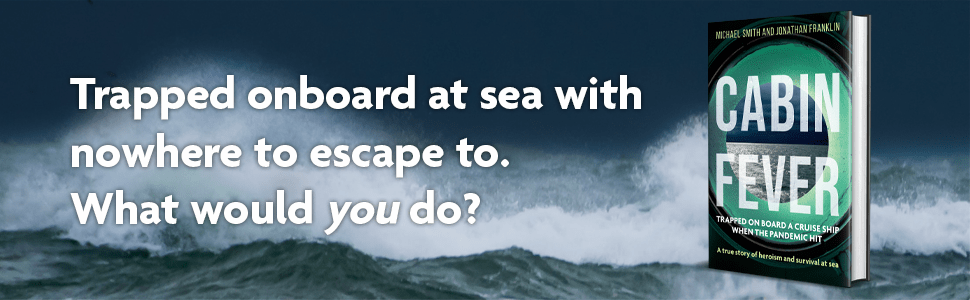
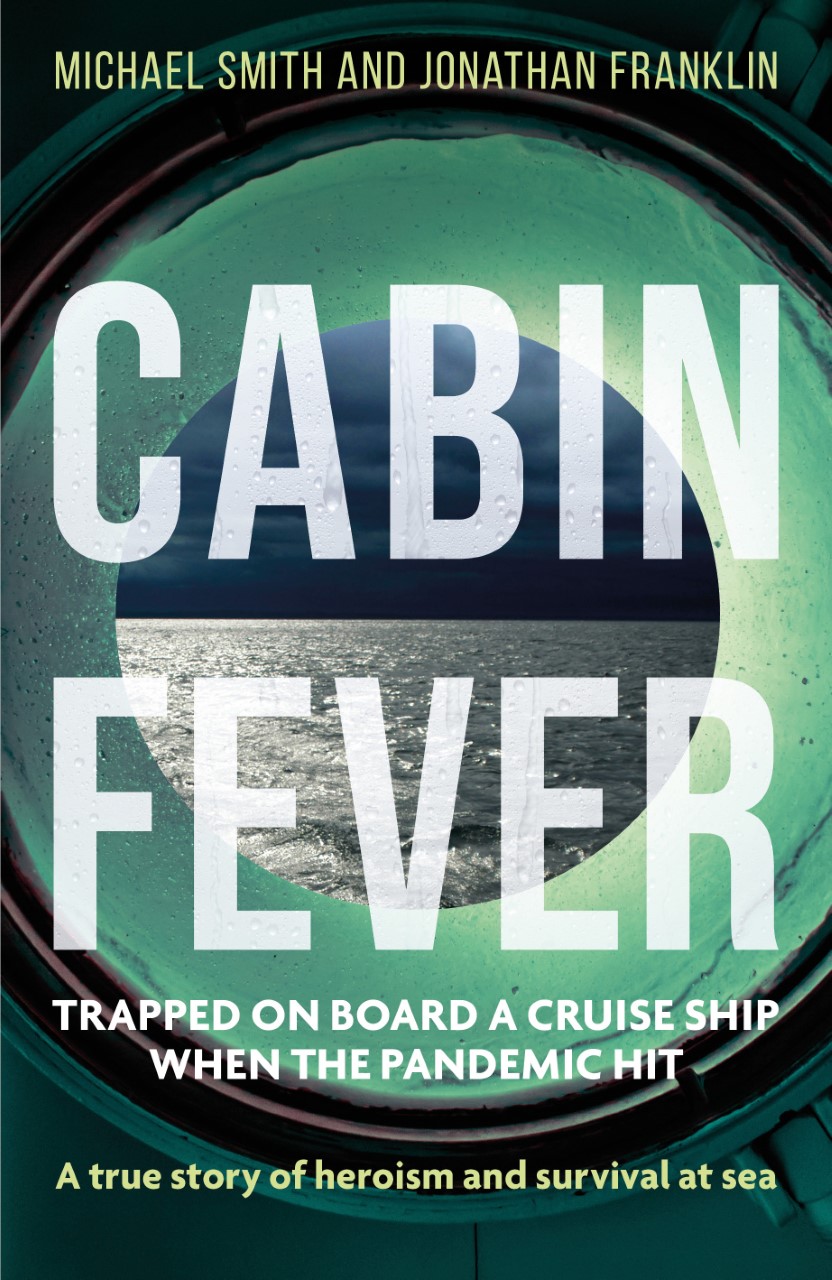
Review: Cabin Fever, by Michael Smith and Jonathan Franklin

Publication date Thursday, July 14,
2022
Price £16.99
EAN\ISBN-13 9781913068738
Travel & holiday
(WT)
Biography: general
(BG)
Binding Hardback

Blurb
The harrowing story of the Zaandam cruise ship, which set sail with a deadly and little-understood stowaway – Covid-19 – days before the world shut down in March 2020. A story of human kindness, peril and bravery.

In early 2020, the world was on edge. An ominous virus was spreading and no one knew what the coming weeks would bring. Far from the hotspots, the cruise ship Zaandam was preparing to sail from Buenos Aires loaded with 1,200 passengers – British, American, Australian, European and South American tourists, plus 600 crew. Most passengers were over the age of 65.
There was concern about the virus in the news but that was oceans away. Escaping to sea at the ends of the earth for a few weeks seemed like it might be a good option. The cruise line had said the voyage would go ahead as scheduled and it would be safe.

Within days, people aboard the Zaandam began to fall sick. The world’s ports shut down. Zaandam became a top story on the news and was denied safe harbour everywhere. With only two doctors aboard and few medical supplies to test for or treat Covid-19, and with dwindling food and water, the ship wandered the oceans on an unthinkable journey

Cabin Fever is a riveting narrative thriller, taking readers behind the scenes of the ship’s complex workings, and below decks into the personal lives of passengers and crew who were caught unprepared for the deadly ordeal that lay ahead. It is a story layered with moments of peril, perseverance and kindness. A remarkable tale that is filled with individual acts of heroism and the struggles and the tragedies of the crew and passengers.

Continue reading “Review: Cabin Fever, by Michael Smith and Jonathan Franklin”

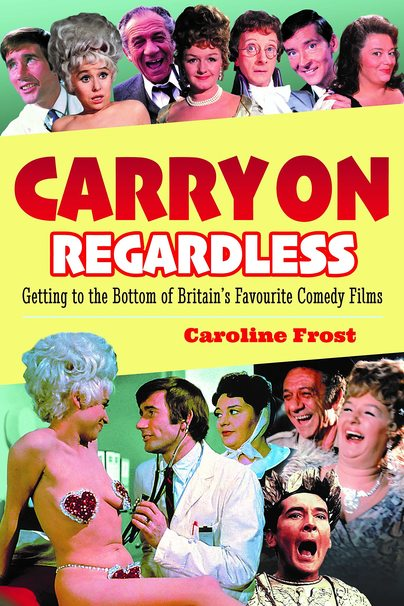
Pen & Sword Review: Carry on Regardless, by Caroline Frost

By Caroline Frost
Imprint: White Owl
Pages: 232
Illustrations: 32 black and white illustrations
ISBN: 9781526774781
Published: 5th May 2022
Expected Re-release Date: 30th June 2022

Blurb

The completely updated story of Carry On, Britain’s largest film franchise, all the way from the gentle capers of the 1950s, through the raucous golden age of the 1960s, to its struggles in the years that followed.

We take a happy walk down memory lane to enjoy again Sid James’s cheeky chuckle, Kenneth Williams’ elongated vowels, Charles Hawtrey’s bespectacled bashfulness and Barbara Windsor’s naughty wiggle.

It all seemed effortless, but exclusive interviews with the series’ remaining stars including Bernard Cribbins, Angela Douglas and Kenneth Cope shed new light on just how much talent and hard work went into creating the laughs. For the first time, the loved ones of some of the franchise’s biggest names – on and off screen – share their personal memories from this unique era.

Was Carry On really as sexist, racist and bigoted as critics claim? Three of the films’ female stars explain why they never felt remotely exploited, plus we take a fresh look at some of the series’ biggest titles and discover that, in reality, they were far more progressive than their detractors would have you believe.

Finally, with constant talk about new films, fresh productions and tantalising speculation about a brand new era of Carry On, we ask – does this unique series still have legs?

My Review

Thanks to the publisher for sending me a copy of this book. It came with my latest box of books from Pen & Sword. I have always enjoyed the Carry On… films, they are a fond memory from my childhood, where we collected the VHS tapes and then the DVDs. I still have the DVDs but got rid of my tapes when I moved out in 2014. I have always been fascinated by the personalities behind the films, especially the ensemble cast of the 60s who come to mind when I think about the films. I’ve been re-watching the films lately. They’re a nostalgic blanket on a wet Sunday afternoon.

I can also quote quite a few lines from most of the films.

This book is an overview of the films, the cast and crew, going from the earliest film, Carry On Sergeant, to the final film, Carry On Columbus. Over the series the films poked gentle fun at institutions, cracked jokes and threw out double entendre all over the place. Unfortunately, by the late seventies, they struggled to cope with changing social mores and the attempts at keeping up with the times fell flat.

Frost writes from a position of fondness and the author clearly enjoyed interviewing as many people as she could who had been involved, and using the auto/biographies of those she could not, to give a positive view of the films. However, she doesn’t give us many details of the actual production process, and she gets repetitive at times. We hear time and time again how much the cast enjoyed filming, and how it was ‘just like going back to school’ every time they went back to Pinewood Studios. It also gets a bit ‘Great British Humour’ at times, all a bit jingoistic.

I found the discussion of criticism of the films interesting. Certainly the sort of stuff they got away with wouldn’t happen now, such as the black face used in Carry On…Khyber and …Up The Jungle. The roles for women could be a bit limited, although as the author points out, many of the women characters were strong, determined women. Carry on Cabby is a fantastic early example. However, the cheap jokes at the expense of women’s appearances is galling, and actually contributed to Joan Sims’ possible Binge Eating Disorder. I thought that Frost’s attitude to the criticism of what she and others refer to as ‘Woke’ and ‘PC’ critics is a bit hypocritical. People have made valid points about the films and the attitudes they display, and you have to be a very canny viewer to realise there’s a bit more going on.

There is a discussion of the likelihood of new Carry Ons…end the book; there are some deluded people out there that think it could happen. I’m sorry, but times and humour have changed. The films are a snap-shot of a time and place, a period of social change that is reflected in the attitudes of the films and the tension between the past and present in the 1960s and early 1970s. The films also worked because they had an ensemble cast of comedic actors. As we saw with the rebooted ‘St. Trinians’ films, what worked in 1960 doesn’t work in the 2000s; social mores and humour have changed, and there is a dearth of the sorts of comedic actors who would be willing to work as part of an ensemble cast, or with the training on stage, TV and film that the cast had.

Over all, it’s okay, but could be better.

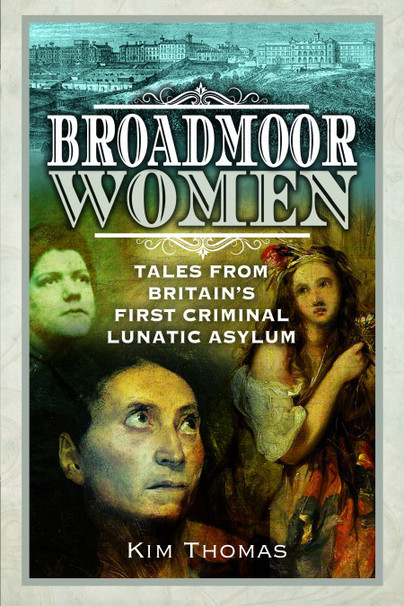
Pen & Sword Review: Broadmoor Women – Tales from Britain’s first criminal lunatic asylum, by Kim Thomas

By Kim Thomas
Imprint: Pen & Sword History
Pages: 192
Illustrations: 20 black and white illustrations
ISBN: 9781526794260
Published: 12th April 2022

Blurb

Broadmoor, Britain’s first asylum for criminal lunatics, was founded in 1863. In the first years of its existence, one in five patients was female. Most had been tried for terrible crimes and sent to Broadmoor after being found not guilty by virtue of insanity. Many had murdered their own children, while others had killed husbands or other family members.

Drawing on Broadmoor’s rich archive, this book tells the story of seven of those women, ranging from a farmer’s daughter in her 20s who shot dead her own mother to a middle-class housewife who drowned her baby daughter. Their moving stories give a glimpse into what nineteenth-century life was like for ordinary women, often struggling with poverty, domestic abuse and repeated childbearing. For some, Broadmoor, with its regime of plain food, fresh air and garden walks, was a respite from the hardships of their previous life. Others were desperate to return to their families.

All but one of the women whose stories are recounted in this book recovered and were released. Their bout of insanity was temporary. Yet the causes of their condition were poorly understood and the treatment rudimentary. As well as providing an in-depth look at the lives of women in Victorian England, the book offers a fascinating insight into the medical profession’s emerging understanding of the causes and treatment of mental illness.

My Review

Rosie Crofts, who does the marketing for Pen & Sword, sent me an email about this book a couple of weeks ago. I sat down and read it over the weekend.

I quite enjoy microhistories; the life of a single person or building can tell you something about the world around them. This book investigates the lives of seven women who were incarcerated in Broadmoor in the first forty years.

Most of them killed their children, one killed her husband and one killed her mother. Most of them had hard lives, limited by social conventions and/or poverty. Respectability was important to them all, and in court could be leveraged by a defendant so that they received a ‘guilty but insane’ or ‘not guilty by reason of insanity’ verdict. Often judges and juries were sympathetic to women who killed new born children in ‘puerperal insanity’ or ‘lactation insanity’. Psychiatrists and doctors didn’t really understand what was going on in people’s minds, and were still clinging to the idea that uteruses could cause madness; one particular belief was that women were so fragile that breast feeding for too long would cause madness.

Some of them had pre-existing mental health conditions before they committed their crimes and hadn’t received any or very limited care. Medical care for mental illness was limited at the time, as people were expected to look after their family members and doctors didn’t really understand how brains and hormones worked. Really bad cases were dropped in asylums and either left or experimented on, observed and drugged. Except in rare cases, like Tukes’ Retreat in York where the Quakers believed in calm, purposeful activity and loving kindness.

They averaged about 7 years in Broadmoor and were often released back to their families. Some husbands started petitioning for their release almost immediately after they were convicted, out of love or desperation for someone to care for their children. Returning to their families was often the worst thing that could happen to the women for several years, since it was the family/home environment that triggered the mental breakdown in the first place.

The regime at Broadmoor in the early years was based on improvement and calm, providing patients with a safe place to recover from their madness, time to heal and return to equanimity before being released. The early superintendents took after Dr. Tuke in their care of the patients; nutritious food, rest and care by sympathetic staff. Their regime was based on the latest (in the 1860s) scientific information. It would still be considered good care, now. Unfortunately, in between 1900 and 2000 there was a change in attitudes from care to abuse and back again. Seriously, I’m working on a project about this for work and it gives me nightmares to think about what happened to people with mental illnesses, learning disabilities or who were otherwise neurodivergent in asylums and residential centres.

I found this book interesting, it humanises the history of Broadmoor and gives us a snapshot into the social conditions of the late Victorian period. It would have been interesting to learn about the lives of the women warders alongside the patients. How did some working class women end up as warders and some as patients?

Could have done with some copy editing.

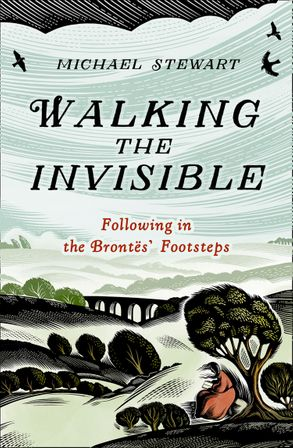
TBR Pile Review: Walking the Invisible, by Michael Stewart

Hardcover, 288 pages
Published June 24th 2021 by HarperCollins
ISBN: 0008430187 (ISBN13: 9780008430184)

Blurb

Michael Stewart has been captivated by the Brontes since he was a child, and has travelled all over the north of England in search of their lives and landscapes. Now, he’d like to invite you into the world as they would have seen it.

Following in the footsteps of the Brontes across meadow and moor, through village and town, award-winning writer Michael Stewart takes a series of inspirational walks through the lives and landscapes of the Bronte family, investigating the geographical and social features that shaped their work.

This is a literary study of both the social and natural history that has inspired writers and walkers, and the writings of a family that have touched readers for generations. Finally we get to understand the ‘wild, windy moors’ that Kate Bush sang about in ‘Wuthering Heights’, see the imposing halls that may have inspired Thornfield Hall in Jane Eyre, and learn about Bramwell’s affair with a real life Mrs Robinson while treading the same landscapes. As well as describing in vivid detail the natural beauty of the moors and their surroundings, Walking the Invisible also encompasses the history of the north and the changing lives of those that have lived there.

Continue reading “TBR Pile Review: Walking the Invisible, by Michael Stewart”

TBR Pile Review: Fat Activism, 2nd Ed., by Charlotte Cooper

Paperback, 312 pages
Published 2021
by Hammeron Press
ISBN13: 9781910849309

Blurb

Charlotte Cooper, a fat activist with more than 30 years experience, lifts the lid on a previously unexplored social movement and offers a fresh perspective on one of the major problems of our times. In her expansive, intelligent grassroots study she: – Reveals details of fat activist methods and approaches – Features extensive accounts of fat activist historical roots going back over four decades – Explores controversies and tensions in the movement – Shows that fat activism is an undeniably feminist and queer phenomenon Fat Activism: A Radical Social Movement is a rare instance of fat people speaking about their lives and politics on their own terms. The book is the result of Charlotte’s community-based doctoral research.

Continue reading “TBR Pile Review: Fat Activism, 2nd Ed., by Charlotte Cooper”

Pen & Sword Review: Not So Virtuous Victorians, by Michelle Rosenberg & Sonia D. Picker

38508163. sy475
Paperback, 80 pages
Published July 30th 2018 by Pen & Sword Books
ISBN:1526700913 (ISBN13: 9781526700919)

Blurb

What springs to mind when you think of British Victorian men and women? Manners, manners and more manners. Behaviour that was as rigid and constricted as the corsets women wore. From iron-knicker sexual prudery to men so uptight they furtively released their pent up emotions in opium dens and prostitute hot spots. All, of course, exaggerated clichés worthy of a Victorian melodrama. Each generation loves to think it is better than the last and loves to look aghast at the horrifying trends of their ancestors. But are we really any different?

This glimpse at life for Victorian men and women might make millennials think again. Men and women were expected to live very differently from one another with clearly defined roles regardless of class. However, lift the skirts a little and not only will you see that they didn’t wear knickers but they were far less repressed than the persistent stereotypes would have us believe. The Victorians were as weird and wonderful as we are today. From fatal beauty tips to truly hysterical cures for hysteria to grave robbers playing skittles with human bones, we have cherry picked some of the more entertaining glimpses into the lives led by our Victorian brothers and sisters.

Continue reading “Pen & Sword Review: Not So Virtuous Victorians, by Michelle Rosenberg & Sonia D. Picker”