Paperback, 312 pages Published 2021 by Hammeron Press ISBN13: 9781910849309
Blurb
Charlotte Cooper, a fat activist with more than 30 years experience, lifts the lid on a previously unexplored social movement and offers a fresh perspective on one of the major problems of our times. In her expansive, intelligent grassroots study she: – Reveals details of fat activist methods and approaches – Features extensive accounts of fat activist historical roots going back over four decades – Explores controversies and tensions in the movement – Shows that fat activism is an undeniably feminist and queer phenomenon Fat Activism: A Radical Social Movement is a rare instance of fat people speaking about their lives and politics on their own terms. The book is the result of Charlotte’s community-based doctoral research.
Paperback, 80 pages Published July 30th 2018 by Pen & Sword Books ISBN:1526700913 (ISBN13: 9781526700919)
Blurb
What springs to mind when you think of British Victorian men and women? Manners, manners and more manners. Behaviour that was as rigid and constricted as the corsets women wore. From iron-knicker sexual prudery to men so uptight they furtively released their pent up emotions in opium dens and prostitute hot spots. All, of course, exaggerated clichés worthy of a Victorian melodrama. Each generation loves to think it is better than the last and loves to look aghast at the horrifying trends of their ancestors. But are we really any different?
This glimpse at life for Victorian men and women might make millennials think again. Men and women were expected to live very differently from one another with clearly defined roles regardless of class. However, lift the skirts a little and not only will you see that they didn’t wear knickers but they were far less repressed than the persistent stereotypes would have us believe. The Victorians were as weird and wonderful as we are today. From fatal beauty tips to truly hysterical cures for hysteria to grave robbers playing skittles with human bones, we have cherry picked some of the more entertaining glimpses into the lives led by our Victorian brothers and sisters.
Hardcover, 320 pages Published June 15th 2021 by Harper Wave ISBN: 0062993151 (ISBN13: 9780062993151)
Blurb
The author of the widely praised Wordslut analyses the social science of cult influence: how cultish groups from Jonestown and Scientology to SoulCycle and social media gurus use language as the ultimate form of power.
What makes “cults” so intriguing and frightening? What makes them powerful? The reason why so many of us binge Manson documentaries by the dozen and fall down rabbit holes researching suburban moms gone QAnon is because we’re looking for a satisfying explanation for what causes people to join—and more importantly, stay in—extreme groups. We secretly want to know: could it happen to me? Amanda Montell’s argument is that, on some level, it already has . . .
Our culture tends to provide pretty flimsy answers to questions of cult influence, mostly having to do with vague talk of “brainwashing.” But the true answer has nothing to do with freaky mind-control wizardry or Kool-Aid. In Cultish, Montell argues that the key to manufacturing intense ideology, community, and us/them attitudes all comes down to language. In both positive ways and shadowy ones, cultish language is something we hear—and are influenced by—every single day.
Through juicy storytelling and cutting original research, Montell exposes the verbal elements that make a wide spectrum of communities “cultish,” revealing how they affect followers of groups as notorious as Heaven’s Gate, but also how they pervade our modern start-ups, Peloton leaderboards, and Instagram feeds. Incisive and darkly funny, this enrapturing take on the curious social science of power and belief will make you hear the fanatical language of “cultish” everywhere.
Hardcover, 304 pages Published December 30th 2020 by Reaktion Books ISBN:1789143012 (ISBN13: 9781789143010)
Those They Called Idiots traces the little-known lives of people with learning disabilities from the communities of eighteenth-century England to the nineteenth-century asylum and care in today’s society. Using evidence from civil and criminal court-rooms, joke books, slang dictionaries, novels, art and caricature, it explores the explosive intermingling of ideas about intelligence and race, while bringing into sharp focus the lives of people often seen as the most marginalized in society.
I’ve got four for you this evening; I’ve been saving them up. Pen & Sword send me a lot of books, ones I’ve agreed to review, but you know how it is, my eyes are bigger than my belly when it comes to books, so I generally have to read a few at a time then review them all in groups. Sometimes there’s even a theme.
Today there is a theme. Daily life in various historical periods. I’ve just finished reading ‘How to survive in Ancient Egypt’, which I had been waiting on to do this set of reviews.
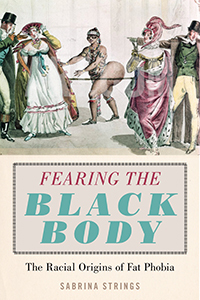
Format: 283 pages, Paperback Published: May 7, 2019 by New York University Press ISBN: 9781479886753 (ISBN10: 1479886750)
Blurb
In her first book, sociologist Strings (sociology, Univ. of California, Irvine) explores the historical development of prothin, antifat ideologies deployed in support of Western, patriarchal white supremacy. Beginning in the aesthetic ideals circulated by Renaissance thinkers and artists and bringing her narrative up into the 1990s, Strings charts how white Europeans and Anglo-Americans developed ideals of race and beauty that both explicitly and figuratively juxtaposed slim, desirable white women against corpulent, seemingly monstrous black women.
The work is divided into three sections. The two chapters in the first part consider how Renaissance white women and women of colour were depicted as plump and feminine, separated by class, yet belonging to the same gender. The second part of the work charts the rise of modern racial ideologies that yoked feminine beauty to Protestant, Anglo-Saxon whiteness. Later chapters and the epilogue consider how Americans normalized the “scientific management” of white women’s bodies for the purpose of racial uplift, a project that continued to situate black women as the embodied Other.
My Review
I’ve been reading this book on and off over the last few months as other commitments permitted; I found it fascinating and always picked up some new information every time I went back to it. I finished it last night with a feeling of disappointment that it wasn’t longer, but also interested in reading more by the author and on the topic.
BMI is, as I have said many times, bullshit, made-up and irrational. That it is still used by the medical profession is a travesty. Historical attitudes to fatness have varied with time and place, but scientific evidence does not support the vilification of fat people. In fact, Ancel Keys, who essentially invented the BMI and pushed for it to replace actuarial tables for insurance and medical purposes, admitted he found fat people ugly and assumed they were unhealthy. You cannot tell anything about a person’s health from a ratio of height to weight, or their appearance.
This book covers Europe and the U.S., because the author is USian, and the U.S. wouldn’t exist without European colonisation, so it covers the period from the Renaissance to the last years of the twentieth century. Five hundred years and three continents it a lot of space and time to cover.
When European’s started Othering people to justify slavery, weight was one of the things they chose to stigmatise. It coincided with Protestant disgust with bodies, with anything that might be fun, and later with changing ideas about ‘polite’ behaviour. By accusing African people of being lazy, gluttonous and dishonest, they could link that to intellect and justify colonisation and enslavement. And of course, to keep Europeans on top of the heap, the same rules had to be applied to Europeans, especially middle and upper class women.
Later still, eugenics came into play and whole new fields of scientific racism and sexism opened up for those white men determined to hold their places at the top of society. In the U.S. one of the ways they did this was to racialise Jewish, Irish, Southern (particularly Italian) and Eastern Europeans as the different groups migrated to the Americas across the 18th and 19th centuries and into the 20th century. They used the same lazy propaganda that earlier European ‘scientists’ had used to racialise and other Africans and then the indigenous populations of the Americas and Australia.
Body size and shape was used as a stick to beat people with. A ‘too thin’ rich white woman was a danger to the nation (whichever nation it was), a ‘too fat’ rich white woman, equally so, at different times. A fat black or African woman – signs of laziness and greediness – moral incontinence and hypersexuality. Because reasons.
Racist shitbags don’t actually have logical reasons, they take their beliefs and make up pseudoscience to support it. Fat hate is the same. It doesn’t matter how much evidence you have to show that ‘normal weight’ doesn’t exist, and that weight variation is just a normal part of human diversity (like the levels of melanin in the skin), they’ll still scream that fat kills.
Strings is a professional, and writes like one, unlike me; I’m just blunt and don’t mind swearing if I think it’s appropriate. I’ve seen other reviews that claim the writing is dry; I disagree. I found it clear and precise, although I would have been interested in more analysis and references from African and African American sources, but I doubt they were available given the systemic erasure and silencing of Black people in the last five hundred years.
The structure of the book puts the different strands of evidence into context and builds on Strings’ argument in a structured and organised way. Strings draws on popular and scientific literature, art and cultural movements to explore the topic and build her arguments. This is not ‘popular history but rewards careful reading and consideration.
Constable – 29th September 2020 hardback £20.00 – also available as an eBook/audio
The definitive, authorised biography of
Lee Child
“Riveting . . . archival diligence . . . [Martin] is a skilled and audacious interlocutor, too, but her subject is just as adept as interviewee . . . starkly affecting” – Irish Times
The Reacher Guy is a life of bestselling superstar Lee Child, a portrait of the artist as a young man, refracted through the life of his fictional avatar, Jack Reacher. It tells the story of how the boy from Birmingham reinvented himself to become the strongest brand in publishing, selling over one hundred million books in more than forty different languages across the globe.
Heather Martin interviews friends, teachers, colleagues and neighbours, including agents and editors. Based primarily on her conversations with the author over a period of years, together with readings of his books and research in his literary archive, this authorised biography reveals the man behind the myth, tracing his origins back through the generations to Northern Ireland and County Durham, and following the trajectory of his extraordinary career via New York and Hollywood until the climactic moment when, in 2020, having written a continuous series of twenty-four books, he finally floats free of his fictional creation.
Lee Child comments: “I met Heather Martin some years ago, and we started talking about why people love telling and hearing stories. To get more depth and detail we started talking about why I do. Eventually I said, ‘If you want to really get to the bottom of it, you’re going to have to write my biography.’ So she did. It was a fun and illuminating process. I had forgotten a lot, and it was fascinating to be reminded. Now it all makes sense.”
“Vivid and entertaining . . . a must-buy for any aspiring novelist, thanks in particular to its terrific insight into how Child’s first book was written, rewritten, edited, sold and published.” – The Telegraph
“You’ll emerge from the first 300-odd pages knowing more about [Child’s] formative years that you do about your own.” – The Times
Publisher : Clink Street Publishing (28 Oct. 2021) Language : English Paperback : 86 pages ISBN-10 : 1913962857 ISBN-13 : 978-1913962852 Dimensions : 10.16 x 0.53 x 15.24 cm
Do you want to travel the world but feel overwhelmed and unclear where to begin? Don’t let fear stop you.
Filled with useful advice and tasks, Plan Safe Travel: Solo is a straightforward 5-stage planning process that transforms your dream into a safe reality:
Assess
Set your travel needs, concerns and budget.
Design
Decide trip style, itinerary and accommodation, including how to meet other travellers.
Adapt
Fine-tune your design, by answering important questions.
Prepare
Make practical choices, like luggage, insurance, money and mobile coverage.
Travel
Read safety tips.
For five years, I have travelled as a female, solo traveller. People ask how I do it. Pre-trip decisions instil confidence. Let my knowledge help you experience this world. Use Covid times to plan for lifelong memories.
City hopping, gap year, career break, or once-in-a-lifetime trip, create your perfect journey with Plan Safe Travel: Solo.
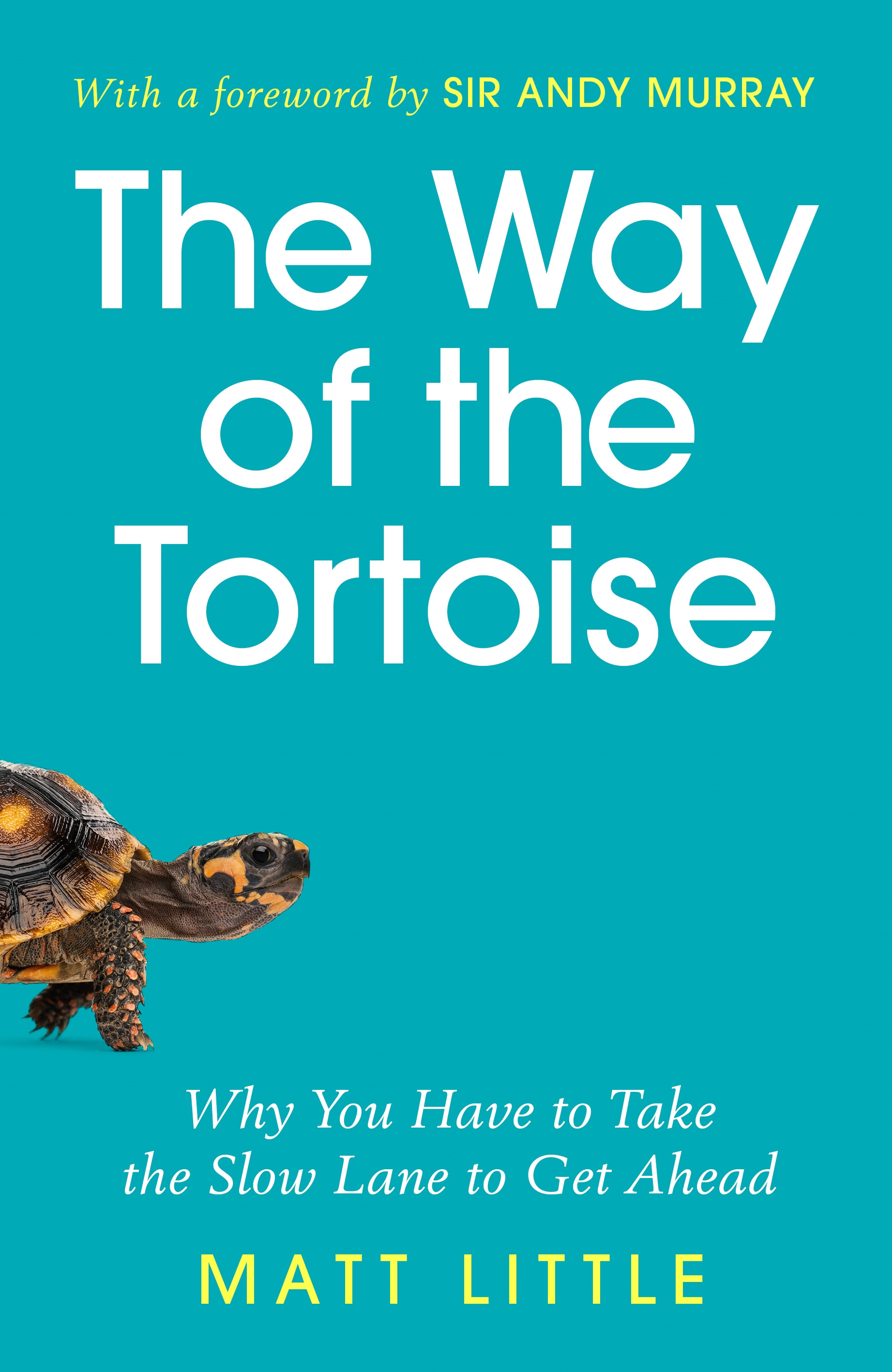
Drawing on more than a decade’s experience working with former tennis World Number One Sir Andy Murray, The Way of the Tortoise introduces you to the benefits of the slow lane and reveals why it’s the only true path to a high-performance mindset.
Taking inspiration from Aesop’s well-known fable of the Hare and the Tortoise, internationally renowned trainer Matt Little recognizes that there is no fast path to success. By focusing on immediate results, we can gloss over process in the race to get ahead, skipping over the lessons and experiences that we all need to build solid foundations for our future achievements. Matt shows that taking the slow lane can not only help you reach your goals more effectively, it can make your successes more sustainable by increasing your motivation, energy and resilience. Packed full of examples from the highly adaptable worlds of sport and business, as well as Matt’s own remarkable career, The Way of the Tortoise reveals, through practical exercises and techniques, the essential strategies we can all use to achieve extraordinary results.
Kerry Daynes, leading forensic psychologist, takes us into the murky world of psychological investigation to uncover what lies buried. Each of her clients is classed as a ‘mentally disordered criminal offender’ whose psychological problems have contributed to them breaking the law.
Whether she is dealing with a young murderer who says he has heard voices telling him to kill, a teacher who daubs children in red paint and threatens to abduct them, or an aspiring serial killer who faints at the sight of blood, Kerry’s quest is to delve beyond the classic question asked of forensic psychologists: ‘Are they mad or are they bad?’
In her new book, Kerry provides an unflinching, enlightening and provocative insight into the minds of her clients, shedding light on the root causes of their behaviour.