ISBN: 9781526738608 Published: 18th September 2019 £15.99
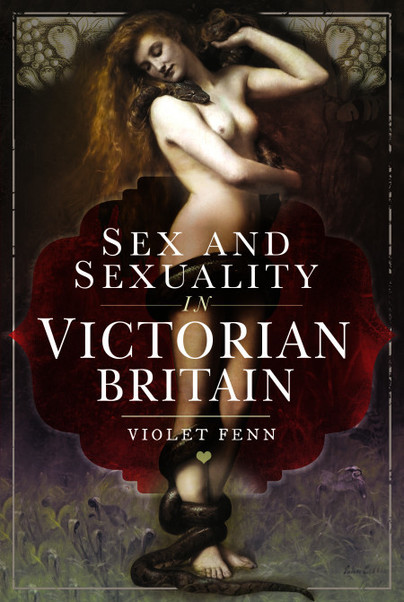
Mary Ann Nichols, Annie Chapman, Elizabeth Stride, Catherine Eddowes and Mary Jane Kelly are inextricably linked in history. Their names might not be instantly recognisable, and the identity of their murderer may have eluded detectives and historians throughout the years, but there is no mistaking the infamy of Jack the Ripper.
For nine weeks during the autumn of 1888, the Whitechapel Murderer brought terror to London’s East End, slashing women’s throats and disembowelling them. London’s most famous serial killer has been pored over time and again, yet his victims have been sorely neglected, reduced to the simple label: prostitute.
The lives of these five women are rags-to-riches-to-rags stories of the most tragic kind. There was a time in each of their lives when these poor women had a job, money, a home and a family. Hardworking, determined and fiercely independent individuals, it was bad luck, or a wrong turn here or there, that left them wretched and destitute. Ignored by the press and overlooked by historians, it is time their stories were told.
Northumberland…to the Romans it was Ad Fines, the limit of the Empire, the end of the Roman World. It was here in 122 AD that the Emperor Hadrian decided to build a wall stretching from coast-to-coast to provide protection, to show the might of the Empire, and as a statement of his grandeur. Visitors to Northumberland can walk the Wall visiting milecastles, Roman frontier forts and settlements such as Housesteads (where you can see the oldest toilets you’ll ever see) or Vindolanda (where you can take part in an archaeological dig) where wooden tablets detailing life on this frontier (the oldest example of written language in Britain) were discovered, or the remains of Roman temples and shrines (such as the Mithraeum at Carrawburgh). After the Romans left, Northumberland became the heart of one of the greatest kingdoms of Anglo-Saxon Britain, Northumbria. The home of Saints, scholars and warrior kings. Visitors can see the ancient seat of this kingdom at the medieval Bamburgh Castle, visit Hexham Abbey (built in 674 AD), or tour the magnificent remains of the 7th century Priory at Tynemouth (where three kings are buried – Oswin (d. 651), Osred (d. 790), and the Scottish King Malcolm III (d. 1093).
No other county in Britain has as many medieval remains as Northumberland. From the most grand such as Alnwick Castle (known as the Windsor of the North, the home of the Dukes of Northumberland, the capital of Northumberland, and, to many, Hogwarts!) to humble remains such as the Chantry at Morpeth. At Warkworth visitors can tour the medieval church (scene of a 12th century Scottish massacre), Warkworth Castle (another Percy possession and the setting for a scene in Shakespeare’s Henry IV), a medieval hermitage, and the fortified bridge gatehouse (one of the only surviving examples in Britain).
Northumberland was ravaged during the Anglo-Scottish Wars and this led to the development of family clans of Border Reivers who were active during the 16th and early 17th centuries. Raiders, looters, blackmailers and courageous cavalrymen the Reivers have left many surviving remnants of their harsh time. Peel Towers dot the landscape alongside Bastle Houses. The active can even walk in the footsteps of the Reivers by following the Reivers Way long distance path.
Victorian Northumberland was dominated by both farming and, increasingly, by the industrial genius of some of its entrepreneurs. The greatest of these, Lord Armstrong (known as the Magician of the North), has left behind one of the most magnificent tourist sites in Britain; his home at Cragside. Carved from a bare hillside and transplanted with millions of trees and shrubs and crowned with the beautiful Cragside House visitors can walk the grounds taking advantage of various trails and spotting wildlife such as red squirrels before visiting the first house in the world to be lit by electricity!
John Morgan was born in the UK in 1938 and qualified there as a chartered surveyor.
He moved to Zurich for three years in 1969 to work for a US conglomerate.
He then moved to Germany, where he eventually established a successful property consultancy firm together with a Dutch partner, selling this in due course to a German bank.
John has a German wife and four sons and now lives in retirement on Lake Constance. Having dual nationality and conversing today mostly in German, he is now uncertain whether he is British or German!
How dangerous is a woman with nothing left to lose?
The year is 1905. London is a playground for the rich and a death trap for the poor. When Sofia Logan’s husband dies unexpectedly, leaving her penniless with two young children, she knows she will do anything to keep them from the workhouse. But can she bring herself to murder? Even if she has done it before…
Emmet Vinsant, wealthy industrialist, offers Sofia a job in one of his gaming houses. He knows more about Sofia’s past than he has revealed. Brought up as part of a travelling fair, she’s an expert at counting cards and spotting cheats, and Vinsant puts her talents to good use. His demands on her grow until she finds herself with blood on her hands.
Set against the backdrop of the Suffragette protests, with industry changing the face of the city but disease still rampant, and poverty the greatest threat of all, every decision you make is life or death. Either yours or someone else’s. Read best-selling crime writer Helen Fields’ first explosive historical thriller.
Danni was a trainee corporate lawyer before she was forced to flee her life in London. Having escaped a controlling and abusive partner, she now finds herself hiding from another predator – her employer.
Post-Brexit, the U.K. oil industry is on its knees and desperate to turn a profit, but at what cost?
Many companies in Aberdeen have already been forced to sell out to the Russians, but when a prominent CEO is found dead, the number of mysterious deaths offshore have escalated and oil platforms are being targeted by terrorists. But who is actually calling the shots? There is more to these attacks than meets the eye…
As Danni draws ever closer to discovering the truth, she becomes embroiled in a web of secrets and deceit where doing the right thing could cost her life.
This book is truly exceptional. Applying science to the problems of human relationships, the perils of perfectionism and the pitfalls of social etiquette, Millie has written a joyous, funny and hugely insightful text for all of us – whether neurotypical or neurodiverse. This ‘outsiders guide to the human race’ is warm, witty and a joy to read.’ Prof Gina Rippon, Cognitive neuroscientist/autism researcher and author of The Gendered Brain.
Diagnosed with Autism Spectrum Disorder at the age of eight, Camilla Pang struggled to understand the world around her and the way people worked. Desperate for a solution, Camilla asked her mother if there was an instruction manual for humans that she could consult. But, without the blueprint to life she was hoping for, Camilla began to create her own. Now armed with a PhD in biochemistry, Camilla dismantles our obscure social customs and identifies what it really means to be human using her unique expertise and a language she knows best: science.
Through a set of scientific principles, this book examines life’s everyday interactions including:
– Decisions and the route we take to make them; – Conflict and how we can avoid it; – Relationships and how we establish them; – Etiquette and how we conform to it.
Explaining Humans is an original and incisive exploration of human nature and the strangeness of social norms, written from the outside looking in. Camilla’s unique perspective of the world, in turn, tells us so much about ourselves – about who we are and why we do it – and is a fascinating guide on how to lead a more connected, happier life.
I treat myself to a book subscription, the SFF Fellowship from Goldsboro Books. Goldilocks, by Laura Lam was the April book. It arrived yesterday. I was a bit distracted by a crochet project yesterday afternoon and this morning, but once I got myself organised, I sat down and read my new book.
The Earth is in environmental collapse. The future of humanity hangs in the balance. But a team of women are preparing to save it. Even if they’ll need to steal a spaceship to do it.
Despite increasing restrictions on the freedoms of women on Earth, Valerie Black is spearheading the first all-female mission to a planet in the Goldilocks Zone, where conditions are just right for human habitation.
The team is humanity’s last hope for survival, and Valerie has gathered the best women for the mission: an ace pilot who is one of the only astronauts ever to have gone to Mars; a brilliant engineer tasked with keeping the ship fully operational; and an experienced doctor to keep the crew alive. And then there’s Naomi Lovelace, Valerie’s surrogate daughter and the ship’s botanist, who has been waiting her whole life for an opportunity to step out of Valerie’s shadow and make a difference.
The problem is that they’re not the authorized crew, even if Valerie was the one to fully plan the voyage. When their mission is stolen from them, they steal the ship bound for the new planet.
But when things start going wrong on board, Naomi begins to suspect that someone is concealing a terrible secret — and realizes time for life on Earth may be running out faster than they feared . . .
My Review
This was a slow burner. Narrated by the main character’s daughter, Iris, in 2063, we learn of events in 2033. A group of women scientists and engineers steal a shuttle to get to Atalanta, a ship they helped design and build but from which they had been booted by a misogynist government.
Led by Dr Valerie Black, CEO of Hawthorn, the company originally tasked with designing the Atalanta and planning the trip, and adoptive mother of main character, Naomi Lovelace, an astrobiologist, Dr Hart (ship’s surgeon), her wife Jakkie Hixson, pilot, and Lebedeva, the engineer, steal a shuttle and then the Atalanta and head for Mars to make the jump to Cavendish, an Earth-like exoplanet, around Epsilon Eridani, now renamed Ran. But things aren’t quite going as expected and when a new infection appears on Earth that kills fast, secrets come to light that make the four subordinates question Dr Valerie Black.
I sat and read this in 6.5 hours, I couldn’t put it down. The slow build of tension as Naomi realises things aren’t quite what they ought to be and she loses her hero-worship of the woman who raised her is the main drive of tension, while the science in the science fiction is enough to keep a science buff interested without bogging down a non-science geek.
Valerie was a really vivid character, who was fully realised, while the others had flashes of life but were often in the background. I have seen other readers say they felt the characters were a bit flat, but I think that it might be deliberate. We are reading from the point of view of Iris Lovelace Kan, the second daughter of Naomi, and Dr Black’s son, Evan Kan; for her the most important people are obviously her mother and grandmother. They loom large in her psyche and so they are more realised in her story. I felt like I was reading a biography written by someone a little too close to the people involved, in that sense, with the characterisation.
The plot is taut and breathtaking, or at least I struggled to remember to breathe while I was reading. I really enjoyed the book, although I’d have liked some more background on how the world got from here to there. It’s hinted at, a gradual erasing of rights, a rise in right-wing ideology, ignored until it smacked people in the face.
We can see this happening already. It’s a warning, but there’s also hope. After the disaster changes were made, and although it wasn’t enough early enough, people survived.
Given it’s VE Day here in the UK and our precious government are using it to whip up nationalist fervour, again, and the dodgy lot they have running her native U.S., I think it’s entirely prescient for Lam to write about changes 13 years from now, where the world is a mess, people still don’t believe climate change is real despite the refugees and wildfires, and rights are eroded for anyone not a rich, white man. The dream of utopia, espoused by Dr Black isn’t an option, nor is running away to another planet. We just have this one, this one chance, to sort things out, to change.
We’re at a turning point. Which way do you want to go?
Fiction/historical Paperback: 198 x 129 Print RRP: £9.99 Print ISBN: 978-1-9164671-8-7 Extent: 336 E-book ISBN: 978-1-913109-06-6 Publication: 30 April 2020
Its spring 1920 in the small military town of Nandagiri in south-east India. Colonel Aylmer, commander of the Royal Irish Kildare Rangers, is in charge. A distance away, decently hidden from view, lies the native part of Nandagiri with its heaving bazaar, reeking streets and brothels. Everyone in Nandagiri knows their place and the part they were born to play – with one exception. The local Anglo-Indians, tainted by their mixed blood, belong . . . nowhere.
When news of the Black and Tans’ atrocities back in Ireland reaches the troops in India, even their priest cannot cool the men’s hot-headed rage. Politics vie with passion as Private Michael Flaherty pays court to Rose, Mrs Aylmer’s Anglo-Indian maid . . . but mutiny brings heroism and heartbreak in equal measure. Only the arrival of Colonel Aylmer’s grandson Richard, some 60 years later, will set off the reckoning, when those who were parted will be reunited, and those who were lost will be found again.
It is a little known fact that one immigrant Italian family ran London’s thriving vice trade unchecked from the mid-1930s for some twenty years.
The five Messina brothers imported prostitutes from the Continent on an industrial scale, acquiring the women British citizenship by phoney marriages. Demanding 80% of earnings, the Messina became fabulously wealthy, purchasing expensive properties, cars and influence.
As this revealing and absorbing account describes, the brothers ruled with a ruthless combination of charm, blackmail and all too credible threats of disfigurement and death.
It took a sensational Sunday newspaper exposé to get the authorities to act. A series of dramatic arrests and trials followed and one by one the brothers were imprisoned and deported for crimes including immoral earnings, attempted bribery and firearms offences.
Such was their fortune that numerous potential beneficiaries came forward, most recently in 2012.
The author, a much published former Metropolitan police officer, has researched the remarkable criminal careers of the five Messina’s and the result is a riveting and shocking read.