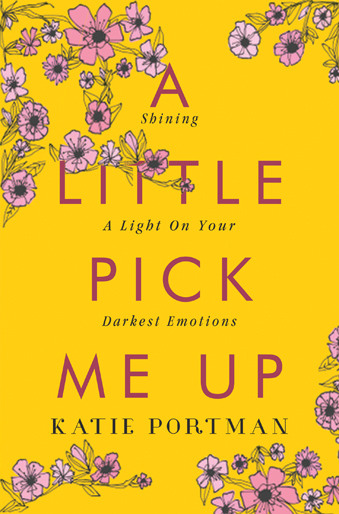
Every cloud has a silver lining… doesn’t it? Anna is thirteen years old, lives in London with her father, and has Asperger’s syndrome. When her father dies, she moves to Scotland to live with her estranged, reclusive mother. With little support to help her t in, she must use every coping strategy her father taught her—especially her ‘Happy Game’—as she tries to connect with her mother, discover her past, and deal with the challenges of being thrown into a brand new life along the way.
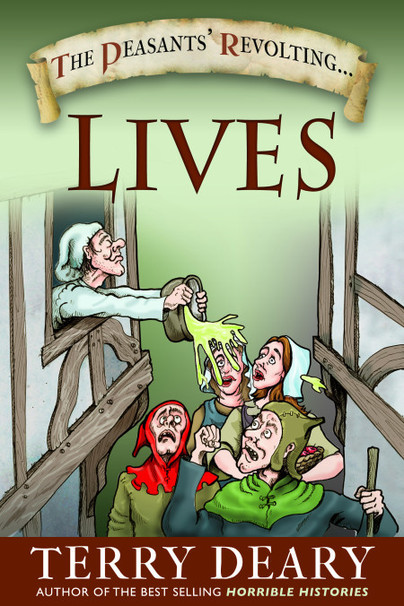
Today we are aware of how the rich and privileged have lived in the past because historians write about them endlessly. The poor have largely been ignored and, as a result, their contributions to our modern world are harder to unearth.
Skilled raconteur TERRY DEARY takes us back through the centuries with a poignant but humorous look at how life treated the common folk who scratched out a living at the very bottom of society. Their world was one of foul food, terrible toilets, danger, disease and death – the last, usually premature.
Discover the stories of the teacher turned child-catcher who rounded up local waifs and strays and put them to work, and the thousands of children who descended into the hazardous depths to dig for coal. Read all about the agricultural workers who escaped the Black Death only to be thwarted by greedy landowners. And would you believe the one about the man who betrothed his 7-year-old daughter to a Holy Roman Emperor, or even the brothel that was run by a bishop?
On the flip side, learn how cash-strapped citizens used animal droppings for house building and as a cure for baldness; how sparrow’s brains were incorporated into aphrodisiacal brews; and how mixing tea with dried elder leaves could turn an extra profit. And of the milestones that brought some meaning to ordinary lives, here are the trials and tribulations of courtship and marriage; the ruthless terrors of the sporting arena; and the harsh disciplines of education – all helping to alleviate the daily grind.
The Peasants’ Revolting… Lives celebrates those who have endured against the odds. From medieval miseries to the idiosyncrasies of being a twenty-first-century peasant, tragedy and comedy sit side by side in these tales of survival and endurance in the face of hardship.
Caught up in a space station turf war between gangs and corrupt law, a lone asteroid miner decides to take them all down.
When an asteroid miner comes to Station 35 looking to sell her cargo and get back to the solitude she craves, she gets swept up in a three-way standoff with gangs and crooked cops. Faced with either taking sides or cleaning out the Augean Stables, she breaks out the flamethrower.
The Rosie Synopsis
‘Jane’ or ‘the Miner’ desperately needs food and fuel, so she puts in to an asteroid-based space station, Station 35. Here she is ripped off by the ore company, finds three rival gangs in control and at each others’ throats, while the ‘decent’ population, lead by ‘Mr Shine’ hunker down in the lower depths of the station, except bar-owner/chef Takata and Station Master Herrera, who both refuse to be forced out of the galleria. Jane decides she’s going to clean up the Station and hand it back to ‘decent folks’.
Plans don’t exactly go as expected.
Basically, have you seen any of those old westerns, the ones based on Japanese films, like Seven Samurai, reworked as westerns, or Clint Eastwood’s work, like Fistful of Dollars? Think that aesthetic, but in space.
The Good
The novel calls on the traditions and tropes of westerns and on those westerns based on Japanese films, and obviously on the original Japanese work. So, the protagonist isn’t named, or only briefly, there are rival gangs and corrupt law officers, the place is far from anywhere with no help coming. I have seen an interesting collection of movies over the years but even if I haven’t seen the specific films, I know enough and can get the feeling over the originals, that the book’s references and plot points make sense.
An example of this tradition is in the naming of the protagonist. The ‘Miner’ is unnamed, given nicknames and only once is her real name and some clue about her identity revealed. This is going to be familiar to lovers of dodgy 60s Westerns based on Japanese books and films. Clint Eastwood famously play ‘The Man with No Name’ in the Dollars Trilogy. If you get the aesthetic and understand the tradition it stands in, this is marvelous fun. It’s not the first ‘spaghetti western in space’ sci fi novel, but it’s the first I’ve read and I liked it.
The pace is fast and choppy, moving between Jane and a character called Steven, although he doesn’t go by that name initially – he’s known as Screwball. They are nominally on the same, then opposed to each other and finally they’re allies. Jane doesn’t like people, preferring to stay out in space, mining and tending her orchids and bonsai trees on her little ship. Steven is a hired thug, working for Feeney, the original crime boss on Station 35. Over the course of the book Jane discovers she doesn’t actually hate humans as much as she thinks she does, and Steven finds himself questioning his life choices after a series of unexpected and painful events.
Basically, they follow the character arcs expected in the genre. They both play hero and anti-hero roles at different points and they both have similar motives initially – they need money. They both become more self-aware and ‘better people’ due to their experiences although acknowledging that they aren’t heroes.
As you can imagine from the foregoing, I found the characterisation enjoyable and fitting perfectly for the genre of the book.
The origins of the dispute and the background of the Station are mentioned in different places in the narrative, so the reader learns more as the Miner does. There are logical reasons for Station 35 being where it is when she arrives. None of the characters are surplus to requirements and the main characters as fairly well fleshed out.
Herrera’s insults are fabulous.
The Not-So-Good
Not much. I’d have liked to know more about the ‘universe’ and Herrera gets a bit characateurish at times.
The Verdict
I enjoyed reading this book, it’s given me hours of enjoyment over the three days I spent reading it. I was on the edge of my seat a lot of the time.
ISBN: 9781526738608 Published: 18th September 2019 £15.99
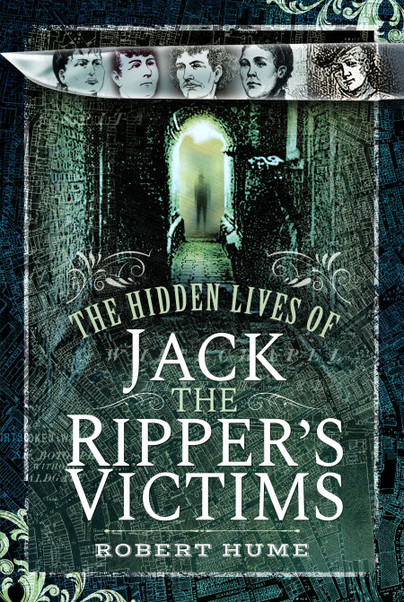
Mary Ann Nichols, Annie Chapman, Elizabeth Stride, Catherine Eddowes and Mary Jane Kelly are inextricably linked in history. Their names might not be instantly recognisable, and the identity of their murderer may have eluded detectives and historians throughout the years, but there is no mistaking the infamy of Jack the Ripper.
For nine weeks during the autumn of 1888, the Whitechapel Murderer brought terror to London’s East End, slashing women’s throats and disembowelling them. London’s most famous serial killer has been pored over time and again, yet his victims have been sorely neglected, reduced to the simple label: prostitute.
The lives of these five women are rags-to-riches-to-rags stories of the most tragic kind. There was a time in each of their lives when these poor women had a job, money, a home and a family. Hardworking, determined and fiercely independent individuals, it was bad luck, or a wrong turn here or there, that left them wretched and destitute. Ignored by the press and overlooked by historians, it is time their stories were told.
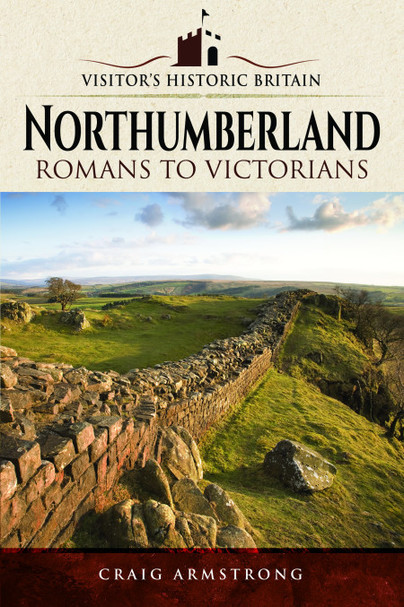
Northumberland…to the Romans it was Ad Fines, the limit of the Empire, the end of the Roman World. It was here in 122 AD that the Emperor Hadrian decided to build a wall stretching from coast-to-coast to provide protection, to show the might of the Empire, and as a statement of his grandeur. Visitors to Northumberland can walk the Wall visiting milecastles, Roman frontier forts and settlements such as Housesteads (where you can see the oldest toilets you’ll ever see) or Vindolanda (where you can take part in an archaeological dig) where wooden tablets detailing life on this frontier (the oldest example of written language in Britain) were discovered, or the remains of Roman temples and shrines (such as the Mithraeum at Carrawburgh). After the Romans left, Northumberland became the heart of one of the greatest kingdoms of Anglo-Saxon Britain, Northumbria. The home of Saints, scholars and warrior kings. Visitors can see the ancient seat of this kingdom at the medieval Bamburgh Castle, visit Hexham Abbey (built in 674 AD), or tour the magnificent remains of the 7th century Priory at Tynemouth (where three kings are buried – Oswin (d. 651), Osred (d. 790), and the Scottish King Malcolm III (d. 1093).
No other county in Britain has as many medieval remains as Northumberland. From the most grand such as Alnwick Castle (known as the Windsor of the North, the home of the Dukes of Northumberland, the capital of Northumberland, and, to many, Hogwarts!) to humble remains such as the Chantry at Morpeth. At Warkworth visitors can tour the medieval church (scene of a 12th century Scottish massacre), Warkworth Castle (another Percy possession and the setting for a scene in Shakespeare’s Henry IV), a medieval hermitage, and the fortified bridge gatehouse (one of the only surviving examples in Britain).
Northumberland was ravaged during the Anglo-Scottish Wars and this led to the development of family clans of Border Reivers who were active during the 16th and early 17th centuries. Raiders, looters, blackmailers and courageous cavalrymen the Reivers have left many surviving remnants of their harsh time. Peel Towers dot the landscape alongside Bastle Houses. The active can even walk in the footsteps of the Reivers by following the Reivers Way long distance path.
Victorian Northumberland was dominated by both farming and, increasingly, by the industrial genius of some of its entrepreneurs. The greatest of these, Lord Armstrong (known as the Magician of the North), has left behind one of the most magnificent tourist sites in Britain; his home at Cragside. Carved from a bare hillside and transplanted with millions of trees and shrubs and crowned with the beautiful Cragside House visitors can walk the grounds taking advantage of various trails and spotting wildlife such as red squirrels before visiting the first house in the world to be lit by electricity!
John Morgan was born in the UK in 1938 and qualified there as a chartered surveyor.
He moved to Zurich for three years in 1969 to work for a US conglomerate.
He then moved to Germany, where he eventually established a successful property consultancy firm together with a Dutch partner, selling this in due course to a German bank.
John has a German wife and four sons and now lives in retirement on Lake Constance. Having dual nationality and conversing today mostly in German, he is now uncertain whether he is British or German!
How dangerous is a woman with nothing left to lose?
The year is 1905. London is a playground for the rich and a death trap for the poor. When Sofia Logan’s husband dies unexpectedly, leaving her penniless with two young children, she knows she will do anything to keep them from the workhouse. But can she bring herself to murder? Even if she has done it before…
Emmet Vinsant, wealthy industrialist, offers Sofia a job in one of his gaming houses. He knows more about Sofia’s past than he has revealed. Brought up as part of a travelling fair, she’s an expert at counting cards and spotting cheats, and Vinsant puts her talents to good use. His demands on her grow until she finds herself with blood on her hands.
Set against the backdrop of the Suffragette protests, with industry changing the face of the city but disease still rampant, and poverty the greatest threat of all, every decision you make is life or death. Either yours or someone else’s. Read best-selling crime writer Helen Fields’ first explosive historical thriller.
Danni was a trainee corporate lawyer before she was forced to flee her life in London. Having escaped a controlling and abusive partner, she now finds herself hiding from another predator – her employer.
Post-Brexit, the U.K. oil industry is on its knees and desperate to turn a profit, but at what cost?
Many companies in Aberdeen have already been forced to sell out to the Russians, but when a prominent CEO is found dead, the number of mysterious deaths offshore have escalated and oil platforms are being targeted by terrorists. But who is actually calling the shots? There is more to these attacks than meets the eye…
As Danni draws ever closer to discovering the truth, she becomes embroiled in a web of secrets and deceit where doing the right thing could cost her life.
This book is truly exceptional. Applying science to the problems of human relationships, the perils of perfectionism and the pitfalls of social etiquette, Millie has written a joyous, funny and hugely insightful text for all of us – whether neurotypical or neurodiverse. This ‘outsiders guide to the human race’ is warm, witty and a joy to read.’ Prof Gina Rippon, Cognitive neuroscientist/autism researcher and author of The Gendered Brain.
Diagnosed with Autism Spectrum Disorder at the age of eight, Camilla Pang struggled to understand the world around her and the way people worked. Desperate for a solution, Camilla asked her mother if there was an instruction manual for humans that she could consult. But, without the blueprint to life she was hoping for, Camilla began to create her own. Now armed with a PhD in biochemistry, Camilla dismantles our obscure social customs and identifies what it really means to be human using her unique expertise and a language she knows best: science.
Through a set of scientific principles, this book examines life’s everyday interactions including:
– Decisions and the route we take to make them; – Conflict and how we can avoid it; – Relationships and how we establish them; – Etiquette and how we conform to it.
Explaining Humans is an original and incisive exploration of human nature and the strangeness of social norms, written from the outside looking in. Camilla’s unique perspective of the world, in turn, tells us so much about ourselves – about who we are and why we do it – and is a fascinating guide on how to lead a more connected, happier life.