Beam aboard your own Science Fiction, Fantasy, and Horror classroom with the next volume of the BSFA-shortlisted writing-guide series!
Join Tiffani Angus (Ph.D.) and Val Nolan (Ph.D.) for a whirlwind introduction to the storytelling basics of 30 more subgenres and major tropes from across the limitless realms of Speculative Fiction.
Learn about Space Opera, Folk Horror, Climate Fiction, Werewolves, Astronauts, Mythic Fantasy, Goblin Markets, Dragons, and many more with deep dives into each subgenre’s history and development, spotter’s guides to typical examples, pitfalls to watch out for in your own writing, and activities to help you get started! All derived from a combined two decades of university-level practices and experience!
Spec Fic for Newbies breaks genres into bite-sized pieces for students or for any budding writer. It offers a welcoming introduction to how writers, filmmakers, and other creatives can begin to explore the infinite potential of Science Fiction, Fantasy, and Horror to create new stories beyond the boundaries of the ordinary.
This is not another dusty rulebook. This is a portal to endless other worlds!
EBook ISBN 25th March 2025 | 9781915998514 | epub | £5.99/$9.99/$11.99 Paperback ISBN 25th March 2025 | 9781915998507 | Trade Paperback | £9.99/$18.99/$24.99
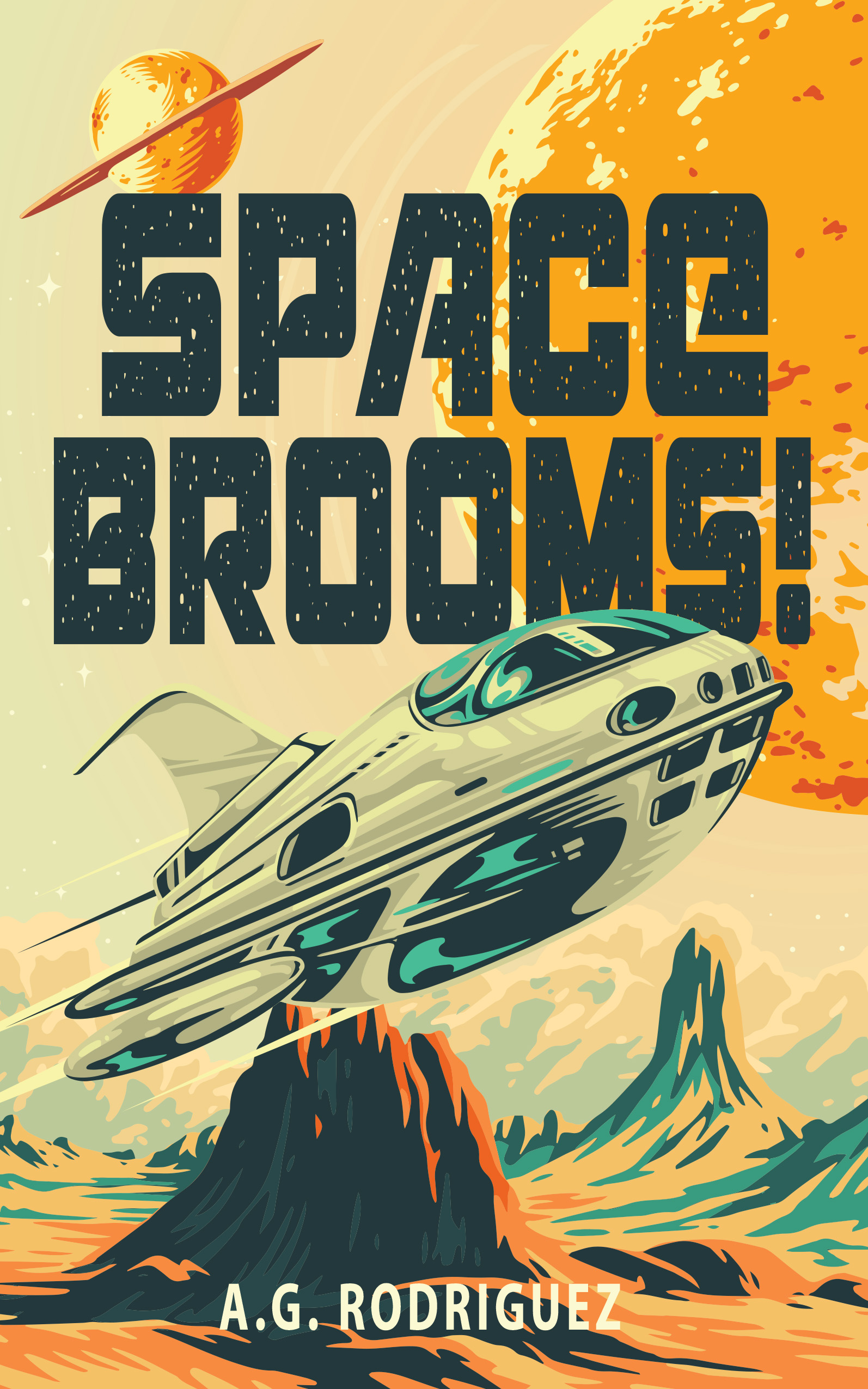
Johnny Gomez, a custodian – or space broom – on Kilgore Station, teams up with a pair of smugglers to sell a stolen data chip full of video game avatars and finally make his fortune
Everyone aboard Kilgore Station is living their best life. Everyone except for Johnny Gomez.
While humans, the augmented, and aliens of all shapes and sizes enjoy exotic cuisine on the dining deck, or gamble away their credits on the entertainment deck, Johnny is elbow-deep in oily, black, alien excrement. A ‘space broom’ custodian for the entire station.
This was obviously not the life Johnny dreamt of. Ten years ago, he travelled to Kilgore, the farthest space station in our solar system, in search of fortune like everyone else. Some people are just luckier than others.
Yet his meaningless, uneventful existence is immediately turned upside down when he happens upon a tiny glass data-chit, hidden amongst the alien poop he must clean up. Unbeknownst to him, every nefarious creature in the solar system will soon be after him to claim it for their own.
With the help of his augmented roommate, a pair of smugglers and a mysterious and beautiful stranger, Johnny fights off thugs and sails as fast as possible to earth’s moon, Luna, in effort to sell the chit to the Obinna Crime Syndicate. But with assassins and mobsters on their tail, the trip is anything but a cakewalk. And Luna itself proves to be nothing like a safe haven, when Johnny’s painful past finally catches up to him…
Space Brooms! is a heart-warming, tongue-in-cheek homage to all things sci-fi, from television and movies, to video games and books.
The Tyrant Philosophers, Book 3 Narrated by David Thorpe Release date: 05-12-24 Language: English Format: Unabridged Audiobook Length: 21 hrs and 39 mins
Bloomsbury presents Days of Shattered Faith by Adrian Tchaikovsky, read by David Thorpe.
Welcome to Alkhalend, Jewel of the Waters, capital of Usmai, greatest of the Successor States, inheritor to the necromantic dominion that was the Moeribandi Empire and tomorrow’s frontline in the Palleseen’s relentless march to bring Perfection and Correctness to an imperfect world.
Loret is fresh off the boat, and just in time.
As Cohort-Invigilator of Correct Appreciation, Outreach department, she’s here as aide to the Palleseen Resident, Sage-Invigilator Angilly. And Sage-Invigilator Angilly – Gil to her friends – needs a second in the spectacularly illegal, culturally offensive and diplomatically inadvisable duel she must fight at midnight.
Outreach, that part of the Pal machine that has to work within the imperfection of the rest of the world, has a lot of room for the illegal, the unconventional, the unorthodox. But just how much unorthodoxy can Gil and Loret get away with?
As a succession crisis looms, as a long-forgotten feat of necromantic engineering nears fruition, as pirate kings, lizard armies and demons gather, as old gods wane and new gods wax, sooner or later Gil and Loret will have to settle their ledger.
Just as well they are both very, very good with a blade…
My Review
I enjoyed the first two books in this series, but I think this third book is my favourite. We encounter re-occurring characters, like Jack, the former priest, and some of the crew from the hospital, who have settled in Alkhaland, and set up a new hospital in the poor district of the city. Jack has made a new friend who runs the local prison and has an un/comfortable relationship with his demon bride. This comes in very handy later in the story.
Into a complicated city comes Loret, a young, scared woman from Pallisand, sent to be aide to Gil, the Resident. Except Loret is a very bad aide, other than rescuing Gil a couple of times. Loret knows what has been happening in the isles and it scares her. She is too scared to tell Gil, and we learn what happened after the characters from book two return to the Palleseen Sway – the ‘infection’ of belief in Jack’s former god, a healer, and the Fisher King, who is very much not a healer, spreads in the army and then in the general population.
I loved this development in the background story, which travels through all three books. It’s the landscape that the stories take place in, with each book being a focused pinpoint in the wider picture. Nothing in the story-world is static, although the Palles want the world to be static and perfect and are constantly fighting against difference and variation.
Alkhaland has an elderly, grief-stricken ruler, who has three sons and a daughter. Tradition says that only a whole man can rule. The eldest is in exile, the second son, Cam, is his father’s right hand and designated heir, the third son is a child obsessed with death. His daughter is a pawn in the game of alliances.
The worldbuilding and descriptions of Alkhaland’s culture and society are vivid and lively. The characters are individual and have their own complex motivations. Gil is truly distressed by the difficult choices she has to make and her complex relationship with Cam.
When the ruler dies, the sons go to war. Except the youngest who goes to meet death. The daughter joins the demon at the hospital. Cam wins with the help of his friend Gil and her Palleseen troops, who promtly move in and make themselves at home.
The people of Alkhaland do not want to be part of the sway, and after some difficulties they free themselves, with the help of a motley crew of aliens, disaffected Palls, demons, and pirates. The final battle is climactic and exciting to read. The advances and reversals, the personal decisions that could make or break the battle, are brilliantly written.
It’s a complex story, exploring how imperialism sneaks into free places around the world, and the small things and well-meaning people that help it along. The Palleseen Sway reminds me of the British Empire, especially the way we took control of India. Trusted representatives of different European states rolled up in the Indian kingdoms and started cultivating influence, until the kings supported one or the other, and then European states sent armies to ‘help’ the Indian kings, until they control the states themselves.
Adrian Tchaikovsky leaves an author’s note that the places in the book aren’t based on real places but he was influenced by the podcast Revolutions. I don’t think I’ve listened to that podcast but I’ve had a quick scan of the episode titles, it seems to cover the revolutionary period from the reign of Charles II onwards. I shall have to have a listen. I also recommend Cool People Who Did Cool Stuff if you’re interested in revolutionaries.
I highly recommend this book and the series in general. I need more stories set in this world, but I think this trilogy is complete as it is, charting the beginning of the end of empire. I hear there’s a short story hiding in an anthology somewhere, so I need to get hold of that anthology.
The narration was excellent and fully embodied the different characters.
11th February 2025 | PB | 9781915998422 | £9.99/$18.99 | Also available in ebook and audio | Sci-Fi | Alien Contact | Military
ABOUT THE BOOK
As World War III rages, the scientists in Antarctica are thankful for the isolation– until a group of Chinese scientists arrive at the American research base. In their truck is a dead body, the first murder in Antarctica. The potential for a geopolitical firestorm is great, and, with no clear jurisdiction, the Americans don’t know what to do. But they soon realize the Chinese scientists have brought far more with them than the body…
Within seventy-two hours, thirteen others lie dead in the snow, murdered in acts of madness and superhuman strength. An extremophile parasite from the truck, triggered by severe cold, is spreading by touch. It is learning from them. Evolving. It triggers violent tendencies in the winter crew, and, more insidiously, the beginnings of a strange symbiotic telepathy.
Exhausted by suspicion and fear, with rescue impossible for months, the desperate crewmembers turn on each other. A small group of survivors try to resist the siren call of the growing hive mind and stay alive long enough to solve the mystery of the symbiotic microbe’s origins. But the symbiote is more than a disease– it is a biological weapon that can change the balance of power in a time of war.
The survivors cannot let anyone infected make it to the summer season, when planes will arrive to take them and potentially the symbiote– back to civilization…
THEMES: Isolation and its effect on the human psyche; the cold of Antarctica as a character; uncontrolled bacterial evolution as a pacing threat; cramped, claustrophobic confines leading to intense interpersonal fireworks; the Antarctic Treaty, and how that is defined in a time of war
Format: 432 pages, Hardcover Published: January 16, 2025 by Hodderscape ISBN: 9781399723176 (ISBN10: 1399723170) Language: English
Description
Marisha’s life is not going as she expected. With the sleeping plague only a few months away, she’s as desperate for money as she is to escape her aunt’s torturous marriage prospects. Leaving all that she’s known behind, Marisha accepts a job working with the notorious koldunya, Baba Zima in her house that glides on chicken feet through the snow.
But Baba Zima is renowned for being both clever and cruel. And most difficult of all is her current apprentice, Olena, who wants nothing to do with Marisha. Despite her fears and Olena’s cold demeanour, Marisha finds herself drawn into the magical world of koldunry and delves further into Olena’s research – a cure for the sleeping plague.
Accompanying Olena on an increasingly dangerous, seemingly impossible search for a cure, she finds hidden connections between the sleeping plague, her own family’s history, and her bizarre, recurring dreams: dreams of a masked ball where the deep sleepers are trapped endlessly dancing – and a monstrous beaked man haunts her every step . . .
My Review
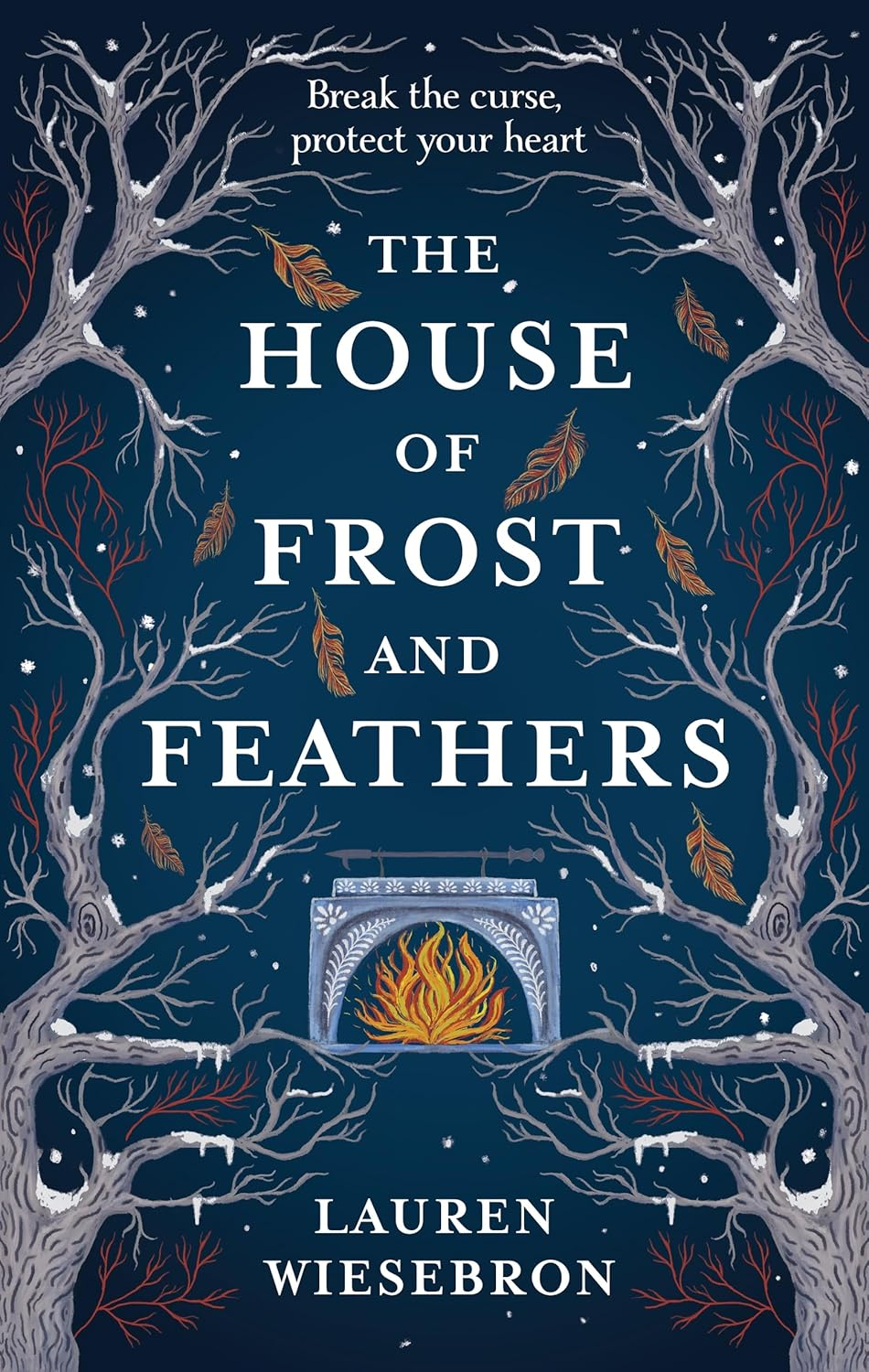
I found an ARC of this book at FantasyCon, one of the Hodderscape team must have left it lying around after a book launch event. It has a matching bookmark. Essentially I have paperback version of the hardback now available. The book was published 16th of this month. The paperback from HarperVoyager will be published in June. It has a different cover, so I might get it. This book is the February BFS Book Club book, and since I had it and felt like reading something different yesterday evening, I started reading it.
When I went to bed I was over 220 pages in and only stopped reading because my eyes were stinging with tiredness. I planned to go swimming this afternoon, but decided to stay home and finish the story instead. I’m going swimming tomorrow instead.
Marisha is cursed. Her mother, then her father, succumb to the sleeping plague, ten years apart. Her brother loses their fortune and she is, after finishing school, thrown on the mercies of her wealthy maternal aunts. Who pity and hate her, fearing she’ll bring the curse to them next time the sleeping plague strikes. Determined to get away from her aunts and the prospect of marriage to a man twice her age with evil eyes, she applies to be a koldunya’s assistant.
She’s too old.
She doesn’t believe in magic or curses.
She doesn’t have koldunya quality.
Her parents are victims of the sleeping plague and her brother has disappeared.
She is stubborn, logical, and hardworking. She knows how to scrub pans, read Old Slavonic, and the house didn’t squash her immediately.
Baba Zima takes her on for a year.
But she’s assistant to Olena, Baba Zima’s apprentice, who is stubborn, spiky, doesn’t let people in, and really doesn’t want an assistant.
The household is completed by two other young assistance, Dunya and Anka-ny, and they are later joined by Baba Zima’s son Valdim
For three months the household travels across the land, dispensing advice, cures, and spirit work to supplicants. Marisha develops a complicated relationship with Olena, especially after they kidnap a victim of the sleeping plague from a sanitorium and Marisha starts having terrifying dreams of a masked ball in the other world. When not hiding their kidnappee in a linen closet, Marisha helps Olena by reading a mountain of books and finding hints about the plague, while picking up the skills of a koldunya, although she doesn’t want to be one.
Olena has complicated feelings about Valdim, Marisha, and Baba Zima, while she struggles with finding a cure for the plague. Her plans seem to work then go awry, Baba Zima tests her loyalty frequently, and abuses her trust as often.
Baba Zima is suspicious; an old rival, Anatoli, is rumoured to have found a way to cure the plague, and has been making overtures to Olena. She doesn’t trust Olena not to betray her, so she distracts her by asking for help with the demonstration they will perform for other koldunya.
As winter comes to an end, the house on chicken legs takes the household to a clearing in the forest, to a gathering of koldunya, the krug. Here, events become tangled further, as Olena is tempted by her mentor’s rival, and Marisha is ‘helped’ by a kolduni who seems familiar, Pan Volya.
The actions of Marisha’s parents, Baba Zima, Anatoli, and their presumed dead matron, Baba Fima, and Pan Volya, before Marisha was born, bears fruit in the present, as Marisha, Dima (her brother), Olena, and Voldam, face the consequences and fight to save the entire world from the sleeping plague.
An imaginative fantasy of redemption, drawing heavily from Slavic mythology and folklore. Witches and wizards (to use English equivalents) flying around in giant mortars, or living in houses that walk about of chicken legs; the waters of life and death, that can heal the body and the spirit if applied appropriately, but which are hidden; deep dark forests, and poor villages, where disabled children are considered cursed, a punishment for the sins of their parents.
The name of the country, Chernozemlya, seems to be a reference to black earth. The black soil of Slavic regions of Europe are incredibly fertile and produce vast amounts of grains. It’s one of the reasons the Russian Empire, then the USSR, and the current Russian Republic, fought, killed, murdered, starved and displaced so many people. Can’t claim the soil if your own people aren’t living there. No really, it partially explains the current Russian war in Ukraine. Apart from control of the Black Sea, and Putin’s delusions of Tzarship.
The story turns on the relationships of the main characters, as they learn to work together and develop friendships or at least respect for each other. I didn’t like Baba Zima very much, she’s intentionally cruel, but as I read the last chapters, which showed her relationship with her own matron, Baba Fima, it’s clear she’s acting from fear, guilt, and a bad example of how a matron koldunya should treat her apprentices and assistants.
Olena’s history of being abused by her family and then manipulated by Zima make her reluctant to trust anyone, even the boy she grew up with, Valdim, and certainly not her assistant Marisha. She finds Marisha useful when she can be bothered to ask for her assistance, and Valdim confusing. Zima plays the three off against each other, so that until the Baba leaves unexpectedly, that make little progress. Every two steps forward in relationship building is met with a little trick by Zima, that forces them each back one step. Her removal gives them space to realise what’s been happening, and they still decide to rescue her. I found her stubbornness frustrating but understandable. She’s visibly disabled in a world that hates disability, she’s been badly treated by the people who are supposed to love her, and she feels guilt at accidentally hurting her brother. Her defence mechanism to hide from the pain is to view everything through a lens of attack, to build a wall around herself and drive people away.
Marisha seems a bit of a dolt at times; she’s blinded by her prejudices against the ‘irrational’, afraid that she’ll be the next victim of the sleeping plague, and she won’t ask for help when nightmares stop her sleeping! It’s obvious that she’s dream walking, at least it is to the reader, once we discover who is helping her. Between Marisha and Olena they have all the clues to the cure that they need, but they don’t talk to each other! I wanted to bash their heads together.
It felt like a realistic depiction of two very different and traumatised people trying to work through their differences and find new perspectives on events. Some real people never get to a point where their trauma is manageable and doesn’t colour everything in negativity, so it’s almost refreshing when fictional people do.
I enjoyed the depiction of Valdim’s sensory sensitivities and synaesthesia, and the way Olena’s foreshortened arm was still a functioning arm. Valdim’s ‘invisible’ disability makes him an over sensitive weirdo, who might see people’s souls, while Olena’s highly visible arm and birthmark are a punishment for her mother’s transgressions and a sign she is cursed. It suggests the author is aware of and sensitive to different forms of disability and the way disabled people and their families/friends make adjustments, even in cultures and societies that don’t recognise some disabilities or that treat disabled people badly.
Yay for sensitive disability representation!
I enjoyed the use of Slavic mythology and folklore in the story, it gave it a richness and depth that was immersive. There’s a rich and deep vein of story to draw on, that few English-language fantasy writers have tapped, and there are probably a lot of good fantasy novels not yet published in English that we’re missing out on.
This book left me feeling melancholy but satisfied. There’s a sense that everything has changed, and the characters are still catching up with themselves and their hopes for the future.
I do want to know what happens next for the trio. Do Olena and Valdim make a go of things? Does Kiril finally remember who Marisha is? What happened when Marisha visits her parents and brother? Do Dunya and Anka-by return to the house of chicken’s legs and continue with their training? Will Baba Zima catch up with Baba Fima? What will Anatoli and Pan Volya do next? Has the bird-faced man been defeated? How does Chernozemlya react to the sudden awakening of all the Sleeping Plague victims?
So many questions! I a bit invested in this world, aren’t I? I wonder if there will be a sequel?
I hope so, because Wiesebron’s writing is evocative, her characters grab attention, and the story was engrossing.
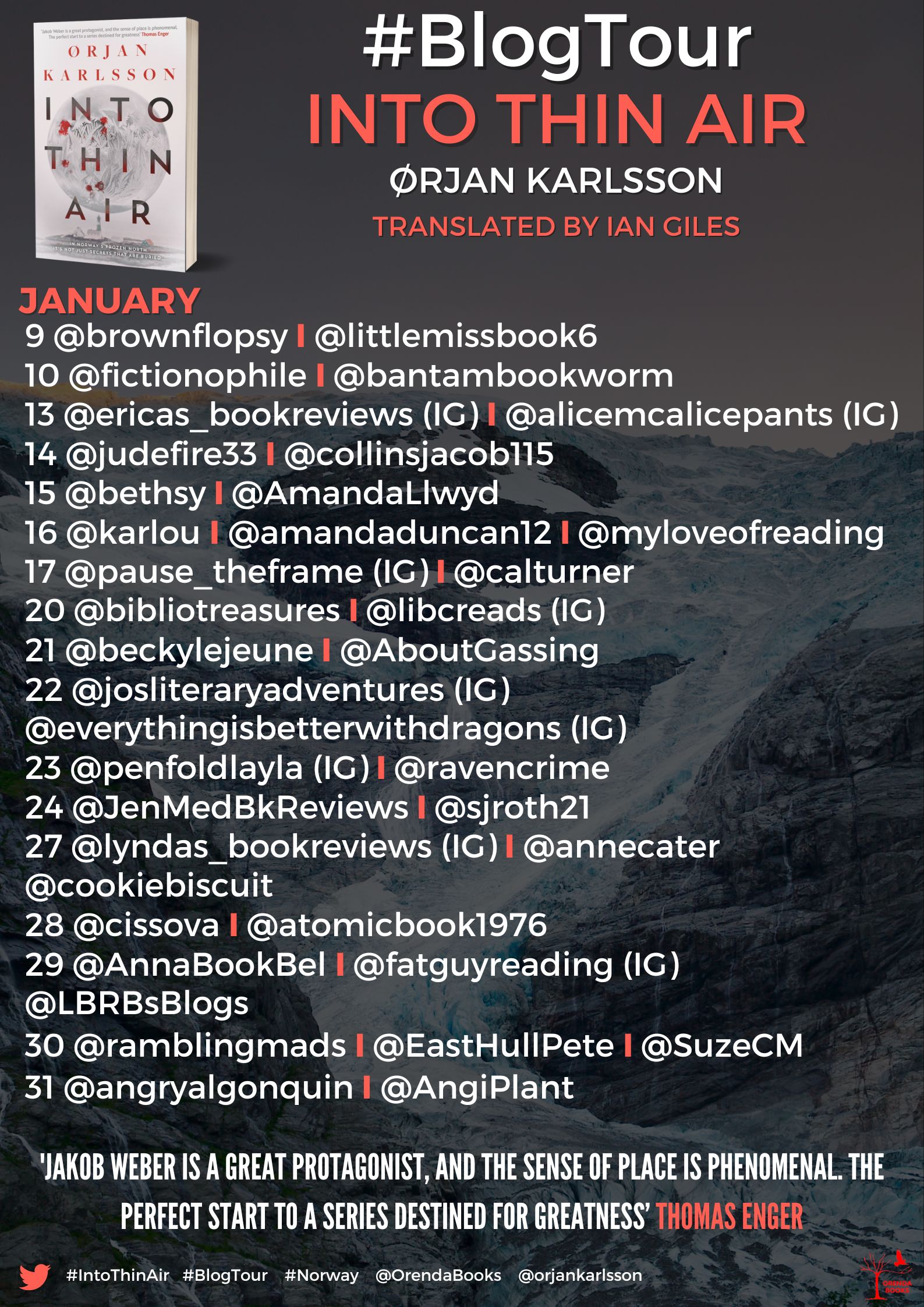
When nineteen-year-old Iselin Hanssen disappears during a run in a popular hiking area in Bodø, Northern Norway, suspicion quickly falls on her boyfriend. For investigator Jakob Weber, the case seems clear-cut, almost unexceptional, even though there is some suggestion that Iselin lived parts of her life beneath the radar of both family and friends.
But events take a dramatic turn when another woman disappears in similar circumstances – this time on the island of Røst, hundreds of miles off the Norwegian coast, in the wild ocean.
Rumours that a killer is on the loose begin to spread, terrifying the local population and leading to wild conspiracies. But then Jakob discovers that this isn’t the first time that young women have vanished without a trace in the region, and it becomes clear that someone is hiding something.
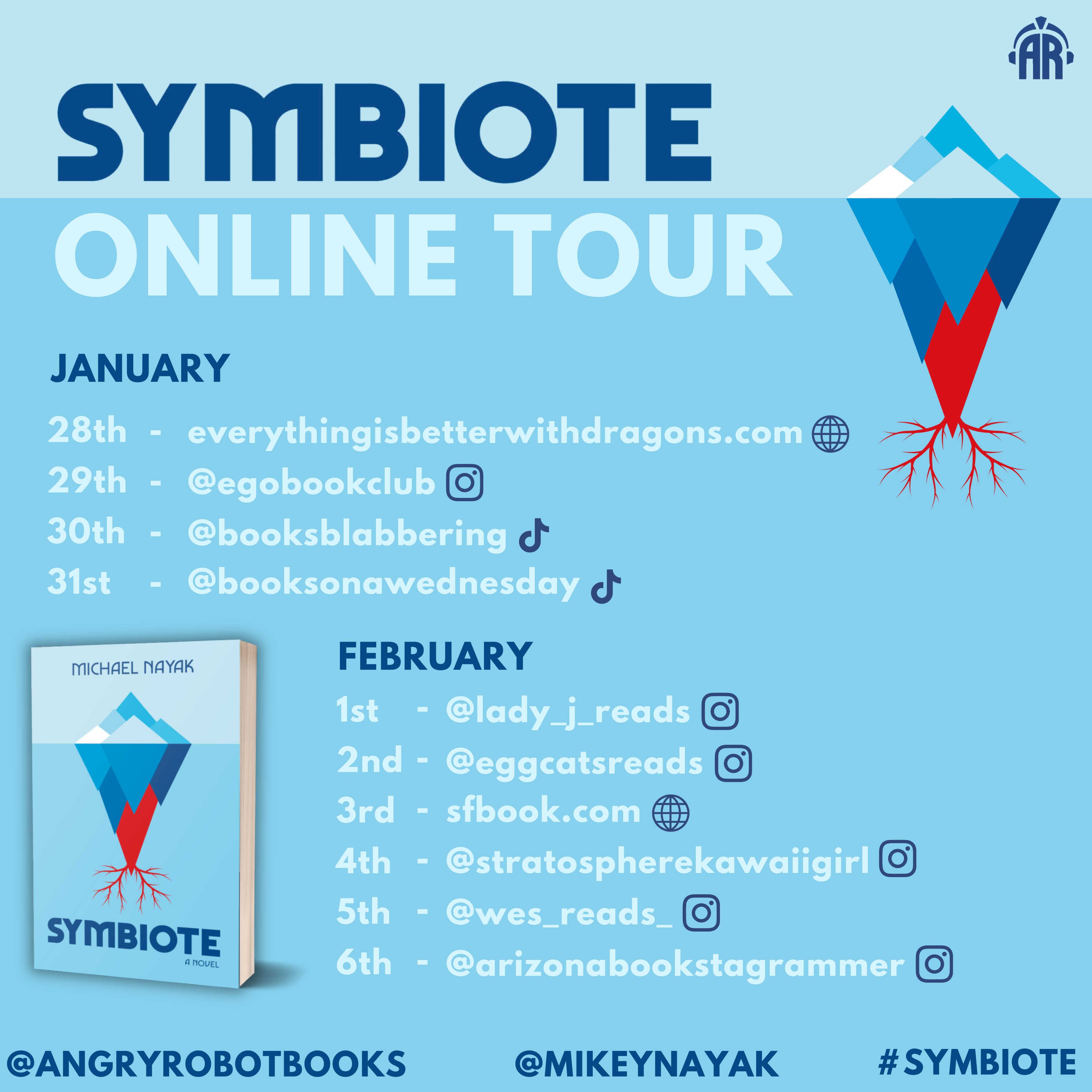
I’m still waiting for my copy of the book and I only found out yesterday that I’m on the tour, but I suspect the festive season messed up the timings. My review will be on the blog 30th January.





 Everything Is Better With Dragons