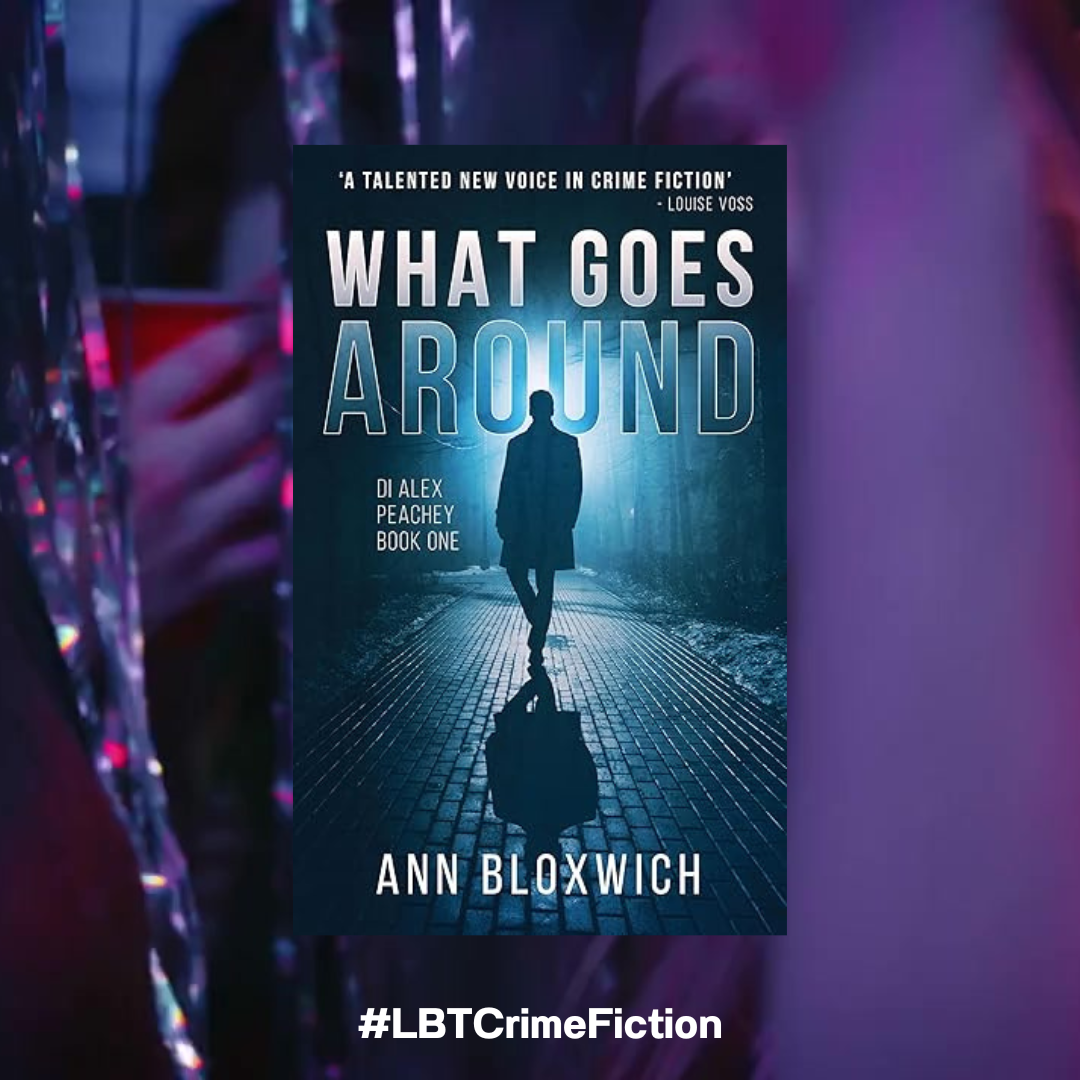
Genre: Crime Fiction
Pages: 331
Buy Links

Book blogger, Autistic, Probably a Dragon

Blurb
Ellie’s plans for a fun day at the park are dampened by the rain. So when Patrick suggests gymnastics instead, Ellie embarks on a new adventure filled with trampolines, beams, and monkey bars.
Will Ellie have the courage to try something new?
This is a story about being brave, facing your fears, and believing in yourself.
Author bio
Emily Bardwell is a first-time author of the children’s picture book, ‘Ellie the Crocodile goes to gymnastics’.
Working in Social Media Marketing, she has a passion for writing and storytelling. Her book was inspired by her own children, who from a young age, would regularly ask her to tell them stories.
A little crocodile named “Ellie” came to mind, and she began telling them all about an adventure she went on with her animal friends.
For over a year, whenever her children had a quiet moment, they’d ask her to tell them an, “Ellie Crocodile story”.
And so Ellie and her adventures became part of their family. She went everywhere with them; camping, bedtimes, doctor’s surgeries, long car journeys.
Until one day, she decided to start writing them down. ‘Ellie the Crocodile goes to gymnastics’ is her debut story.
Emily lives in Surrey (UK) with her husband and two children.
Buy Links
https://www.amazon.co.uk/Ellie-Crocodile-gymnastics-Emily-Bardwell-ebook/dp/B0DF5WC262
https://www.amazon.com/Ellie-Crocodile-gymnastics-Emily-Bardwell-ebook/dp/B0DF5WC262
Goodreads
https://www.goodreads.com/book/show/218130236-ellie-the-crocodile-goes-to-gymnastics

Description
The number one best-selling series that Audible listeners call “wonderfully entertaining”, “packed with humor, geek references and thought-provoking storylines”, and performed by “a true master story teller and actor” returns as the Bobs face their deadliest challenge yet.
The Bobiverse is a different place in the aftermath of the Starfleet War, and the days of the Bobs gathering in one big happy moot are far behind. There’s anti-Bob sentiment on multiple planets, the Skippies playing with an AI time bomb, and multiple Bobs just wanting to get away from it all.
But it all pales compared to what Icarus and Daedalus discover on their 26,000-year journey to the center of the galaxy. Sure, it could settle the Fermi Paradox for good (and what Bob doesn’t want to solve a mystery of the universe?). But it also reveals a threat to the galaxy greater than anything the Bobs could have imagined.
Just another average day in the Bobiverse.
My Review
I might have done a happy dance when I got the notification that this audiobook was available, and even more when I realised I had an Audible credit to use.
I love the Bobiverse series and I always want to know what will happen next. In this instalment, we follow Icarus and Daedalus on their adventure to Sagittarius A* and their side-tracks, which leads them home at last, but with terrible news. It’s certainly an entertaining and clever solution to the Fermi Paradox, although I maintain my hypothesis that the other sentient species of the galaxy took one look at us and decided to leave us to our own devices because we were too much trouble. The second plot is Howard and Bridget’s adventures among the dragons. Another is the mission to develop wormholes, defeat the self-aware AI Thoth that the Skippies have let loose on the galaxy, and deal with increasingly hostile humans, while the Quinlans get their own ‘net and Charles makes a confession about the origins of Starfleet.
There are always a few plot lines in a Bobiverse book, because they’re an ensemble cast, but it gets confusing. I really enjoyed the different plots but I’d love it if I could just focus on one at a time! The plots are mostly linked, but sometimes they’re just separate stories. Howard and Bridget’s adventures among the dragons could have been a novella, for instance. I think Bob and Teresa’s story definitely needs more attention, too.
As ever, Ray Porter is a superlative narrator. I love his voice!
Overall, a great return to the Bobiverse, but may need more than one listen to get everything that’s going on. I shall be relistening soon.
Description
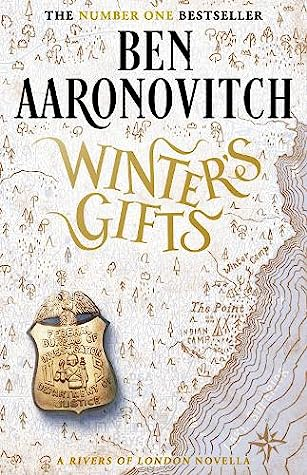
When retired FBI Agent Patrick Henderson calls in an ‘X-Ray Sierra India’ incident, the operator doesn’t understand. He tells them to pass it up the chain till someone does.
That person is FBI Special Agent Kimberley Reynolds. Leaving Quantico for snowbound Northern Wisconsin, she finds that a tornado has flattened half the town – and there’s no sign of Henderson.
Things soon go from weird to worse, as neighbours report unsettling sightings, key evidence goes missing, and the snow keeps rising – cutting off the town, with no way in or out…
Something terrible is awakening. As the clues lead to the coldest of cold cases – a cursed expedition into the frozen wilderness – Reynolds follows a trail from the start of the American nightmare, to the horror that still lives on today…
My Review
A novella from last year that’s been sat on my TBR pile for a while! I’ve been prompted to read it by the arrival of the latest Rivers of London novella. I thought I’d better get up to date.
Kimberley Reynolds is sent to the Great Lakes in the middle of winter to deal with an incident with unusual characteristics, and is snowed in almost immediately. Stuck without back-up, and her contact missing, she must discover what’s going on, what it has to do with an exhibition by the Virginia Gentlemen in 1848 and where Henderson in. Unfortunately, she’s not the only one looking into things, and it gets complicated when the local meteorologist takes her out to the site of the 1848 winter camp. Malevolent forces are at work, a teenage genius loci comes to the rescue, and Kimberly falls in love.
Kimberley Reynolds is a character that pops up in some of the novels but to be honest, she never struck me as a interesting character, or one I’d taken much note of. However, this novella gives the reader more information about her background and develops her character. I enjoy these novellas because they allow Aaronovitch to explore characters and locations without a full novel focused on Peter. He does make an appearance, over the phone and in her head, but it’s mainly about Kimberley and her slowly blossoming romance with William, while investigating both modern and historical crimes.
The dust jacket is cool too.
Recommended for fans of the series.
Description
New York City, New York.
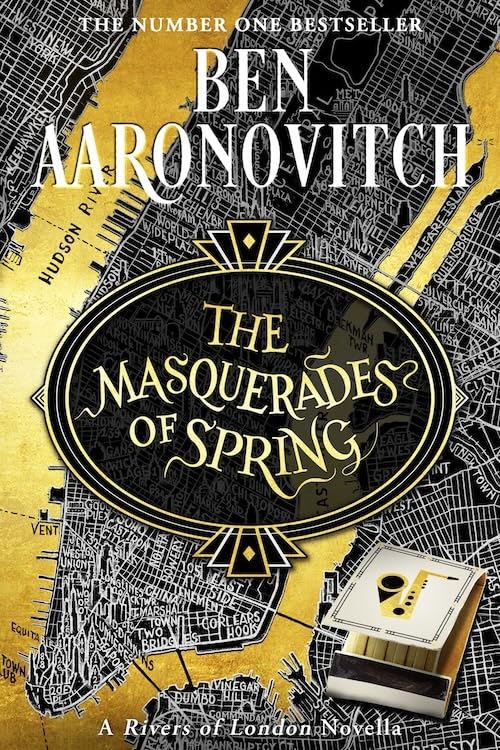
Meet Augustus Berrycloth-Young – fop, flaneur, and Englishman abroad – as he chronicles the Jazz Age from his perch atop the city that never sleeps.
That is, until his old friend Thomas Nightingale arrives, pursuing a rather mysterious affair concerning an old saxophone – which will take Gussie from his warm bed, to the cold shores of Long Island, and down to the jazz clubs where music, magic, and madness haunt the shadows…
My Review
A fun novella set in jazz-age New York, with a queer cast and inter-racial love. Nightingale turns up unexpectedly, and Gussie must help him rescue a fae. Interrupting things in the US, and upsetting lots of politicians, businessmen and mobsters, and people of a magical persuasion, events culminate at a drag ball, with policemen amusingly debagged, and explosions on lonely roads.
Aaronovitch conjures the air of excitement and danger that pervades New York in the 1920s and 30s, as jazz clubs and bathtub gin fill the need for escape after the horrors of war, and chronicle a forgotten period of cultural explosion, particularly exemplified by the Harlem Renaissance, in which Black culture and Queer culture flourished, before being appropriated and repressed after the second world war. He also captures the culture of corruption in the city, from police shakedowns for personal gain to gang violence. I loved the inclusion of the drag ball. I’ve heard about them, and how popular they were, but I don’t think they’re particularly well known outside of people interested in Queer history.
Gussie and Lucy are adorable, and I was sure Beauregard is some species of fae, although he might just be a practitioner with connections. I hope Lucy, Gussie and the gang all have long and fun lives, although I think they’d be old before their relationship becomes legal.
I enjoyed the ‘Jeeves and Wooster’ tone of the narrative, and Gussie is a funny narrator. He’s self-deprecating and observant, and astute enough to know when and when not to be himself, even if he has a low opinion of his own intelligence. The references to golden age crime fiction made me laugh – especially when Gussie decides to be a detective for a minute.
Enjoyable novella that introduces new aspects of the Rivers of London universe. Highly recommended.
The carriage shuddered to a holt. The aurochs screamed again. Maria felt the creature’s pain shudder through the vehicle.
“Come on Doc, this is our stop.”
“I’m not a doctor.”
“You will be soon.” McLintock grinned.
“Thanks.” Maria responded, doubt showing in the lines of their face.
The steps dropped down, orange light and damp air filtered in, lighting up the face of the major, Collins, and the other soldiers. They looked grey and exhausted to Maria.

Description
Judith Butler, the ground-breaking philosopher whose influential work has redefined how we think about gender and sexuality, confronts the attacks on gender that have become central to right-wing movements today. Global networks have formed “anti-gender ideology movements” dedicated to circulating a fantasy that gender is a dangerous threat to families, local cultures, civilization –and even “man” himself. Inflamed by the rhetoric of public figures, this movement has sought to abolish reproductive justice, undermine protections against violence, and strip trans and queer people of their rights. But what, exactly, is so scary about gender?
In this vital, courageous book, Butler carefully examines how “gender” has become a phantasm for emerging authoritarian regimes, fascist formations, and trans-exclusionary feminists. They illuminate the concrete ways that this phantasm displaces anxieties and fears of destruction. Operating in tandem with deceptive accounts of critical race theory and xenophobic panics about migration, the anti-gender movement demonizes struggles for equality, fuels aggressive nationalism, and leaves millions of people vulnerable to subjugation.
An essential intervention into one of the most fraught issues of our moment, Who’s Afraid of Gender? is a bold call to make a broad coalition with all those whose struggle for equality is linked with fighting injustice. Imagining new possibilities for both freedom and solidarity, Butler offers us an essentially hopeful work that is both timely and timeless.
My Review
Interesting, definitely one to re-read and digest. I struggled with parts of the text – it was a bit dense.
The author challenges the phantasm of ‘gender ideology’, pushed by those with a stake in maintaining the cis-heteronormative, patriarchal status quo as part of religious and Right wing ideology. The author takes the reader through the various talking points, and explains how those opposed to equal rights for gender and sexual minorities elide between talking points without logical argument. They assume ‘allowing trans people to live their lives’ automatically means ‘anyone will identify as anything in order to attack children’. There’s no logical way to get from one to the other. This is a way to displace the fear of living in late-stage capitalism, with the attendant global warming and population displacement that comes with it. Instead of focusing our anger and fear on the causes of the world becoming unliveable, humans are distracted by false ghosts, phantasms, bundled under the word ‘gender’.
The book seems to be aimed at a non-academic audience, covering what should be fairly obvious arguments, if you’ve kept up with the whole anti-trans movement. However, it does become very academic and falls into philosophy-speak at times. I did enjoy reading this book, but sometimes, I wish they’d written it in plain English.
It’s late, I’ll write more when I’ve had a think about it.

On her first day back from maternity leave, Detective Sam Shephard is thrown straight into a cold-case investigation – the unsolved murder of a highly respected Anglican Priest in Dunedin.
The case has been a thorn in the side of the Police hierarchy, and for her boss it’s personal. With all the witness testimony painting a picture of a dedicated church and family man, what possible motive could there have been for his murder?
But when Sam starts digging deeper into the case, it becomes apparent that someone wants the sins of the past to remain hidden. And when a new potential witness to the crime is found brutally murdered, there is pressure from all quarters to solve the case before anyone else falls prey.
But is it already too late…?
Continue reading “Book Review: Prey, by Vanda Symon”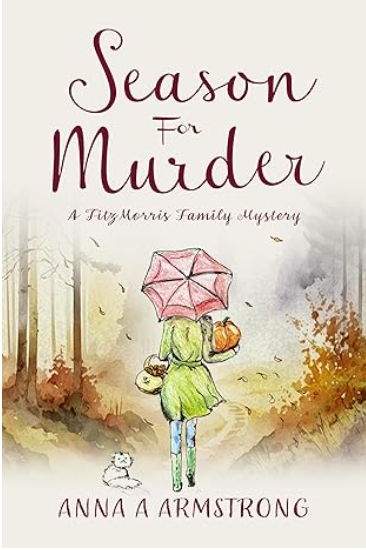
Blurb
Enjoy a visit to the idyllic Cotswolds where the blackberry jam is delicious, the pumpkins are ripe and a killer is plotting death.
Vivian Plover is an unlikely murderer but needs must. If her bumbling husband is ever going to reach the exalted office of Lord-Lieutenant, Vivian, in sensible shoes, twin set and pearls has some murderous work to do. She is beset by challenges, from her godson’s fake fiancée to Dee’s meddling.
With the worthies of Little Warthing falling foul of accidents, can Dee FitzMorris thwart her scheme or will she find herself yet another victim?
Rarely has murder been so amusing.
Indulge in this quirky and humorous cozy crime novel that will keep you entertained from start to finish. Set in modern-day England, amidst the charming British Cotswold countryside, “Season for Murder” delivers a captivating blend of mystery and comedy. With its light-hearted atmosphere and engaging whodunit plot, this British detective series is a must-read for fans of cozy crime murder mysteries.
Season For Murder – excerpt
Vivian Plover liked graveyards, especially this one in Little Warthing. She approved of the magnificent medieval church at its heart, famous for being the finest in all of the Cotswolds.The graveyard was a benign resting place, neatly measured out by Victorian railings on three sides and flanked on the fourth by a burbling river, on which glided a pair of swans enjoying the autumn sunshine. The graves were politely placed side by side. Vivian found it comforting that their respective size denoted the social importance of each occupant.
Even in death, breeding will out.
Vivian shifted her miserly weight on the bench beneath the giant yew tree which looked out at the sea of graves. Her uninspiring hair and features were groomed to the point of stiffness and her painfully appropriate clothes added to her air of rigidity. Only her thoughts were original. It’s reassuring that on my whim anyone I choose can end up here. She smiled.
Buy Links
https://www.amazon.co.uk/Season-Murder-Poisoning-FitzMorris-Mysteries-ebook/dp/B0CKZ9MPLQ/ref=sr_1_1
https://www.amazon.com/Season-Murder-Poisoning-FitzMorris-Mysteries-ebook/dp/B0CKZ9MPLQ/ref=sr_1_1

It is said there is a price that every passenger must pay. A price beyond the cost of a ticket.
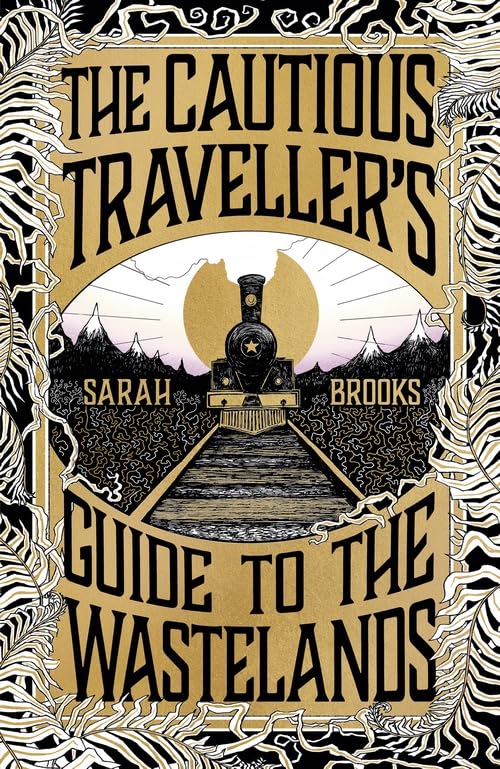
It is the end of the 19th Century and the world is awash with marvels. But there is nothing so marvellous as the Wastelands: a terrain of terrible miracles that lies between Beijing and Moscow.
Nothing touches this abandoned wilderness except the Great Trans-Siberian Express: an impenetrable train built to carry cargo across continents, but which now transports anyone who dares to cross the shadowy Wastelands.
On to the platform steps a curious cast of characters: a grieving woman with a borrowed name, a famous child born on the train and a disgraced naturalist, all heading for the Great Exhibition in Moscow.
But the old rules are changing, and there are whispers that the train isn’t safe. As secrets and stories begin to unravel the passengers and crew must survive their journey through the Wastelands together, even as something uncontrollable seems to be breaking in . . .
My Review
I picked this book up at the ‘It’s Strange Up North’ event in June. Sarah Brooks is delightful, and signed this book for me. Actually, I think the books sold at that event were officially sold before publication date.
We have here a tale of a train that runs through the Siberian landscape from Beijing to Moscow, but a landscape transformed by some magical power. The land is utterly strange and bizarre creatures live there. It’s dangerous for humans to travel across the ‘Wasteland’, but trade demands that they must, so ‘the Company’ built a railway track and sends one train back and forth across it.
But the landscape is changing, it’s mimicking the the world that is intruding on it and eventually things go very wrong.
In this novel, set in 1899, we follow Marya, a young woman grieving the deaths of her parents, out to find the truth of the last crossing, and Weiwei, the child of the train – born on the train and raised by the crew – who also wants to know what happened. In the process of their separate investigations, they rouse the suspicions of the Company consultants, known as ‘Crows’.
As they seek answers they are changed, and the choices they, and their allies make – the Wasteland Girl, Elena, Alexei the engineer, Suzuki the Cartographer, and The Professor – bring changes to the whole world.
The action builds up as the train travels, there’s tension as they struggle with water shortages and mad English naturalists running off to get samples, while a Russian priest screams about blasphemy, and French aristocrats laze about. Someone has clearly been reading Agatha Christie.
This was something like Murder On The Orient Express, in that there’s a mystery to be solved – what happened on the last crossing? It’s also a historical fantasy of the late nineteenth century, with luxury carriages for the wealthy, crowded third class accommodation, steam trains, fantastical technology, and a landscape that is utterly strange but entrancing. The transformation of the train from a mechanical wonder to another kind of wonder, a terrifying, moving forest, luxuriant and free, a travelling Eden, is the central narrative, around which everything else is built, everything else is just the humans trying to understand it, understand their places in this new reality, and decide if they want to be a part of it or not.
It reminds me a bit of the magic used by Priya in Tasha Suri’s The Burning Kingdoms series. Except the magic isn’t controlled by anyone, the train and the landscape decides where it’s going.
The train and the landscape are intertwined, and the people realise they are intertwined with the landscape too, and the Walls are false promises of strength holding up ultimately weak Empires and greedy corporations.
How lovely! What a wonderous thought, a wonderous world it would be, if the old empires fell because a magical forest rose, rather than because we started murdering each other by the millions.
‘The Company’ is clearly modelled after the East India Companies of the 17th to 19th centuries (Dutch and British – both equally greedy and murderous, with their own armies), with a Victorian railway company thrown into the mix. If the East India Company hadn’t fallen apart by the 1850s, they might have got into trans-continental railways, I suppose, and the trans-Siberian train route has been around for about 100 years. It’s actually three or four connected routes, that started when the Russian Empire decided it would quite like to get to it’s furthest eastern reaches, near China, more easily. You can travel all the way from Moscow to Beijing, which would be fun, if you didn’t have to go to multiple dictatorships to do so. The train network made it easy for Russian troops to support China during the Japanese invasion in the 1940s, but also meant the Chinese and Russians could kill each other easily over bits of territory they both claimed in the 1910s.
I would call them silly buggers, but come on, we didn’t do much better. Empires are bad for everyone.
Anyway, I was quite enthralled by this book. I loved the lavish descriptions of the Wastelands and the way the train transformed. I found Marya and Weiwei, two very different people, to be sympathetic and engaging characters, and the narrative tightly constructed.
Enjoyable historical fantasy. Especially if you like trains. And magical, murderous landscapes.
 Everything Is Better With Dragons