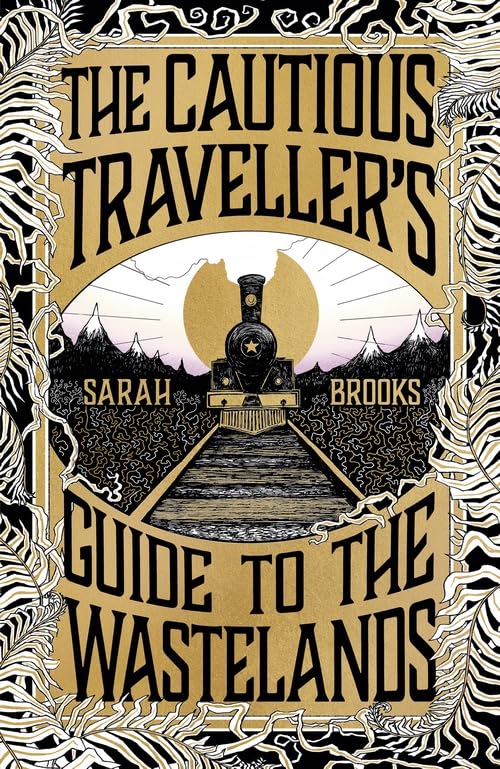
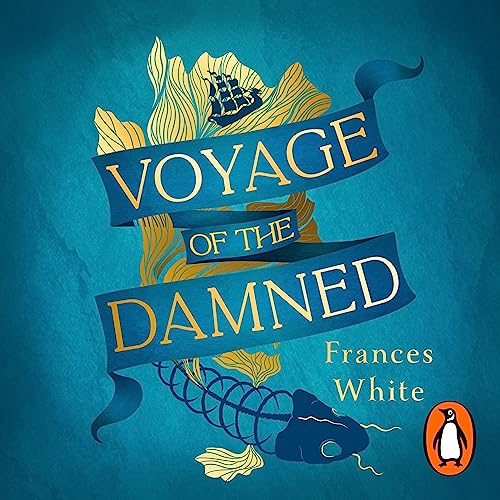
Format: 384 pages, Hardcover Published: June 20, 2024 by W&N ISBN: 9781399607537
It is said there is a price that every passenger must pay. A price beyond the cost of a ticket.
It is the end of the 19th Century and the world is awash with marvels. But there is nothing so marvellous as the Wastelands: a terrain of terrible miracles that lies between Beijing and Moscow.
Nothing touches this abandoned wilderness except the Great Trans-Siberian Express: an impenetrable train built to carry cargo across continents, but which now transports anyone who dares to cross the shadowy Wastelands.
On to the platform steps a curious cast of characters: a grieving woman with a borrowed name, a famous child born on the train and a disgraced naturalist, all heading for the Great Exhibition in Moscow.
But the old rules are changing, and there are whispers that the train isn’t safe. As secrets and stories begin to unravel the passengers and crew must survive their journey through the Wastelands together, even as something uncontrollable seems to be breaking in . . .
My Review
I picked this book up at the ‘It’s Strange Up North’ event in June. Sarah Brooks is delightful, and signed this book for me. Actually, I think the books sold at that event were officially sold before publication date.
We have here a tale of a train that runs through the Siberian landscape from Beijing to Moscow, but a landscape transformed by some magical power. The land is utterly strange and bizarre creatures live there. It’s dangerous for humans to travel across the ‘Wasteland’, but trade demands that they must, so ‘the Company’ built a railway track and sends one train back and forth across it.
But the landscape is changing, it’s mimicking the the world that is intruding on it and eventually things go very wrong.
In this novel, set in 1899, we follow Marya, a young woman grieving the deaths of her parents, out to find the truth of the last crossing, and Weiwei, the child of the train – born on the train and raised by the crew – who also wants to know what happened. In the process of their separate investigations, they rouse the suspicions of the Company consultants, known as ‘Crows’.
As they seek answers they are changed, and the choices they, and their allies make – the Wasteland Girl, Elena, Alexei the engineer, Suzuki the Cartographer, and The Professor – bring changes to the whole world.
The action builds up as the train travels, there’s tension as they struggle with water shortages and mad English naturalists running off to get samples, while a Russian priest screams about blasphemy, and French aristocrats laze about. Someone has clearly been reading Agatha Christie.
This was something like Murder On The Orient Express, in that there’s a mystery to be solved – what happened on the last crossing? It’s also a historical fantasy of the late nineteenth century, with luxury carriages for the wealthy, crowded third class accommodation, steam trains, fantastical technology, and a landscape that is utterly strange but entrancing. The transformation of the train from a mechanical wonder to another kind of wonder, a terrifying, moving forest, luxuriant and free, a travelling Eden, is the central narrative, around which everything else is built, everything else is just the humans trying to understand it, understand their places in this new reality, and decide if they want to be a part of it or not.
It reminds me a bit of the magic used by Priya in Tasha Suri’s The Burning Kingdoms series. Except the magic isn’t controlled by anyone, the train and the landscape decides where it’s going.
The train and the landscape are intertwined, and the people realise they are intertwined with the landscape too, and the Walls are false promises of strength holding up ultimately weak Empires and greedy corporations.
How lovely! What a wonderous thought, a wonderous world it would be, if the old empires fell because a magical forest rose, rather than because we started murdering each other by the millions.
‘The Company’ is clearly modelled after the East India Companies of the 17th to 19th centuries (Dutch and British – both equally greedy and murderous, with their own armies), with a Victorian railway company thrown into the mix. If the East India Company hadn’t fallen apart by the 1850s, they might have got into trans-continental railways, I suppose, and the trans-Siberian train route has been around for about 100 years. It’s actually three or four connected routes, that started when the Russian Empire decided it would quite like to get to it’s furthest eastern reaches, near China, more easily. You can travel all the way from Moscow to Beijing, which would be fun, if you didn’t have to go to multiple dictatorships to do so. The train network made it easy for Russian troops to support China during the Japanese invasion in the 1940s, but also meant the Chinese and Russians could kill each other easily over bits of territory they both claimed in the 1910s.
I would call them silly buggers, but come on, we didn’t do much better. Empires are bad for everyone.
Anyway, I was quite enthralled by this book. I loved the lavish descriptions of the Wastelands and the way the train transformed. I found Marya and Weiwei, two very different people, to be sympathetic and engaging characters, and the narrative tightly constructed.
Enjoyable historical fantasy. Especially if you like trains. And magical, murderous landscapes.











 Everything Is Better With Dragons