Promise collects Christi Nogle’s best futuristic stories ranging from plausible tech-based science fiction to science fantasy stories about aliens in our midst: chameleonic foils hover in the skies, you can order a headset to speak and dream with your dog, and your devices sometimes connect not just to the web but to the underworld.
These tales will recall the stories of Ray Bradbury, television programs such as Black Mirror and The Twilight Zone, and novels such as Little Eyes by Samanta Schweblin or Under the Skin by Michel Faber.
They are often strange and dreadful but veer towards themes of hope, potential, promise.
Format: 368 pages, Paperback Published: January 1, 2023 by Orbit ISBN: 9780356520865 (ISBN10: 0356520862) Language: English
Blurb
The Terraformers is an equally heart-warming and thought-provoking vision of the future for fans of Becky Chambers, Kim Stanley Robinson, and Martha Wells.
Destry is a top network analyst with the Environmental Rescue Team, an ancient organization devoted to preventing ecosystem collapse. On the planet Sask-E, her mission is to terraform an Earthlike world, with the help of her taciturn moose, Whistle. But then she discovers a city that isn’t supposed to exist, hidden inside a massive volcano. Torn between loyalty to the ERT and the truth of the planet’s history, Destry makes a decision that echoes down the generations.
Centuries later, Destry’s protege, Misha, is building a planetwide transit system when his worldview is turned upside-down by Sulfur, a brilliant engineer from the volcano city. Together, they uncover a dark secret about the real estate company that’s buying up huge swaths of the planet―a secret that could destroy the lives of everyone who isn’t Homo sapiens. Working with a team of robots, naked mole rats, and a very angry cyborg cow, they quietly sow seeds of subversion. But when they’re threatened with violent diaspora, Misha and Sulfur’s very unusual child faces a stark choice: deploy a planet-altering weapon, or watch their people lose everything they’ve built on Sask-E.
My Review
This is two stories that follow on from each other, taking place several thousand years apart, containing some of the same characters. The characters are a variety of species and genders.
The character pairs of Destry and Moose, Sulfur and Misha, Moose and Scrubjay, are memorable and loving in their own way. They are biological or mechanical, hominins or other species, all with sentience. They interact with each other, form families and are torn between doing the right thing and being controlled by Verdance or Emerald. Scrubjay and Moose are particularly interesting. Scrubjay is a sentient flying train, Moose is a sentient cat. They fall in love with each other while taking on and taking down Emerald, the corporation that has taken control of Sask-E and who are trying to destroy Spider City.
The main theme of the story is that companies controlling life is a bad idea. That better ways of governing and building communities are possible, but there will always be forces intent on breaking those better ways for their own profit.
I enjoyed the descriptions of the environments of Sask-E and the social structures. They are clearly thought out and based on a lot of research.
Newitz is a clear and amusing writer. I have read (listened to) their non-fiction book, Four Lost Cities, and to be fair I also follow Annalee Newitz on Instagram. I listen to their Our Opinions Are Correct podcast. It’s a sci-fi and fantasy podcast Annalee Newitz does with Charlie Jane Anders.
In this stunning conclusion to N. E. Davenport’s fast-paced, action-packed sci-fantasy duology, elite warrior Ikenna and her rogue cohort must outrun bounty hunters, their former comrades, and a megalomaniacal demi-god, all in the hopes of saving their friends and enemies from the racist and misogynistic oppression that threatens the continents from all sides.
After discovering the depth of betrayal, treachery, and violence perpetrated against her by Mareen’s Tribunal Council and exposing her illegal blood-gift to save her Praetorian squad, Ikenna becomes a fugitive with a colossal bounty on her head.
Yet, somehow, that’s the least of her worries.
Her grandfather’s longtime allies refuse to offer help, and the Blood Emperor’s Warlord is tracking her. She’s also struggling to control the enormous power she was granted by the Goddess of Blood Rites…and come to terms with the promises she made to get such power.
Amidst all of this, the Blood Emperor wages a full-scale invasion against Mareen and leaves a trail of decimated cities, war crimes, and untold death in his wake. As the horrors increase, Ikenna and her team realize they must assassinate the Blood Emperor and quickly end the war. But the price to do so is steep and has planet-shattering consequences.
The price to do nothing, though, is annihilation.
War has erupted. Alliances are fracturing. And Ikenna is torn between her loyalties, her desires for revenge, and the power threatening to consume her. With the world aflame, only one thing is certain: blood will be spilled.
My Review
I enjoyed this book. I stayed up all night reading it. This may not be the most coherent review due to lack of sleep. Seriously, I sat down at half eight last night to read a few chapters before bed and realised I read all night when it started getting light, and finished reading the book at 6:03 a.m., and was stunned for a few moments. I have the Illumicrate Exclusive Edition which has blue edges and a red cover. It matches/contrasts with my Illumicrate Exclusive Edition of The Blood Trials. I also reviewed that book as part of the blog tour and was excited to find out what happened next.
The book begins some short time after the end of The Blood Trials; Ikenna and her team have spent time among the northern Microstates trying to gain allies for their war against both the Blood Emperor and the Tribunal of Mareen, but aren’t having much luck. They turn to a criminal syndicate for the means to fight their war, but don’t get to spend long with their new ally because they get attacked by Praetorians from Rhysian War House and mercenaries.
Eventually, they end up in the hands of Ajani, the Apis of Accacia – the second in command of the Blood Emperor, Nkosi. Ikenna and Ajani do not get on well, but for the good of Iludu, they make an agreement to work together long enough to kill Nkosi and put Ajani on the throne of Accacia. Ikenna doesn’t trust Ajani and assumes he’s going to kill her when he gets a chance, and Ajani doesn’t do much to reassure anyone on her team.
After a traumatic encounter with Krashna, the ancient god of Mareen, and being saved by Kissa, the goddess of Kanai, Ikanna learns that she needs to commune with her goddess, Amaka, to gain more control of her powers, but she doesn’t listen and things start to go very wrong with their plans. Eventually, Ikenna listens and comes into her power and learns that she is more than just a blood-gifted warrior. Her ancestry is more complex than that.
This is sci-fantasy. The cultures are technologically advanced but also use magic, some of the countries are stratified societies and monarchies, and most have a difficult relationship with religion. I quite enjoy this mix of magic and technology.
Ikenna and Darius’s relationship develops and their conversations addressing their personal issues is one of the best parts of the book. The fights are really fun too. Ikenna is slowly developing as a person, she is still often childish but has moments of maturity which improve her as a character. The team are becoming a cohesive unit, and they survive repeated attempts on their lives, from both the Mareen Republic and the Accacian Empire, as they try to gather allies to reset the planet.
The latter chapters which cover the war with the Tribunal and Ikenna’s revenge on Selene Rhysian and her family, feels a bit rushed. I can see a further series where Ikenna and the Invictus squad fight the gods, and Selene and Enoch team up to give Ikenna problems.
This is really two books squished into one, and it would have been best to end it at page 291, and then have the events after the death of Nkosi and the rearrangement of the world in a third book. The war against the Tribunal and the battle at the Krashna’s Citadel should have been the a third book. I don’t think this is the author’s fault, but a publishing decision. I would love to see Nia Davenport get a chance to write the two novels this was meant to be.
Format: 352 pages, Paperback Published: March 28, 2023 by Titan Books ISBN: 9781803362298 (ISBN10: 1803362294)
Blurb
Ten Low and her ragtag comrades take on an ultra-rich tycoon who owns entire planets in this high-octane clash of law and lawlessness across the stars, for fans of Gideon the Ninth , Anne Leckie and Becky Chambers.
Who controls the future, controls it all…
Ten “Doc” Low is a medic with a dark past, riding the wastes of the desert moon Factus, dispensing medicine to the needy and death to those who cross the laws of the mysterious Seekers. Cursed by otherworldly forces, she stays alone to keep herself safe, and to keep others safe from her…
But when she experiences a terrifying vision of conflict and the deaths of those she once called friends, she must drag herself back to the land of the living to stop a war before it begins. With rebellion brewing, the Accord’s grip on the Outer Moons weakening and a sinister tycoon buying up all land in sight, Ten must find allies where she can and face the past in order to save the future. The cost will be greater than she could ever have imagined…
A wild, adrenaline-packed, whip-smart crash of storytelling and shoot-outs, ideal for fans of Becky Chambers’ Wayfarers and Alex White’s Salvagers .
Format: 256 pages, Hardcover Published: March 9, 2023 by Hodder & Stoughton ISBN: 9781529390520 Language: English
Blurb
Saints and preachers, librarians and horse thieves, lawmakers and lawbreakers, and a crash-surviving spaceborn vagrant searching for her lover on a scarred Earth.
Earth, the distant future: climate change has reduced our verdant home into a hard-scrabble wasteland. Saints and sinners, lawmakers and sheriffs, travellers and gunslingers and horse thieves abound. People are as diverse and divided as they’ve ever been – except in their shared suspicions when a stranger comes to town.
One night a ship falls from the sky, bringing the planet’s first visitor in three hundred years. She’s armed, she’s scared… and she’s looking for someone.
Love, loss, and gun slinging in this dazzling debut novel by Grace Curtis. For fans of Sam J. Miller, Mary Robinette Kowal, and Becky Chambers, Frontier is a heartfelt queer romance in a high noon standoff with our planet’s uncertain future, full of thrills, a love story, and laser guns.
2110 Earth is suffering major resource shortages, and the impact of climate change is peaking, with much of the planet’s equatorial regions turned to lifeless desert and populations displaced. Colonies have been established on Mars and the Moon, but these cannot hope to sustain any more than a scant population of hundreds of citizens.
Attention has turned to the need to discover an extra-solar colony world. European scientists, using discoveries made at CERN, have identified the means of creating a wormhole in the space-time continuum, which would allow interstellar travel. However, to do so they must first physically transport one end of the wormhole to where they want it to be, so setting up a wormhole will always rely on physical travel first of all.
A ship is sent to Mu Arae, earth-like planet discovered 10 years before. It is a journey that will take 80 years, the crew, who will eventually set up the wormhole on the planet, kept in suspended animation. But only a few years into the trip, catastrophe strikes and the ship blows up en route, killing all aboard.
2190 Eighty years after the starship set out.
Gordon Kemp is a detective working in the cold case department in London. Usually he works on cases closed ten, twenty-five years earlier. Now, however, he has been assigned a murder investigation closed, unsolved, over eighty years ago. What he unearths will change history and threatens everything we know about what the powers that be have planned for Earth.
The tragedy that befell the ship 80 years before is not what it seems and the past and the present are radically different to what everyone on Earth believes.
We made the journey. Why has it been kept a secret?
Author Bios
ERIC BROWN – Eric Brown is the BSFA award-winning author of more than 20 novels and as many novellas. He has had many short stories published in Interzone magazine and was, for many years, the SF and Fantasy reviewer for The Guardian
KEITH BROOKE – Keith Brooke is the Philip K. Dick award shortlisted author of more than a dozen novels for adults and teenagers. He was the editor for Infinity Plus magazine and has written non-fiction on the SF genre for Palgrave Macmillan.
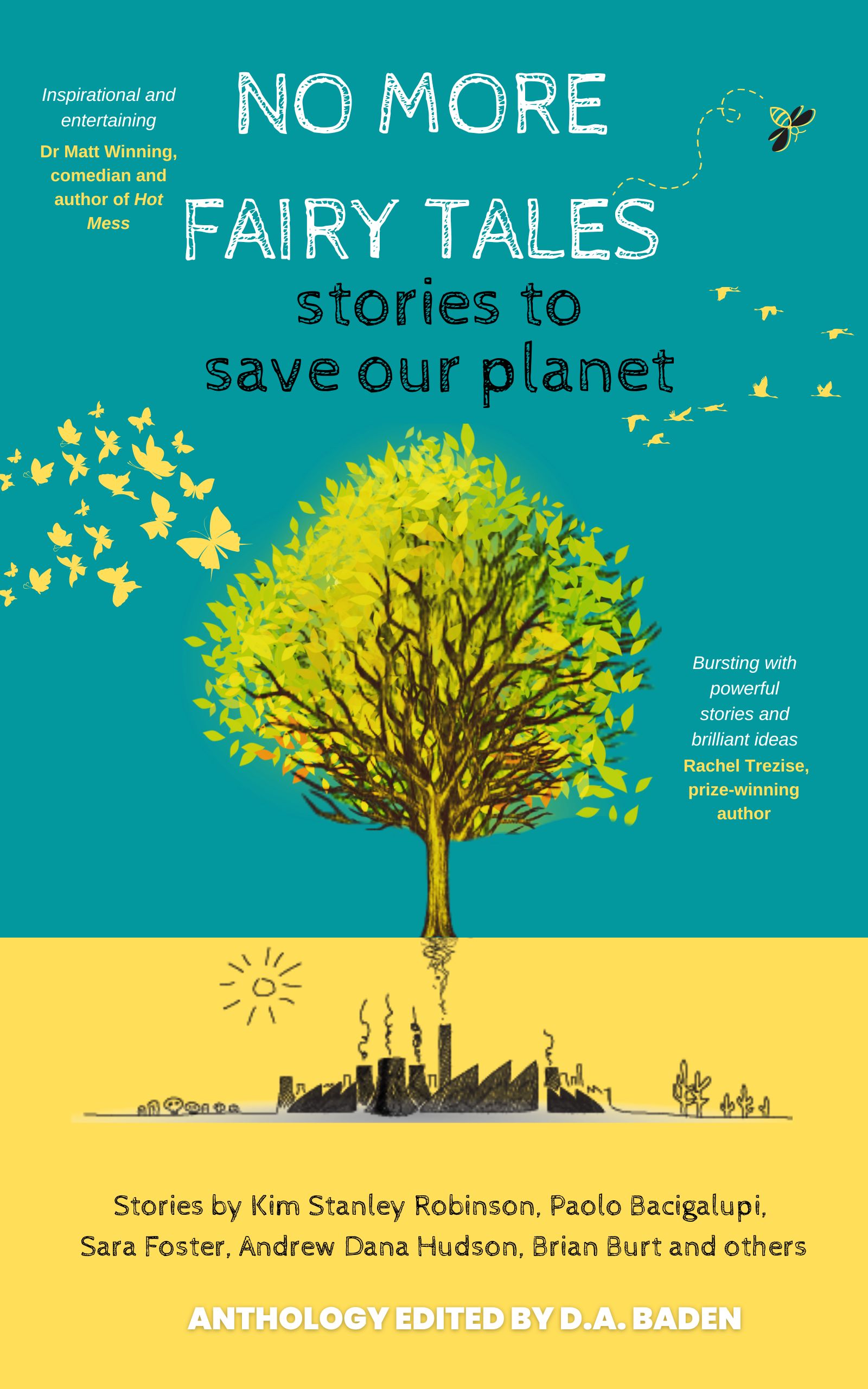
A collection of inspiring, funny, dark, mysterious, tragic, romantic, dramatic, upbeat and fantastical short stories. These 24 stories are written by a variety of authors, with the aim to inspire readers with positive visions of what a sustainable society might look like and how we might get there.
The stories are diverse in style, ranging from whodunnits to sci-fi, romance to family drama, comedy to tragedy, and cover a range of solution types from high-tech to nature-based solutions, to more systemic aspects relating to our culture and political economy.
Genetically-modified teens try to bring down the organisation that made them.
Fun, fast-paced, high-octane action adventure, 21% Monster is a perfect page-turning new series for fans of Alex Rider, Percy Jackson and the MCU generation. When Darren Devlin is arrested for destroying his school with his bare hands, it’s not just the police who are after him. Enter Marek Masters, 14 years old, 19% alien, and the most intelligent, most wanted “almost human” alive. Marek is here to tell Darren the truth – he is 21% monster, and together they must take down the secret organisation that created them. Darren and Marek are wanted, powerful and dangerous. And now it’s payback time.
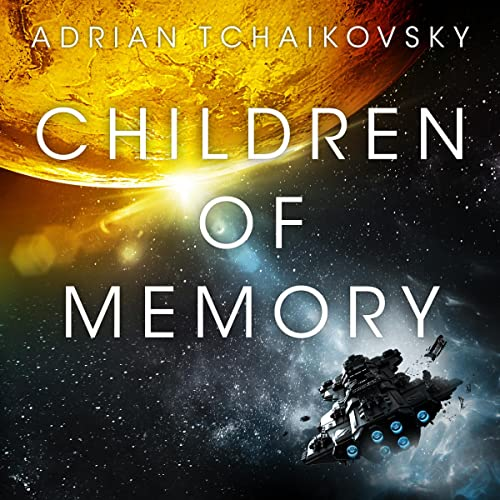
The unmissable follow-up to the highly acclaimed Children of Time and Children of Ruin.
When Earth failed, it sent out arkships to establish new outposts. So the spaceship Enkidu and its captain, Heorest Holt, carried its precious human cargo to a potential new paradise. Generations later, this fragile colony has managed to survive on Imir, eking out a hardy existence. Yet life is tough, and much technological knowledge has been lost.
Then strangers appear, on a world where everyone knows their neighbour. They possess unparalleled knowledge and thrilling new technology – for they have come from the stars, to help humanity’s lost colonies. But not all is as it seems on Imir.
As the visitors lose track of time and memories, they discover the colonists fear unknown enemies and Imir’s own murky history. Neighbour turns against neighbour, as society fractures in the face of this terrifying foe. Perhaps some other intelligence is at work, toying with colonists and space-faring scientists alike? But not all questions are so easily answered – and the price may be the colony itself.
Children of Memory by Arthur C. Clarke Award-winning author Adrian Tchaikovsky is a far-reaching space opera spanning generations, species and galaxies.
Format: 16 pages, Audible Audio
Published: November 24, 2022 by Tor
Language: English
My Review
I have copies of all of the books in this series and have listened to them all as audiobooks.
I found this one really confusing. On the surface it’s simple, a team of Humans, portids, uplifted octopuses, the aggregate lifeform from Nod, and a pair of corvids, visit a new planet, called Imir. Something strange is going on there though. The people are afraid of something outside of their small colony and they don’t know what it is. Things keep going strangely wrong. They keep happening over and over again, in slightly different ways. Miranda, the person who embodies the aggregate lifeform from Nod, is deeply invested in the events and can’t escape from Imir.
The simulation hypothesis is explored in this novel; are we living in a simulation? What is sentience? The ideas are explored through the characters of Gethi and Gothi, a pair of Corvids who need to be together to explore and draw conclusions.
I really liked Gethi and Gothi, they’re funny and drive the plot forward. I love the way they talk back to Avrana Kern and their discussions about sentience, and their conclusion that they aren’t sentient, and also that either everyone is or no one is.
If you enjoyed the first two books in the series I highly recommend this third book. I think this is the final book in the series, which would be a shame, as I want to know where else the sentient species go and who they meet.
When an army of giant robot AIs threatens to devastate Earth, a virtuoso pianist becomes humanity’s last hope in this bold, lightning-paced, technicolor new space opera series from the author of A Big Ship at the Edge of the Universe.
Jazz pianist Gus Kitko expected to spend his final moments on Earth playing piano at the greatest goodbye party of all time, and maybe kissing rockstar Ardent Violet, before the last of humanity is wiped out forever by the Vanguards–ultra-powerful robots from the dark heart of space, hell-bent on destroying humanity for reasons none can divine.
But when the Vanguards arrive, the unthinkable happens–the mecha that should be killing Gus instead saves him. Suddenly, Gus’s swan song becomes humanity’s encore, as he is chosen to join a small group of traitorous Vanguards and their pilots dedicated to saving humanity.





 Everything Is Better With Dragons