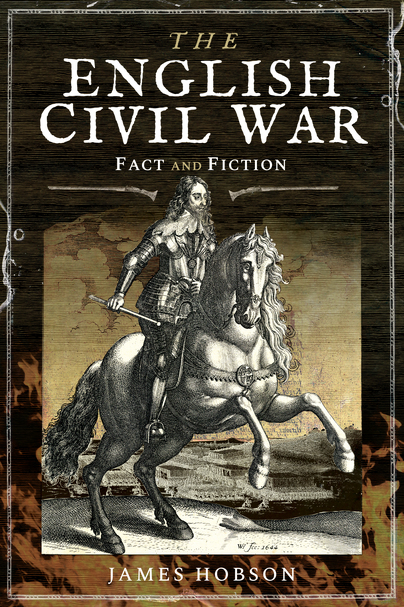
Review: The English Civil War: Fact and Fiction, by James Hobson

The English Civil War
By James Hobson
Imprint: Pen & Sword History
Pages: 135
Illustrations: 40
ISBN: 9781526734877
Published: 9th April 2019

Have you ever found yourself watching a show or reading a novel and wondering what life was really like in the Civil War? Did the war really split families? Was Charles I just too stupid to be King? Did Cromwell really hate the monarchy and did Parliament actually ban Christmas?

In The English Civil War: Fact and Fiction, you’ll find fast and fun answers to all your secret questions about this remarkable period of British history. Find out about people’s lives and how the Civil War affected them. Learn about the role of women and if they merely stayed at home and suffered, and if Cromwell really was always miserable.

James Hobson brings to life the tumultuous and unprecedented period of history that is known as the Civil War. An unfussy yet accurate history, each chapter presents a controversy in itself and sets about dispelling commonly held myths about the Civil War.

Continue reading “Review: The English Civil War: Fact and Fiction, by James Hobson”

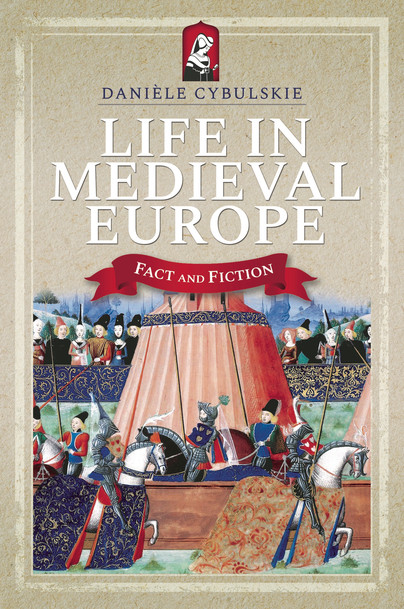
Pen & Sword Review: Life in Medieval Europe: Fact and Fiction, by Daniele Cybulskie

Life in Medieval Europe


Imprint: Pen & Sword History
ISBN: 9781526733450
Published: 30th September 2019

Price:£12.00 was £14.99

Have you ever found yourself watching a show or reading a novel and wondering what life was really like in the Middle Ages? What did people actually eat? Were they really filthy? And did they ever get to marry for love?

In Life in Medieval Europe: Fact and Fiction, you’ll find fast and fun answer to all your secret questions, from eating and drinking to sex and love. Find out whether people bathed, what they did when they got sick, and what actually happened to people accused of crimes. Learn about medieval table manners, tournaments, and toothpaste, and find out if people really did poop in the moat.

Continue reading “Pen & Sword Review: Life in Medieval Europe: Fact and Fiction, by Daniele Cybulskie”

Review: The Spanish Flu Epidemic and its Influence on History, by Jaime Breitnauer

ISBN: 9781526745170
Published: 20th November 2019
Price: £15.99

On the second Monday of March 1918, the world changed forever. What seemed like a harmless cold morphed into a global pandemic that would wipe out as many as a hundred-million people – ten times as many as the Great War. German troops faltered lending the allies the winning advantage, India turned its sights to independence while South Africa turned to God. In Western Samoa a quarter of the population died; in some parts of Alaska, whole villages were wiped out. Civil unrest sparked by influenza shaped nations and heralded a new era of public health where people were no longer blamed for contracting disease. Using real case histories, we take a journey through the world in 1918, and look at the impact of Spanish flu on populations from America, to France, to the Arctic, and the scientific legacy this deadly virus has left behind.

My Review

Thanks to Rosie at Pen & Sword for sending me this book. It’s much appreciated, given how much time it’s taking me to read and and review books she’s been sending me.

Took me less than four hours to read this book last night. I couldn’t sleep anyway. No, really, I’m coughing a bit. It’s probably just a cold or an allergy. Might change my bedding later and vacuum the carpet, just in case. I’ll let you know if it’s something worse.

Like the Spanish Flu.

Although I’d probably be dead by now if I had Spanish Flu. In the second wave it was so virulent that it killed people as they walked down the street to the doctors to get help. Whole families died. Thousands of children were left orphaned. Up to 100 million people died in less than two years. At the time it was a shocking event, but in the years that followed it was forgotten. The author speculates that the horrors of war, mass movement of people, malnutrition and then the pandemic was too much for people to cope with. They prefered to think that people died in combat not coughing up their own lungs and choking to death.

Colonialism helped spread the pandemic. Troops from the colonies were sent to the Western Front and then sent back. European troops had been sent to the Middle East, Chinese citizens were sent through Canada and across the Atlantic as part of the Chinese Labour Corp. Millions of people from all over the planet moving around, meeting up in closely packed, unhealthy conditions, malnourished and carrying seasonal infections, then going back out into the world.

People generally know about the effects of the Spanish Flu in Europe and North America, but the pandemic covered the whole globe. People who were of European decent were less likely to die compared to indigenous people in Africa, the Americas, Australia and the Pacific Islands. European and North America people of European descent are used to getting colds and flu, so they had some immunity. Indigenous people didn’t.

Viruses do this interesting thing where they can share their genetic material with each other if they meet in a cell. At some point in the years between 1916 and 1918 some nasty H1N1 flu strains met up, shared genetic material and produced the nastiest virus humans have ever dealt with. Reconstruction of the virus from Alaskan bodies buried in the permafrost in 1920 shows that any one of the eight segments would produce a nasty virus; together they made it leathal.

The arrival of the flu in 1918 helped end the Great War, because it’s really hard to keep up violence when your soldiers are dying from disease and your support lines are falling apart because everyone who should be moving supplies is dead, dying or sick. There were mass famines as the fields weren’t harvested or planted in 1919. In industrial areas, factories and mines shut down because too many people were ill.

It encouraged new and already existing independence movements in colonies in response to the poor treatment of indigenous people during the pandemic, and probably screwed up the post-war negotiations, since it killed or sickened many of the people at the table. The loss of moderate political voices lead to greater punitive measures against Germany, the loss of expertise about the Middle East resulted in the utter mess we still have today.

People are still not sure where it started. There were outbreaks of flu in 1916, 1917 and 1918 in China, the US and France before the first wave of the Spanish Flu. I have a hypothesis that there were some nasty strains going around, and the mass movement of people from across the world, carrying these different strains, as the ‘first wave’ and finally brought together in France, allowed the nastiest of them to meet up, shuffle around some genetics and then produce the virus we call Spanish Flu. I think this is the ‘second wave’, which was the truly awful one. The one that killed millions. The ‘third wave’, less virulent was possibly a version that had drifted a bit or one or the less nasty. Might be wrong, someone else has probably looked at it and ruled this idea out.

Honestly, this is a really good introduction to the Spanish Flu pandemic and its ongoing influence. I could tell the author has a history background and a journalism background too. She made the book very easy to read and the use of real people examples really brought the events of those years to life.

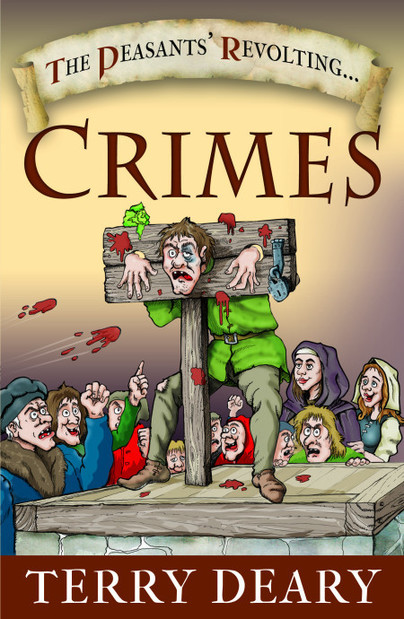
Unexpected Review: The Peasants’ Revolting Crimes, by Terry Deary

The Peasants' Revolting Crimes
ISBN: 9781526745576
Buy here
Published: 23rd October 2019
Price: £8.00

Popular history writer Terry Deary takes us on a light-hearted and often humorous romp through the centuries with Mr & Mrs Peasant, recounting foul and dastardly deeds committed by the underclasses, as well as the punishments meted out by those on the ‘right side’ of the law.

Discover tales of arsonists and axe-wielders, grave robbers and garroters, poisoners and prostitutes. Delve into the dark histories of beggars, swindlers, forgers, sheep rustlers and a whole host of other felons from the lower ranks of society who have veered off the straight and narrow. There are stories of highwaymen and hooligans, violent gangs, clashing clans and the witch trials that shocked a nation. Learn too about the impoverished workers who raised a riot opposing crippling taxes and draconian laws, as well as the strikers and machine-smashers who thumped out their grievances against new technologies that threatened their livelihoods.

Britain has never been short of those who have been prepared to flout the law of the land for the common good, or for their own despicable purposes. The upper classes have lorded and hoarded their wealth for centuries of British history, often to the disadvantage of the impoverished. Frustration in the face of this has resulted in revolt. Read all about it here!

This entertaining book is packed full of revolting acts and acts of revolt, revealing how ordinary folk – from nasty Normans to present-day lawbreakers – have left an extraordinary trail of criminality behind them. The often gruesome penalties exacted in retribution reveal a great deal about some of the most fascinating eras of British history.

My Review

Thanks to Rosie Crofts at Pen & Sword for sending me this book. I’m making my way through my book backlog while trying to keep up with my blog tour commitments.

It’s popular history, so don’t expect in-depth discussion of the crimes or events covered in the book. The author has a rather broad definition of ‘peasant’. A peasant is:

person who owns or rents a small piece of land and grows cropskeeps animals, etc. on it, especially one who has a low income, very little education, and a low social position. This is usually used of someone who lived in the past or of someone in a poor country

https://dictionary.cambridge.org/dictionary/english/peasant

Deary’s broader definition seems to be broadened to ‘a person with a low income and a low social position’. So long as they don’t have land and extensive income or property, the author classes them as a peasant.

The author covers the period from the Norman Conquest to the late-eighteenth century. The crimes are everything from petty theft to forgery, murder and revolt. This book is sometimes humorous and it was good for dipping in and out of. It did keep me amused (even when I had to correct minor things) and it is an easy to read book that builds on Deary’s ‘Horrible Histories’ books. It has a similar format to those books, with the era chapters sub-divided by crime, which makes it easy to find specific crimes in specific eras. Deary uses quotes judiciously to support the text.

Probably a good one for children interested in history who have read all the ‘Horrible Histories’.

Pen & Sword True Crime Round-up Reviews

I have so many Pen & Sword books to review (because they keep releasing so many that I want to read!) that I’m doing multiple reviews in a single post. Today I’m writing reviews for the true crime books I’ve read recently.

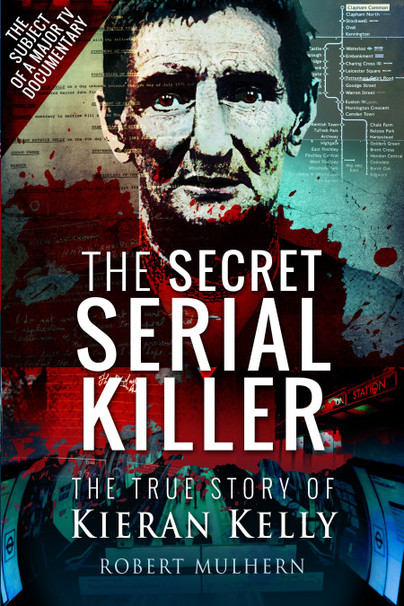
The Secret Serial Killer
On the evening of 21 August 1983, Metropolitan Police detectives raced to the cells of London’s Clapham Police Station to find a prisoner dead and his cellmate sat cross-legged and quiet in the corner.

Kieran Kelly, a labourer from Ireland, quickly confessed to strangling the prisoner – and then stunned officers by confessing to dozens of unreported and unsolved murders over the previous 30 years.

Detectives believed they were in the presence of Britain’s most prolific serial killer yet Kelly was convicted on just two of his admissions and his story went unnoticed until 2015, when a former police officer who worked on the case claimed the killer’s crimes were covered up by the British Government.

Strangulations, murders on the London Underground, an internal Metropolitan Police review – as the story’s elements whipped the international news media into a frenzy, journalist Robert Mulhern set off on a methodical search for the truth against the backdrop of an ever-increasing body count.

Could Kieran Kelly really have murdered 31 times?
https://www.pen-and-sword.co.uk/The-Secret-Serial-Killer-Hardback/p/15804

My Review

I had not heard of this case before, and I was intrigued because I thought I’d heard of most of the major serial killers in Britain in the last fifty years, There has been a lot of speculation and sensationalisation about Kieran Kelly, much of it encouraged by former Police Officer Geoff Platt, alleging that Kieran Kelly had murdered 31 people, 12 on the tube. He wrote a couple of books about it and apparently does cruises. He also says the crimes were covered up by the government for some reason.

Robert Mulhern does an excellent job of chasing down as much of the truth as possible after so long. The only certainty is that Kelly killed his cell-mate William Boyd in August 1983 and Hector Fisher on Clapham Common in 1975. He may have also killed five or six other homeless people, but the police weren’t able to prove anything and his own solicitor called Kelly a ‘fantasist’.

As much an investigation in to the life of Kieran Kelly and an investigation into the claims that were making headlines and their author. Mulhern travels from London to Ireland and back, trying to check the details and speaking to people who knew Kelly as Ken.

Mulhern spoke to a lot of other people, including more police officers involved with the Kelly case in 1983/1984, and Geoff Platt himself. Among those Mulhern spoke to was ‘Officer A’, who had access to a lot of the paperwork and the new Inquiry, and retired D.I., Ian Brown, a detective on the Boyd case, who objects to being called a liar.

The evidence suggests Kelly murdered five or six homeless people during drunken rages, but had nothing to do with any deaths on the Underground. It also suggests that Platt is making hay from his minor part in an unusual case of murder in a police station. There’s some really good investigative work in this book, with multiple interviews from the people who were there.


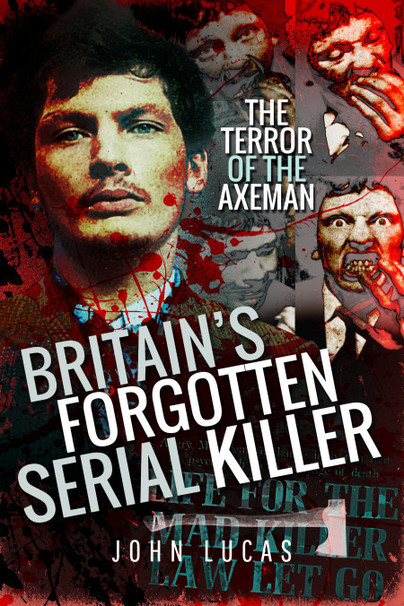
Britain's Forgotten Serial Killer

Serial killer Patrick Mackay was dubbed the most dangerous man in Britain when he appeared in court in 1975 charged with three killings, including the axe murder of a priest. The Nazi-obsessed alcoholic had stalked the upmarket streets of West London hunting for victims and was suspected of at least eight further murders.

Now, after more than 40 years behind bars, where he has shunned publicity, Mackay has been allowed to change his name and win the right to live in an open prison – bringing him one step closer to freedom. For the first time, Britain’s Forgotten Serial Killer reveals the full, untold story of Patrick Mackay and the many still-unsolved murders linked to his case.
https://www.pen-and-sword.co.uk/Britains-Forgotten-Serial-Killer/p/16439

My Review

Patrick Mackay is a bit of a sad sack, who took out his own insecurities first on his mother and sisters, and then on local kids, before moving on to murder people who tried to help him. Usually elderly women. I’ve heard about him before so I couldn’t understand the title of this book. And then I got to the last chapter.

Patrick Mackay’s crimes were sensational at the time – priests found hacked to death in their baths will cause a fuss – but over the years he’s been forgotten. Murderers with higher body counts have pushed him into the background. He’s changed his name and now lives in an open prison. Brady or Sutcliffe would never have been allowed to do that.

The author sets out a biography of Patrick Mackay and his potential involvement in other unsolved crimes that match the crimes he was convicted for. If you’ve never heard of this particular serial killer, this book is a good place to start.


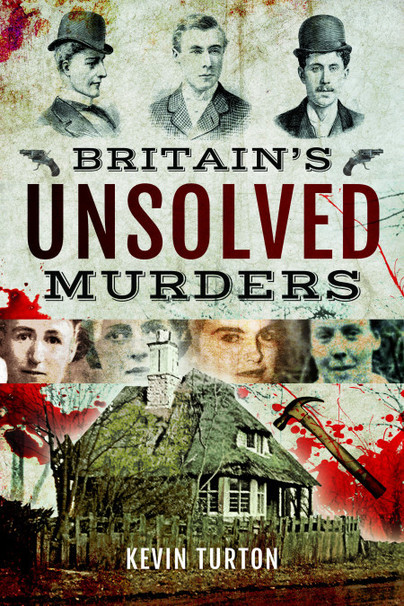
Britain’s Unsolved Murders
Britain has its fair share of unsolved murders. Crimes that have both fascinated and horrified in equal measure, with many as baffling today as they were when the stories first hit the headlines in the national press. Spanning 100 years between 1857-1957, this book re-examines thirteen of these murder cases and retells the stories that have endured and confounded both police and law courts alike. Each chapter provides an account of the circumstances surrounding the killing, of the people caught up in the subsequent investigation and the impact it had on some of their lives. It also explores the question of guilt and to whom it should, or should not, be attached. Each of these murders poses an undeniable truth; no-one was ever proven to have committed the killing despite, in some cases, accusing fingers being pointed, arrests being made and show trials taking place. Consequently, notoriety, deserved or otherwise, was often attached to both victim and accused. But was it ever merited?

From the questionable court case surrounding Scotland’s now famous Madeleine Smith, and the failed police investigation into Bradford’s Jack the Ripper case of 1888, to the mysterious deaths of Caroline Luard and Florence Nightingale Shore at the start of the twentieth century, this book disturbs the dust, sifts the facts and poses the questions that mattered at the time of each murder. Did Harold Greenwood poison his wife in Kidwelly? Who was responsible for the Ripper-like killing of Emily Dimmock and Rose Harsent? Why did Evelyn Foster die on the moor near Otterburn in what became known as the Blazing car murder and who strangled Ann Noblett to death in 1957?

These are just some of the cases examined and the stories behind them. Each and every one, no matter how appalling the crime, still deserving of justice.
https://www.pen-and-sword.co.uk/Britains-Unsolved-Murders-Paperback/p/16507

My Review

This book covers thirteen murders from 1857 – 1957, some quite well-known and some less so. The author gives the details then discusses the possible killers, as far as he is able to after so long. Each chapter is detailed and the photographs and images provided are helpful. It’s a fairly easy to read book that you can pick up to read a chapter or two then go back to later.

A good place to start if you’re interested in unsolved murders.


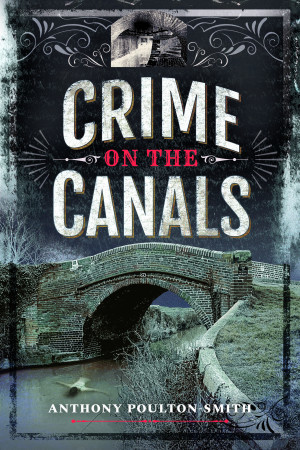
Crime on the Canals
Throughout our islands’ history we find tales of thieves, smugglers, thugs and murderers. Books have been written retelling tales of bandits, footpads, highwaymen, et al, attacking the lone traveller, the horseman, the coachman, shipping line, locomotive engineer, lorry or van driver and even pilot. Yet for almost two centuries the majority of goods travelled on Britain’s famed canal network. This also attracted felons of all kinds and yet many of these tales had been ignored, until now.

Within these pages all manner of crimes are covered. From murders to muggings, parental problems to pilfering, arson, assault, smugglers, counterfeiters and even road rage (albeit canal-style). But it is not all morbidity and misery, humour also plays a significant part in these tales. Why would a hungry man steal the inedible? Follow the policeman on foot chasing down a thief on board the narrowboat. Discover what really lies beneath the waters of the canal. Learn about canal etiquette, the hardships, the kindness and the cruelty.

From an author whose fascination with etymology has produced many books on origins of place names, leading to an interest in the historical modes of travel across our islands, this book is the latest to follow old routes and those found along them.
https://www.pen-and-sword.co.uk/Crime-on-the-Canals-Paperback/p/16206

My Review

Well, this one was different. Since the network of canals around England were first dug in the early years of the Industrial Revolution to the modern use of them for pleasure, crime has taken place. Murder, mugging, coal theft.

I found this book sludgy going at times, although at others it was really fascinating.

Review: ‘Charles and Ada’, by James Essinger #BlogTour #Rachel’sRandomResources #ConradPress #OneDayBlogBlitz

Charles and Ada: the computer’s most passionate partnership

The partnership of Charles Babbage and Ada Lovelace was one that would change science forever.

They were an unlikely pair – one the professor son of a banker, the other the only child of an acclaimed poet and a social-reforming mathematician – but perhaps that is why their work is so revolutionary.

They were the pioneers of computer science, creating plans for what could have been the first computer. They each saw things the other did not; it may have been Charles who designed the machines, but it was Ada who could see their potential.

But what were they like? And how did they work together? Using previously unpublished correspondence between them , Charles and Ada explores the relationship between two remarkable people who shared dreams far ahead of their time.

Purchase Links

UK – https://www.amazon.co.uk/Charles-Ada-Computers-Passionate-Partnership/dp/0750990953

 US – https://www.amazon.com/Charles-Ada-Computers-Passionate-Partnership/dp/0750990953

Continue reading “Review: ‘Charles and Ada’, by James Essinger #BlogTour #Rachel’sRandomResources #ConradPress #OneDayBlogBlitz”

Pen & Sword book reviews: The Women’s History edition

Thanks to Rosie Crofts, who emails me with lists of books every now and then. I have quite a pile of books to get through so I’m doing themed review posts. In this case, Women’s History. The next one will be ‘True Crime’.

Continue reading “Pen & Sword book reviews: The Women’s History edition”

May 2019 Bonus Review #1: ‘Lady Killers: Deadly Women Throughout History’, by Tori Telfer


Publisher: John Blake
Publication Date: 8th February 2018
ISBN-13: 978-1786061218

Blurb

When you think of serial killers throughout history, the names that come to mind are ones like Jack the Ripper and Ted Bundy. But what about Tillie Klimek, Moulay Hassan, Kate Bender? The narrative we’re comfortable with is the one where women are the victims of violent crime, not the perpetrators. In fact, serial killers are thought to be so universally, overwhelmingly male that in 1998, FBI profiler Roy Hazelwood infamously declared in a homicide conference, ‘There are no female serial killers’.

Lady Killers, based on the popular online series that appeared on Jezebel and The Hairpin, disputes that claim and offers fourteen gruesome examples as evidence. Though largely forgotten by history, female serial killers such as Erzsebet Bathory, Nannie Doss, Mary Ann Cotton, and Darya Nikolayevna Saltykova rival their male counterparts in cunning, cruelty, and appetite for destruction.

Each chapter explores the crimes and history of a different subject, and then proceeds to unpack her legacy and her portrayal in the media, as well as the stereotypes and sexist cliches that inevitably surround her. The first book to examine female serial killers through a feminist lens with a witty and dryly humorous tone, Lady Killers dismisses easy explanations (she was hormonal, she did it for love, a man made her do it) and tired tropes (she was a femme fatale, a black widow, a witch), delving into the complex reality of female aggression and predation. Featuring 14 illustrations from Dame Darcy, Lady Killers is a bloodcurdling, insightful, and irresistible journey into the heart of darkness.

Continue reading “May 2019 Bonus Review #1: ‘Lady Killers: Deadly Women Throughout History’, by Tori Telfer”

Non-fiction Bonus Reviews #1

I haven’t been feeling great so my reviews are a bit behind. I have a stack of books next to my laptop that I need to tell you all about. I’ve got three Pen & Sword books for you and an indie about comic book history.

Continue reading “Non-fiction Bonus Reviews #1”

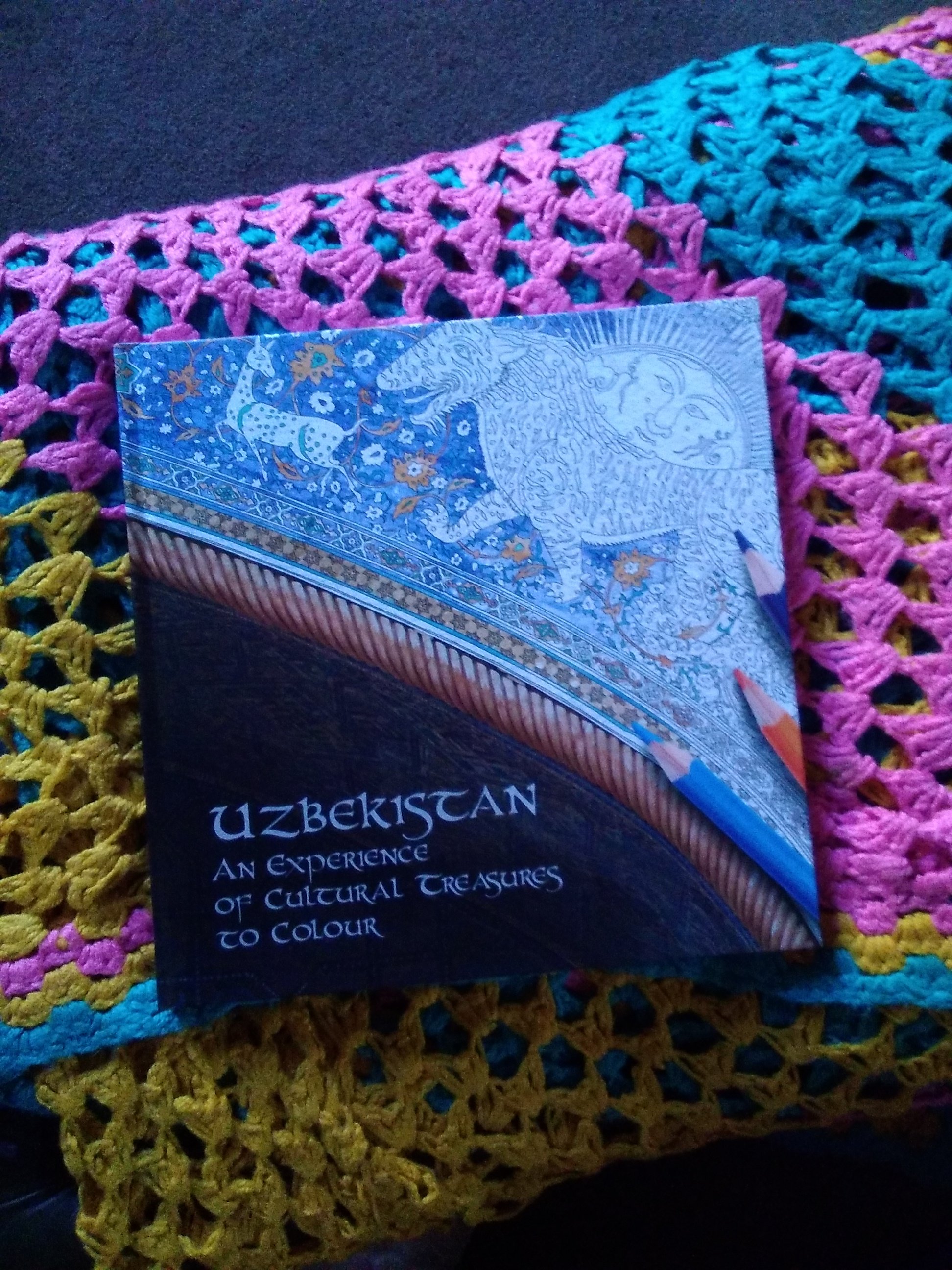
Colouring book review: ‘Uzbekistan: An experience of cultural treasures to colour’

I do enjoy colouring in when I’m stressed. Or bored. And when this one came up, I just had to accept it.

My Review

The book pairs images of architecture, fabrics, mosaics, carvings and paintings from the last couple of thousand years with line images for the reader to colour in.

The paper is dense and high quality, and I’m scared to get my pencils anywhere near it. It’s so beautiful! And informative. As a cross-roads of cultures and civilisations, Uzbekistan has an artistic legacy that continues to this day.

Thanks to Rosie Crofts at Pen & Sword for sending me this book. I think I’m just going to stroke it a bit rather than try any colouring in.