Review: The Mayfair Mafia, by Dick Kirby

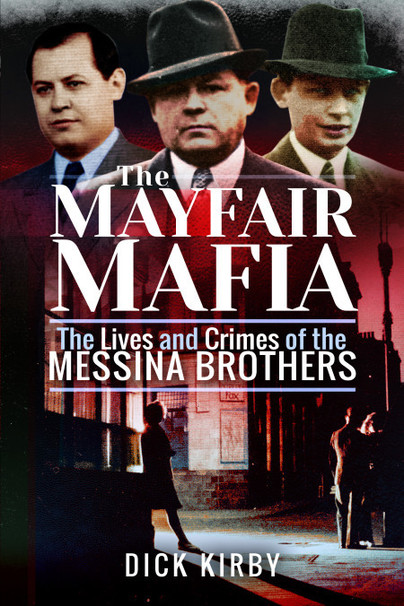
The Mayfair Mafia
By Dick Kirby
Imprint: Pen & Sword True Crime
Pages: 198
Illustrations: 32
ISBN: 9781526742612
Published: 1st May 2019

It is a little known fact that one immigrant Italian family ran London’s thriving vice trade unchecked from the mid-1930s for some twenty years.

The five Messina brothers imported prostitutes from the Continent on an industrial scale, acquiring the women British citizenship by phoney marriages. Demanding 80% of earnings, the Messina became fabulously wealthy, purchasing expensive properties, cars and influence.

As this revealing and absorbing account describes, the brothers ruled with a ruthless combination of charm, blackmail and all too credible threats of disfigurement and death.

It took a sensational Sunday newspaper exposé to get the authorities to act. A series of dramatic arrests and trials followed and one by one the brothers were imprisoned and deported for crimes including immoral earnings, attempted bribery and firearms offences.

Such was their fortune that numerous potential beneficiaries came forward, most recently in 2012.

The author, a much published former Metropolitan police officer, has researched the remarkable criminal careers of the five Messina’s and the result is a riveting and shocking read.

Continue reading “Review: The Mayfair Mafia, by Dick Kirby”

Review: The English Civil War: Fact and Fiction, by James Hobson

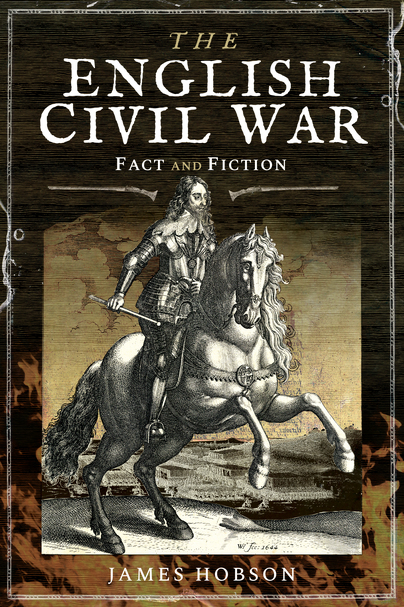
The English Civil War
By James Hobson
Imprint: Pen & Sword History
Pages: 135
Illustrations: 40
ISBN: 9781526734877
Published: 9th April 2019

Have you ever found yourself watching a show or reading a novel and wondering what life was really like in the Civil War? Did the war really split families? Was Charles I just too stupid to be King? Did Cromwell really hate the monarchy and did Parliament actually ban Christmas?

In The English Civil War: Fact and Fiction, you’ll find fast and fun answers to all your secret questions about this remarkable period of British history. Find out about people’s lives and how the Civil War affected them. Learn about the role of women and if they merely stayed at home and suffered, and if Cromwell really was always miserable.

James Hobson brings to life the tumultuous and unprecedented period of history that is known as the Civil War. An unfussy yet accurate history, each chapter presents a controversy in itself and sets about dispelling commonly held myths about the Civil War.

Continue reading “Review: The English Civil War: Fact and Fiction, by James Hobson”

Review: Feasible Planet, by Ken Kroes

Blurb

Are you concerned about the state of our planet and hope that governments and corporations will find a sustainable way for us to live? If you do not think about it too hard, that may work, but will it? Left on their own, with drivers of popularity and profits, I am not too convinced that it will.

This leads to the key question. Are we doing enough? I believe that the answer to this question is no and that our best hope is for each of us to vote smart, lobby hard, stay informed, and to act. This book primarily focuses on the last part, the actions that each of us can take.

While environmental aspects are key areas of concern, sustainability goes beyond controlling our consumption and pollution. There are key social, political, and economic areas that need to be addressed as well, and there are several steps that individuals can take to help in all of these areas.

For those of you who feel we could do more, this book is for you and is loaded with actionable activities, the reasons for doing them, and explores why we are not doing them already.

Continue reading “Review: Feasible Planet, by Ken Kroes”

Pen & Sword Review: Life in Medieval Europe: Fact and Fiction, by Daniele Cybulskie

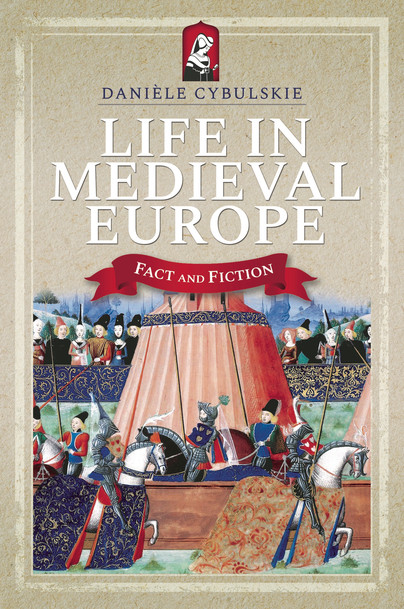
Life in Medieval Europe


Imprint: Pen & Sword History
ISBN: 9781526733450
Published: 30th September 2019

Price:£12.00 was £14.99

Have you ever found yourself watching a show or reading a novel and wondering what life was really like in the Middle Ages? What did people actually eat? Were they really filthy? And did they ever get to marry for love?

In Life in Medieval Europe: Fact and Fiction, you’ll find fast and fun answer to all your secret questions, from eating and drinking to sex and love. Find out whether people bathed, what they did when they got sick, and what actually happened to people accused of crimes. Learn about medieval table manners, tournaments, and toothpaste, and find out if people really did poop in the moat.

Continue reading “Pen & Sword Review: Life in Medieval Europe: Fact and Fiction, by Daniele Cybulskie”

Review: The Spanish Flu Epidemic and its Influence on History, by Jaime Breitnauer

ISBN: 9781526745170
Published: 20th November 2019
Price: £15.99

On the second Monday of March 1918, the world changed forever. What seemed like a harmless cold morphed into a global pandemic that would wipe out as many as a hundred-million people – ten times as many as the Great War. German troops faltered lending the allies the winning advantage, India turned its sights to independence while South Africa turned to God. In Western Samoa a quarter of the population died; in some parts of Alaska, whole villages were wiped out. Civil unrest sparked by influenza shaped nations and heralded a new era of public health where people were no longer blamed for contracting disease. Using real case histories, we take a journey through the world in 1918, and look at the impact of Spanish flu on populations from America, to France, to the Arctic, and the scientific legacy this deadly virus has left behind.

My Review

Thanks to Rosie at Pen & Sword for sending me this book. It’s much appreciated, given how much time it’s taking me to read and and review books she’s been sending me.

Took me less than four hours to read this book last night. I couldn’t sleep anyway. No, really, I’m coughing a bit. It’s probably just a cold or an allergy. Might change my bedding later and vacuum the carpet, just in case. I’ll let you know if it’s something worse.

Like the Spanish Flu.

Although I’d probably be dead by now if I had Spanish Flu. In the second wave it was so virulent that it killed people as they walked down the street to the doctors to get help. Whole families died. Thousands of children were left orphaned. Up to 100 million people died in less than two years. At the time it was a shocking event, but in the years that followed it was forgotten. The author speculates that the horrors of war, mass movement of people, malnutrition and then the pandemic was too much for people to cope with. They prefered to think that people died in combat not coughing up their own lungs and choking to death.

Colonialism helped spread the pandemic. Troops from the colonies were sent to the Western Front and then sent back. European troops had been sent to the Middle East, Chinese citizens were sent through Canada and across the Atlantic as part of the Chinese Labour Corp. Millions of people from all over the planet moving around, meeting up in closely packed, unhealthy conditions, malnourished and carrying seasonal infections, then going back out into the world.

People generally know about the effects of the Spanish Flu in Europe and North America, but the pandemic covered the whole globe. People who were of European decent were less likely to die compared to indigenous people in Africa, the Americas, Australia and the Pacific Islands. European and North America people of European descent are used to getting colds and flu, so they had some immunity. Indigenous people didn’t.

Viruses do this interesting thing where they can share their genetic material with each other if they meet in a cell. At some point in the years between 1916 and 1918 some nasty H1N1 flu strains met up, shared genetic material and produced the nastiest virus humans have ever dealt with. Reconstruction of the virus from Alaskan bodies buried in the permafrost in 1920 shows that any one of the eight segments would produce a nasty virus; together they made it leathal.

The arrival of the flu in 1918 helped end the Great War, because it’s really hard to keep up violence when your soldiers are dying from disease and your support lines are falling apart because everyone who should be moving supplies is dead, dying or sick. There were mass famines as the fields weren’t harvested or planted in 1919. In industrial areas, factories and mines shut down because too many people were ill.

It encouraged new and already existing independence movements in colonies in response to the poor treatment of indigenous people during the pandemic, and probably screwed up the post-war negotiations, since it killed or sickened many of the people at the table. The loss of moderate political voices lead to greater punitive measures against Germany, the loss of expertise about the Middle East resulted in the utter mess we still have today.

People are still not sure where it started. There were outbreaks of flu in 1916, 1917 and 1918 in China, the US and France before the first wave of the Spanish Flu. I have a hypothesis that there were some nasty strains going around, and the mass movement of people from across the world, carrying these different strains, as the ‘first wave’ and finally brought together in France, allowed the nastiest of them to meet up, shuffle around some genetics and then produce the virus we call Spanish Flu. I think this is the ‘second wave’, which was the truly awful one. The one that killed millions. The ‘third wave’, less virulent was possibly a version that had drifted a bit or one or the less nasty. Might be wrong, someone else has probably looked at it and ruled this idea out.

Honestly, this is a really good introduction to the Spanish Flu pandemic and its ongoing influence. I could tell the author has a history background and a journalism background too. She made the book very easy to read and the use of real people examples really brought the events of those years to life.

Review: Acid Test, by Christopher Kimball Bigelow

50348216

Growing up Mormon during America’s early-1980s satanic panic, Bigelow escapes the religion’s bland conformity by playing Dungeons & Dragons. After graduating from high school in 1984, he dives into sex, drugs, and the counterculture via Salt Lake City’s punk and new-wave scenes, as echoed from London, New York, and especially Los Angeles.

As Bigelow explores the underground, he rejects myths of supernatural good vs. evil, living instead by the D&D concept of chaotic neutrality. During LSD trips, however, he starts sensing an unseen dimension. Then Stephen King’s post-apocalyptic novel The Stand gets him reconsidering good vs. evil. After an alarming otherworldly attack, can Bigelow find spiritual protection in Mormonism’s processed, regimented, corporate culture?

Published January 14th 2020 by Zarahemla Books

ISBN:0999347233 (ISBN13: 9780999347232)

Continue reading “Review: Acid Test, by Christopher Kimball Bigelow”

Review: The Dark Side of the Mind, by Kerry Daynes


BLURB
Welcome to the world of the forensic psychologist, where the people you meet are wildly unpredictable and often frightening.

The job: to delve into the psyche of convicted men and women to try to understand what lies behind their often brutal actions.

Follow in the footsteps of Kerry Daynes, one of the most sought-after forensic psychologists in the business and consultant on major police investigations.

Kerry’s job has taken her to the cells of maximum-security prisons, police interview rooms, the wards of secure hospitals and the witness box of the court room.

Her work has helped solve a cold case, convict the guilty and prevent a vicious attack.

Spending every moment of your life staring into the darker side of life comes with a price. Kerry’s frank memoir gives an unforgettable insight into the personal and professional dangers in store for a female psychologist working with some of the most disturbing men and women.

·        Paperback: 304 pages
·        Publisher: Endeavour; 01 edition (20 Feb. 2020)
·        Language: English
·        ISBN-10: 1788402170
·        ISBN-13: 978-1788402170
 
Amazon: https://www.amazon.co.uk/Dark-Side-Mind-Forensic-Psychologist/dp/1788402170
 
Continue reading “Review: The Dark Side of the Mind, by Kerry Daynes”

Review: Hidden Wyndham, by Amy Binns

New biography explores the secret love life of celebrated author John Wyndham

Hidden Wyndham: Life, Love, Letters includes previously unpublished love letters from The Day of the Triffids author

The first biography of the life of science fiction author John Wyndham is now available. It includes the first publication of a collection of love letters to his long-term partner and later wife, Grace Wilson.

Hidden Wyndham: Life, Love, Letters, by Dr Amy Binns, author and senior lecturer in journalism at the University of Central Lancashire (UCLan), explores Wyndham’s wealthy but traumatic childhood. This was transformed by a spell at the first mixed-sex public school Bedales from 1915 to 1918, the source of the strange but fervent feminism of Consider Her Ways and Trouble with Lichen.

The biography covers his formative years as a pulp fiction writer, his experiences as a censor during the Blitz and his part in the Normandy landings. He described his struggles with his conscience in a moving series of letters to Grace, the teacher with whom he had a 36 year love affair.

 After the war, he transformed the searing experiences of wartime London, France and Germany into a series of bestselling novels: The Day of the Triffids, The Chrysalids, The Midwich Cuckoos and The Kraken Wakes. But he remained intensely private, shunning fame and finally retiring to live anonymously with Grace in the countryside he loved.

Hidden Wyndham is distributed by Gardners Books and is now available on the Waterstones and Amazon websites, in Kindle and in paperback edition.

Continue reading “Review: Hidden Wyndham, by Amy Binns”

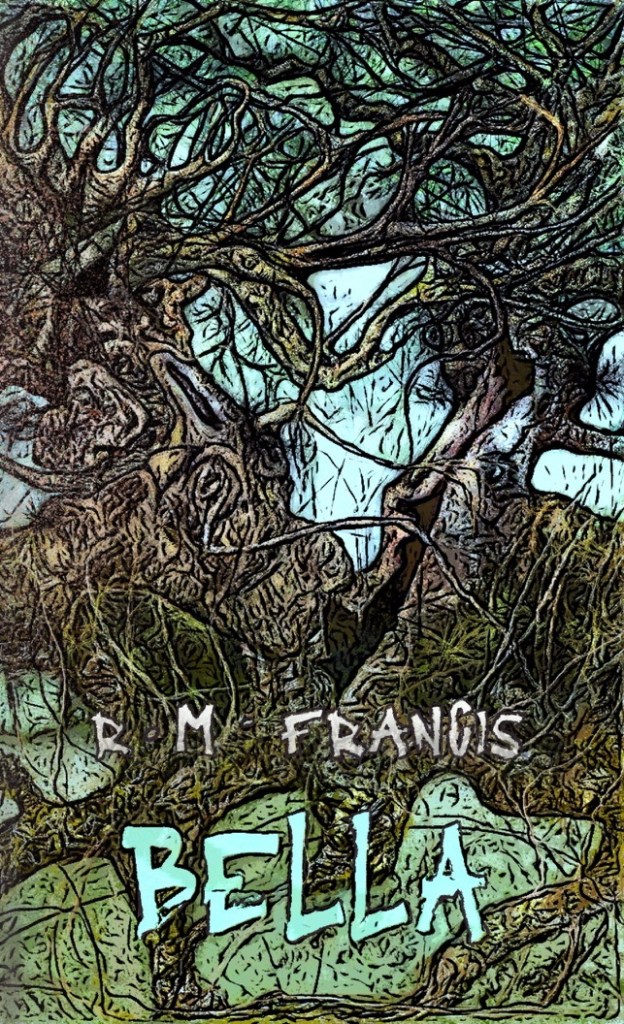
Review: ‘Bella’, by R.M. Francis

Blurb

A spectre has haunted Netherton for generations.

Everyone has a theory, no one has an answer.

The woods that frame the housing estate uncover a series of heinous acts, drawing onlookers in to a space of clandestine, queer sexuality: a liminal space of abject and uncanny experience.

A question echoes in the odd borderlands of being, of fear-fascination, attraction-repulsion, of sex and death…

Who put Bella down the Wych-Elm?

Continue reading “Review: ‘Bella’, by R.M. Francis”

Review: Health At Every Size, by Linda Bacon Ph.D

7890166
Fat isn’t the problem. Dieting is the problem. A society that rejects anyone whose body shape or size doesn’t match an impossible ideal is the problem. A medical establishment that equates “thin” with “healthy” is the problem.
The solution?

Health at Every Size.

Tune in to your body’s expert guidance. Find the joy in movement. Eat what you want, when you want, choosing pleasurable foods that help you to feel good. You too can feel great in your body right now—and Health at Every Size will show you how.

Health at Every Size has been scientifically proven to boost health and self-esteem. The program was evaluated in a government-funded academic study, its data published in well-respected scientific journals.

Updated with the latest scientific research and even more powerful messages, Health at Every Size is not a diet book, and after reading it, you will be convinced the best way to win the war against fat is to give up the fight. 

Paperback, 374 pages
Published: March 23rd 2010 by BenBella Books
 (first published October 11th 2008)
Original Title
Health at Every Size: The Surprising Truth about Your Weight
ISBN:1935618253 
ISBN13: 9781935618256
Edition Language: English
URL:http://www.haesbook.org/

My Review

I bought this book out of interest, having been a fat person for most of my life and tried diets multiple times that worked temporarily. I’d lose a couple of stone then plateau before starting to increase again. And before I knew it I’d be back to my old weight. In the last year I’ve put on 10 kg. The nurse has got grumpy with me, I’ve returned to the Wellbeing Service Health Trainer I was seeing three years ago (at least), and she’s referred me to Thrive. I have to fill in a food diary and track everything. It’s already screwing with my head. I’m trying not to restrict but I’m struggling with it. I want to get fitter, my weight will do what it will.

I read this book with interest. Linda Bacon is a good writer and she makes the science understandable. The first half of the book is about the science, which shows that restrictive dieting may actually trigger the body’s anti-starvation mechanisms, making the dieter obsessed with food and binge. She discusses the social and political pressures around body size and health.

The basic idea is that rather than restricting food and exercising as punishment for eating, people should try to listen to their body, eat when they’re hungry and move in ways that feel good. The book tries to help the reader with that. It’s very easy to read, and full of information. Many will find it challenging because it questions everything we’re told about weight and health.

The book is US-centric and doesn’t discuss disability in respect to health and food. It also assumes the reader is in a stable living situation where they can afford and cook ‘real’ food. At times it comes off as a bit preachy.

If you’re struggling with your weight, sick of feeling a failure because the diets don’t work, try reading this book.